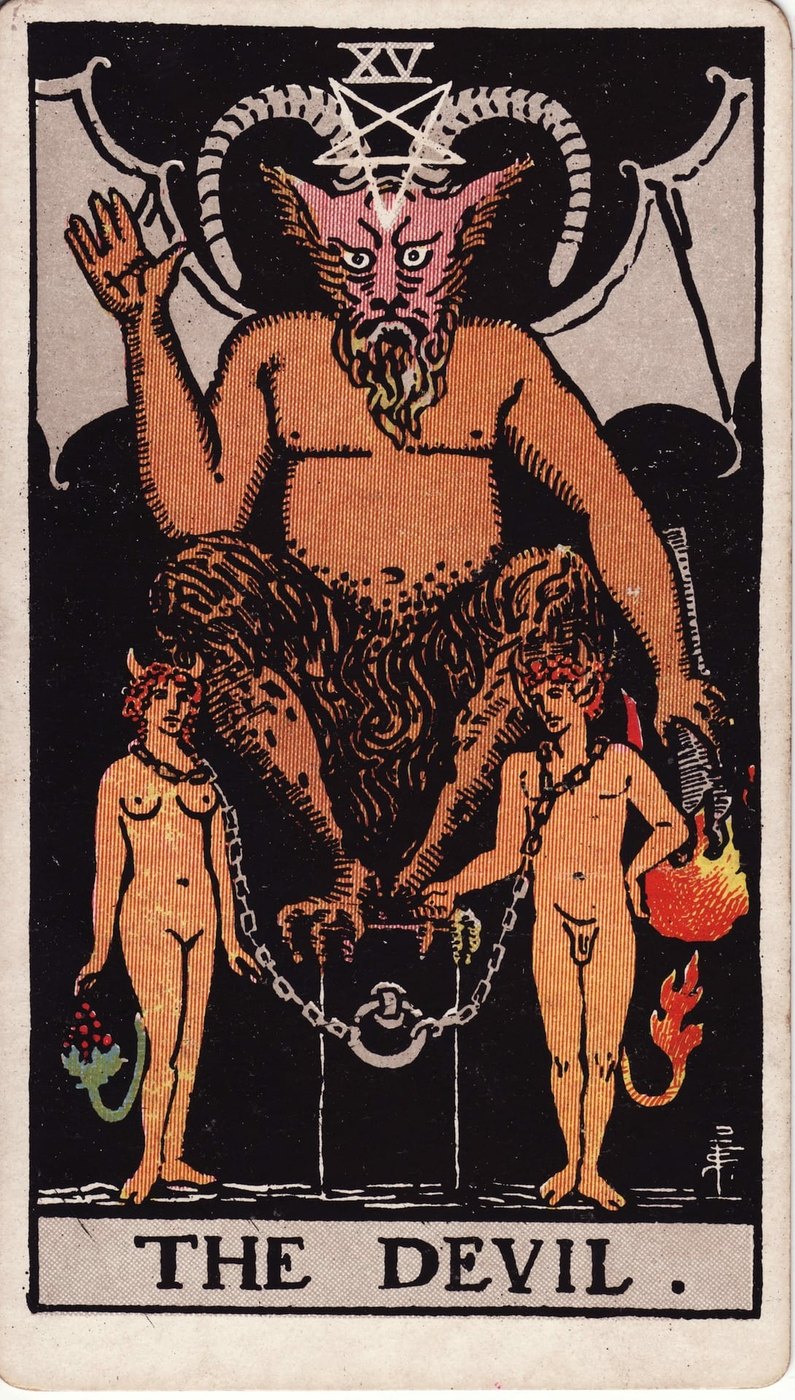
The Devil (XV)
The Devil as the central motif, filed under the Demon and the Monster, with the Angel and the Wing, the Pentagram, Fire, the Hand, and the King and the Queen in a secondary part. From The 1909 tarot.
What is happening
Waite, 1911 “In the eighteenth century this card seems to have been rather a symbol of merely animal impudicity. Except for a fantastic head-dress, the chief figure is entirely naked; it has bat-like wings, and the hands and feet are represented by the claws of a bird.”
Key · 6 motifs
Tap a motif on the picture, or a line below. Its note opens under the line, with the reading its author gave it.
- Primary motif
- Secondary motifs · 5
The picture
A horned goat-headed figure with bat wings squatting on a black block, a reversed pentagram on its brow, the right hand raised and an inverted torch in the left, a man and a woman with horns and tails chained by the neck to the block, on black ground; the Devil as the central motif. By eye
The reading
The picture read whole, in the archive's words, from the sources quoted on the marks. Read on, and the picture follows: the motif under discussion keeps its colour.
Every gesture on this card is another card of the deck turned upside down. The right hand is raised and extended, which Waite says is the reverse of the blessing the Hierophant gives. The torch in the left hand points at the ground. The pentagram on the brow is reversed. The wings are a bat's where the Lovers' angel had feathers. Read the deck straight through and this is its mirror.
The figure itself has a short history and Waite gives it. In the eighteenth century the Devil of the pack was ‘a symbol of merely animal impudicity’. Then, he writes, ‘since 1856 the influence of Eliphas Lévi and his doctrine of occultism has changed the face of this card’, handing it a goat's head, a torch between the horns and a caduceus. What Pamela Colman Smith drew is Lévi's Baphomet with the furniture tidied away: ‘the Horned Goat of Mendes, with wings like those of a bat’, squatting on a black altar with the sign of Mercury on its belly.
The two chained figures make the mirror explicit. They are analogous with the pair on the fifth card, Waite says, ‘as if Adam and Eve after the Fall’, and the chain round their necks is ‘the chain and fatality of the material life’. They have grown horns and tails to signify the animal nature, ‘but there is human intelligence in the faces’. The chains hang loose enough to lift off, which Smith drew and Waite does not mention.
So what is he? Waite throws out Lévi's answer, that the goat stands for occult science and magic, with unusual sharpness, and throws out predestination with it. His own reading puts the Devil outside a gate rather than under the world: he ‘signifies the Dweller on the Threshold without the Mystical Garden when those are driven forth therefrom who have eaten the forbidden fruit’. And the goat on the block is not the owner of the place. ‘Even now, he is also a bondsman, sustained by the evil that is in him and blind to the liberty of service.’ The Lovers stood in a garden with the serpent still up the tree behind them. Four cards later the same two are outside the gate with a chain on, and the goat that keeps the door is wearing one too.
Readings quoted
Waite, 1911 “Another commentator says that in the Divine world it signifies predestination, but there is no correspondence in that world with the things which below are of the brute.”
Decoded: every motif is marked, and each mark carries the reading its author gave it, quoted from the text, or says that it is observed on the picture and not read. The reading above is the archive's own, made from those sources and no others.
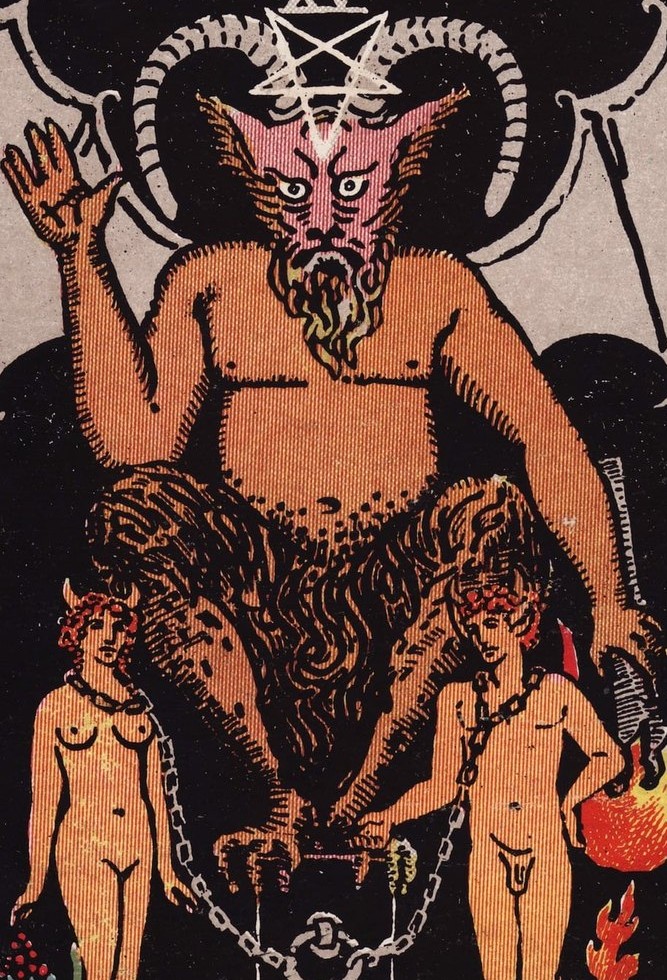
Almost always a composite and almost always subordinate. Note what it is made of and whether it is bound.
In plain words A devil with a goat’s head, bat’s wings and a man’s torso, squatting on a black block that Waite calls an altar. He names it the Goat of Mendes and says the shape comes from Eliphas Lévi’s Baphomet of 1856, which changed how every deck since drew this card. What it means, for Waite, is the thing that waits at the gate when Adam and Eve are put out of the garden: the Lovers card, after the Fall.
Waite, 1911 “The design is an accommodation, mean or harmony, between several motives mentioned in the first part. The Horned Goat of Mendes, with wings like those of a bat, is standing on an altar. At the pit of the stomach there is the sign of Mercury.”
Waite, 1911 “What it does signify is the Dweller on the Threshold without the Mystical Garden when those are driven forth therefrom who have eaten the forbidden fruit.”
Waite, 1911 “Since 1856 the influence of Eliphas Lévi and his doctrine of occultism has changed the face of this card, and it now appears as a pseudo-Baphometic figure with the head of a goat and a great torch between the horns; it is seated instead of erect, and in place of the generative organs there is the Hermetic caduceus.”
The mark of an errand rather than a nature. Note whether the wings are open, folded, or given to the figure by someone else.
In plain words Wings, but a bat’s, leathery and ribbed, where the angel of the Lovers had feathers. The card is built as that card’s dark twin, and the wings are the first place it shows.
Waite, 1911 “The Horned Goat of Mendes, with wings like those of a bat, is standing on an altar. At the pit of the stomach there is the sign of Mercury.”
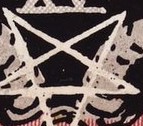
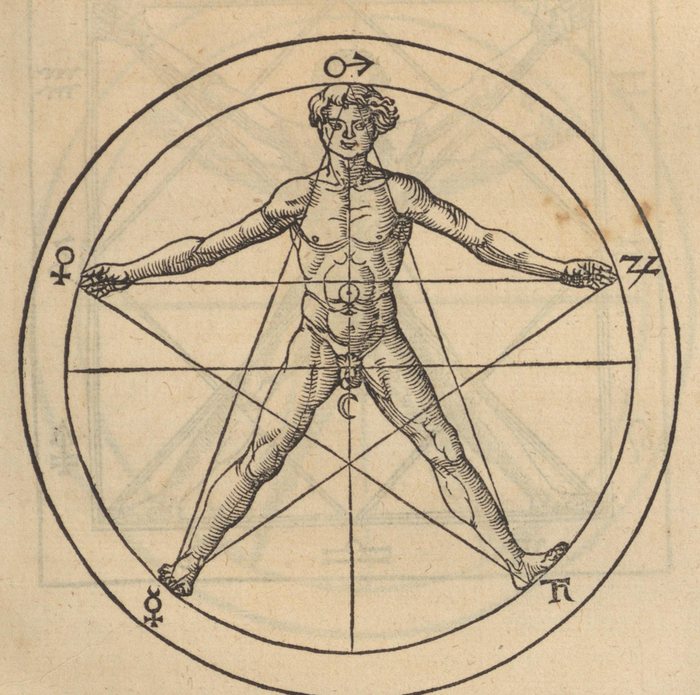
A five-pointed star drawn in one line. Count which way it points before reading it: one point up and two down is one sign, two up and one down is another.
In plain words A five-pointed star drawn point down between the horns. In the books this card draws on, the star with one point up stands for order and for the human figure with arms and legs spread; with two points up it is the same sign reversed, and Lévi, whose Baphomet this card copies, made the reversal the goat’s own mark. Waite records it in four words and moves on.
Waite, 1911 “A reversed pentagram is on the forehead.”
Waite, 1911 “With more than his usual derision for the arts which he pretended to respect and interpret as a master therein, Eliphas Lévi affirms that the Baphometic figure is occult science and magic.”
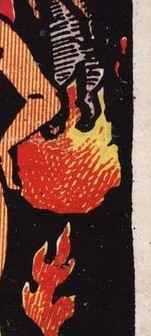
A count, a catastrophe, or the visible part of something that has no body. Note whether the flames are arranged in a number, breaking something, or standing where a figure would be.
In plain words A torch held upside down, so the flame burns downward. A torch is usually held up to give light; turned over, its light goes to the ground. Waite records the inversion and does not gloss it, but every other sign on the card is a reversal too, and this one belongs with them.
Waite, 1911 “In the left hand there is a great flaming torch, inverted towards the earth.”
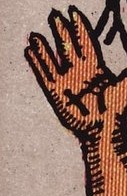
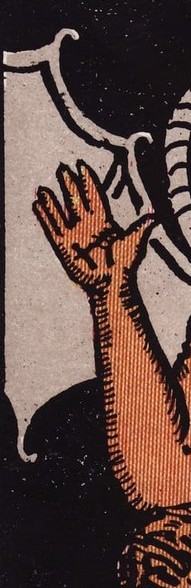
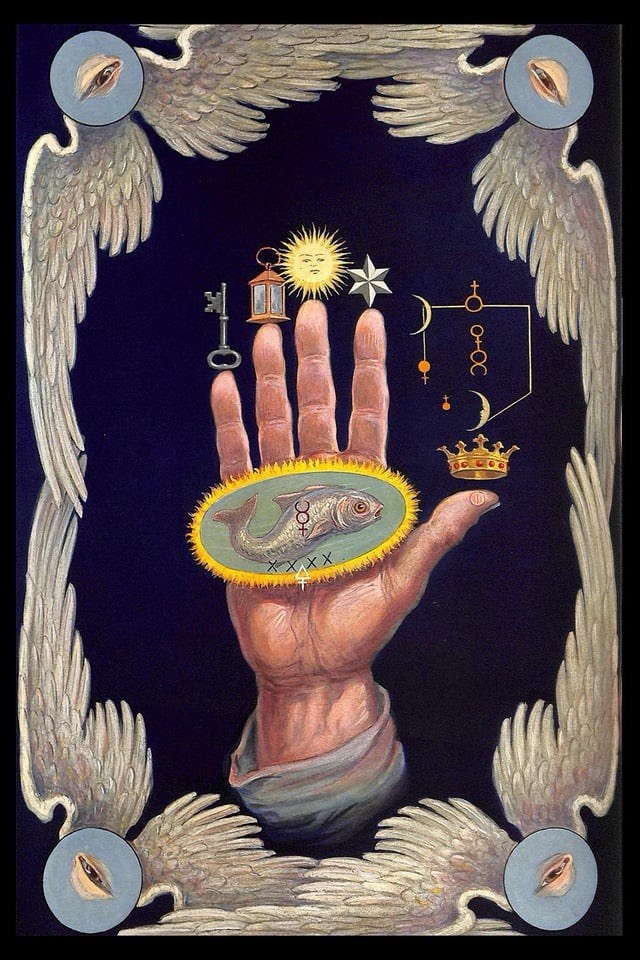
The hand as a sign in itself: what it holds, where it points, which fingers are raised. On the Hand of the Mysteries every finger carries a sign of its own.
In plain words The hand is up and open, all five fingers spread, and Waite says it is the Hierophant’s blessing turned inside out. The Hierophant raises two fingers and folds two, saying that part of the teaching is spoken and part kept; the Devil shows everything and blesses nothing.
Waite, 1911 “The right hand is upraised and extended, being the reverse of that benediction which is given by the Hierophant in the fifth card.”
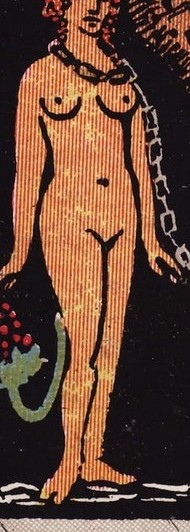
A rank rather than a person. Read the robe, the throne and what comes out of the mouth before you read the face.
In plain words The couple from the Lovers, after. They have grown horns and tails, the woman’s tail ending in grapes and the man’s in flame, and they are chained by the neck to the block the devil squats on. Waite reads the chains as the hold of material life, and adds two things: the faces are still human, and the one above them will not be their master for ever.
Waite, 1911 “There is a ring in front of the altar, from which two chains are carried to the necks of two figures, male and female. These are analogous with those of the fifth card, as if Adam and Eve after the Fall. Hereof is the chain and fatality of the material life.”
Waite, 1911 “The figures are tailed, to signify the animal nature, but there is human intelligence in the faces, and he who is exalted above them is not to be their master for ever. Even now, he is also a bondsman, sustained by the evil that is in him and blind to the liberty of service.”
Also carrying the Demon and the Monster
23 works carry it. The 6 where it is the central motif are here. The symbol.
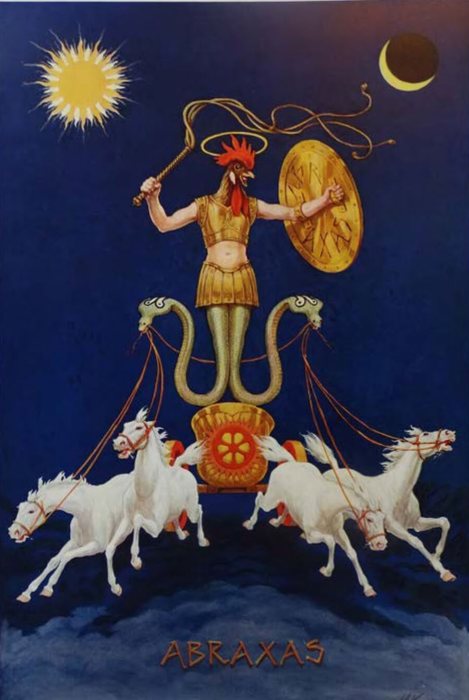 Abraxas, a Gnostic Pantheos
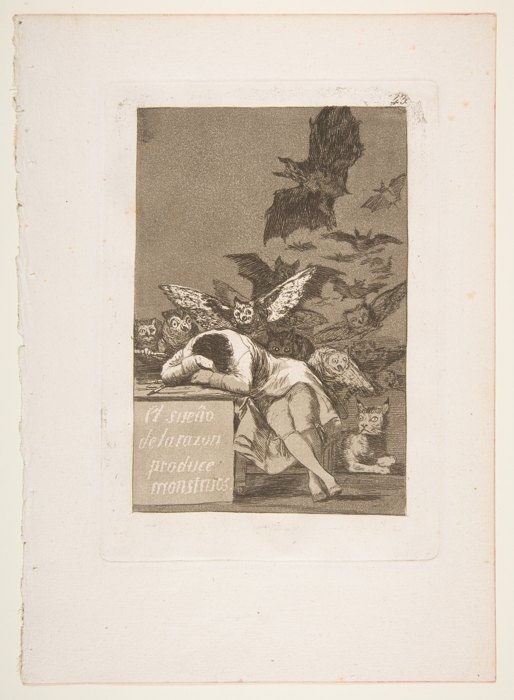 The Sleep of Reason Produces Monsters
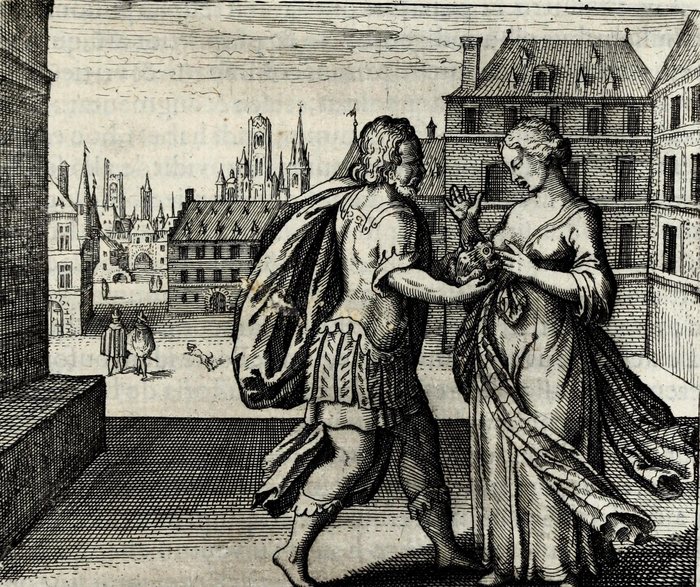 Appone mulieri super mammas bufonem, ut ablactet eum, & moriatur mulier, sitque bufo grossus de lacte
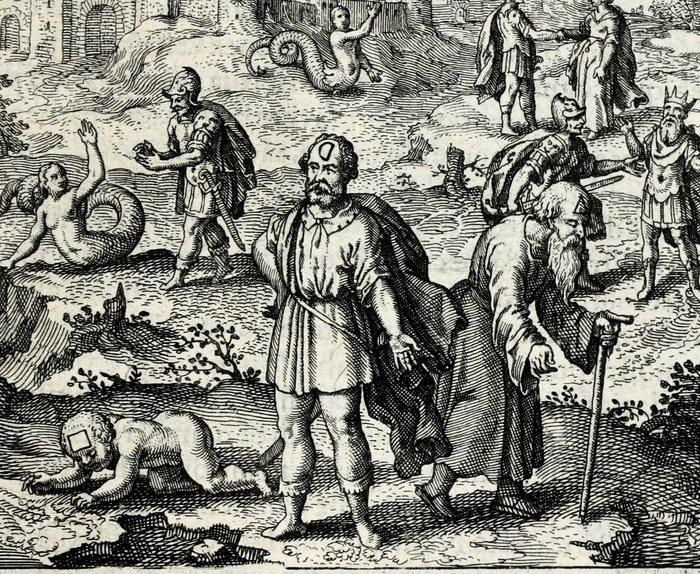 Oedypus Sphynge superata & trucidato Lajo patre matrem ducit in uxorem
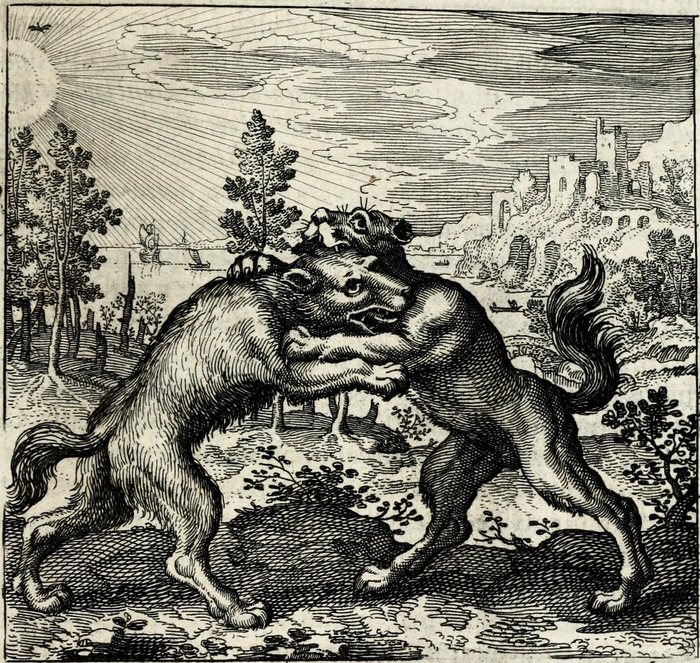 Lupus ab Oriente & Canis ab Occidente venientes se invicem momorderunt
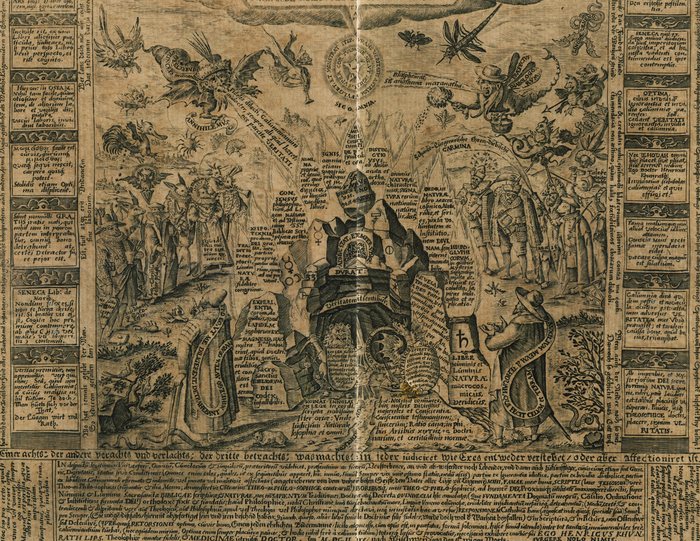 Against the slanderers, by right of retort
Where the detail is the subject
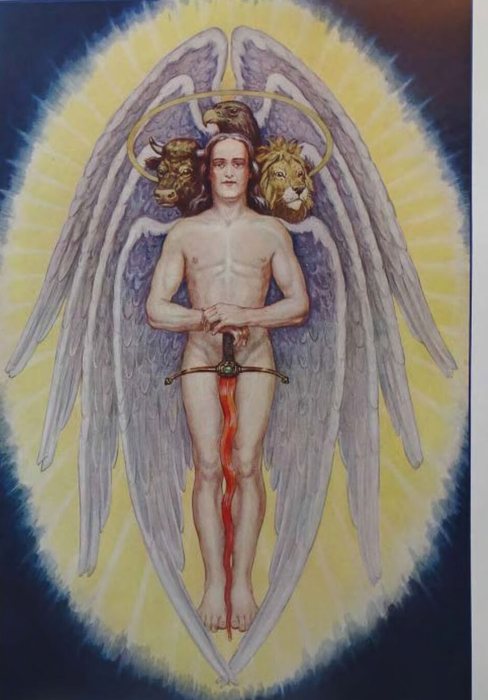
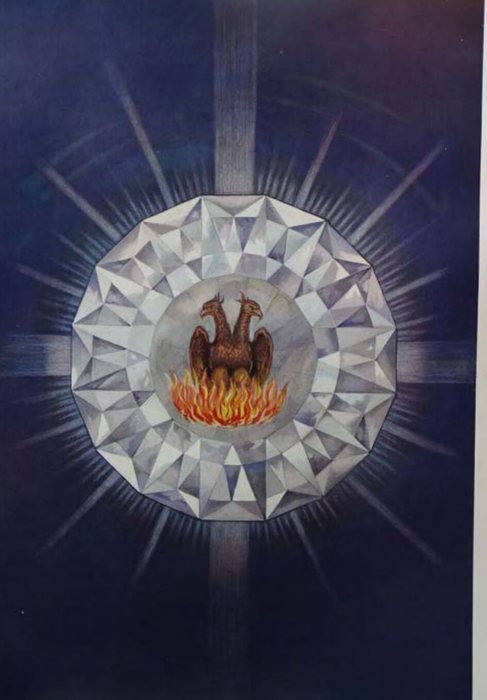
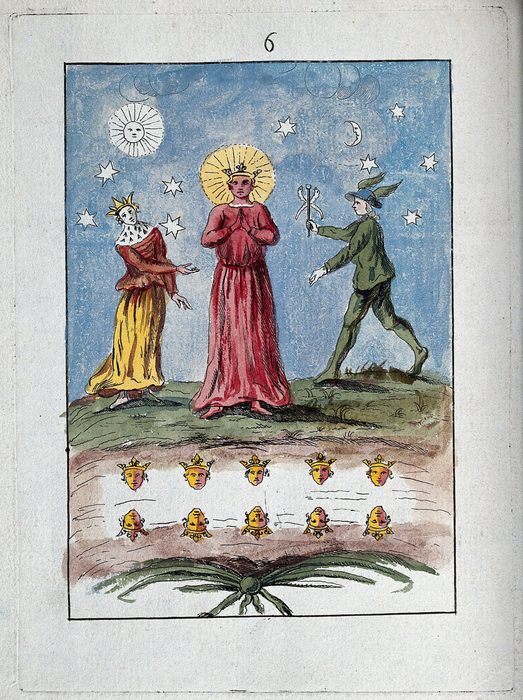
the Angel and the Wing · the Pentagram · Fire · the Hand · the King and the Queen
Each of these is in the picture without being what it is about. Below, one work that is about each.
In the same series
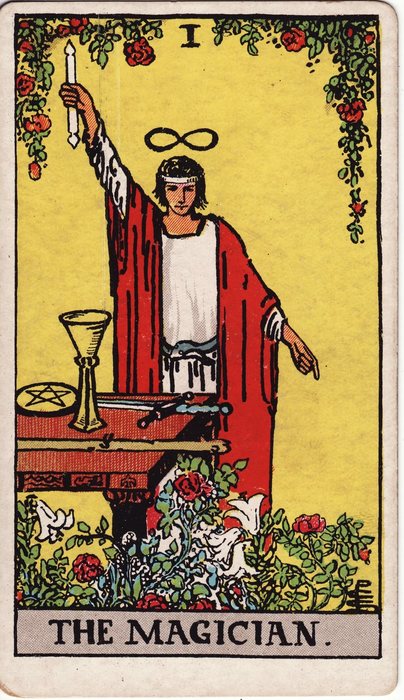
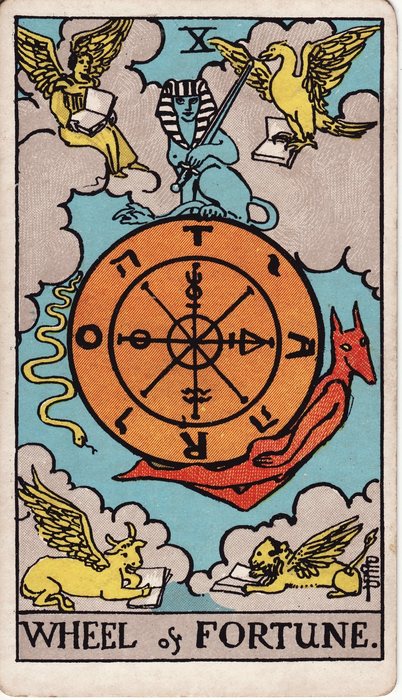
Record
One symbol a week, decoded.
This picture is free at full size from its source, linked above. What an address gets is the Sunday letter: one picture, one symbol marked on it, what it meant and who said so, and the master files of the decoded plates as they are verified. Leave any time.
Free, one letter a week, unsubscribe in one click. How the address is used.
Scroll or pinch to zoom · drag to move · double-tap for 1:1 · 795 by 1400 pixel web copy; the source file is linked under Record