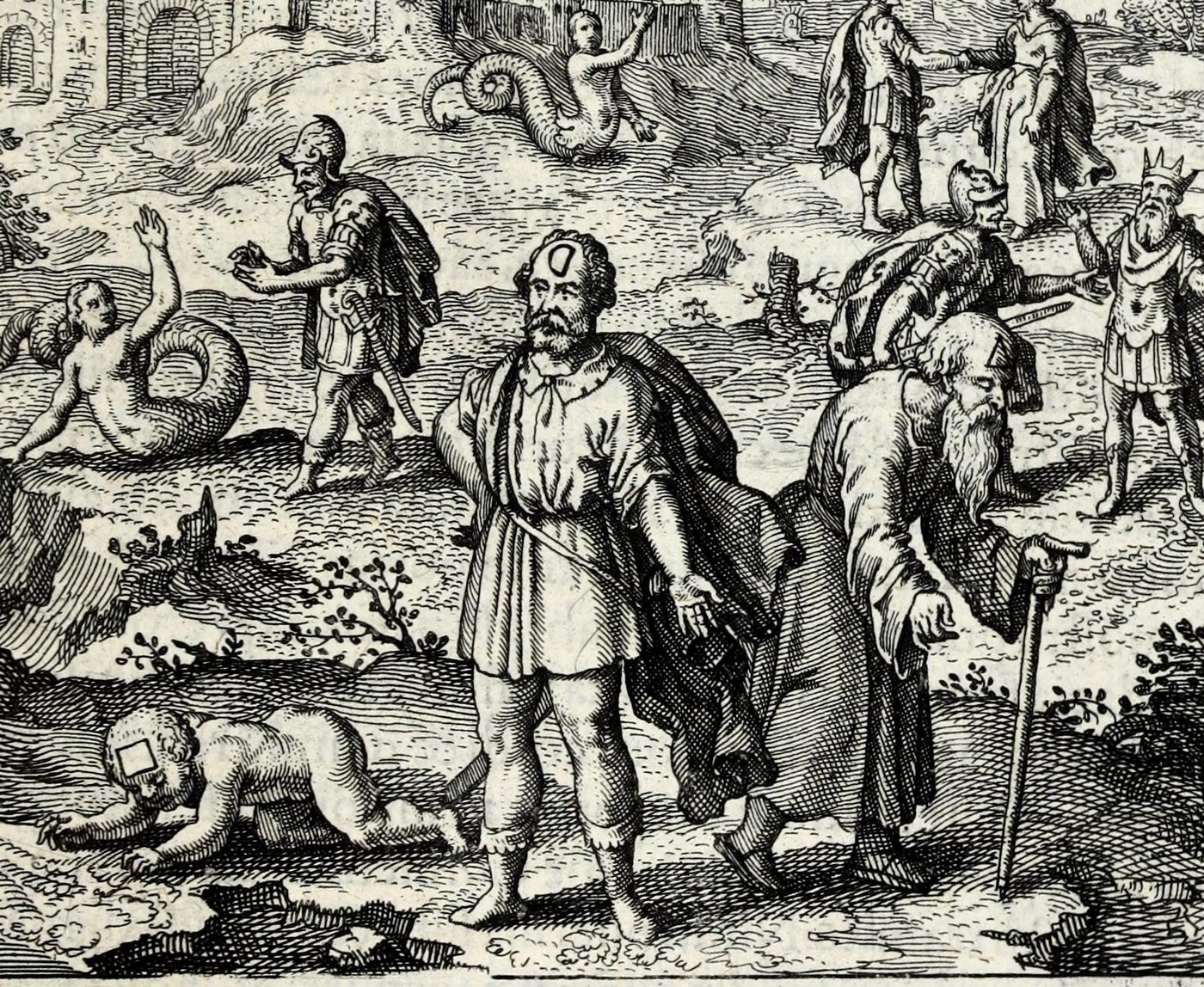
Oedypus Sphynge superata & trucidato Lajo patre matrem ducit in uxorem
The Demon and the Monster as the central motif, with Death and the Skull in a secondary part. From Atalanta Fugiens.
What is happening
Michael Maier, 1618 “Oedypus Sphynge superata & trucidato Lajo patre matrem ducit in uxorem.”
Symbolica, 2026 Maier’s Latin, put into English here: Oedipus, the Sphinx beaten and Laius his father killed, takes his mother to wife.
Michael Maier, 1618 “Sphyngem aenigmatico Thebis sermone timendam
Oedypus ad propriam torserat arte necem:
Quaesitum est, cui mane pedes sint bis duo, luce
Sed media bini, tres, ubi vesper adest.
Victor abhinc Lajum nolentem cedere caedit,
Ducit & uxorem quae sibi mater erat.”
Symbolica, 2026 Maier’s epigram, put into English here: The Sphinx, to be feared at Thebes for her riddling speech, Oedipus turned by his skill to her own destruction. The question was: who has four feet in the morning, two at midday, and three when evening comes? Victorious from there, he kills Laius, who would not give way, and marries the wife who was his mother.
Key · 2 motifs
Tap a motif on the picture, or a line below. Its note opens under the line, with the reading its author gave it.
- Primary motif
- Secondary motifs · 1
The picture
The three ages of the riddle in the foreground, the infant on all fours, the man on two feet and the old man with his stick; the Sphinx with her serpent tail at the left; Oedipus striking down the crowned Laius above, and the marriage at the top. By eye
The reading
The picture read whole, in the archive's words, from the sources quoted on the marks. Read on, and the picture follows: the motif under discussion keeps its colour.
‘Oedypus Sphynge superata & trucidato Lajo patre matrem ducit in uxorem’: Oedipus, the Sphinx beaten and his father Laius killed, takes his mother to wife. Merian crowded the whole story onto one plate and put the riddle in front: a baby crawling, a man standing, an old man on a stick.
‘Sphyngem aenigmatico Thebis sermone timendam’, the Sphinx, to be feared at Thebes for her riddling speech, ‘Oedypus ad propriam torserat arte necem’, Oedipus turned by his skill to her own destruction. The riddle is quoted: ‘Quaesitum est, cui mane pedes sint bis duo, luce / Sed media bini, tres, ubi vesper adest’, who has four feet in the morning, two at midday, and three when evening comes. The three figures in the foreground are the answer walking about.
‘Victor abhinc Lajum nolentem cedere caedit’, victorious from there, he kills Laius, who would not give way, ‘Ducit & uxorem quae sibi mater erat’, and marries the wife who was his mother. Maier does not say in the epigram what the alchemists meant by it; the emblem is a riddle about a riddle, and the archive holds no text of his that solves it. What it does hold is the picture, in which understanding a monster, killing a king and marrying a queen are one sequence, which is the order of the work in the emblems before and after this one.
Decoded: every motif is marked, and each mark carries the reading its author gave it, quoted from the text, or says that it is observed on the picture and not read. The reading above is the archive's own, made from those sources and no others.
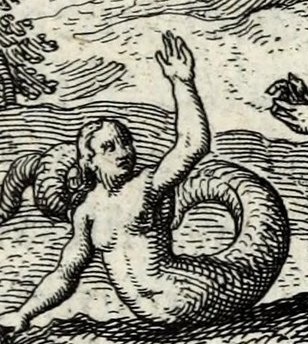
Almost always a composite and almost always subordinate. Note what it is made of and whether it is bound.
In plain words The Sphinx sits at the left, a woman with a serpent's tail, and the three figures in the foreground are her riddle answered: the infant on all fours, the man on two feet, the old man on three. Maier's Sphinx is the monster that talks in riddles, and Oedipus is the man who beat her by understanding one.
Michael Maier, 1618 “Sphyngem aenigmatico Thebis sermone timendam / Oedypus ad propriam torserat arte necem:”
Symbolica Maier's Latin, put into English here: The Sphinx, to be feared at Thebes for her riddling speech, Oedipus turned by his skill to her own destruction.
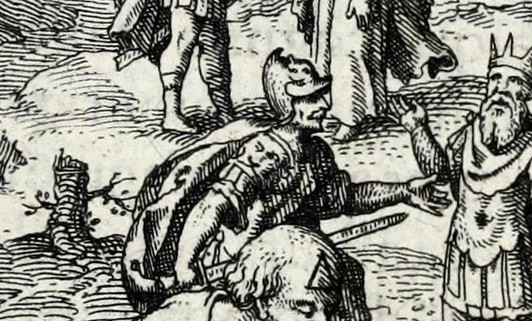
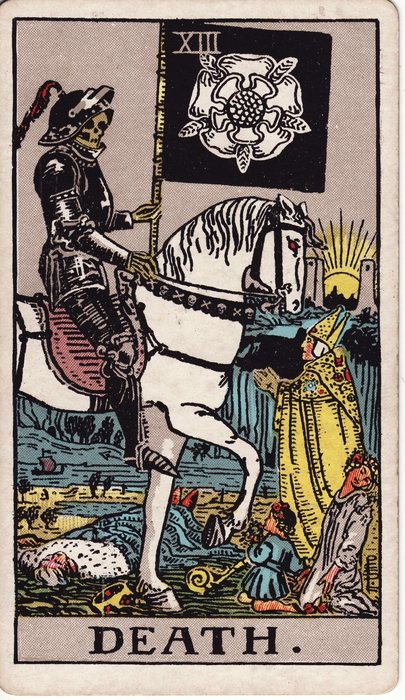
An office, not an ending. Note what Death is holding and who is being made to look at it.
In plain words At the top of the plate Oedipus kills a crowned man who would not give way to him, his father Laius, and beyond that takes his mother as his wife. The killing of the father is drawn small and far off, the way the story keeps it: something done without knowing.
Michael Maier, 1618 “Victor abhinc Lajum nolentem cedere caedit, / Ducit & uxorem quae sibi mater erat.”
Symbolica Maier's Latin, put into English here: Victorious from there, he kills Laius, who would not give way, and marries the wife who was his mother.
Also carrying the Demon and the Monster
23 works carry it. The 6 where it is the central motif are here. The symbol.
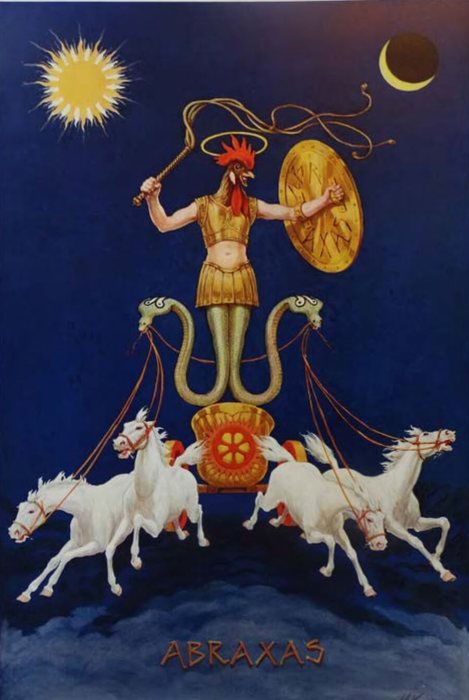
Where the detail is the subject
This is in the picture without being what it is about. Below, one work that is about it.
In the same series
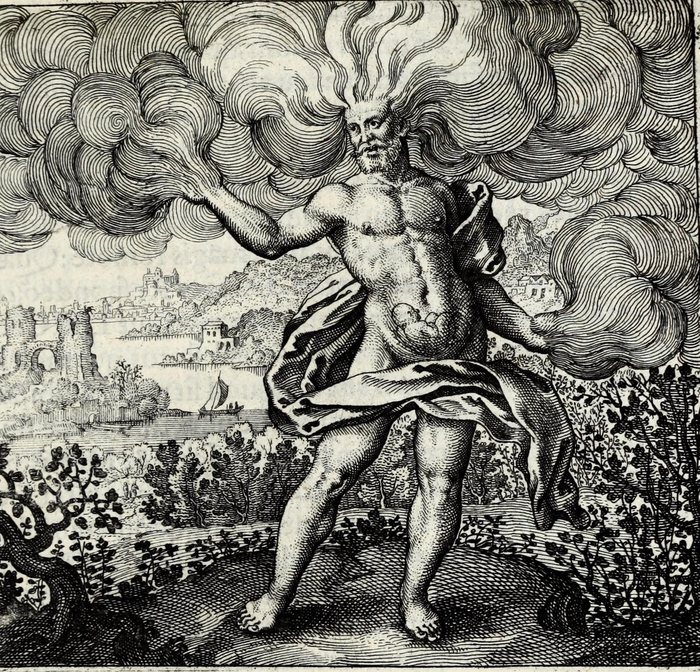 Portavit eum ventus in ventre suo
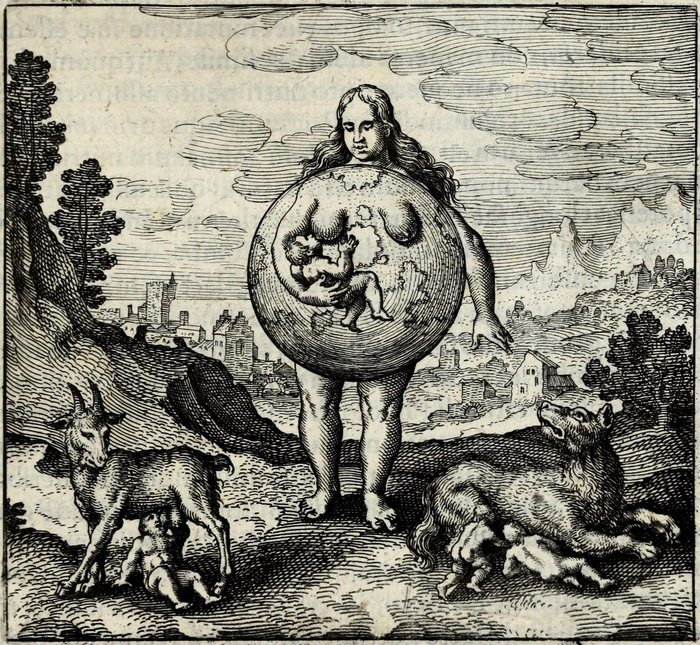 Nutrix ejus terra est
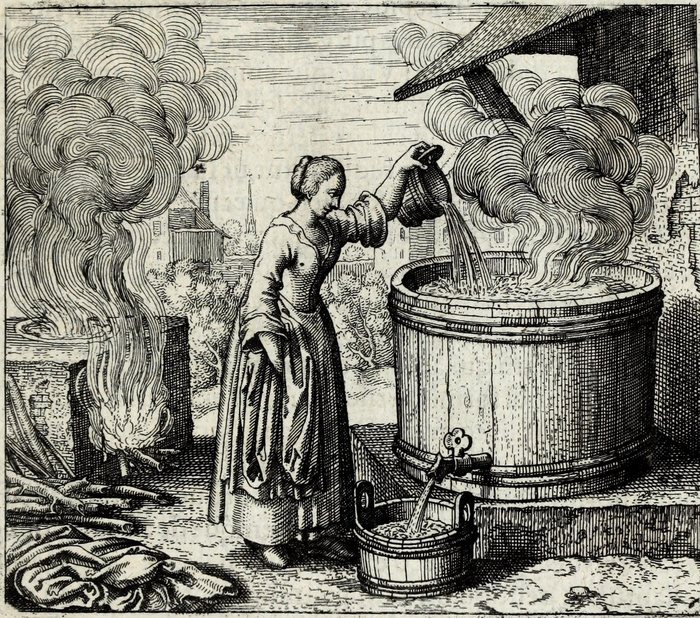 Vade ad mulierem lavantem pannos, tu fac similiter
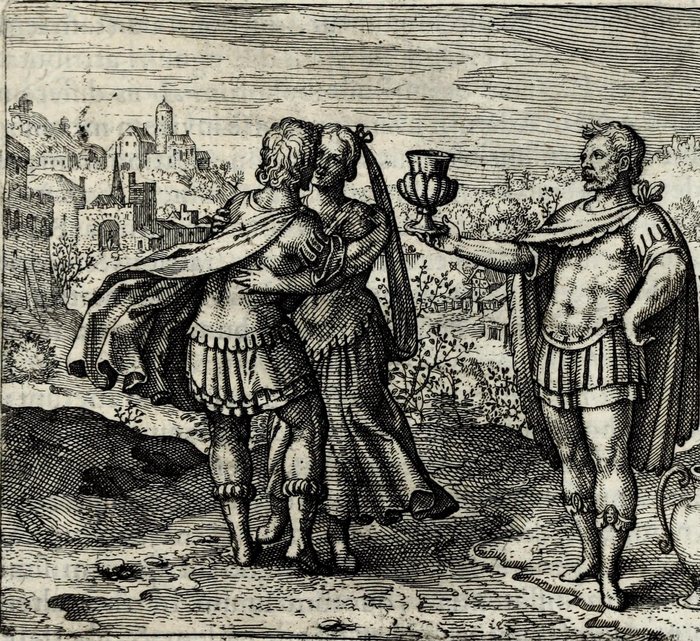 Conjunge fratrem cum sorore & propina illis poculum amoris
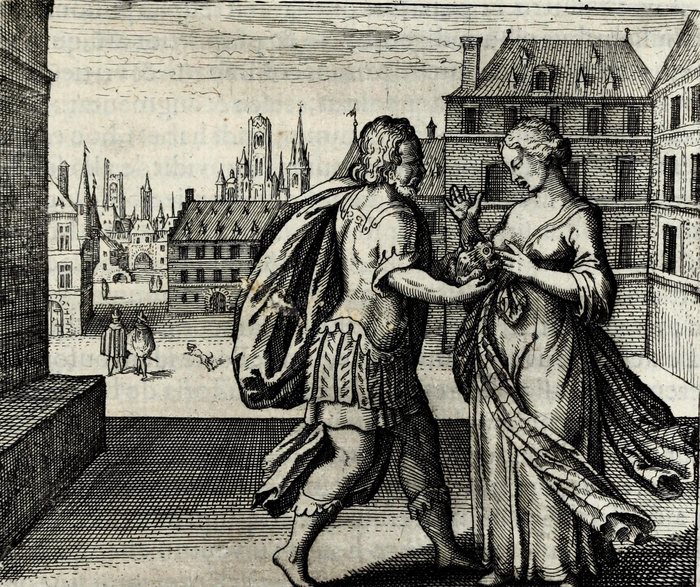 Appone mulieri super mammas bufonem, ut ablactet eum, & moriatur mulier, sitque bufo grossus de lacte
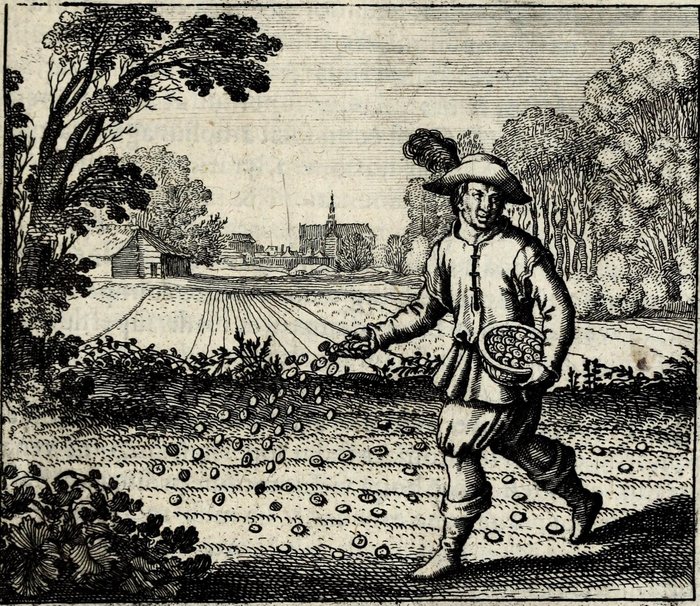 Seminate aurum vestrum in terram albam foliatam
Record
One symbol a week, decoded.
This picture is free at full size from its source, linked above. What an address gets is the Sunday letter: one picture, one symbol marked on it, what it meant and who said so, and the master files of the decoded plates as they are verified. Leave any time.
Free, one letter a week, unsubscribe in one click. How the address is used.
Scroll or pinch to zoom · drag to move · double-tap for 1:1 · 1400 by 1148 pixel web copy; the source file is linked under Record