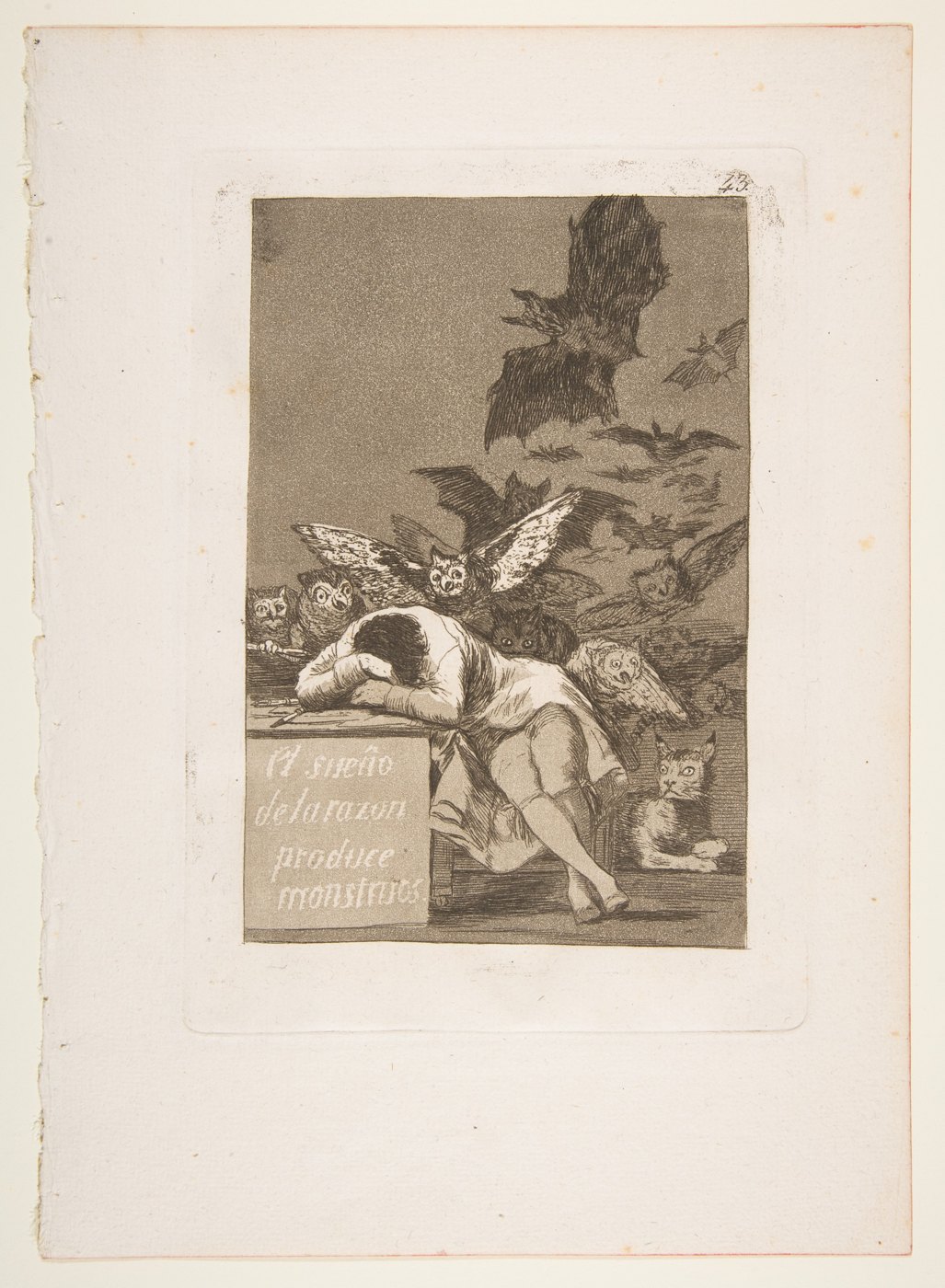
The Sleep of Reason Produces Monsters
The Demon and the Monster as the central motif, with the Angel and the Wing, and the Bird in a secondary part. From Los Caprichos.
What is happening
the manuscript commentary, in Lefort's French, 1877 “La fantaisie, sans la raison, produit des monstruosités; unies, elles enfantent les vrais artistes et créent des merveilles”
Symbolica Lefort's French, put into English: fancy without reason produces monstrosities; joined together, the two bring forth true artists and create marvels. The Spanish is lost. Yriarte printed a different French of the same line in 1867, closer to imagination without reason invents absurd monsters, but united with reason she is the mother of the arts and produces marvels. Two translators, one missing original, and the archive says so rather than choosing.
Key · 3 motifs
Tap a motif on the picture, or a line below. Its note opens under the line, with the reading its author gave it.
- Primary motif
- Secondary motifs · 1
The picture
A man sleeps at his writing desk while owls and bats crowd out of the dark behind him; one owl holds a crayon out to his hand, and a lynx lies awake at the right. The title is written on the side of the desk. By eye
The reading
The picture read whole, in the archive's words, from the sources quoted on the marks. Read on, and the picture follows: the motif under discussion keeps its colour.
The title is on the print, written on the side of the desk: El sueño de la razon produce monstruos. Sueño is both sleep and dream in Spanish, and the sentence means the sleep of reason produces monsters and the dream of reason produces monsters at once; English has to choose, and the Met chooses sleep. A man in breeches and a coat has fallen forward onto the desk with his head on his arms. Out of the dark behind him come bats, high up, and owls, low down, one of them at his shoulder with a crayon in its claws. At the right a lynx lies on the floor, awake, its eyes open and turned on us.
The monsters are the creatures of night. Calvert's catalogue of 1908 describes the plate in a sentence: bats and owls fly round a sleeping man, and place a pencil in his hand wherewith to reproduce his vision. The bats are at the top, black against the grey, and the owls crowd in lower, one with its wings fully open over the sleeper. None of them is a devil. They are ordinary night animals, drawn as if the dark were full of them, and that is Goya's point: the monsters are not supernatural, they are what is there when the light of reason goes out.
The owl at his elbow is the one that acts. It holds a crayon out towards the sleeper's hand, and Lefort, cataloguing the Caprices in 1877, read the gesture as an invitation to the artist to draw his dreams. The owl of Minerva is wisdom's bird; here it is the monsters' clerk, offering the artist the means to record them. This is the forty-third of the eighty Caprichos, and Goya first drew this design as the frontispiece for the whole set, with himself as the sleeper. The published frontispiece is a self-portrait awake; this one is the artist asleep and dreaming the book.
A manuscript commentary circulated with the plates in Goya's lifetime and explains it, in Lefort's French, as fancy without reason producing monstrosities, while the two together bring forth true artists and create marvels. The Spanish original is lost, and another translator, Yriarte, gave a different French of the same line in 1867; the archive holds both and chooses neither. Either way the sentence turns the picture from a nightmare into a manifesto. The monsters are not the enemy of art. They are its raw material, and reason is what turns them into marvels. Goya, asleep, is doing his job.
The lynx is the last thing to notice and the archive leaves it unread, since neither catalogue explains it. It is awake when the man is not, it sees in the dark, and it looks at the viewer. Whether it is vigilance, or the part of the artist that never sleeps, or simply a cat, the print does not say.
Decoded: every motif is marked, and each mark carries the reading its author gave it, quoted from the text, or says that it is observed on the picture and not read. The reading above is the archive's own, made from those sources and no others.
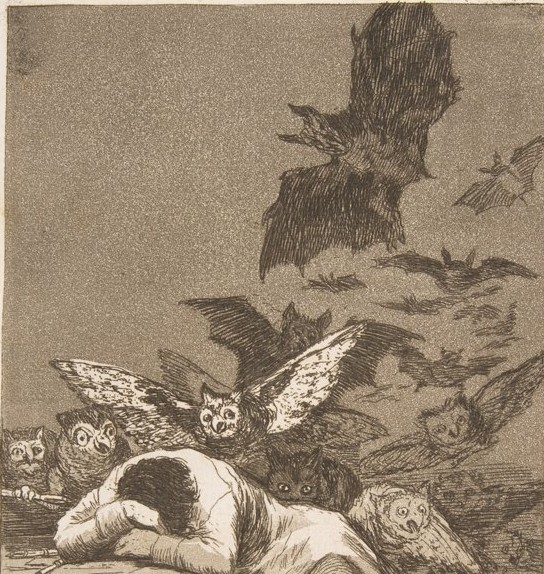
Almost always a composite and almost always subordinate. Note what it is made of and whether it is bound.
In plain words Bats and owls pour out of the dark behind a man asleep at his desk. Calvert, in 1908, says it plainly: bats and owls fly round a sleeping man, and place a pencil in his hand wherewith to reproduce his vision. They are the monsters of the title, the things reason lets in when it sleeps.
Calvert, 1908 “Bats and owls fly round a sleeping man, and place a pencil in his hand wherewith to reproduce his vision.”
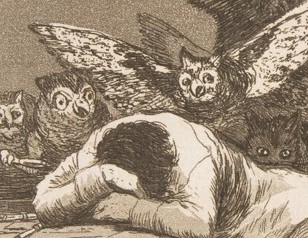
The mark of an errand rather than a nature. Note whether the wings are open, folded, or given to the figure by someone else.
In plain words The great owl at his elbow holds a crayon out to his hand. Lefort, in 1877, read the gesture as an invitation: one of these birds holds a crayon out to him, as though inviting the artist to draw his dreams. The monsters want to be drawn.
Lefort, 1877 “L'un de ces oiseaux lui présente un crayon, comme pour inviter l'artiste à reproduire ses rêves.”
Symbolica Lefort's French, put into English: one of these birds holds a crayon out to him, as though inviting the artist to draw his dreams.
Also carrying the Demon and the Monster
23 works carry it. The 6 where it is the central motif are here. The symbol.
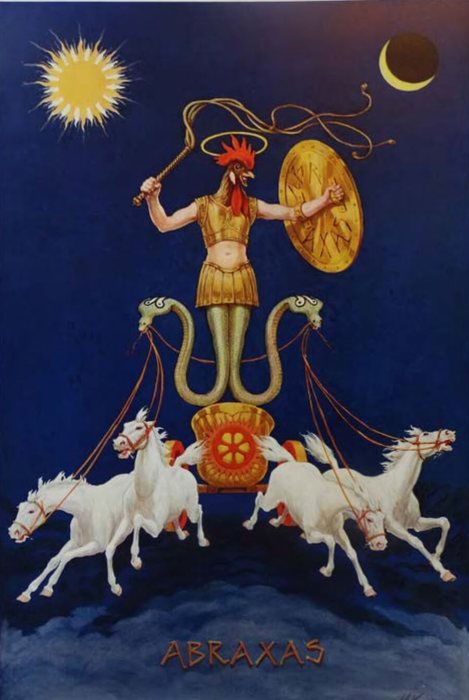 Abraxas, a Gnostic Pantheos
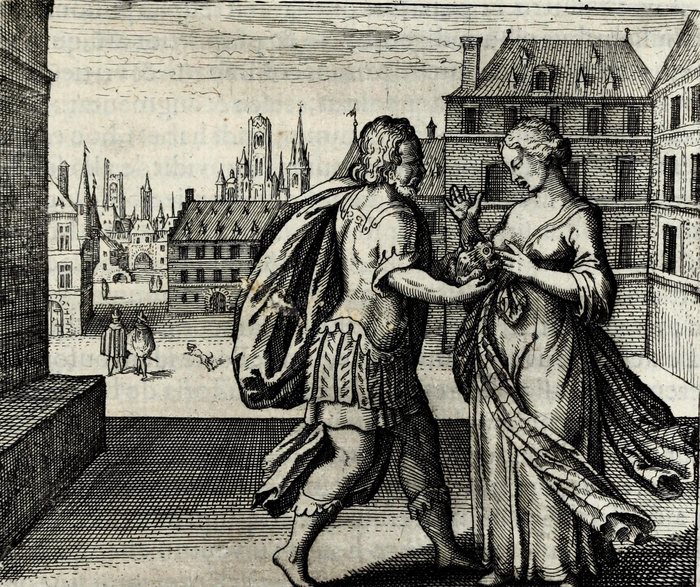 Appone mulieri super mammas bufonem, ut ablactet eum, & moriatur mulier, sitque bufo grossus de lacte
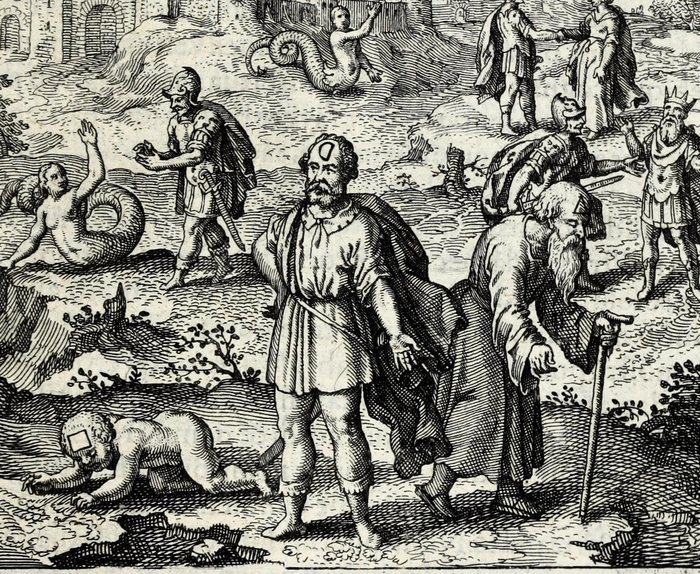 Oedypus Sphynge superata & trucidato Lajo patre matrem ducit in uxorem
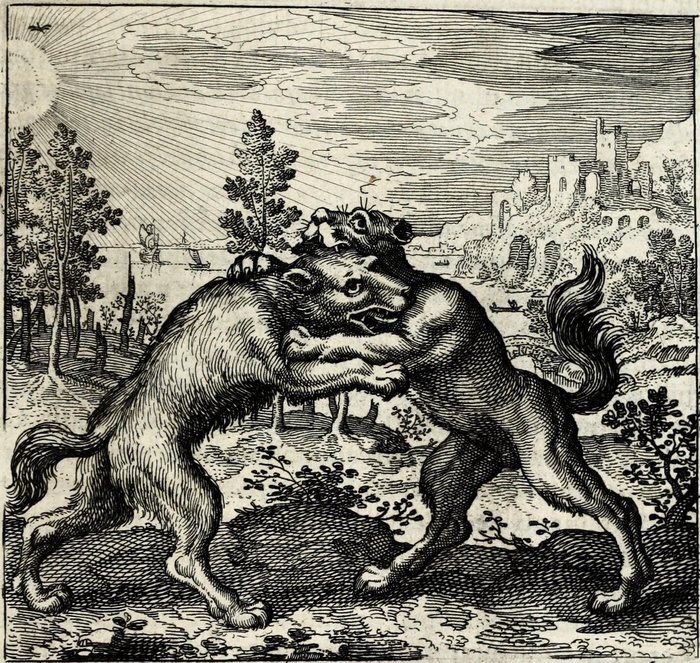 Lupus ab Oriente & Canis ab Occidente venientes se invicem momorderunt
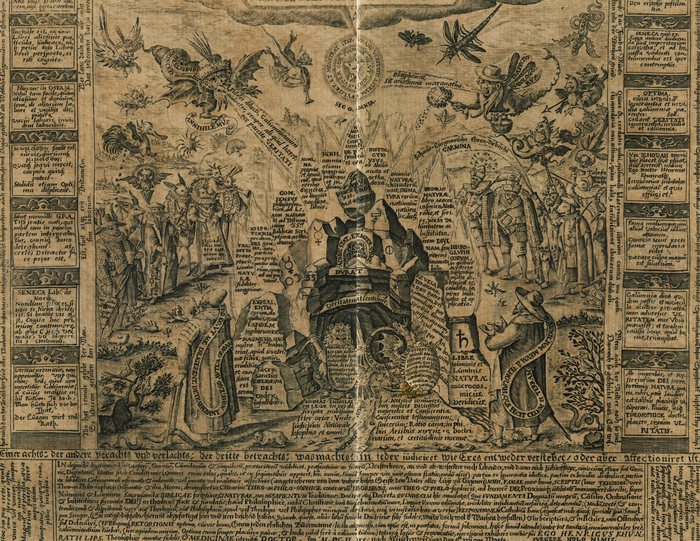 Against the slanderers, by right of retort
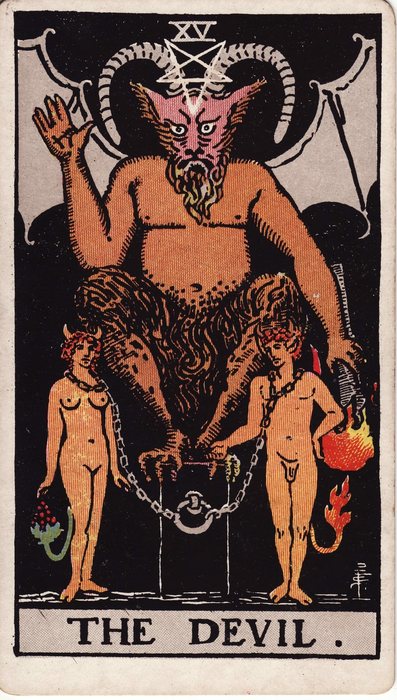 The Devil (XV)
Where the detail is the subject
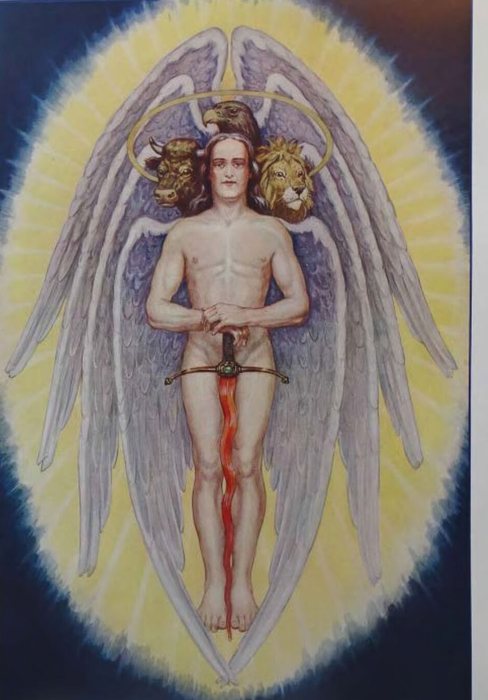
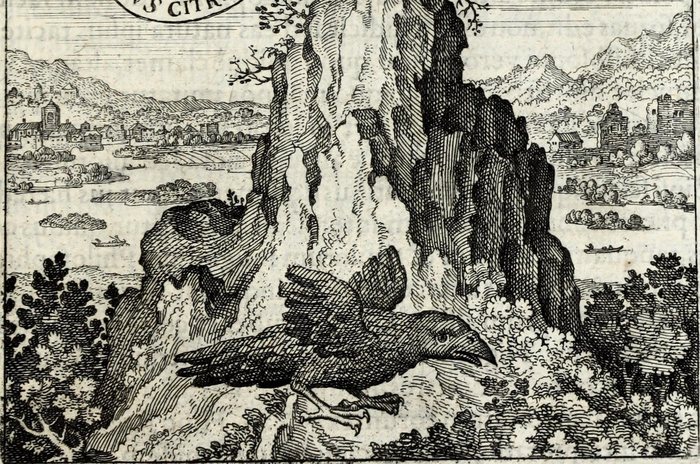
the Angel and the Wing · the Bird
Each of these is in the picture without being what it is about. Below, one work that is about each.
Record
One symbol a week, decoded.
This picture is free at full size from its source, linked above. What an address gets is the Sunday letter: one picture, one symbol marked on it, what it meant and who said so, and the master files of the decoded plates as they are verified. Leave any time.
Free, one letter a week, unsubscribe in one click. How the address is used.
Scroll or pinch to zoom · drag to move · double-tap for 1:1 · 1027 by 1400 pixel web copy; the source file is linked under Record