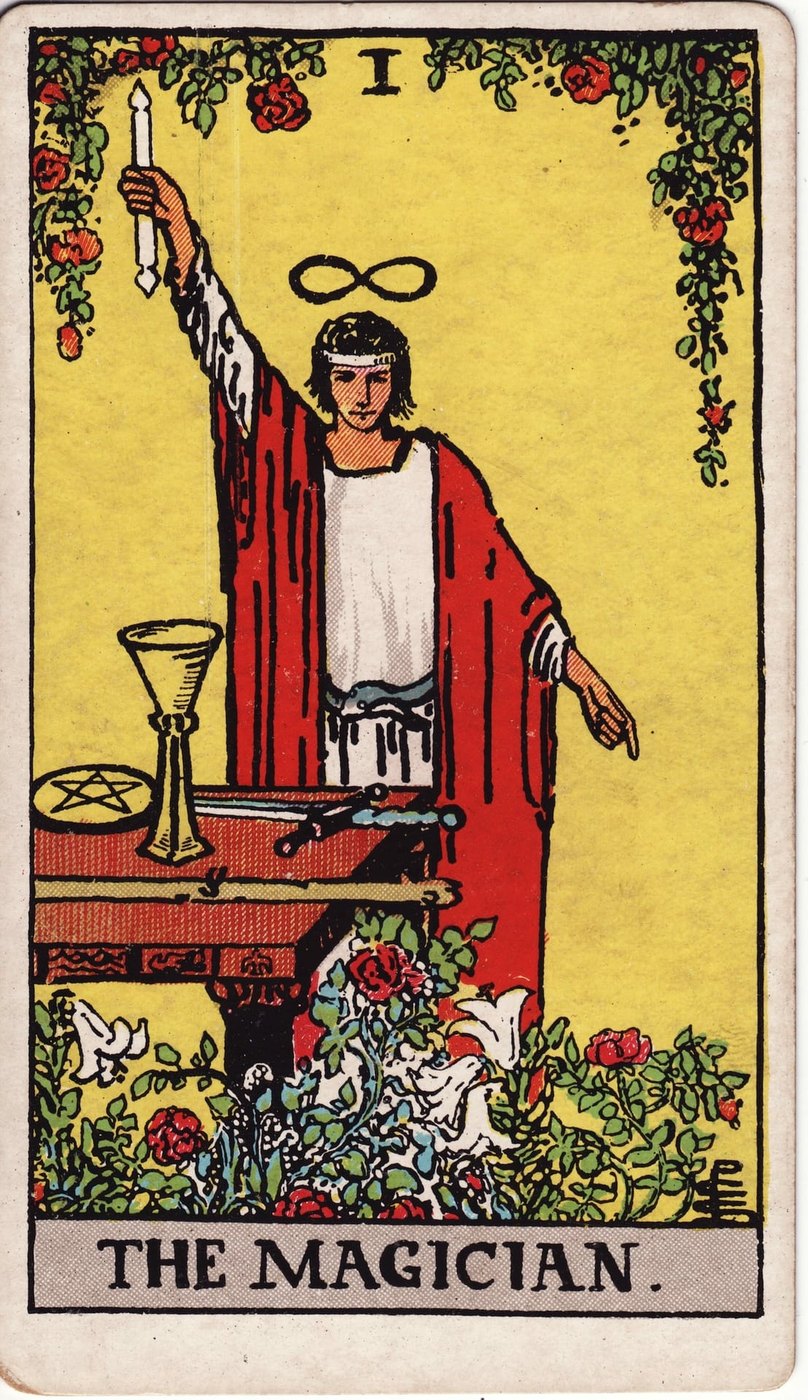
The Magician (I)
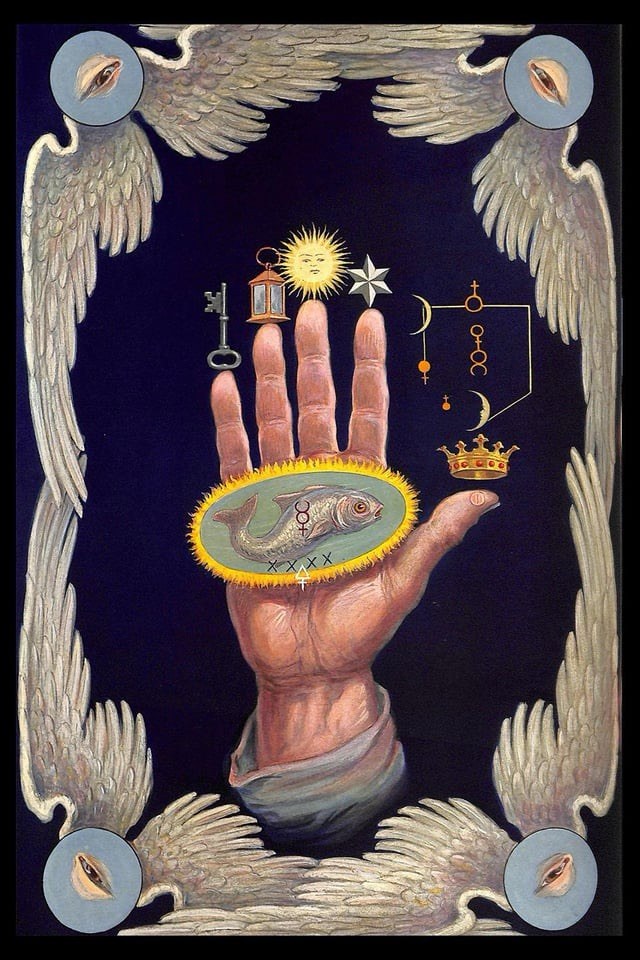
The Hand as the central motif, with the Serpent and the Dragon, and the Vessel in a secondary part. From The 1909 tarot.
What is happening
Waite, 1911 “A youthful figure in the robe of a magician, having the countenance of divine Apollo, with smile of confidence and shining eyes. Above his head is the mysterious sign of the Holy Spirit, the sign of life, like an endless cord, forming the figure 8 in a horizontal position.”
Waite, 1911 “This card signifies the divine motive in man, reflecting God, the will in the liberation of its union with that which is above. It is also the unity of individual being on all planes, and in a very high sense it is thought, in the fixation thereof.”
Key · 3 motifs
Tap a motif on the picture, or a line below. Its note opens under the line, with the reading its author gave it.
- Primary motif
- Secondary motifs · 2
The picture
A young figure in a white robe and red mantle stands at a table bearing a cup, a sword, a pentacle and a wand; the right hand raises a white wand, the left points to the ground; the lemniscate above the head, a serpent belt at the waist, roses and lilies around; the Hand as the central motif, the Serpent and the Vessel by eye. By eye
The reading
The picture read whole, in the archive's words, from the sources quoted on the marks. Read on, and the picture follows: the motif under discussion keeps its colour.
The French decks called this man Le Bateleur, a juggler working a stall, and the props on his table were his living. Waite kept the table and changed the man. What he asked Pamela Colman Smith for has the ‘countenance of divine Apollo, with smile of confidence and shining eyes’, and above the head a lemniscate that he reads as the sign of the Holy Spirit and of life, an endless cord.
Everything turns on what the hands do. The right holds a short white wand straight up; the left points at the ground. Waite calls the pair a dual sign ‘known in very high grades of the Instituted Mysteries’, and says it shews ‘the descent of grace, virtue and light, drawn from things above and derived to things below’. That is the Hermetic formula made into a posture. The man is not producing anything. He is a conduit, and the card is about what passes through him.
The table settles it. A cup, a sword, a pentacle and a wand lie there, one for each suit of the deck and behind them the four elements, and Waite's phrase for them is the coldest thing on the card: they ‘lie like counters before the adept, and he adapts them as he wills’. Counters, not treasures. The archive marks the cup because the cup is the vessel, but the sentence covers all four.
The belt is a serpent eating its tail, and Waite heads off the obvious gloss before anyone can offer it. Most people will call it eternity, he says, and here it means something narrower, ‘the eternity of attainment in the spirit’. Not time going round for ever, but a man who has arrived and stays.
Roses climb behind him and lilies stand at his feet, and Waite names them out of the Song of Songs, the flower of the field and the lily of the valleys, taken out of the wild and grown in a bed to show the culture of aspiration. The juggler's trick has turned into a rite. The sign over his head says the performer is not the one performing.
Decoded: every motif is marked, and each mark carries the reading its author gave it, quoted from the text, or says that it is observed on the picture and not read. The reading above is the archive's own, made from those sources and no others.
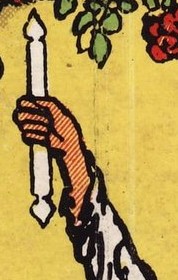
The hand as a sign in itself: what it holds, where it points, which fingers are raised. On the Hand of the Mysteries every finger carries a sign of its own.
In plain words One hand up with the wand, one hand pointing down: Waite says this double gesture is a sign known in the high grades of the orders he belonged to, and that it means light and power coming down from above to below. The magician is a conductor, not a source.
Waite, 1911 “In the Magician's right hand is a wand raised towards heaven, while the left hand is pointing to the earth. This dual sign is known in very high grades of the Instituted Mysteries; it shews the descent of grace, virtue and light, drawn from things above and derived to things below.”
Waite, 1911 “The suggestion throughout is therefore the possession and communication of the Powers and Gifts of the Spirit.”
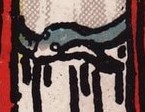
A single creature doing two opposite jobs. Note whether it is bound, killed, or eating itself.
In plain words The belt is a snake swallowing its own tail. Everyone takes that as eternity; Waite says here it means specifically the eternity of what is attained in the spirit, an achievement that does not wear out.
Waite, 1911 “About his waist is a serpent-cincture, the serpent appearing to devour its own tail. This is familiar to most as a conventional symbol of eternity, but here it indicates more especially the eternity of attainment in the spirit.”
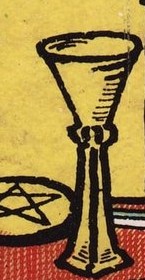
Never the subject. What is inside it is.
In plain words The cup on the table is one of four things laid out, cup, sword, pentacle and wand, the emblems of the four suits. Waite calls them the elements of natural life, lying like counters in front of the adept, who arranges them as he likes.
Waite, 1911 “On the table in front of the Magician are the symbols of the four Tarot suits, signifying the elements of natural life, which lie like counters before the adept, and he adapts them as he wills.”
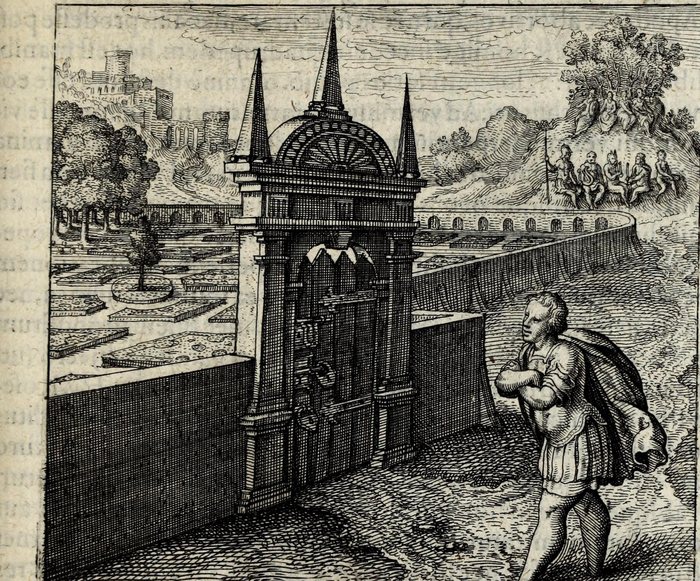
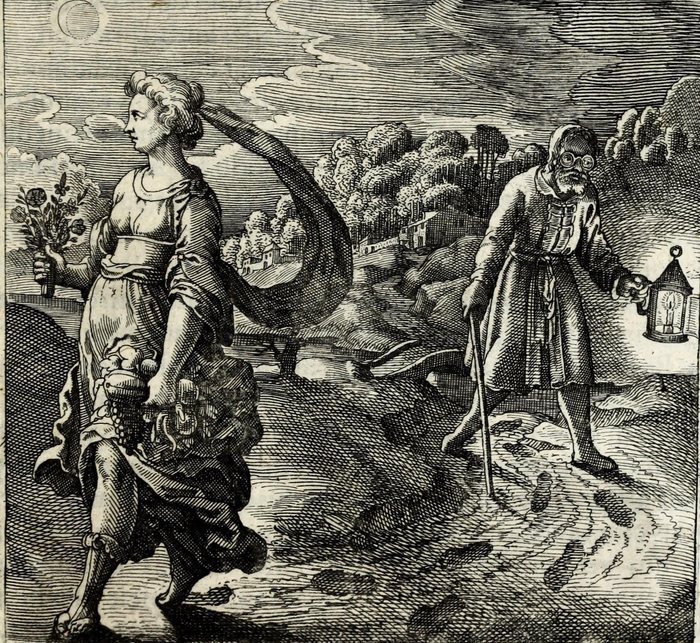
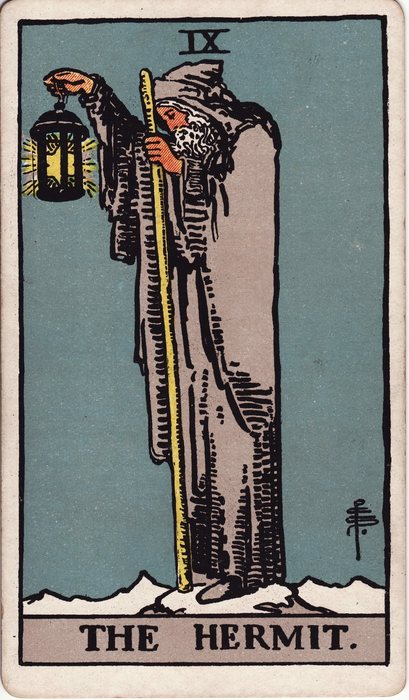
Also carrying the Hand
24 works carry it. The 4 where it is the central motif are here. The symbol.
Where the detail is the subject
the Serpent and the Dragon · the Vessel
Each of these is in the picture without being what it is about. Below, one work that is about each.
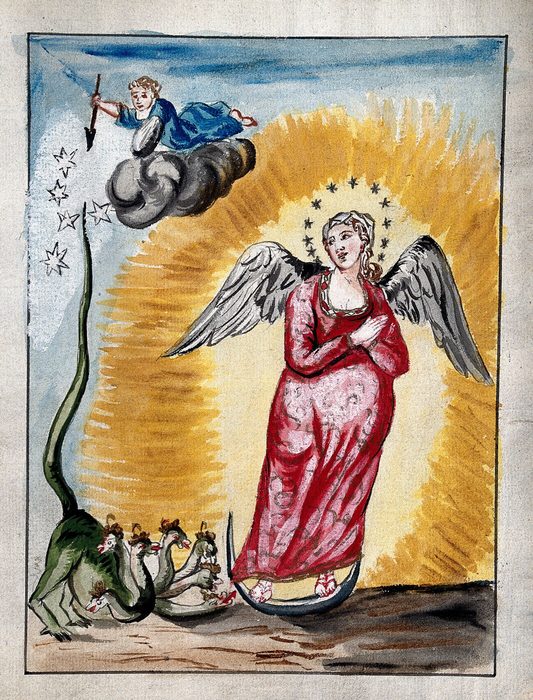
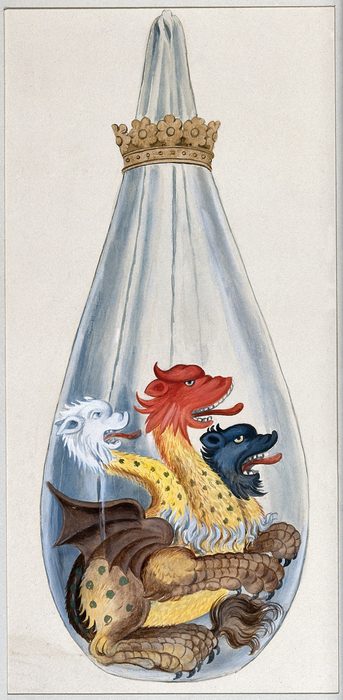
In the same series
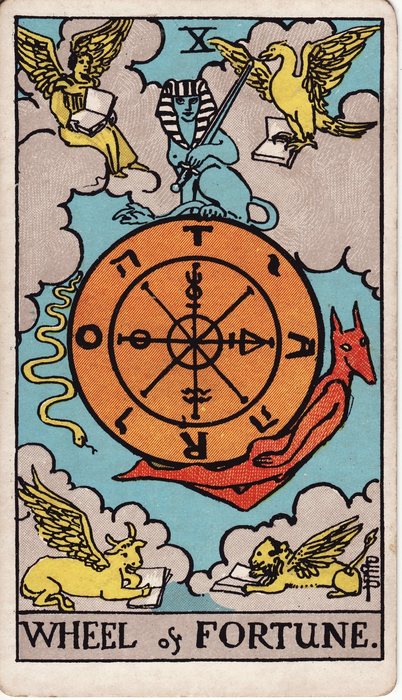
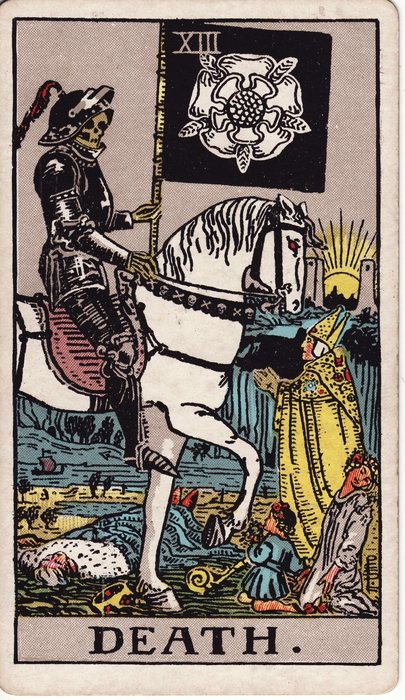
Record
One symbol a week, decoded.
This picture is free at full size from its source, linked above. What an address gets is the Sunday letter: one picture, one symbol marked on it, what it meant and who said so, and the master files of the decoded plates as they are verified. Leave any time.
Free, one letter a week, unsubscribe in one click. How the address is used.
Scroll or pinch to zoom · drag to move · double-tap for 1:1 · 808 by 1400 pixel web copy; the source file is linked under Record