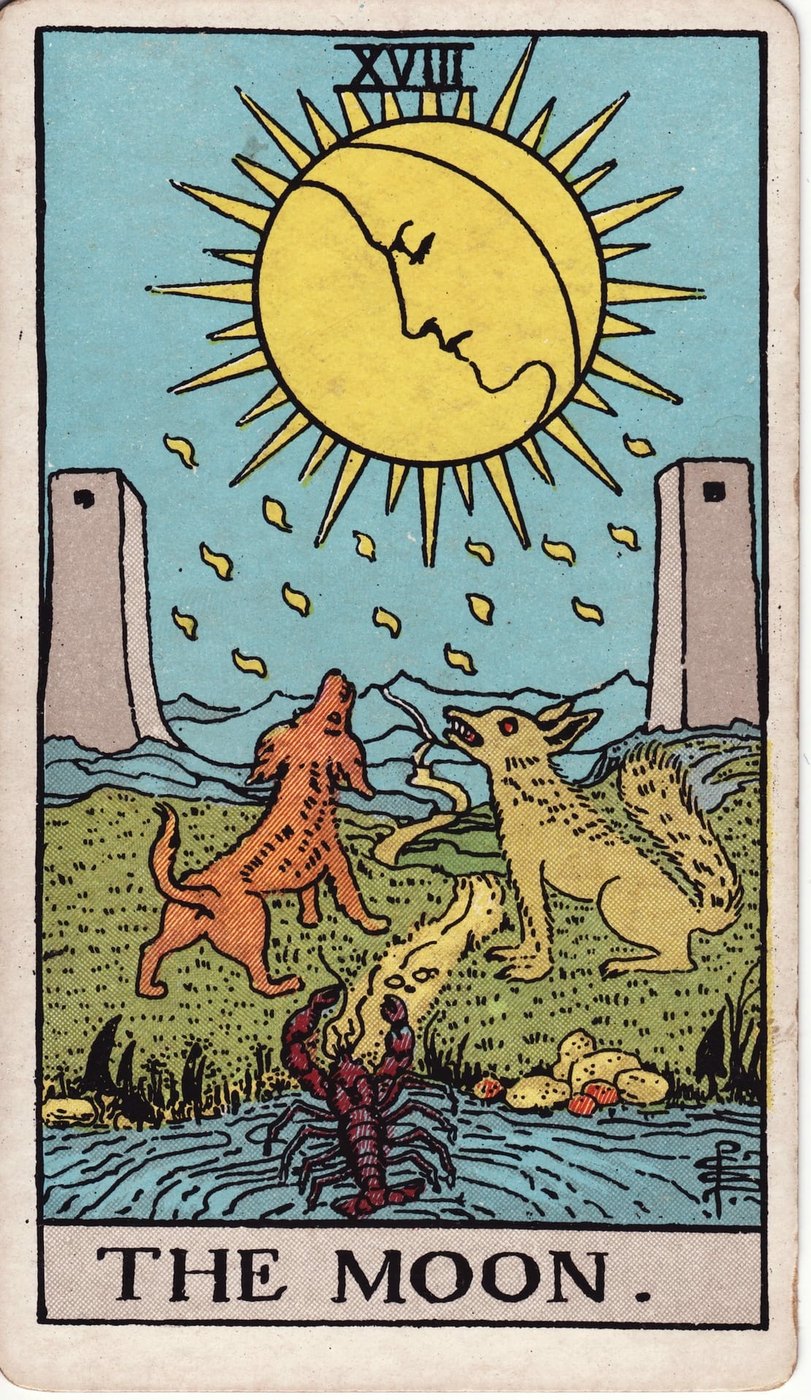
The Moon (XVIII)
The Sun and the Moon as the central motif, with the Water in a secondary part. From The 1909 tarot.
What is happening
Waite, 1911 “The card represents life of the imagination apart from life of the spirit. The path between the towers is the issue into the unknown.”
Waite, 1911 “The dog and wolf are the fears of the natural mind in the presence of that place of exit, when there is only reflected light to guide it.”
Key · 2 motifs
Tap a motif on the picture, or a line below. Its note opens under the line, with the reading its author gave it.
- Primary motif
- Secondary motifs · 1
The picture
A crescent moon with a face in profile set within a full disc, rays and falling drops; a path between two towers to the mountains; a dog and a wolf howling; a crayfish climbing from a pool; the Moon as the central motif. By eye
The reading
The picture read whole, in the archive's words, from the sources quoted on the marks. Read on, and the picture follows: the motif under discussion keeps its colour.
Waite starts by correcting the other decks. The moon here is increasing, he says, on what is called the side of mercy, to the right of the observer, and it carries sixteen chief rays and sixteen secondary ones. Then he says in six words what the card is about: ‘life of the imagination apart from life of the spirit’. Everything under the moon is that life, and everything under it is lit by it.
The light is the argument. Waite calls it a reflection, beyond which lies the unknown mystery it cannot shew forth, and the face Smith set inside the crescent he calls ‘the face of the mind’, turning a calm gaze on the unrest below. The drops falling out of it are the dew of thought. So the picture is a mind at night: what it sees is lit second hand, and the light shows it the ground without ever showing where the light comes from.
Below, a path runs between two towers and out to the mountains, which Waite calls the issue into the unknown. The dog and the wolf howling at it are ‘the fears of the natural mind in the presence of that place of exit, when there is only reflected light to guide it’. Two animals, one tame and one not, afraid of the same door.
The crayfish is the lowest thing in the picture and Waite treats it as such: ‘that which comes up out of the deeps, the nameless and hideous tendency which is lower than the savage beast’. It strives to attain manifestation by crawling out of the water onto the land, and as a rule, he says, it sinks back where it came from. Smith catches it half out.
Put together it is a night walk. A mind looks down on its own animal fears and on the thing underneath them that it will not name, and the only light to walk by is borrowed. Waite ends on the calm and not on the fear, quoting the gospel at the storm, Peace, be still, and hoping for a calm upon the animal nature while the abyss beneath ceases to give up a form. Smith gives the hope a shape. The path does go through, between the towers, and out to the mountains.
Decoded: every motif is marked, and each mark carries the reading its author gave it, quoted from the text, or says that it is observed on the picture and not read. The reading above is the archive's own, made from those sources and no others.
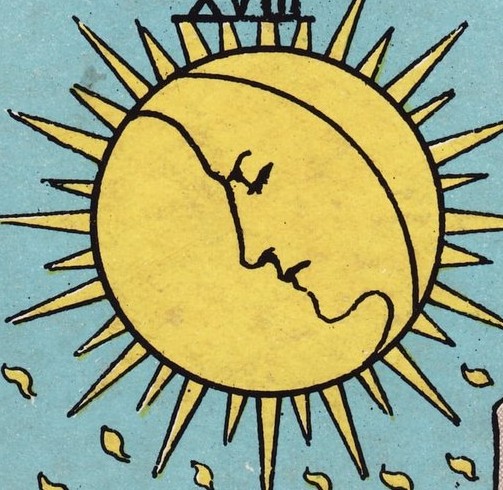
The borrowed light, the mother of the work, and the crescent a woman stands on. The one body here that every source explains against another.
In plain words Smith drew a crescent with a face, set inside the full disc, with drops falling from it. Waite's point about it is which way it grows: to the right of the viewer, which he calls the side of mercy, and he counts the rays, sixteen and sixteen. For him the moon is reflected light, thought that arrives second-hand, and the falling drops are ‘the dew of thought’.
Waite, 1911 “The distinction between this card and some of the conventional types is that the moon is increasing on what is called the side of mercy, to the right of the observer. It has sixteen chief and sixteen secondary rays.”
Waite, 1911 “The intellectual light is a reflection and beyond it is the unknown mystery which it cannot shew forth.”
Waite, 1911 “The face of the mind directs a calm gaze upon the unrest below; the dew of thought falls; the message is: Peace, be still; and it may be that there shall come a calm upon the animal nature, while the abyss beneath shall cease from giving up a form.”
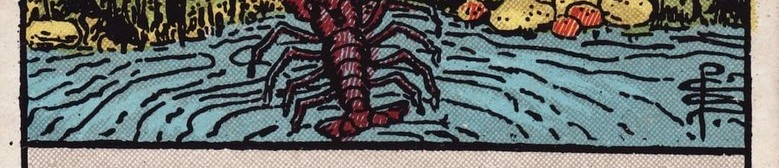
Where a thing is taken apart rather than destroyed. Note whether the figure is in the water, on it, or pouring it.
In plain words The pool is the lowest thing in the picture and the crayfish is what climbs out of it. Waite reads the two animals on the bank as the mind's ordinary fears and the crayfish as something beneath them, a tendency he will not name, which keeps trying to come up onto land and mostly slides back. The water is where it lives.
Waite, 1911 “It illuminates our animal nature, types of which are represented below--the dog, the wolf and that which comes up out of the deeps, the nameless and hideous tendency which is lower than the savage beast.”
Waite, 1911 “It strives to attain manifestation, symbolized by crawling from the abyss of water to the land, but as a rule it sinks back whence it came.”
Also carrying the Sun and the Moon
59 works carry it. The 6 where it is the central motif are here. The symbol.
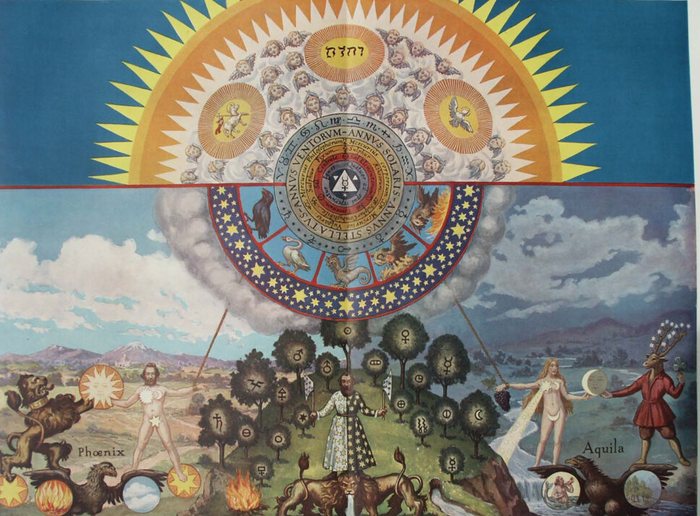
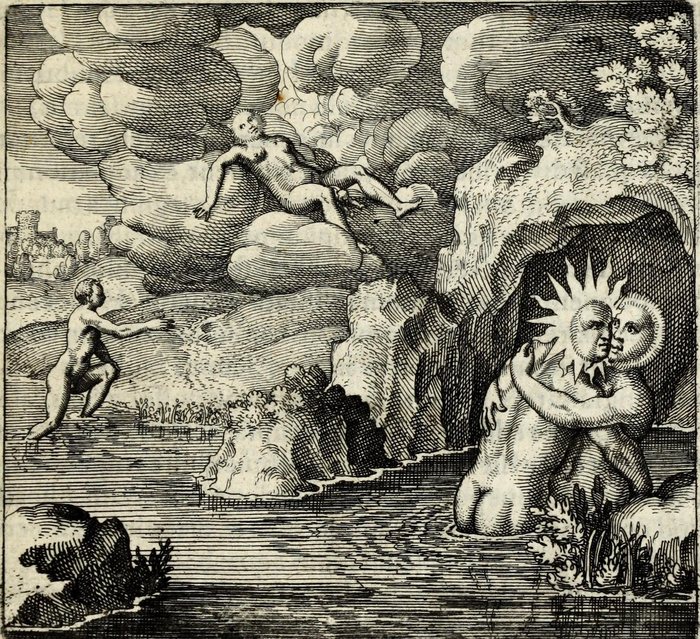
Where the detail is the subject
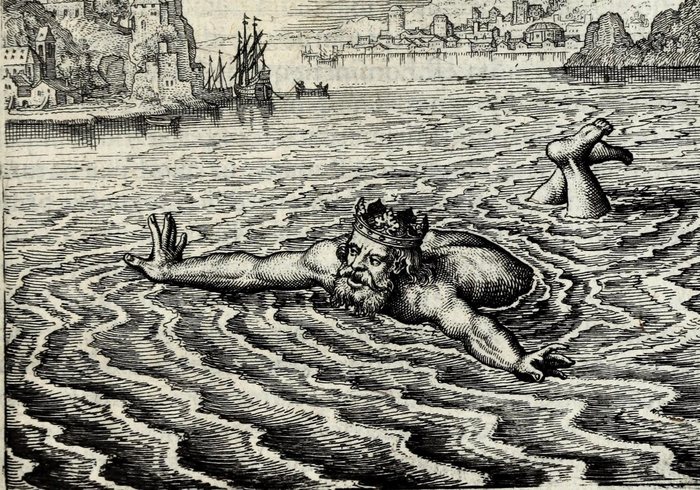
This is in the picture without being what it is about. Below, one work that is about it.
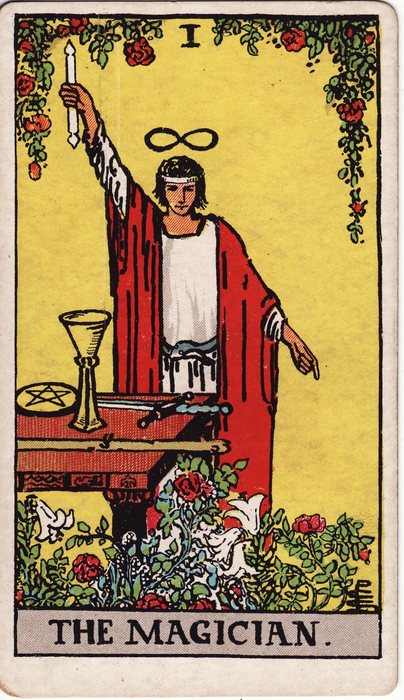
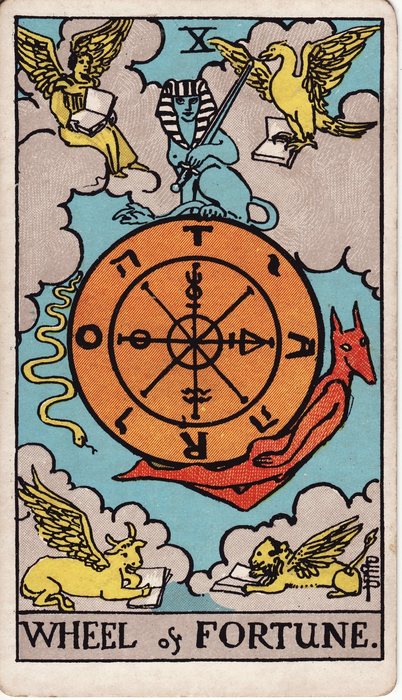
In the same series
Record
One symbol a week, decoded.
This picture is free at full size from its source, linked above. What an address gets is the Sunday letter: one picture, one symbol marked on it, what it meant and who said so, and the master files of the decoded plates as they are verified. Leave any time.
Free, one letter a week, unsubscribe in one click. How the address is used.
Scroll or pinch to zoom · drag to move · double-tap for 1:1 · 811 by 1400 pixel web copy; the source file is linked under Record