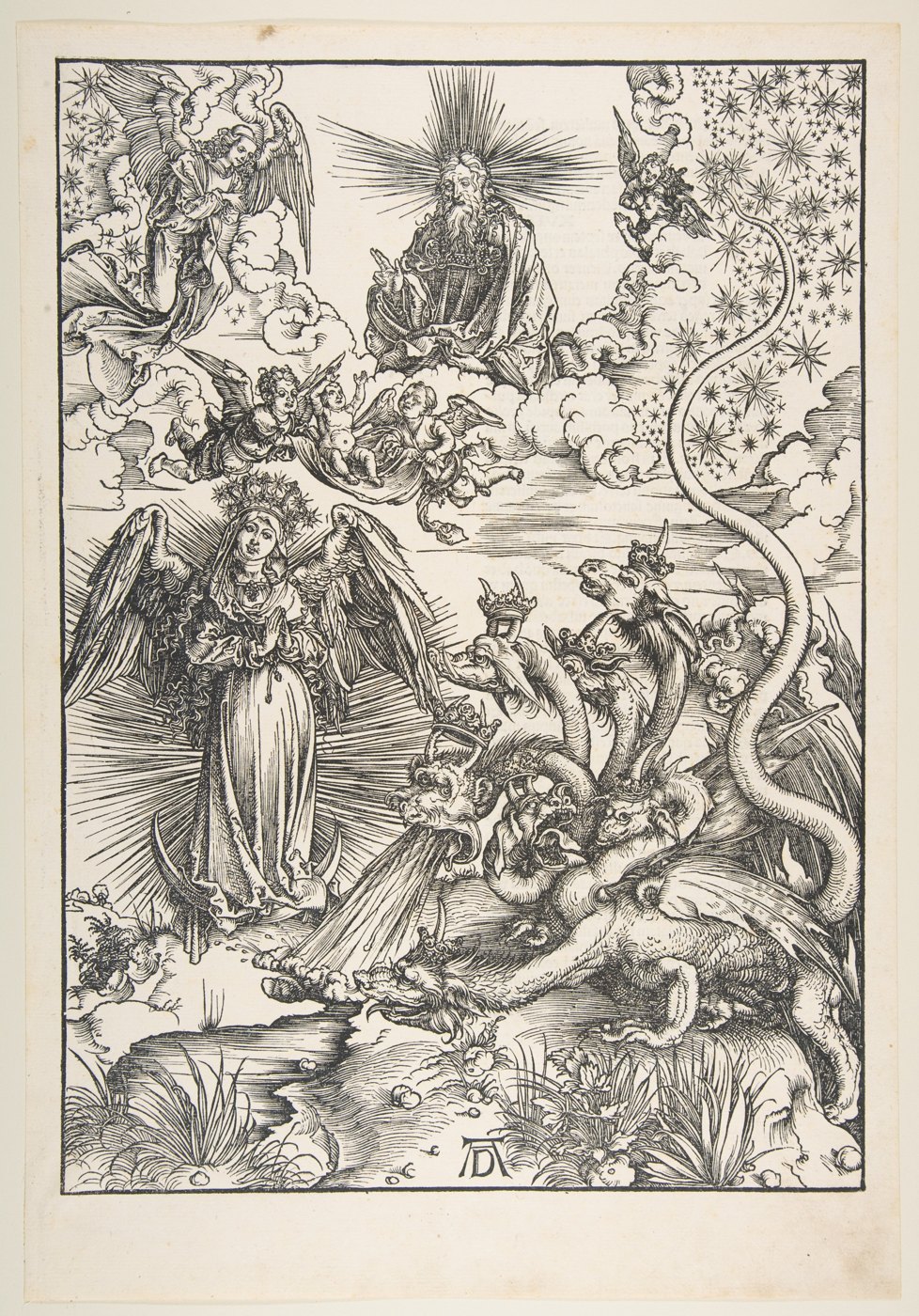
The Apocalyptic Woman
The Sun and the Moon as the central motif, with the Serpent and the Dragon, and the Angel and the Wing in a secondary part. From The Apocalypse.
What is happening
Apocalypse 12:2 “And being with child, she cried travailing in birth: and was in pain to be delivered.”
Apocalypse 12:4 “And his tail drew the third part of the stars of heaven and cast them to the earth. And the dragon stood before the woman who was ready to be delivered: that, when she should be delivered, he might devour her son.”
Apocalypse 12:5 “And she brought forth a man child, who was to rule all nations with an iron rod. And her son was taken up to God and to his throne.”
Key · 3 motifs
Tap a motif on the picture, or a line below. Its note opens under the line, with the reading its author gave it.
- Primary motif
- Secondary motifs · 2
The picture
The woman crowned with stars, radiant with the sun, the crescent moon under her feet, the dragon beneath; pairs with the Flamel Virgin on the crescent, by eye. By eye
The reading
The picture read whole, in the archive's words, from the sources quoted on the marks. Read on, and the picture follows: the motif under discussion keeps its colour.
Dürer cut this woodcut for his Apocalypse of 1498 and reissued it in 1511, and it shows the same scene as the Flamel sheet elsewhere in this archive, the twelfth chapter of the Apocalypse, three hundred years earlier and in black and white. A woman stands in rays of light on a crescent moon; a dragon with seven crowned heads waits at the right; above, in clouds, God sits enthroned with angels round him, and a child is being carried up.
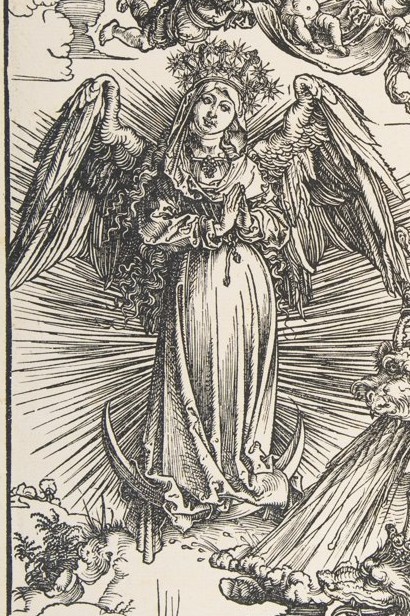
The first verse is the picture's plan: ‘a woman clothed with the sun, and the moon under her feet, and on her head a crown of twelve stars’. Dürer gives her a mandorla of straight rays for the sun, sets a thin crescent under her bare feet, and puts a ring of twelve stars round her hair. She is praying, her hands together, and she looks down and to the side, not at the dragon. She is the Virgin of every German altarpiece, and the chapter's woman, in one figure.
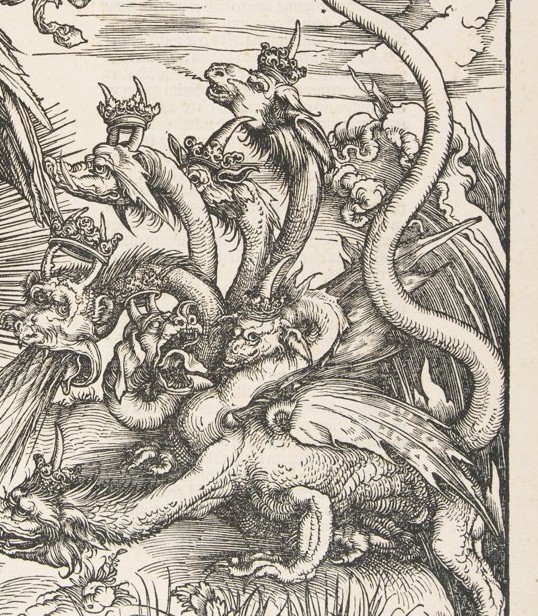
The dragon is drawn to the text's specification: ‘a great red dragon, having seven heads and ten horns: and on his heads seven diadems’. Seven heads rise on seven necks at the right, each crowned, and the horns are distributed among them. Its long tail whips up the right edge of the block into the sky, where stars are scattering, because the next verse says ‘his tail drew the third part of the stars of heaven and cast them to the earth. And the dragon stood before the woman who was ready to be delivered, that, when she should be delivered, he might devour her son.’ Dürer places it exactly there, at her feet, waiting.
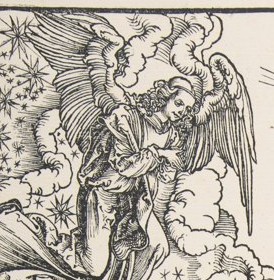
What saves the child happens overhead. In the clouds God is enthroned in a glory, and angels fly in from both sides; one of them carries a small figure upward. That is verse five: ‘she brought forth a man child … and her son was taken up to God, and to his throne’. The chapter does not say angels did the carrying; it says the child was taken up. The angels are Dürer's, and the archive records them as his while giving the verse they illustrate.
The archive pairs this print with the coloured Flamel sheet of the same woman because the two together show what a source does to a picture. Dürer illustrates the chapter for a Bible-reading public and puts the whole of it on the page, the woman, the dragon, the stars, the child, the throne. The alchemists' designer of the eighteenth century keeps the woman and the dragon and drops the rest, because he wanted the scene to mean something else. Here nothing is dropped. The chapter is the meaning, and the archive gives it beside the marks.
Decoded: every motif is marked, and each mark carries the reading its author gave it, quoted from the text, or says that it is observed on the picture and not read. The reading above is the archive's own, made from those sources and no others.
Gold, the perfected metal, and the illuminated intellect. The most overloaded symbol in the tradition.
In plain words She stands in a blaze of rays with a crescent moon under her feet and twelve stars round her head, which is the whole of the first verse of the chapter: a woman clothed with the sun, and the moon under her feet, and on her head a crown of twelve stars.
Apocalypse 12:1 “A woman clothed with the sun, and the moon under her feet, and on her head a crown of twelve stars.”
A single creature doing two opposite jobs. Note whether it is bound, killed, or eating itself.
In plain words The dragon at the right has seven heads, each with a crown, and ten horns among them, as the chapter counts them; its tail sweeps up into the sky, where the stars are falling, because the text says his tail drew the third part of the stars of heaven.
Apocalypse 12:3 “And behold a great red dragon, having seven heads and ten horns and on his heads seven diadems.”
The mark of an errand rather than a nature. Note whether the wings are open, folded, or given to the figure by someone else.
In plain words The angels in the clouds above her, one of them carrying the child up to God on his throne, are Dürer's arrangement of the fifth verse, in which her son was taken up to God. The chapter names no angels here, so the archive records them as his.
Symbolica The twelfth chapter names no angels at this moment, only the woman and the dragon; the angels above are Dürer's. Observed on the print, and left unread rather than guessed.
Also carrying the Sun and the Moon
59 works carry it. The 6 where it is the central motif are here. The symbol.

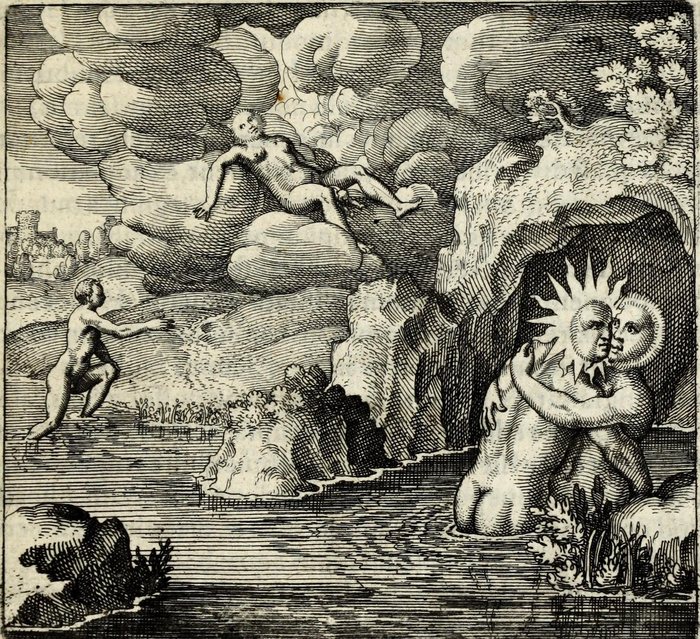
Where the detail is the subject
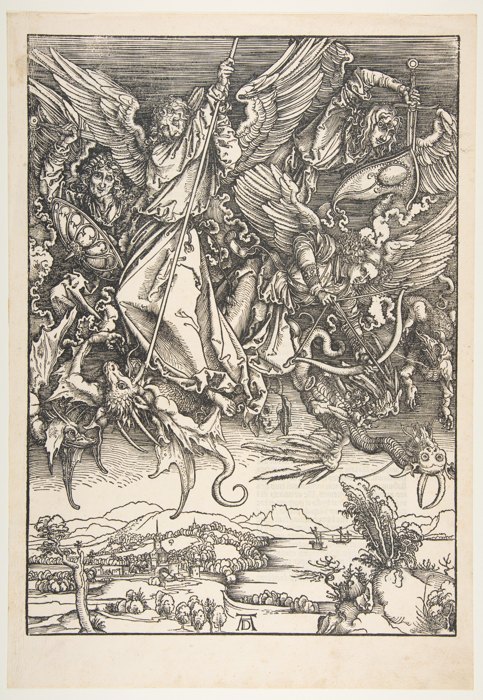
the Serpent and the Dragon · the Angel and the Wing
Each of these is in the picture without being what it is about. Below, one work that is about each.
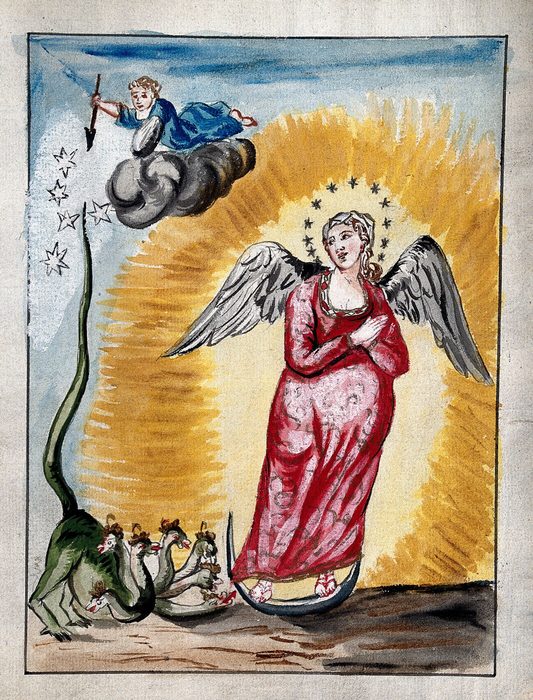
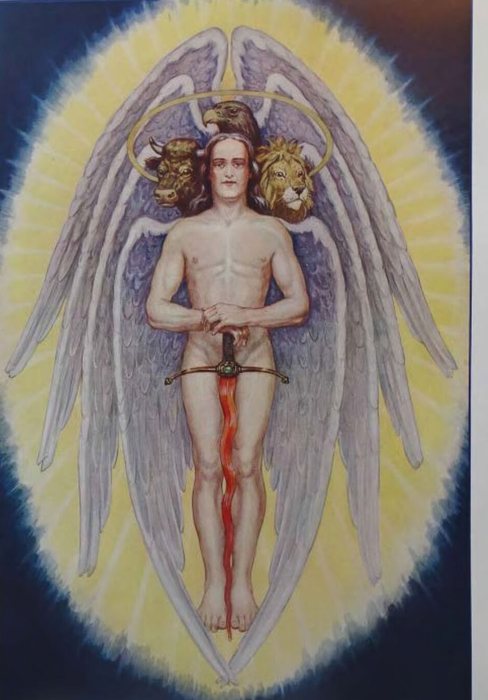
By the same hand
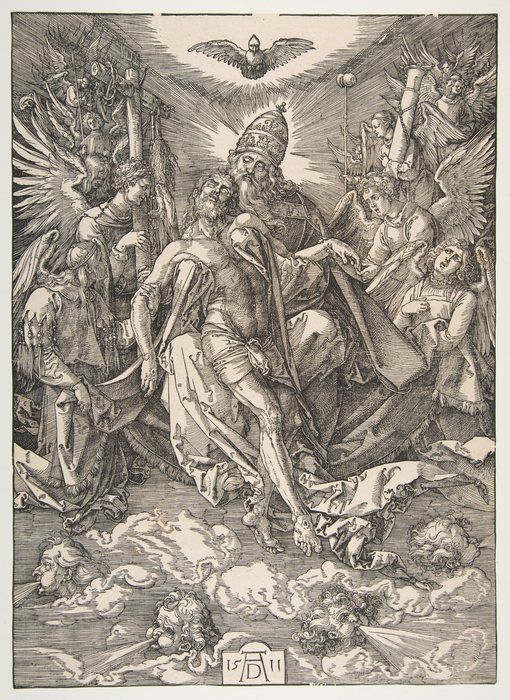
In the same series
Record
One symbol a week, decoded.
This picture is free at full size from its source, linked above. What an address gets is the Sunday letter: one picture, one symbol marked on it, what it meant and who said so, and the master files of the decoded plates as they are verified. Leave any time.
Free, one letter a week, unsubscribe in one click. How the address is used.
Scroll or pinch to zoom · drag to move · double-tap for 1:1 · 978 by 1400 pixel web copy; the source file is linked under Record