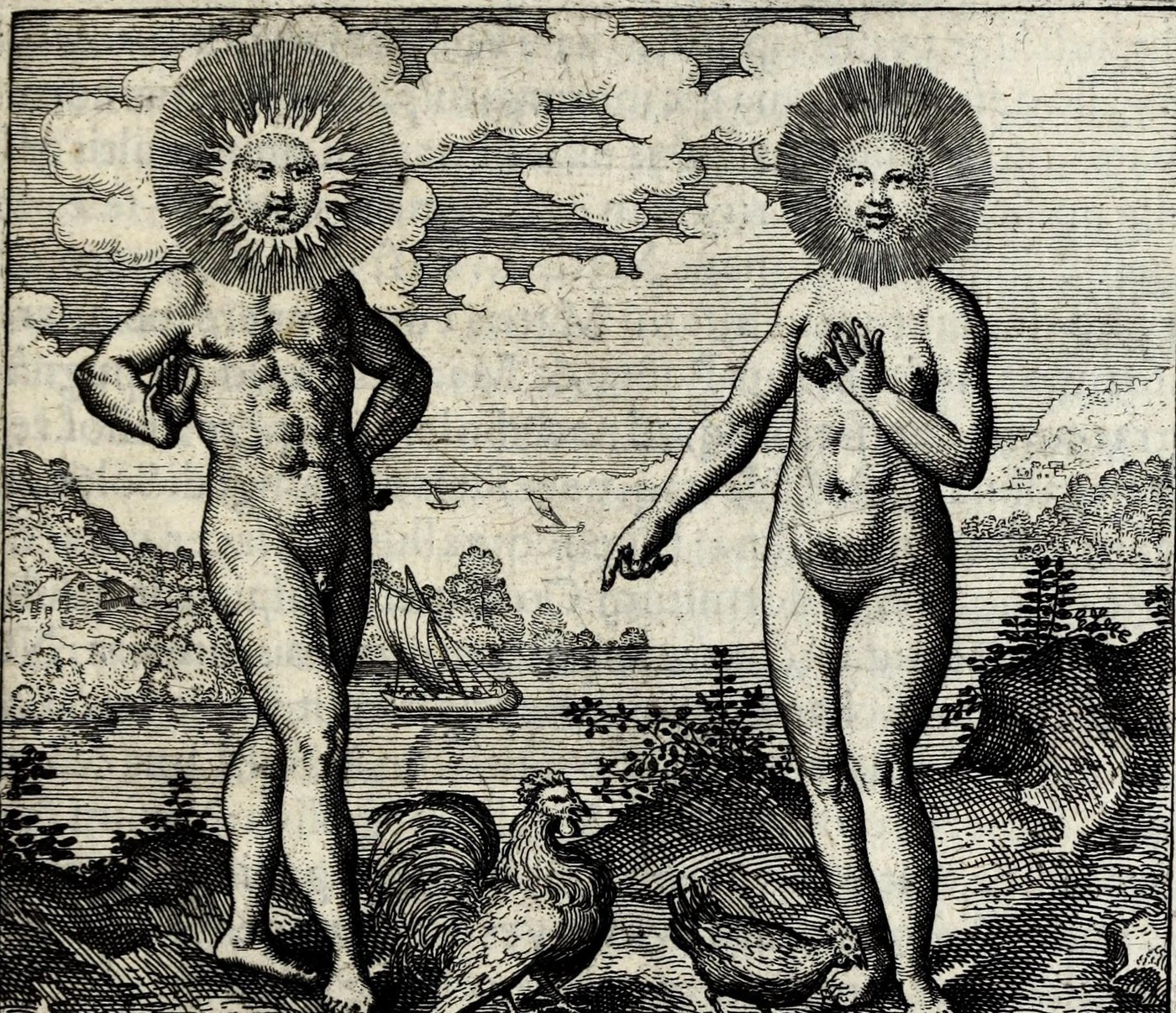
Sol indiget lunâ, ut gallus gallinâ
The Sun and the Moon as the central motif, with the Bird in a secondary part. From Atalanta Fugiens.
What is happening
Michael Maier, 1618 “Sol indiget lunâ, ut gallus gallinâ.”
Symbolica, 2026 Maier’s Latin, put into English here: The Sun needs the Moon as the cock needs the hen.
Michael Maier, 1618 “O SOL, solus agis nil, si non viribus adsim,
Ut sine gallina est gallus inanis ope.
Auxiliumque tuum praesens ego luna vicissim
Postulo, gallinae gallus ut expetitur.
Quae natura simul conjungi flagitat, ille est
Mentis inops, vinclis qui religare velit.”
Symbolica, 2026 Maier’s epigram, put into English here: O SUN, alone you do nothing, unless I am there with my powers, as a cock without a hen is empty of help. And I, the moon, here present, ask your help in turn, as a hen wants a cock. What nature demands should be joined together, only a man out of his mind would want to tie up in chains.
Key · 2 motifs
Tap a motif on the picture, or a line below. Its note opens under the line, with the reading its author gave it.
- Primary motif
- Secondary motifs · 1
The picture
The sun-headed man and the moon-headed woman facing each other, the cock and the hen at their feet. By eye
The reading
The picture read whole, in the archive's words, from the sources quoted on the marks. Read on, and the picture follows: the motif under discussion keeps its colour.
‘Sol indiget lunâ, ut gallus gallinâ’: the Sun needs the Moon as the cock needs the hen. Two naked figures with the sun and the moon for heads stand on a shore facing each other, and a cock and a hen stand between their feet.
The moon does the talking. ‘O SOL, solus agis nil, si non viribus adsim’, O Sun, alone you do nothing unless I am there with my powers, ‘Ut sine gallina est gallus inanis ope’, as a cock without a hen is empty of help. ‘Auxiliumque tuum praesens ego luna vicissim / Postulo’, and I, the moon, here present, ask your help in turn. In the work the sun and the moon are the two substances that have to be joined, and Maier gives the argument for joining them to the moon, who is usually the silent one.
The birds are the same sentence in the barnyard, ‘gallinae gallus ut expetitur’, as a hen wants a cock. The last couplet is the moral: ‘Quae natura simul conjungi flagitat’, what nature demands should be joined together, ‘ille est / Mentis inops, vinclis qui religare velit’, only a man out of his mind would want to tie up in chains. The cock and the hen are there so that nobody can pretend the point is obscure.
Decoded: every motif is marked, and each mark carries the reading its author gave it, quoted from the text, or says that it is observed on the picture and not read. The reading above is the archive's own, made from those sources and no others.
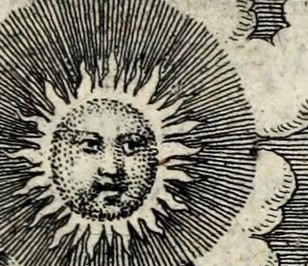
Gold, the perfected metal, and the illuminated intellect. The most overloaded symbol in the tradition.
In plain words A man with the sun for a head and a woman with the moon for hers stand facing each other. The moon speaks the epigram: sun, alone you do nothing without me, as a cock without a hen is useless. The two lights are a pair, and neither works alone.
Michael Maier, 1618 “O SOL, solus agis nil, si non viribus adsim, / Ut sine gallina est gallus inanis ope.”
Symbolica Maier's Latin, put into English here: O SUN, alone you do nothing, unless I am there with my powers, as a cock without a hen is empty of help.
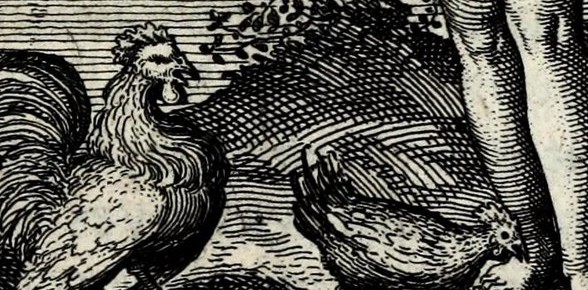
What rises and what comes back down. Note whether the bird is flying, caught, or paired with a second one.
In plain words A cock and a hen stand at the feet of the sun and the moon and say the same thing in the barnyard: he needs her and she needs him. Maier's last line calls anyone who would chain apart what nature joins a man out of his mind.
Michael Maier, 1618 “Auxiliumque tuum praesens ego luna vicissim / Postulo, gallinae gallus ut expetitur.”
Symbolica Maier's Latin, put into English here: And I, the moon, here present, ask your help in turn, as a hen wants a cock.
Also carrying the Sun and the Moon
59 works carry it. The 6 where it is the central motif are here. The symbol.
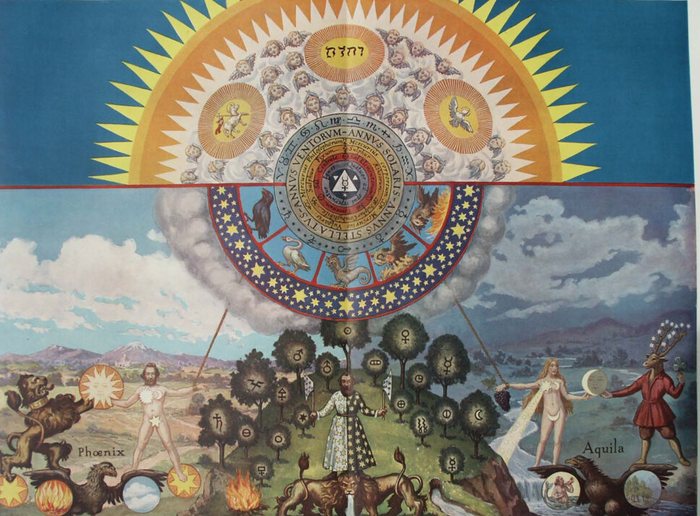
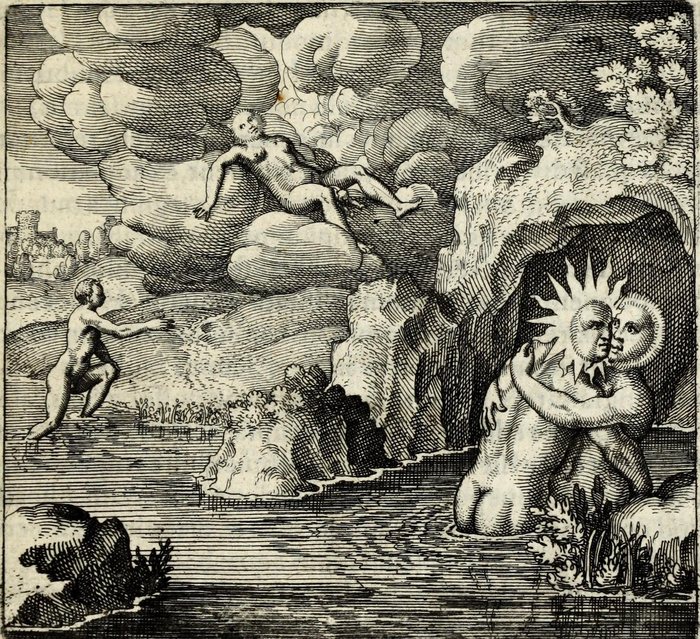
Where the detail is the subject
This is in the picture without being what it is about. Below, one work that is about it.
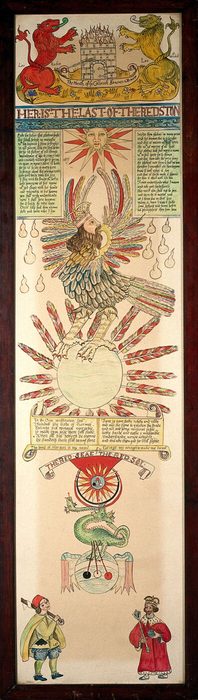
In the same series
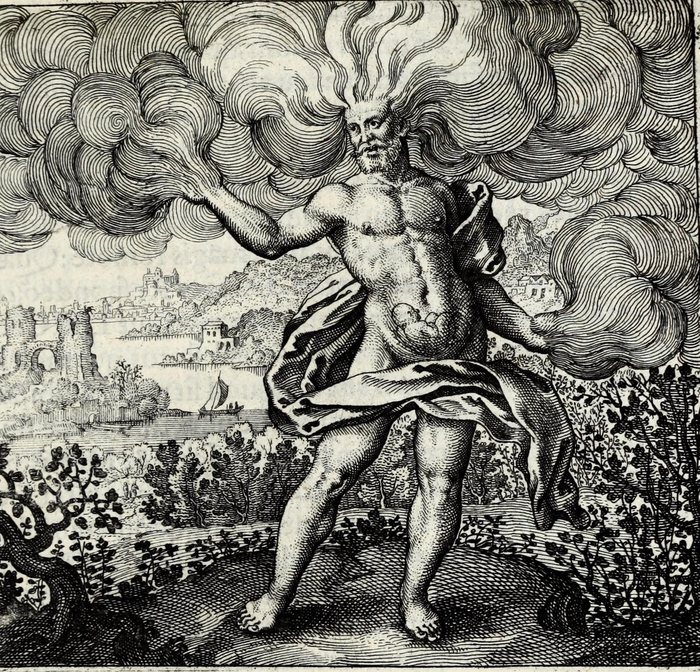 Portavit eum ventus in ventre suo
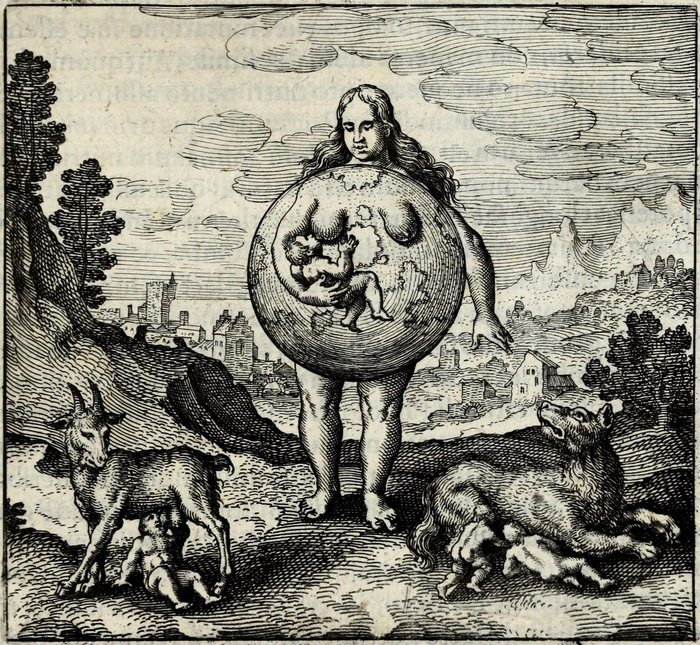 Nutrix ejus terra est
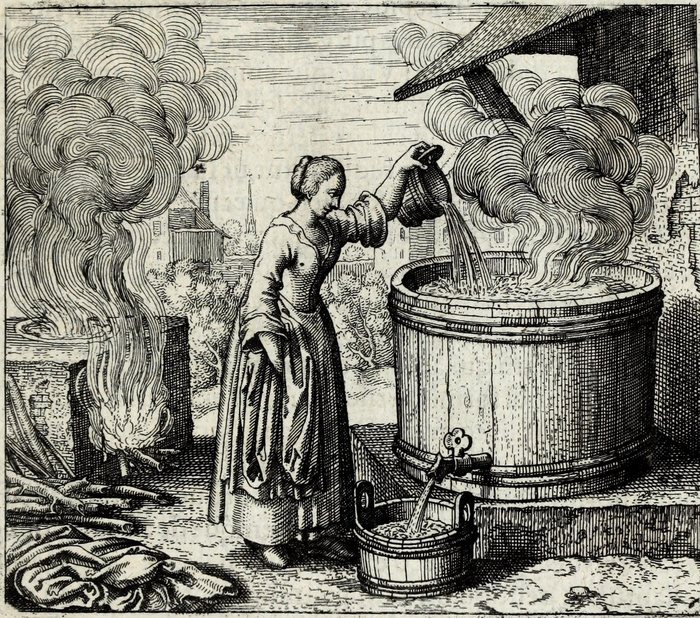 Vade ad mulierem lavantem pannos, tu fac similiter
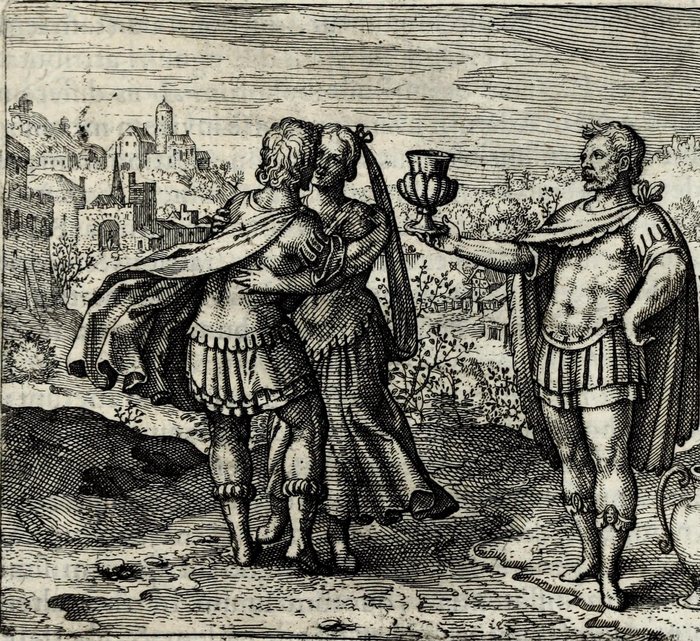 Conjunge fratrem cum sorore & propina illis poculum amoris
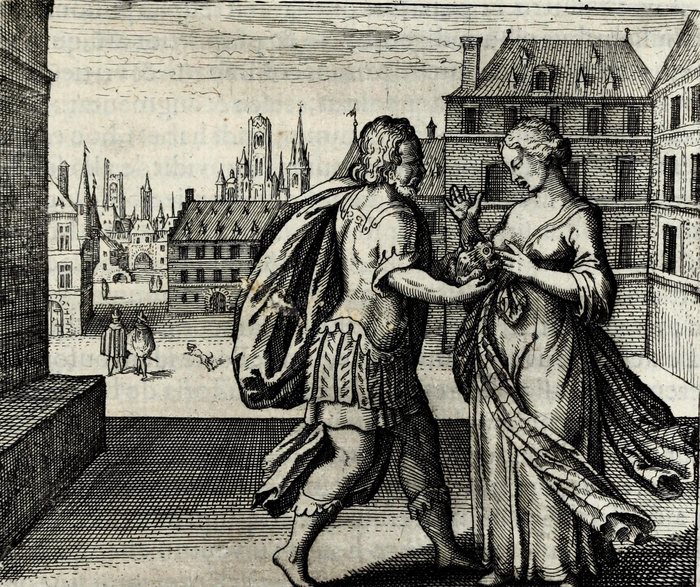 Appone mulieri super mammas bufonem, ut ablactet eum, & moriatur mulier, sitque bufo grossus de lacte
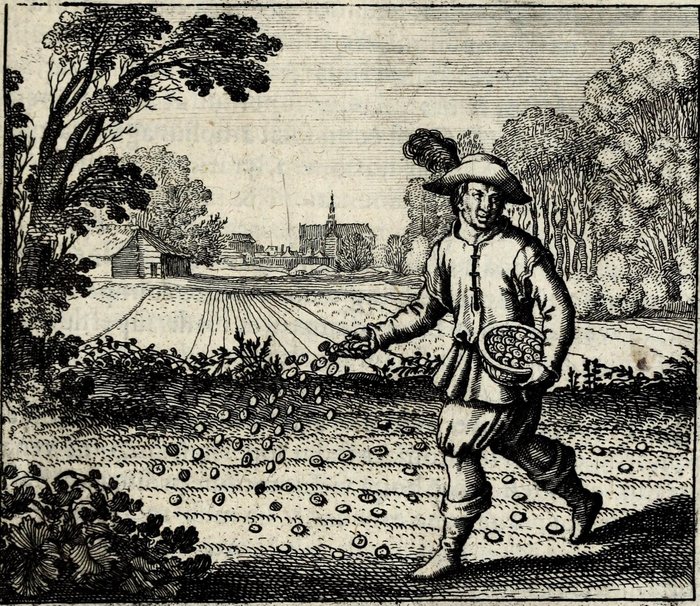 Seminate aurum vestrum in terram albam foliatam
Record
One symbol a week, decoded.
This picture is free at full size from its source, linked above. What an address gets is the Sunday letter: one picture, one symbol marked on it, what it meant and who said so, and the master files of the decoded plates as they are verified. Leave any time.
Free, one letter a week, unsubscribe in one click. How the address is used.
Scroll or pinch to zoom · drag to move · double-tap for 1:1 · 1400 by 1206 pixel web copy; the source file is linked under Record