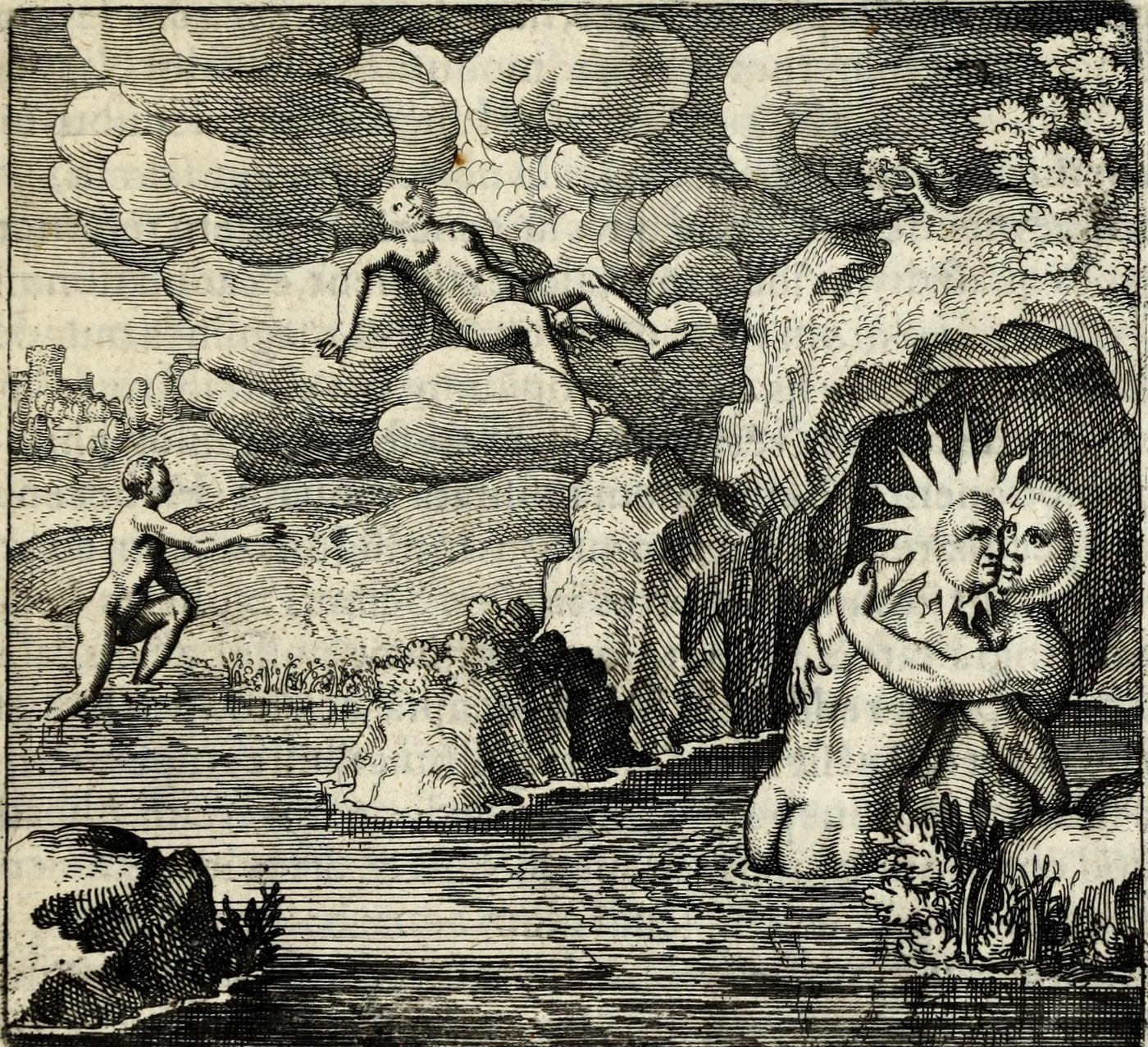
In balneis concipitur, & in aëre nascitur, rubeus verò factus graditur super aquas
The Sun and the Moon as the central motif, with the Water, and the King and the Queen in a secondary part. From Atalanta Fugiens.
What is happening
Michael Maier, 1618 “In balneis concipitur, & in aëre nascitur, rubeus verò factus graditur super aquas.”
Symbolica, 2026 Maier’s Latin, put into English here: Conceived in the bath, born in the air, made red it walks on the water.
Michael Maier, 1618 “Balnea conceptu pueri, natalibus aer
Splendet, & hinc rubeus sub pede cernit aquas.
Fitque super montana cacumina candidus ille,
Qui remanet doctis unica cura viris.
Est lapis, & non est, caeli quod nobile Donum,
Dante DEO faelix, si quis habebit, erit.”
Symbolica, 2026 Maier’s epigram, put into English here: Baths belong to the child's conception, air shines at his birth, and from there, red, he looks down on the waters under his foot. Above the mountain tops he becomes white, he who remains the one care of learned men. It is a stone, and it is not, that noble Gift of heaven. If anyone shall have it, by God's giving, he will be blessed.
Key · 3 motifs
Tap a motif on the picture, or a line below. Its note opens under the line, with the reading its author gave it.
- Primary motif
- Secondary motifs · 2
The picture
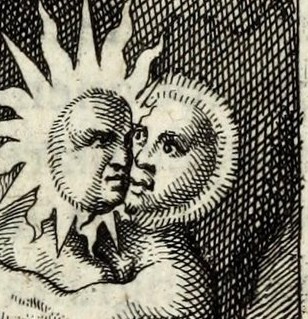
The sun-faced and moon-faced heads embracing in the cave mouth, the child carried above the water. By eye
The reading
The picture read whole, in the archive's words, from the sources quoted on the marks. Read on, and the picture follows: the motif under discussion keeps its colour.
‘In balneis concipitur, & in aëre nascitur, rubeus verò factus graditur super aquas’: conceived in the bath, born in the air, and made red it walks on the water. Merian drew all three stages on one plate: the embracing heads in the cave, the child in the clouds, and the figure walking across the water at the left.
‘Balnea conceptu pueri’, baths belong to the child's conception. The sun and the moon in the water of the cave are the parents, and the bath is their bed.
‘natalibus aer / Splendet’, air shines at his birth, and ‘Fitque super montana cacumina candidus ille’, above the mountain tops he becomes white, ‘Qui remanet doctis unica cura viris’, he who remains the one care of learned men. The child in the clouds is the work at its white stage.
‘rubeus sub pede cernit aquas’, red, he looks down on the waters under his foot. The figure at the left walking on the water is the same child at the end, red and finished, treading what he was conceived in. Maier closes with a paradox and a piety: ‘Est lapis, & non est, caeli quod nobile Donum’, it is a stone, and it is not, that noble gift of heaven, and whoever has it, by God's giving, will be blessed.
Decoded: every motif is marked, and each mark carries the reading its author gave it, quoted from the text, or says that it is observed on the picture and not read. The reading above is the archive's own, made from those sources and no others.
Gold, the perfected metal, and the illuminated intellect. The most overloaded symbol in the tradition.
In plain words In the mouth of a cave at the right two heads embrace, one with the sun's face and one with the moon's, and they are in the water. This is the conception in the bath: the sun and the moon joined, and the child that comes of it is the rest of the picture.
Michael Maier, 1618 “Balnea conceptu pueri, natalibus aer / Splendet, & hinc rubeus sub pede cernit aquas.”
Symbolica Maier's Latin, put into English here: Baths belong to the child's conception, air shines at his birth, and from there, red, he looks down on the waters under his foot.
Where a thing is taken apart rather than destroyed. Note whether the figure is in the water, on it, or pouring it.
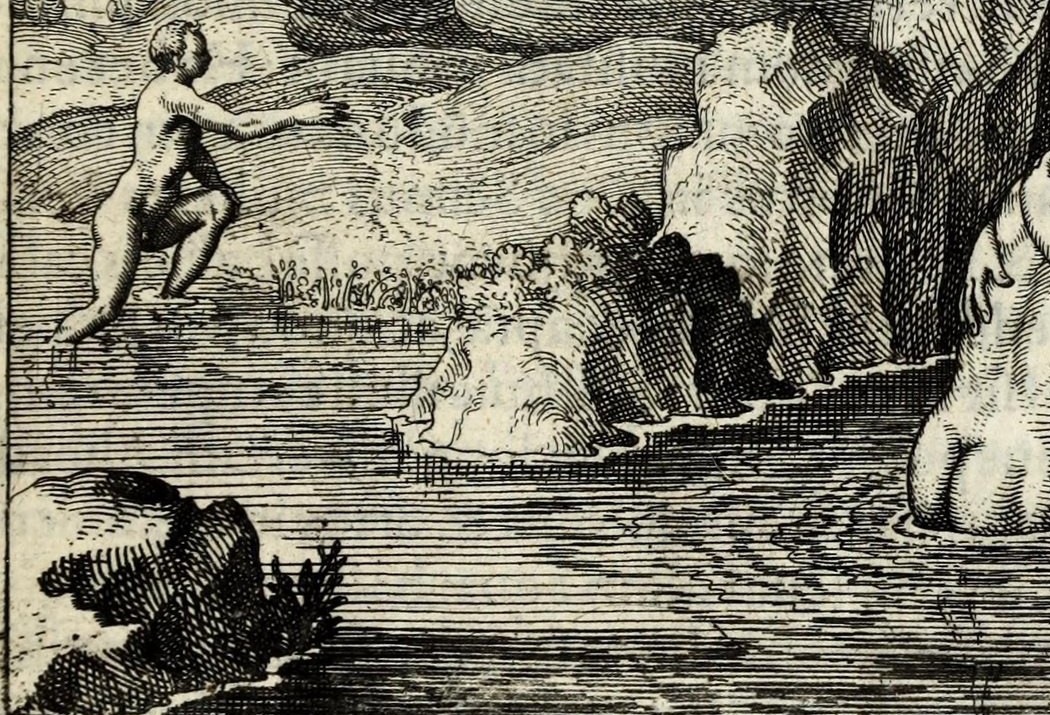
In plain words A figure walks on the water at the left. He is the child grown and made red, and the motto says he walks on the waters: conceived in the bath, born in the air, and finally standing on what he came from.
Michael Maier, 1618 “rubeus sub pede cernit aquas”
Symbolica Maier's Latin, put into English here: red, he looks down on the waters under his foot
In the alchemical pictures a child is the thing being made. In the Apocalypse it is the thing under attack.
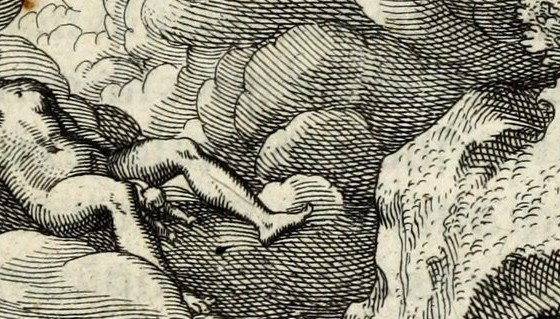
In plain words Up in the clouds a figure carries the child: born in the air, as the motto says, and turning white above the mountain tops. Maier calls him the one care of learned men, and in the last couplet a stone that is and is not a stone, the gift of heaven.
Michael Maier, 1618 “Fitque super montana cacumina candidus ille, / Qui remanet doctis unica cura viris.”
Symbolica Maier's Latin, put into English here: Above the mountain tops he becomes white, he who remains the one care of learned men.
Also carrying the Sun and the Moon
59 works carry it. The 6 where it is the central motif are here. The symbol.
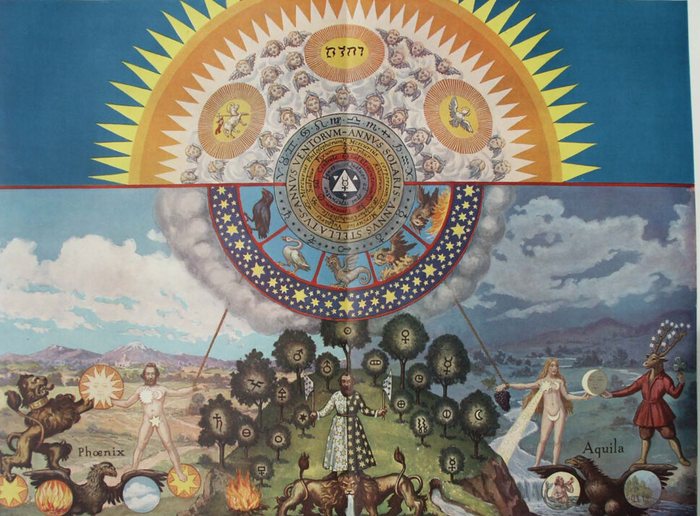
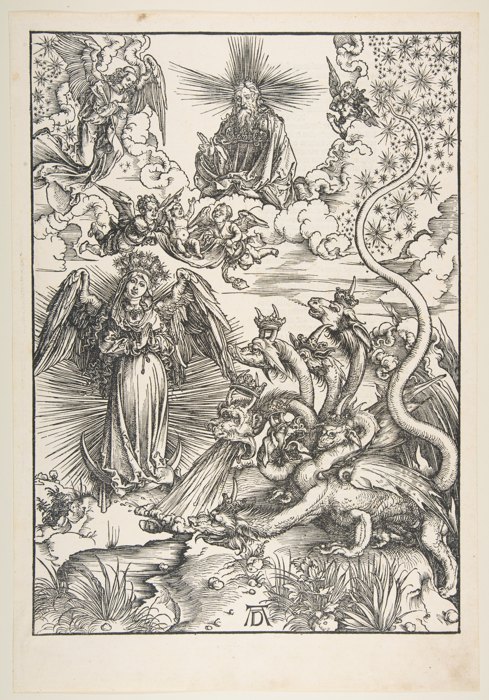
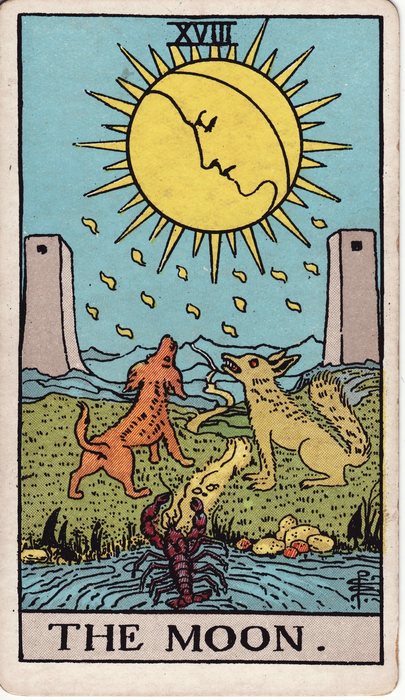
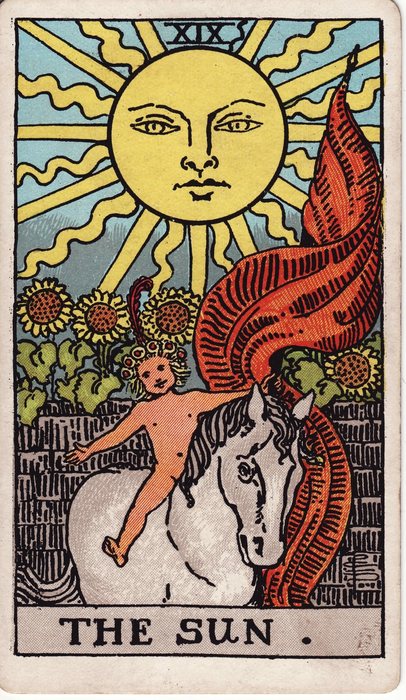
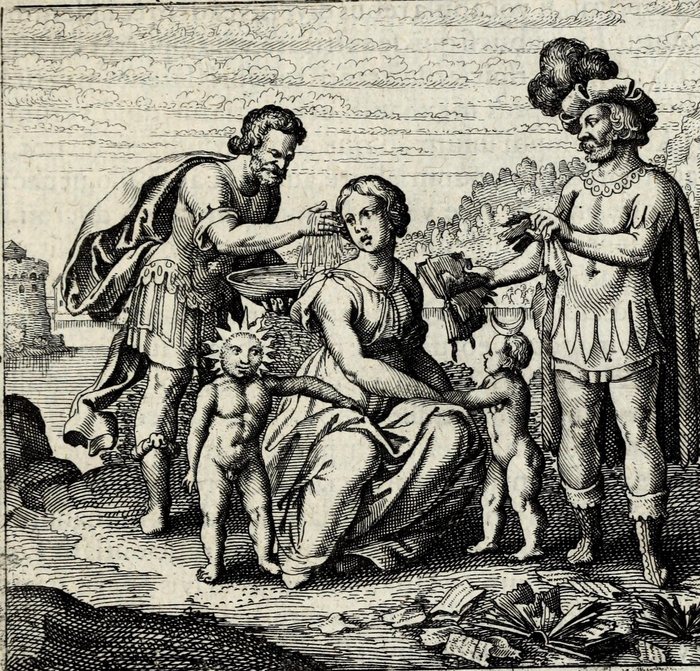
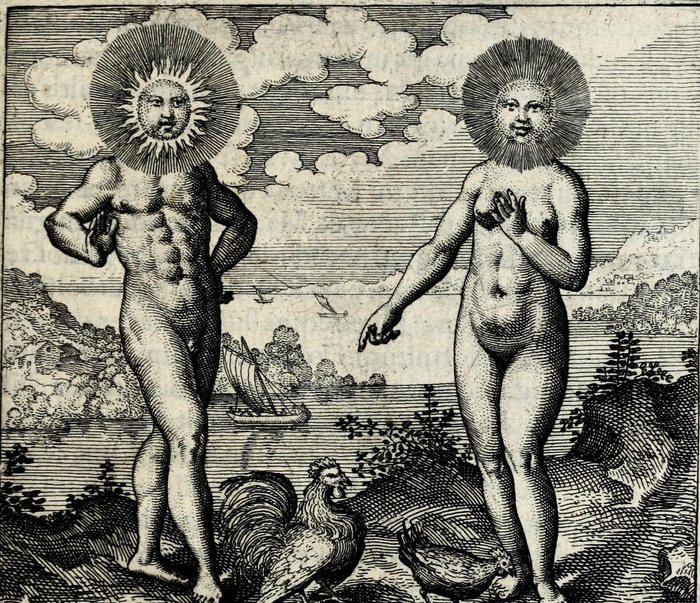
Where the detail is the subject
the Water · the King and the Queen
Each of these is in the picture without being what it is about. Below, one work that is about each.
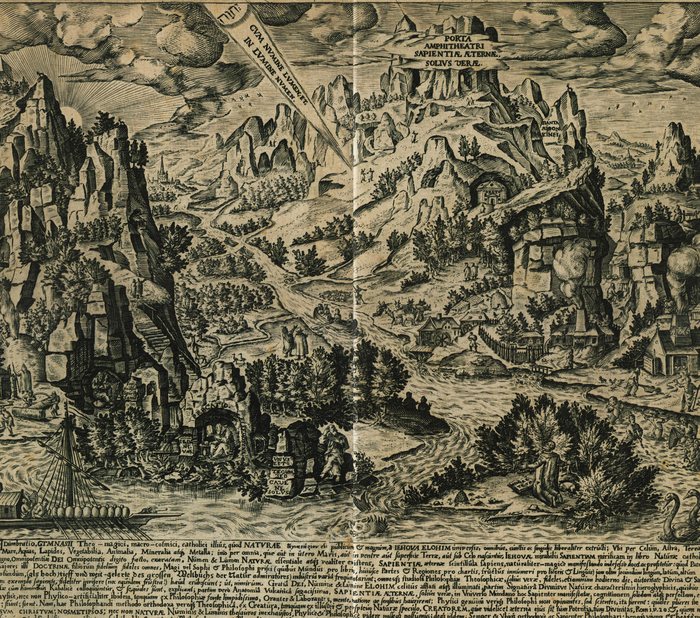
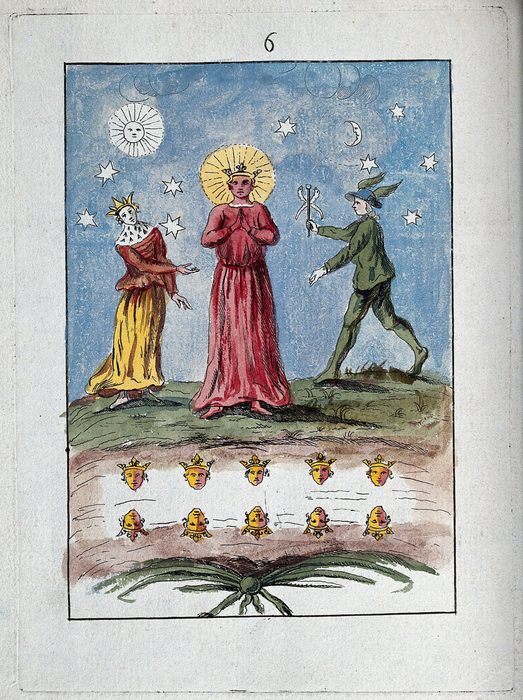
In the same series
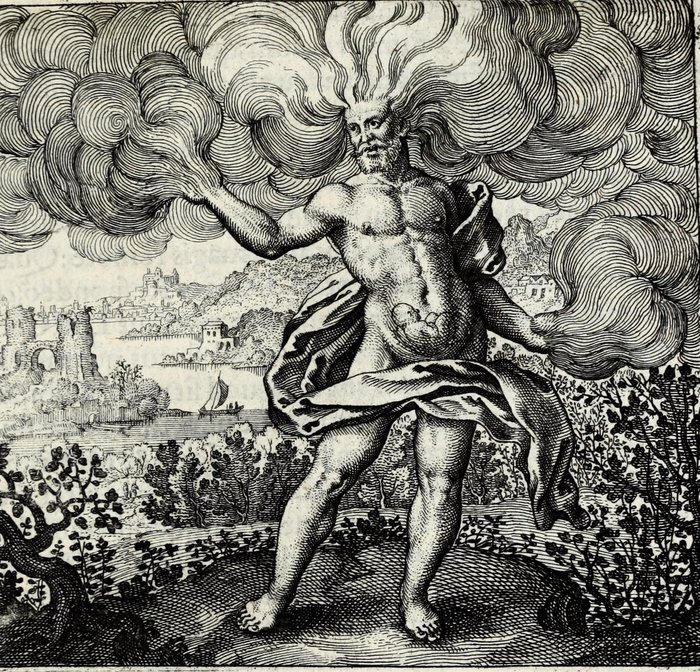 Portavit eum ventus in ventre suo
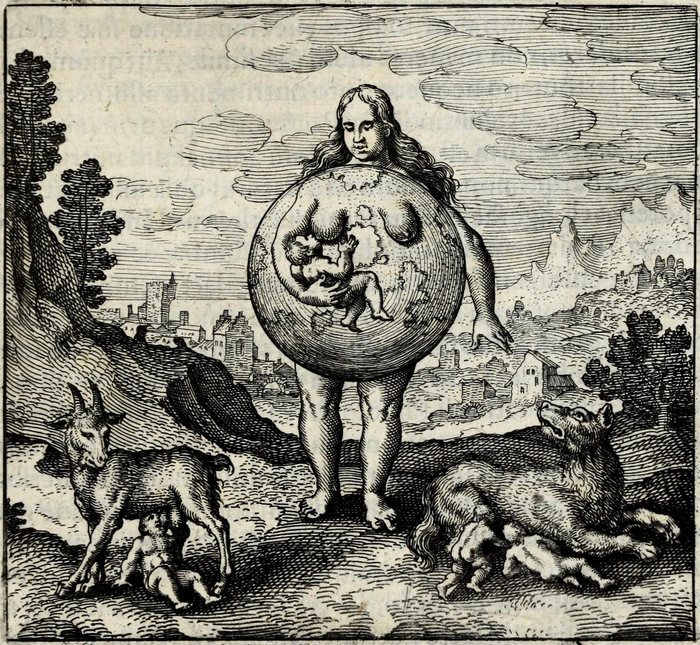 Nutrix ejus terra est
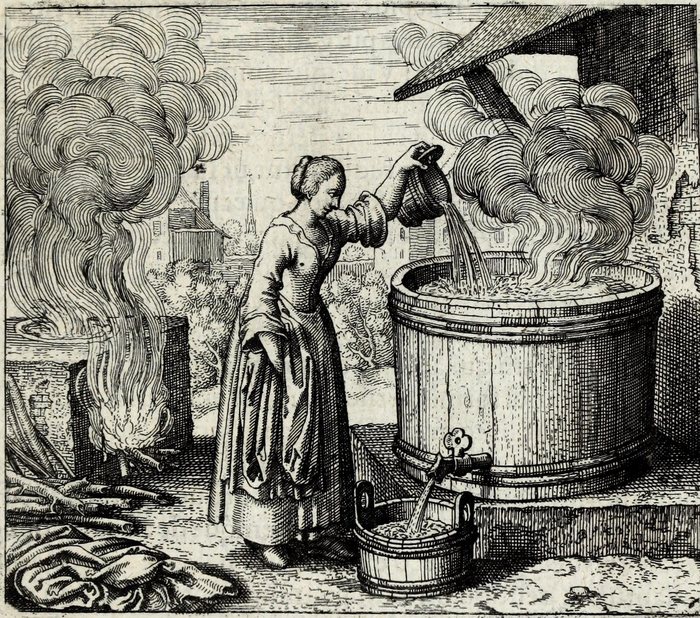 Vade ad mulierem lavantem pannos, tu fac similiter
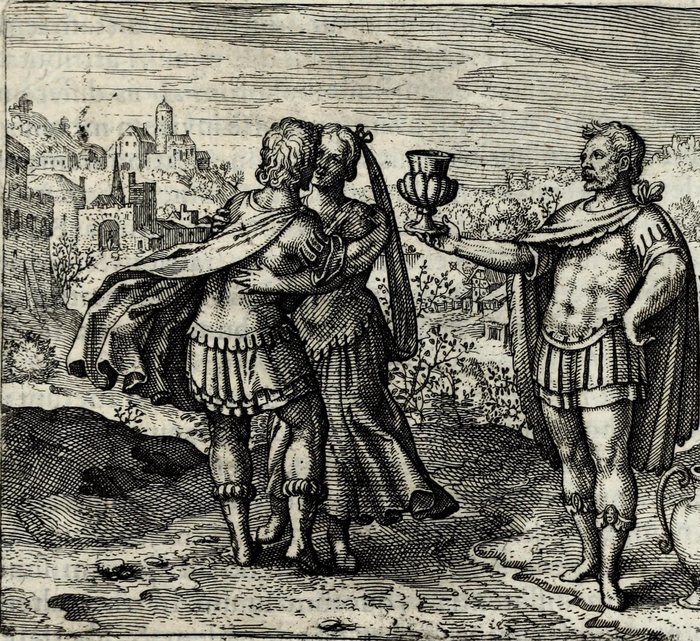 Conjunge fratrem cum sorore & propina illis poculum amoris
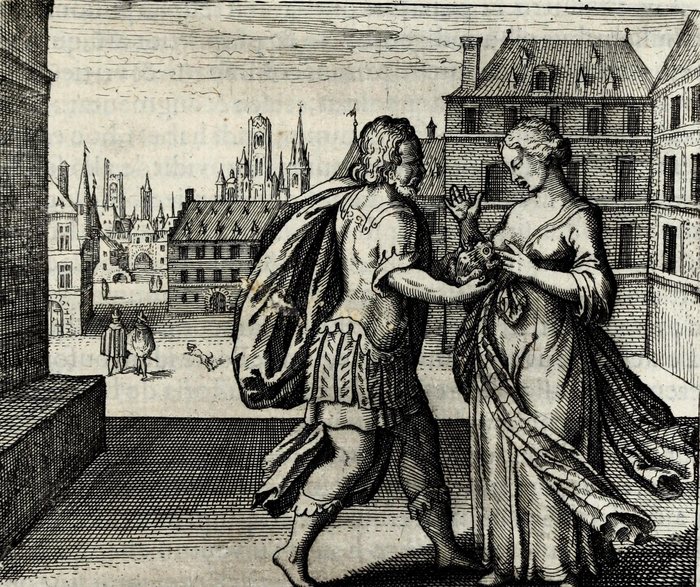 Appone mulieri super mammas bufonem, ut ablactet eum, & moriatur mulier, sitque bufo grossus de lacte
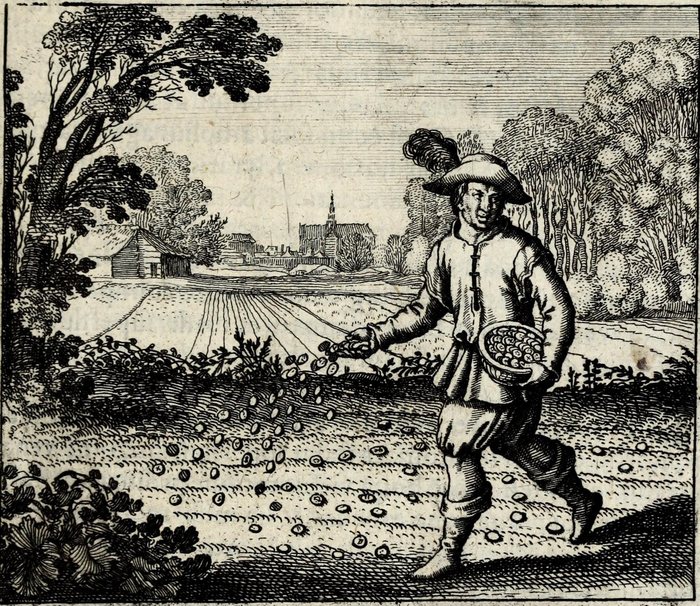 Seminate aurum vestrum in terram albam foliatam
Record
One symbol a week, decoded.
This picture is free at full size from its source, linked above. What an address gets is the Sunday letter: one picture, one symbol marked on it, what it meant and who said so, and the master files of the decoded plates as they are verified. Leave any time.
Free, one letter a week, unsubscribe in one click. How the address is used.
Scroll or pinch to zoom · drag to move · double-tap for 1:1 · 1400 by 1277 pixel web copy; the source file is linked under Record