The Sun (XIX)
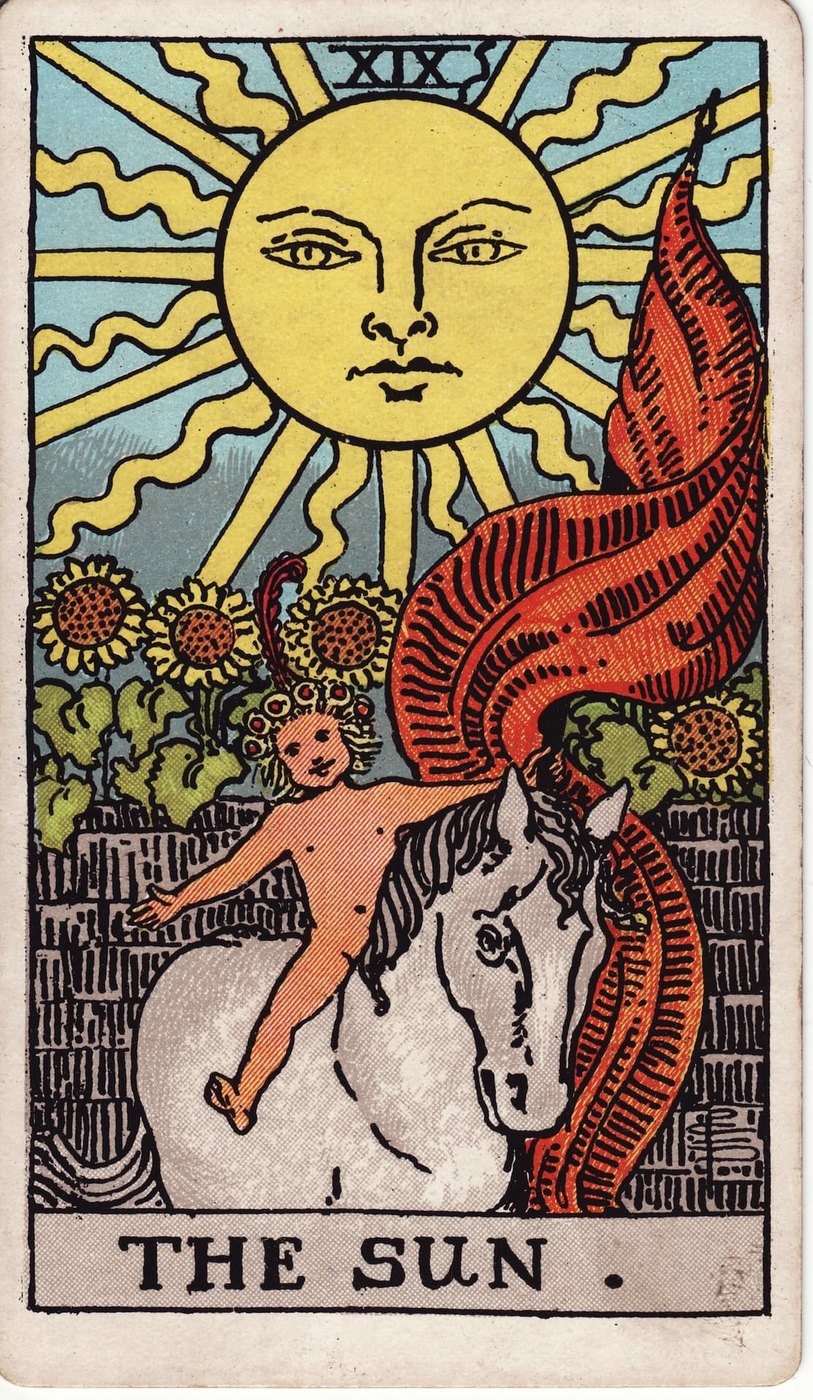
The Sun and the Moon as the central motif, with the Horse in a secondary part. From The 1909 tarot.
What is happening
Waite, 1911 “The characteristic type of humanity has become a little child therein--a child in the sense of simplicity and innocence in the sense of wisdom. In that simplicity, he bears the seal of Nature and of Art; in that innocence, he signifies the restored world.”
Waite, 1911 “When the self-knowing spirit has dawned in the consciousness above the natural mind, that mind in its renewal leads forth the animal nature in a state of perfect conformity.”
Key · 2 motifs
Tap a motif on the picture, or a line below. Its note opens under the line, with the reading its author gave it.
- Primary motif
- Secondary motifs · 1
The picture
A sun with a face, straight and wavy rays; a naked child crowned with flowers rides a white horse and carries a red banner; sunflowers over a garden wall; the Sun as the central motif, the Horse by eye. By eye
The reading
The picture read whole, in the archive's words, from the sources quoted on the marks. Read on, and the picture follows: the motif under discussion keeps its colour.
Lévi handed Waite this card. The older design put two children in a walled garden under the sun, and Lévi wrote that they are ‘sometimes replaced by a spinner unwinding destinies, and otherwise by a much better symbol, a naked child mounted on a white horse and displaying a scarlet standard’. Waite agreed, called it the better symbolism, and had Pamela Colman Smith draw it.
What Smith kept from the older sheets is the rays. Waite noticed that the luminary on them is distinguished by chief rays waved and salient by turns with a secondary set between, and she alternates them the same way round the whole disc, straight, wavy, straight. His gloss for the sun sets it against the Moon two cards earlier: this is consciousness in the spirit, direct light as against reflected. So he reads the card as a transit out of ‘the manifest light of this world’ and into ‘the light of the world to come, which goes before aspiration and is typified by the heart of a child’.
Which makes the horse the argument rather than the transport. The child rides bareback with both arms open and no rein in either hand, and Waite explains why none is needed. Once ‘the self-knowing spirit has dawned in the consciousness above the natural mind’, he writes, that mind in its renewal ‘leads forth the animal nature in a state of perfect conformity’. The horse goes where the child goes because nothing is left in it that wants to go anywhere else.
The garden is behind them. Waite is precise that the procession comes out of ‘the walled garden of the sensitive life’ and passes on the journey home, and Smith puts the wall at the child's back with sunflowers looking over it. Those the archive marks as seen, because Waite never mentions them. They are doing on the wall what the horse is doing on the ground, turning to follow the light and going nowhere else.
Decoded: every motif is marked, and each mark carries the reading its author gave it, quoted from the text, or says that it is observed on the picture and not read. The reading above is the archive's own, made from those sources and no others.
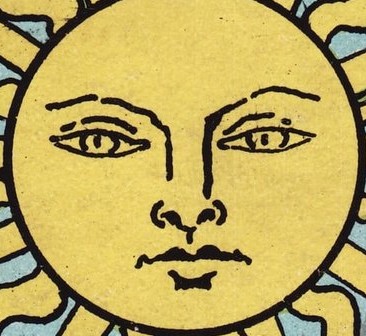
Gold, the perfected metal, and the illuminated intellect. The most overloaded symbol in the tradition.
In plain words The sun has a face and two kinds of rays, straight and wavy, which Waite notes is how the old cards drew it. He says the sun on this card is the sun of consciousness in the spirit, direct light as against reflected, the opposite of the Moon two cards before.
Waite, 1911 “The sun is that of consciousness in the spirit - the direct as the antithesis of the reflected light.”
Waite, 1911 “The card signifies, therefore, the transit from the manifest light of this world, represented by the glorious sun of earth, to the light of the world to come, which goes before aspiration and is typified by the heart of a child.”
Waite, 1911 “The luminary is distinguished in older cards by chief rays that are waved and salient alternately and by secondary salient rays.”
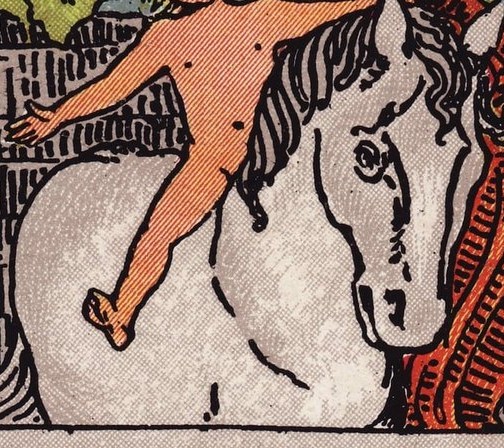
Almost never the subject. Read the rider, then read what the colour of the horse is doing.
In plain words A naked child rides a white horse out of a walled garden carrying a red banner. Waite took the child and the horse from Lévi, who called it a much better symbol than the old pair of children, and reads it as the light that goes ahead of humanity on its way home.
Waite, 1911 “The naked child mounted on a white horse and displaying a red standard has been mentioned already as the better symbolism connected with this card. It is the destiny of the Supernatural East and the great and holy light which goes before the endless procession of humanity, coming out from the walled garden of the sensitive life and passing on the journey home.”
Waite, 1911 “Eliphas Lévi says that these are sometimes replaced by a spinner unwinding destinies, and otherwise by a much better symbol-a naked child mounted on a white horse and displaying a scarlet standard.”
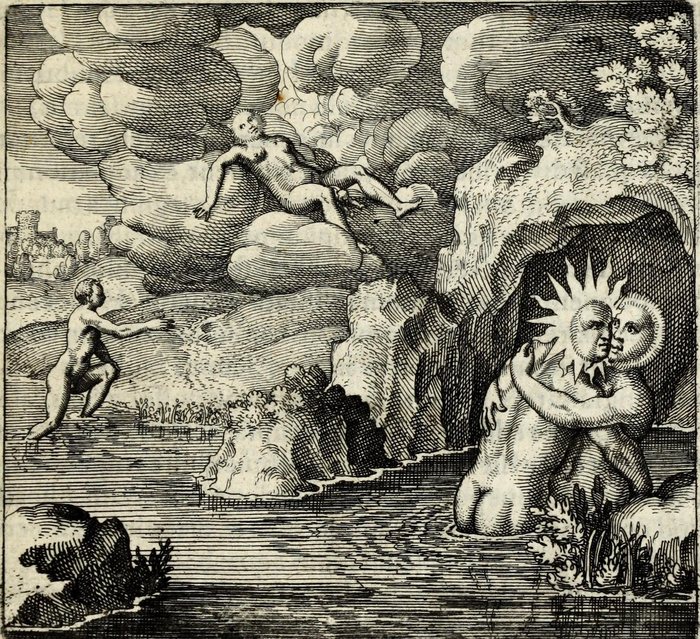
Also carrying the Sun and the Moon
59 works carry it. The 6 where it is the central motif are here. The symbol.
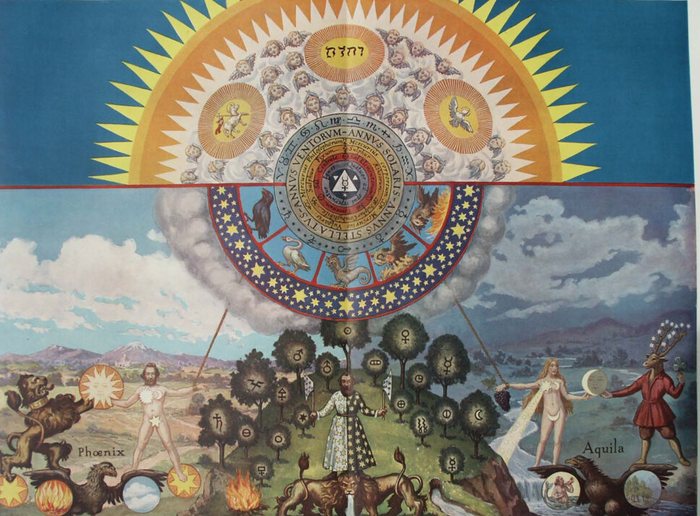
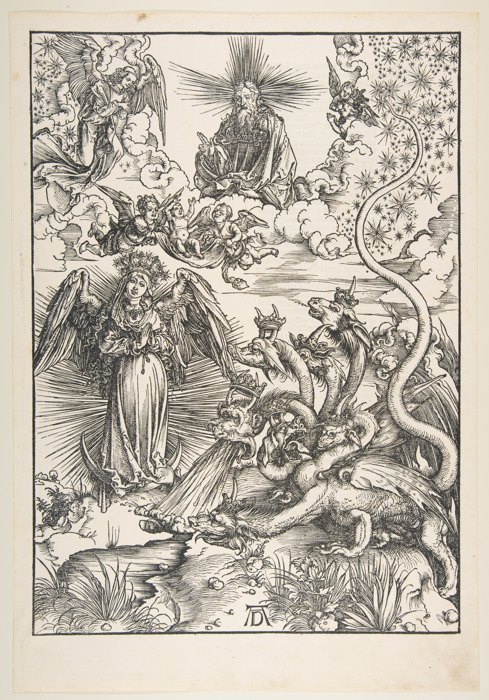
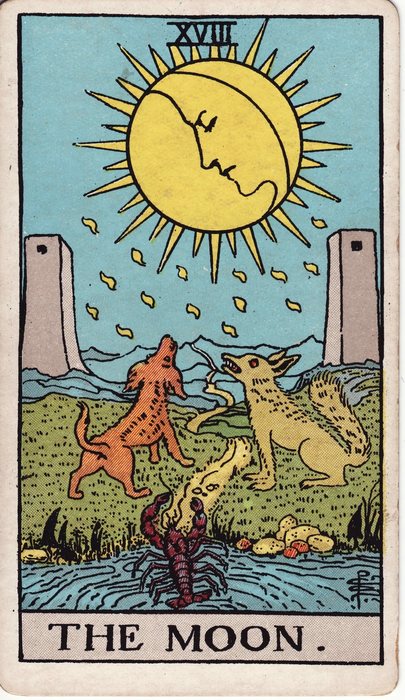
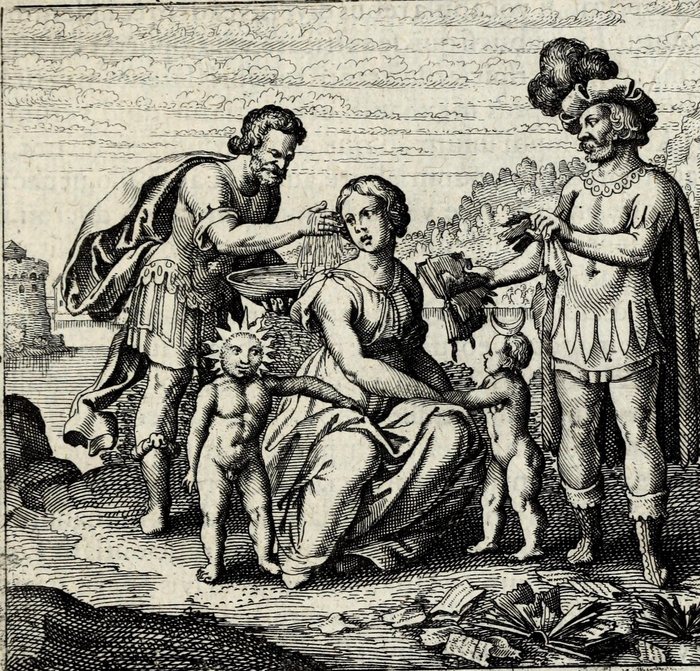
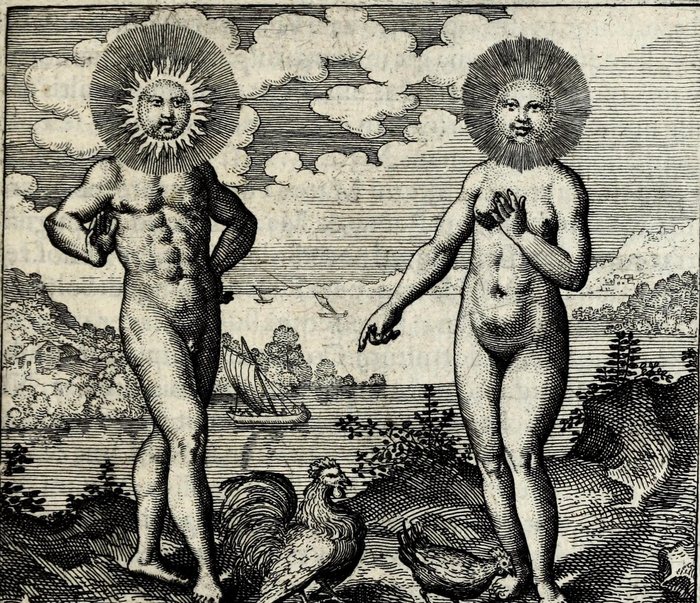
Where the detail is the subject
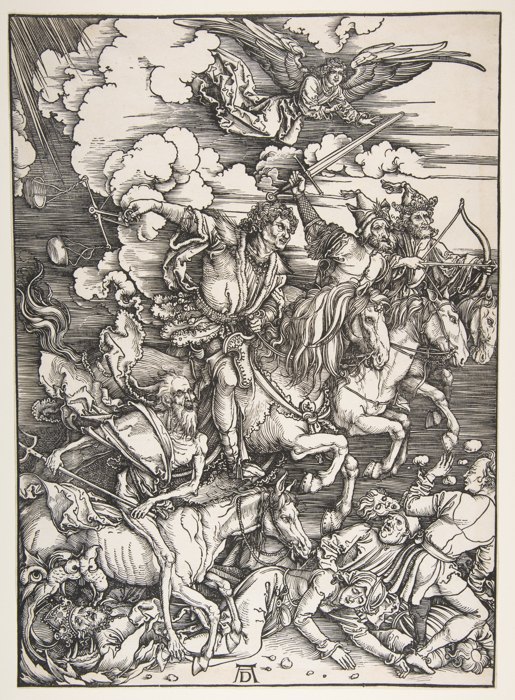
This is in the picture without being what it is about. Below, one work that is about it.
In the same series
Record
One symbol a week, decoded.
This picture is free at full size from its source, linked above. What an address gets is the Sunday letter: one picture, one symbol marked on it, what it meant and who said so, and the master files of the decoded plates as they are verified. Leave any time.
Free, one letter a week, unsubscribe in one click. How the address is used.
Scroll or pinch to zoom · drag to move · double-tap for 1:1 · 813 by 1400 pixel web copy; the source file is linked under Record