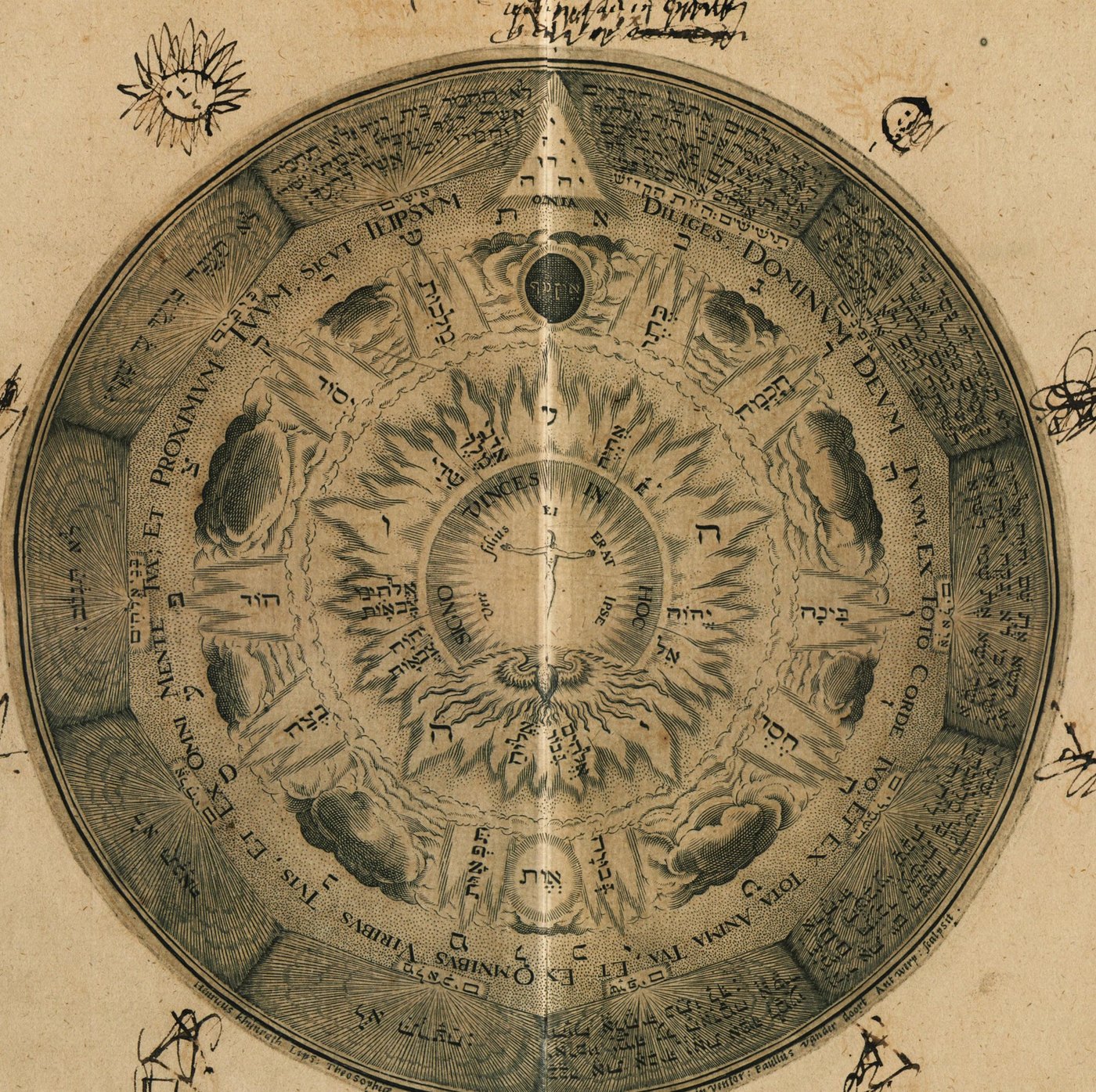
The Name in the pyramid, Christ in the sun, and the two commandments round the rim
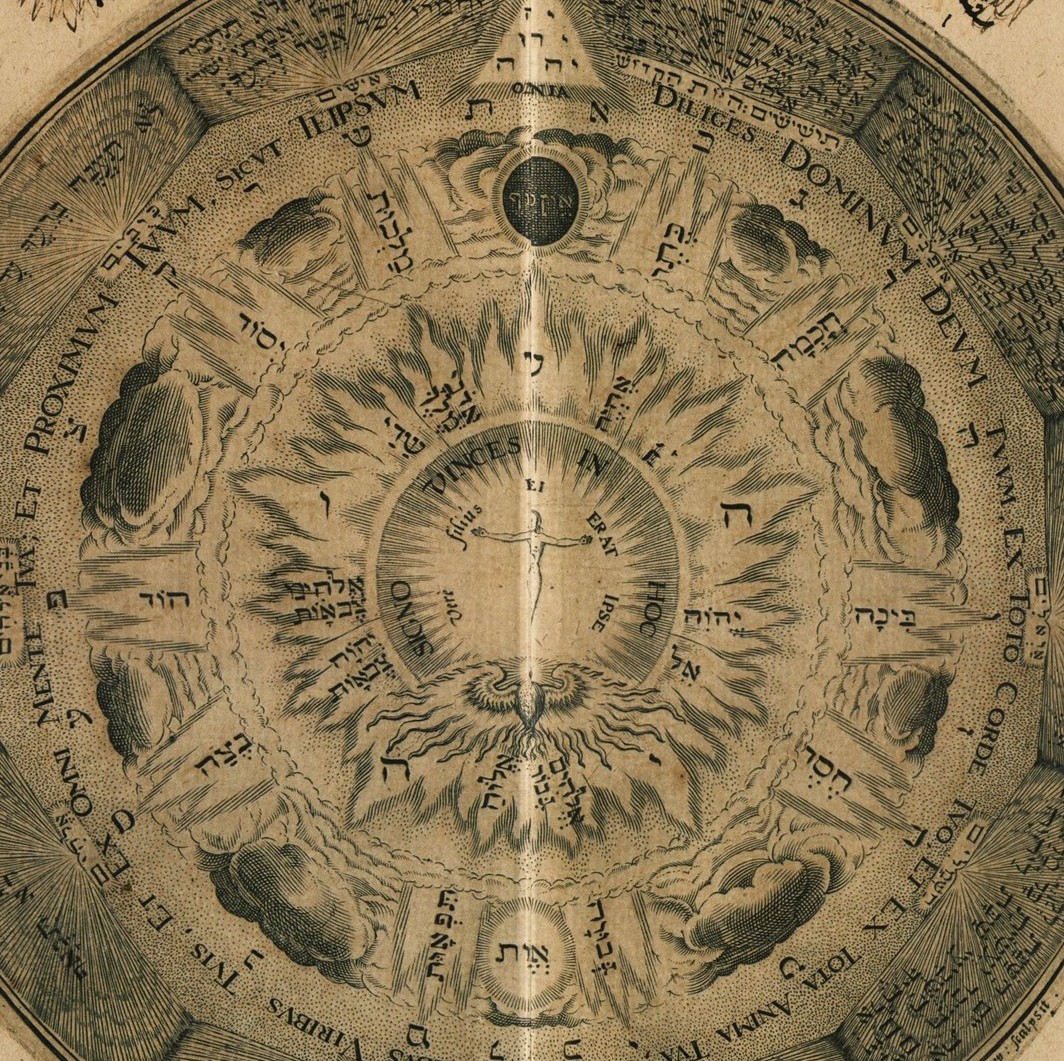
The Divine as the central motif, with the Sun and the Moon, the Triangle and the Pyramid, and the Heavens in a secondary part. From Amphitheatrum.
What is happening
Paullus van der Doort, 1609 “Inventor: Paullus vander Doort Antwerp: sculpsit.”
Symbolica, 2026 Khunrath's Latin, put into English here. Round the rim: You shall love the Lord your God with all your heart, and with all your soul, and with all your strength; and your neighbour as yourself. Round the centre: In this sign you shall conquer; he was truly the Son of God. Beneath the pyramid: All things. The pyramid at the top is the four letters of the Name set as a tetractys, one, two, three and four, the same figure Dee draws in numbers. The Hebrew on the clouds are names of the Sephiroth, understanding, mercy, strength, splendour, and the divine names El and Elohim, with Emeth, truth, in the oval at the foot. The rim names Khunrath as inventor and van der Doort of Antwerp as engraver. The dense outer ring of Hebrew is not yet transcribed. Read again at the size of the archive's image: the dark globe in the cloud under the pyramid is lettered Ain Soph, the Infinite, the Kabbalists' name for God before any name; the letters at either side of the pyramid are aleph and tav, the first and last of the alphabet; and the rim of the sun reads In this sign you shall conquer, with Dei Filius vere erat ipse, he was truly the Son of God, inside it about the figure. A sun and a moon drawn in ink in the upper margins of this copy are an early owner's, not the engraver's.
Key · 4 motifs
Tap a motif on the picture, or a line below. Its note opens under the line, with the reading its author gave it.
- Primary motif
- Secondary motifs · 3
The picture
A great circle: at the top a pyramid holding the four letters of the Name, with Omnia beneath and the dark globe of Ain Soph in a cloud below it; at the centre Christ inside the sun, a dove below him; the names of the Sephiroth in Hebrew on a ring of clouds; the two great commandments in Latin round the rim and a ring of Hebrew outside them. By eye
The reading
The picture read whole, in the archive's words, from the sources quoted on the marks. Read on, and the picture follows: the motif under discussion keeps its colour.
A great circle, and down its axis three ways of drawing God. At the top the Name: four Hebrew letters set as a pyramid, one, two, three, four, with ‘Omnia’, all things, beneath it. Under the pyramid, in a cloud, a dark globe lettered ‘Ain Soph’, the Infinite, the name the Kabbalists give to God before any name. At the centre, the Son, standing inside the sun.
Round the rim the two great commandments run in Latin, ‘Diliges Dominum Deum tuum ex toto corde tuo, et ex tota anima tua, et ex omnibus viribus tuis. Et proximum tuum sicut teipsum’, you shall love the Lord your God with all your heart, and with all your soul, and with all your strength, and your neighbour as yourself, and outside them a ring of Hebrew. The plate is a theology in one figure: the unknowable dark, the Name that can be spelled, the emanations, the incarnation, and the law, from the inside out.
The pyramid is the Name built up letter by letter, a tetractys in Hebrew. Dee, forty years earlier, drew the same figure in numbers and called it the Pythagorean quaternary; Khunrath's own title plate had already set the Name in a triangle of light. Here the pyramid has ‘Aleph. Tav.’ at either side, the first and last letters, Alpha and Omega.
Between the pyramid and the sun the clouds run in a ring, and on the clouds are the names of the Sephiroth, ‘Binah. Chesed. Geburah. Hod. Elohim. El. Emeth.’ as far as the archive reads them, with lightning striking between the clouds. This is the heavens as the Kabbalah counts them, the emanations set in a circle, and it is the middle of the plate because it is the middle of the descent.
The sun at the centre has a man in it. Christ stands with his arms spread, a dove under his feet, and the disc is lettered ‘In hoc signo vinces. Dei Filius vere erat ipse.’, in this sign you shall conquer, which Constantine saw, and he was truly the Son of God, which the centurion said. The sun the alchemists call the father of the work is here the place where God became a man, and the plate lets the two meanings stand in one disc.
Van der Doort signed it ‘Inventor: Paullus vander Doort Antwerp: sculpsit’, and a later owner drew a small sun and moon in ink in the upper margins of this copy, which the archive leaves in the picture and out of the reading.
Decoded: every motif is marked, and each mark carries the reading its author gave it, quoted from the text, or says that it is observed on the picture and not read. The reading above is the archive's own, made from those sources and no others.
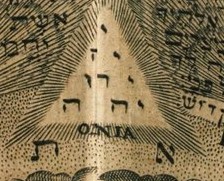
God shown, or pointed at. Look for what stands where a face would be: a name in a cloud, a circle above the top of a diagram, a ring of verses, a sign over a head.
In plain words God three ways down the axis of the plate. At the top the Name, its four letters built up as a pyramid of one, two, three and four, with Omnia, all things, beneath. Under it, in a cloud, a dark globe lettered Ain Soph, the Infinite, the God before names. At the centre the Son, in the sun. Between them, on the clouds, the Sephiroth in Hebrew, and round the rim the two commandments.
Heinrich Khunrath, 1609 “Omnia.”
Heinrich Khunrath, 1609 “Ain Soph.”
Heinrich Khunrath, 1609 “Binah. Chesed. Geburah. Hod. Elohim. El. Emeth.”
Heinrich Khunrath, 1609 “In hoc signo vinces. Dei Filius vere erat ipse.”
Heinrich Khunrath, 1609 “Diliges Dominum Deum tuum ex toto corde tuo, et ex tota anima tua, et ex omnibus viribus tuis. Et proximum tuum sicut teipsum.”
Symbolica The Latin and Hebrew, put into English here: all things; the Infinite; understanding, mercy, strength, splendour, God, God, truth; in this sign you shall conquer, he was truly the Son of God; you shall love the Lord your God with all your heart, and with all your soul, and with all your strength, and your neighbour as yourself.
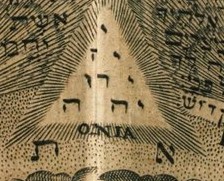
A triangle given a fourth side and set down as a solid. Three of them here, and only one has ever been explained by anybody who worked on it.
In plain words The pyramid is made of letters: one on the top row, two on the next, three, then four, the Name spelled out by accumulation. It is the tetractys of the Pythagoreans done in Hebrew, the figure Dee draws in numbers in the Monas, and it stands on the word Omnia, with aleph and tav, the first and last letters, at either side.
Heinrich Khunrath, 1609 “Omnia.”
Heinrich Khunrath, 1609 “Aleph. Tav.”
Symbolica Omnia is all things; aleph and tav are the first and last letters of the Hebrew alphabet, the Alpha and Omega of the Apocalypse in the other alphabet.
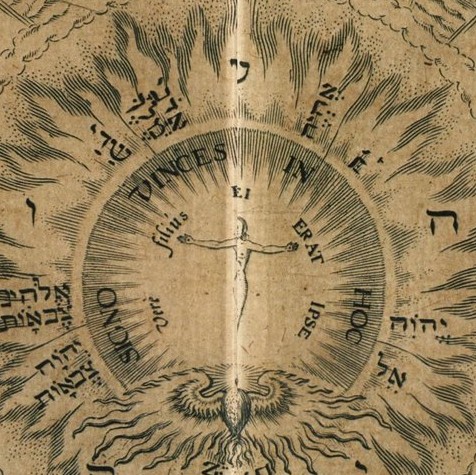
Gold, the perfected metal, and the illuminated intellect. The most overloaded symbol in the tradition.
In plain words The centre of the plate is the sun, and inside the sun is Christ with his arms out, a dove below him. The rim says in this sign you shall conquer, Constantine's words, and the disc says he was truly the Son of God, the centurion's. The sun here is not the alchemists' gold but its source, and Khunrath puts a man in it.
Heinrich Khunrath, 1609 “In hoc signo vinces. Dei Filius vere erat ipse.”
Symbolica In hoc signo vinces, in this sign you shall conquer, is the sentence Constantine is said to have seen; Dei Filius vere erat ipse, he was truly the Son of God, is the centurion's at the crucifixion.
A diagram of everything, drawn so that a person can be found inside it. Note where the human figure stands in the scheme.
In plain words Round the sun a ring of clouds, and on each cloud a Hebrew name of a Sephirah, understanding, mercy, strength, splendour: the heavens drawn as the Kabbalists count them, emanations in a circle between the Name at the top and the Son at the centre. Outside the clouds run the two commandments in Latin and a ring of Hebrew.
Symbolica The ring of clouds is marked by eye; the names on the clouds are quoted under the Name, which they belong to.
Also carrying the Divine
39 works carry it. The 6 where it is the central motif are here. The symbol.
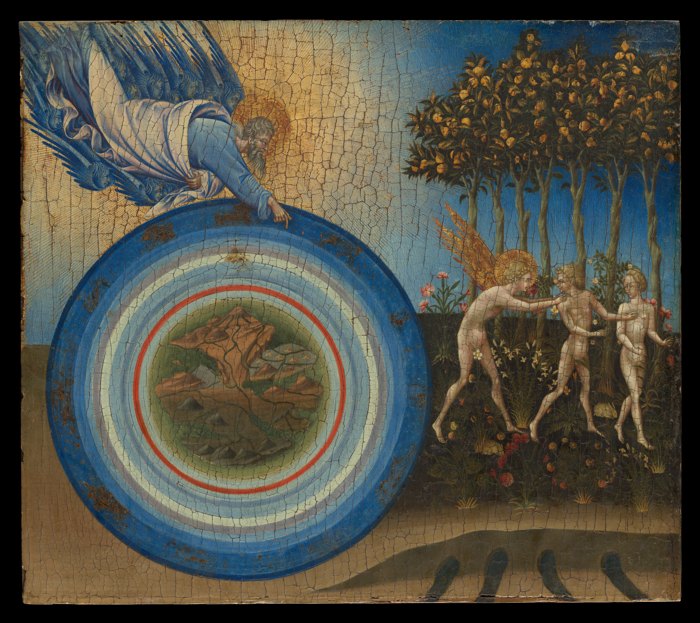
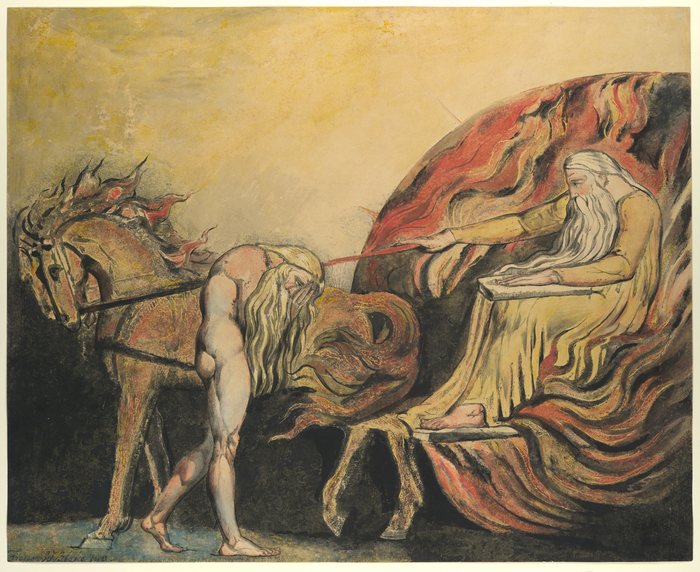
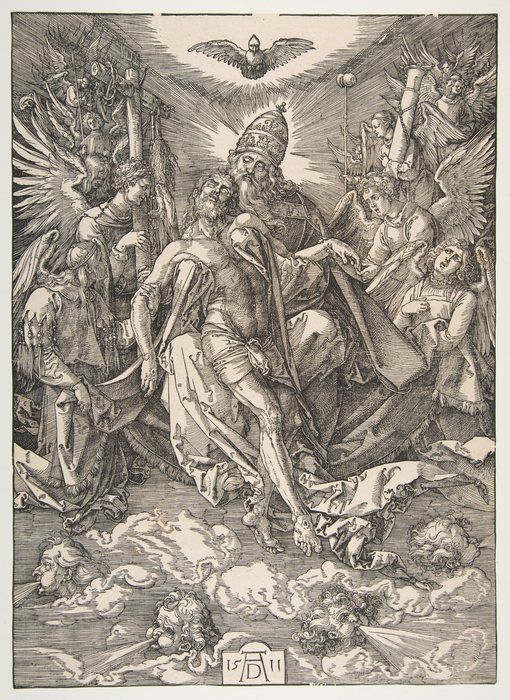
Where the detail is the subject
the Sun and the Moon · the Triangle and the Pyramid · the Heavens
Each of these is in the picture without being what it is about. Below, one work that is about each.
In the same series
Record
One symbol a week, decoded.
This picture is free at full size from its source, linked above. What an address gets is the Sunday letter: one picture, one symbol marked on it, what it meant and who said so, and the master files of the decoded plates as they are verified. Leave any time.
Free, one letter a week, unsubscribe in one click. How the address is used.
Scroll or pinch to zoom · drag to move · double-tap for 1:1 · 1400 by 1395 pixel web copy; the source file is linked under Record