The Pyramid
the unfinished pyramid, the eye in the pyramid, pyramis
A triangle given a fourth side and set down as a solid. Three of them here, and only one has ever been explained by anybody who worked on it.
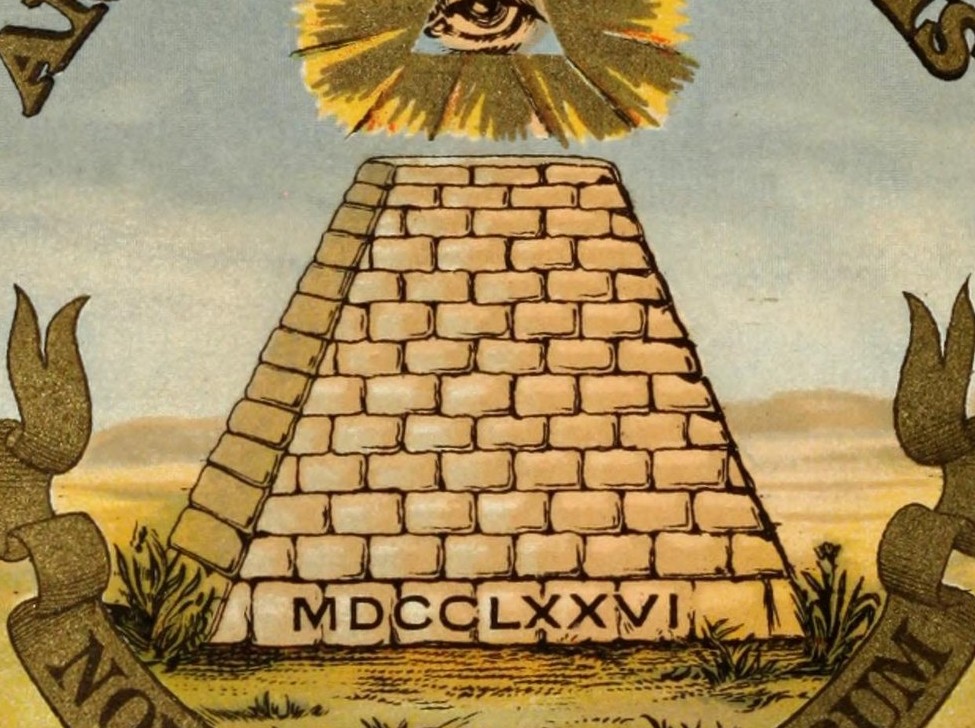
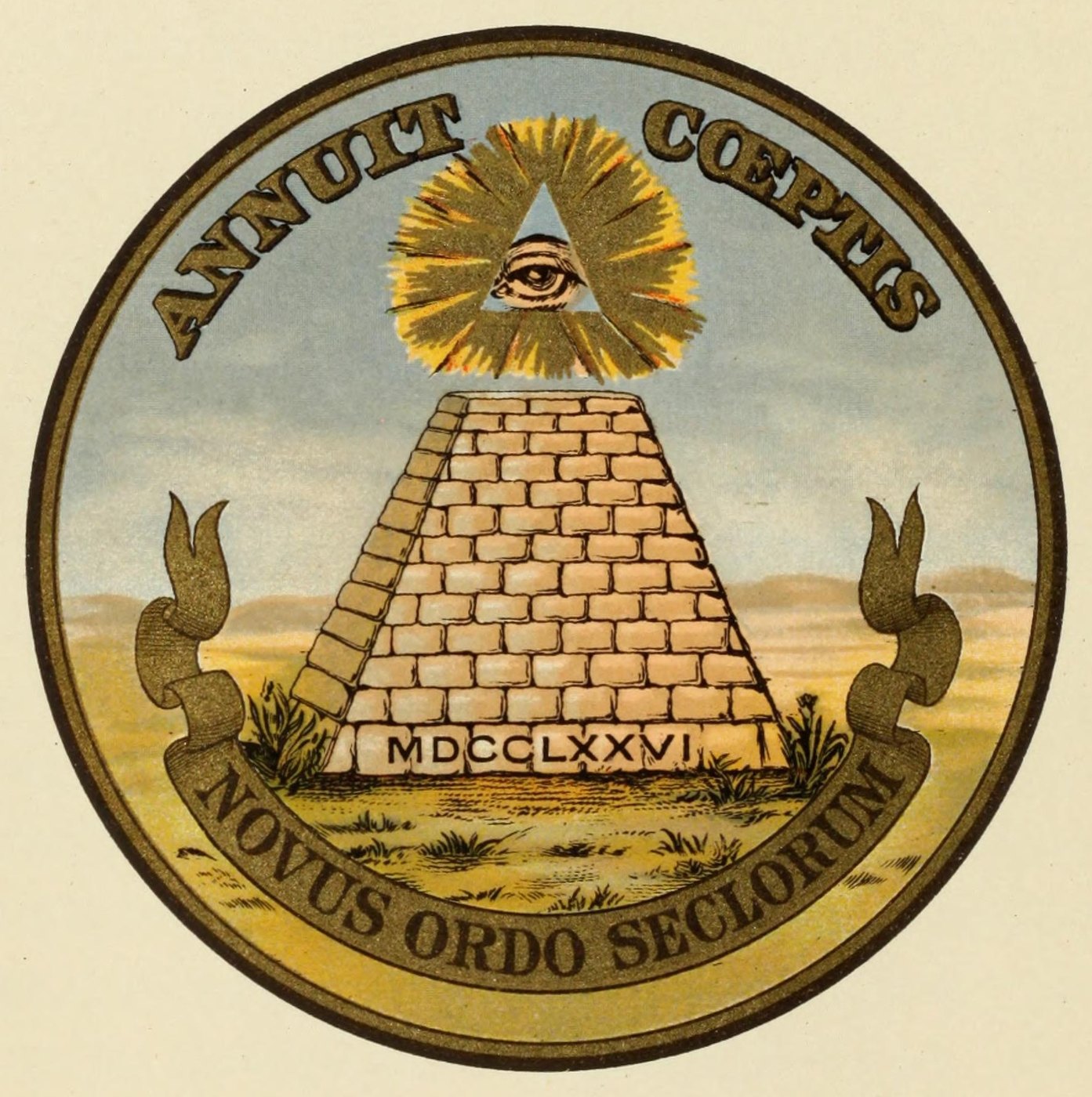
Count the courses. Thirteen on the reverse of the Great Seal with the lettered base course counted, and that number is very nearly the only thing about this pyramid that anybody involved wrote down. William Barton drew it into his design of 9 May 1782 and glossed it in the same breath: “A Pyramid of thirteen Strata, (or Steps) Or. In the Zenith; an Eye, surrounded with a Glory, proper. The Pyramid signifies Strength & Duration.” Six weeks later Congress adopted the reverse and took the number out, blazoning “A pyramid unfinished. In the zenith, an eye in a triangle, surrounded with a glory, proper.” Charles Thomson's Remarks, adopted with the device, keep Barton's five words and add nothing to them: “The pyramid signifies Strength and Duration”.
Strength and duration. Two nouns, written by the herald who drew the thing, printed in the report Congress adopted. Everything fastened to that pyramid since has arrived without a signature.
Read Thomson's next clause and the eye comes away from the pyramid in his hands. “The Eye over it & the Motto allude to the many signal interpositions of providence in favour of the American cause.” The eye is thanking somebody. It floats clear of the flat top in a triangle of its own, in a sentence of its own, and the two were put on one plate rather than made into one meaning.
Khunrath cut his pyramids a hundred and eighty years earlier and used them for the thing the Great Seal's is not used for, which is writing. Two stand at the gate of his citadel of the first matter carrying one word each, “Fides. Taciturnitas.”, faith and silence, and the road behind them tells the traveller what to do once inside: “Theosophice ora. Physico-chymice labora.”, pray theosophically, work physico-chemically. The pyramids are the terms of entry, and he letters them so that nobody has to guess.
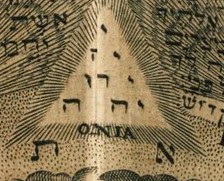
His other one is built out of a word. At the head of the plate where Christ stands in the sun, the four Hebrew letters of the Name are stacked one, two, three, four, so that spelling God and counting to four become the same action, with “Omnia.”, all things, under the apex and the first and last letters of the alphabet, “Aleph. Tav.”, at either side. Khunrath thought a pyramid was something you could build a name out of.
None of the three is Egyptian. Khunrath's stand in a German landscape with a waterfall and swans, and the one on the Great Seal is masonry, course on course, with no pharaoh, no desert and no chamber anywhere near it. Barton wrote five words, Thomson kept them, Congress printed them, and nobody who was in the room wrote a sixth.
Contested
Sources
- William Barton, the third committee's design for the reverse, 1782: Barton's report of 9 May 1782, page 30 of the Department of State history of the seal, 1909.
- Charles Thomson, Remarks and Explanation, the report adopted with the device, 1782: The blazon adopted by Congress on 20 June 1782 and Thomson's Remarks, pages 41 and 42 of the Department of State history of the seal, 1909.
- Heinrich Khunrath, Amphitheatrum Sapientiae Aeternae, 1609: The words lettered on the two pyramids at the citadel gate and on the road behind them, and the letters of the Name at the head of the plate of Christ in the sun, read off the plates at the size of the archive's own images.
On the same plate
Where it appears · 3
3 works in the archive carry the Pyramid. First the 3 where it has been read, with the Pyramid itself picked out.