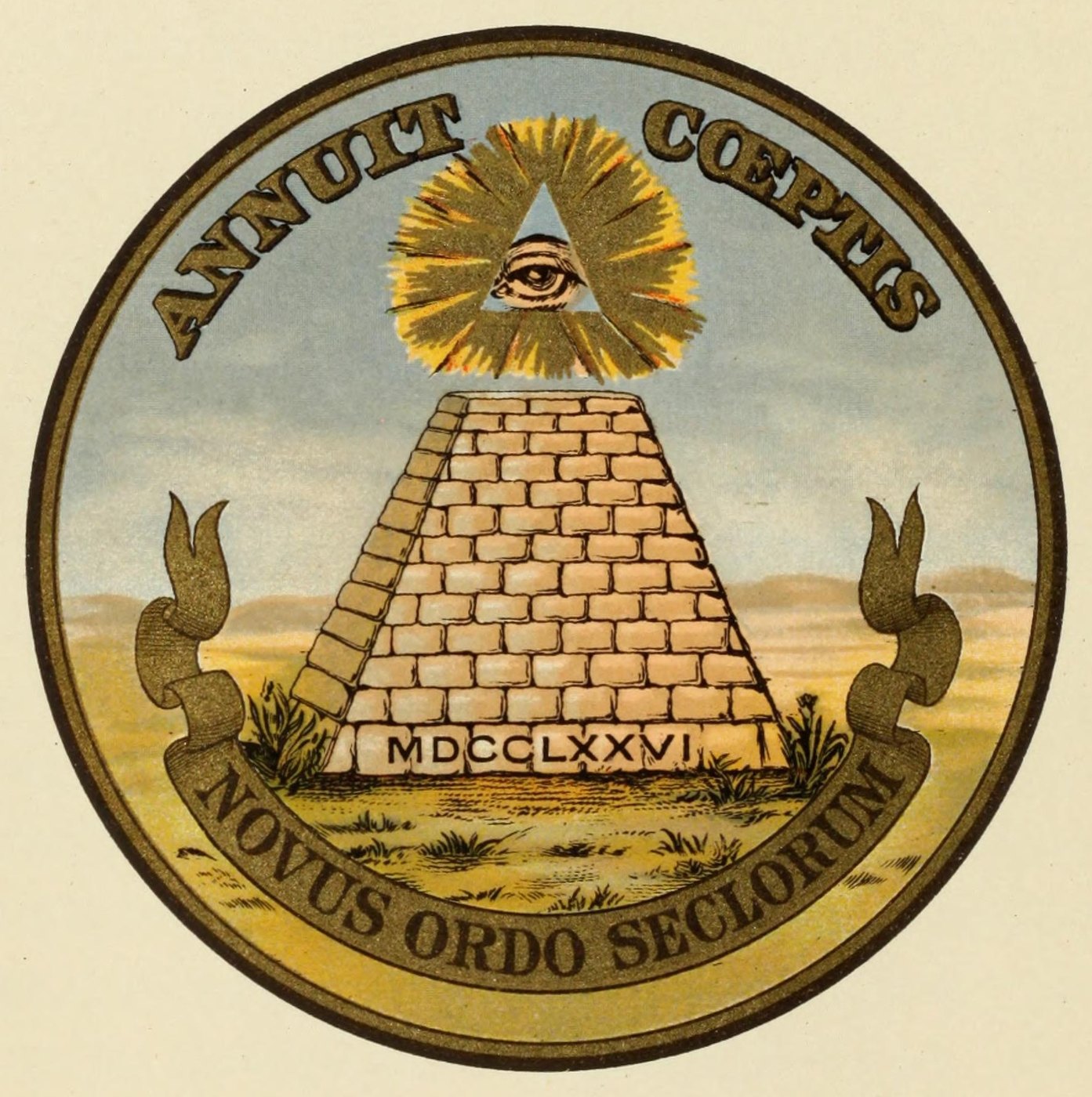
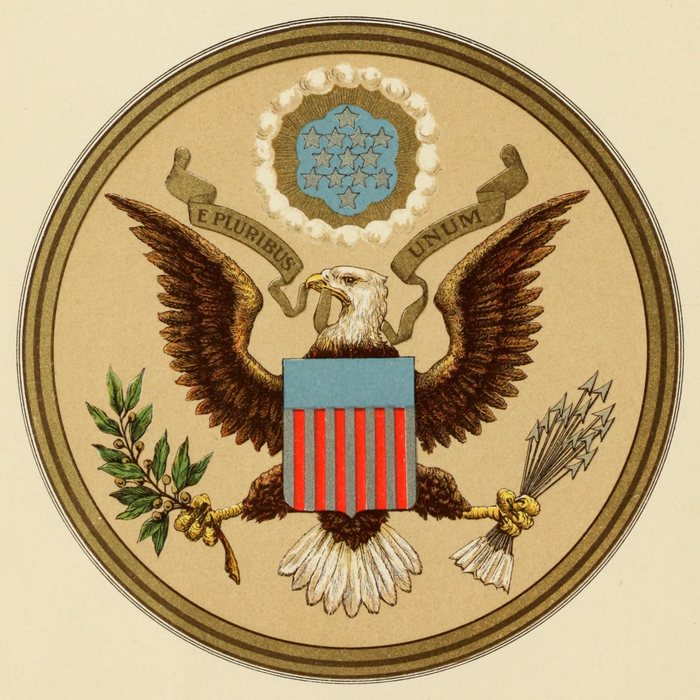
The Great Seal of the United States, the reverse
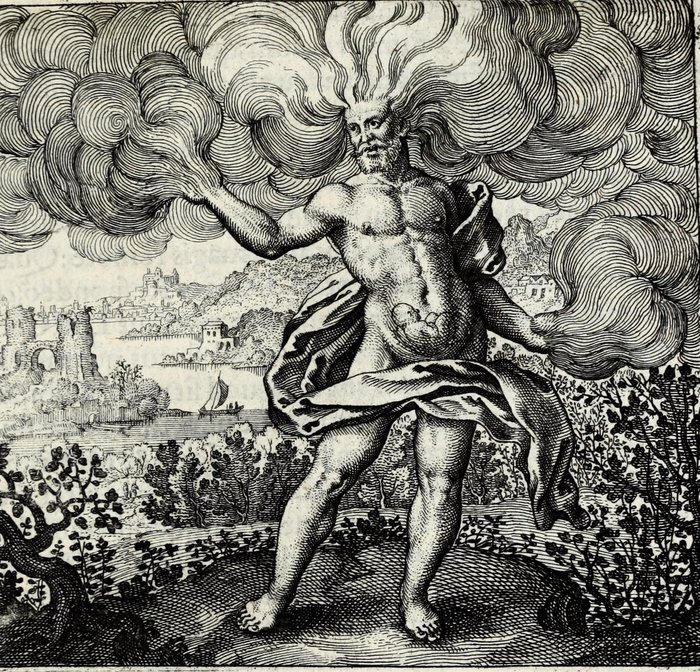
The Eye as the central motif, with the Triangle and the Pyramid, and the Divine in a secondary part. From The Great Seal.
What is happening
The Congress of the United States, 1782 “REVERSE. A pyramid unfinished. In the zenith, an eye in a triangle, surrounded with a glory proper. Over the eye these words, Annuit Coeptis. On the base of the pyramid the numerical letters MDCCLXXVI. And underneath the following motto, Novus Ordo Seclorum.”
Symbolica, 2026 Adopted with the obverse on 20 June 1782. No die of the reverse has ever been cut, so every picture of it, this one included, is a rendering from the words. This plate is the Department of State's own, printed in colour in its history of the seal in 1909.
Key · 3 motifs
Tap a motif on the picture, or a line below. Its note opens under the line, with the reading its author gave it.
- Primary motif
- Secondary motifs · 2
The picture
An unfinished pyramid of squared stone in a desert, the date MDCCLXXVI cut into its base course, an eye in a triangle in a glory of rays above the apex, and the mottoes Annuit Coeptis over it and Novus Ordo Seclorum on a scroll below. By eye
The reading
The picture read whole, in the archive's words, from the sources quoted on the marks. Read on, and the picture follows: the motif under discussion keeps its colour.
The reverse of the Great Seal is the most looked at and least read picture in the archive. It reaches most people on the back of a one-dollar bill, where it has been since 1935, and it arrives there with a story attached about secret societies. The story has a simple problem: the man who designed the device wrote down what every part of it means, and Congress adopted his explanation along with the picture on 20 June 1782. The key is not hidden. It is the law.
Charles Thomson, Secretary of Congress, gives the pyramid two words. ‘The pyramid signifies Strength and Duration.’ That is the whole of it. The blazon adopted with it says only ‘A pyramid unfinished’, and the plate draws it as squared masonry that stops flat rather than rising to a point. Counting the courses on this plate, with the lettered base counted, gives thirteen, which is the number of the founding states and the number that runs through the obverse as well. Thomson does not count them, and the archive marks the count as its own. What the unfinished top means is not stated anywhere in the report.
Above the apex, clear of the stone, is an eye inside a triangle inside a burst of rays. Thomson ties it to the motto in one clause: ‘The Eye over it & the Motto allude to the many signal interpositions of providence in favour of the American cause.’ Interposition is the word to hold on to. The eye is not watching to judge, the way Cross's All-seeing Eye watches a heart in the masonic monitor of 1819. It is being thanked for having intervened. The claim on the plate is about the past, not about power.
The two mottoes carry the same tense. Annuit Coeptis, arched over the eye, is third person and perfect: he has nodded at the things begun. Novus Ordo Seclorum, on the scroll along the foot, Thomson glosses as ‘the beginning of the new American Aera, which commences from that date’, the date being the MDCCLXXVI cut into the base course, the Declaration of Independence. New order of the ages, not new world order: seclorum is the genitive of saeculum, an age or a generation, and the phrase is lifted from Virgil's fourth Eclogue.
The reverse has one further oddity worth knowing. No die of it has ever been cut. The obverse was cut in brass within months of adoption and has been in continuous use since; the reverse existed only as a description in the record until the nineteenth century, and every picture of it, this one included, is a rendering made from Thomson's words. The plate here is the Department of State's own, printed in colour in its history of the seal in 1909, which is as official as a picture of the reverse can be.
Decoded: every motif is marked, and each mark carries the reading its author gave it, quoted from the text, or says that it is observed on the picture and not read. The reading above is the archive's own, made from those sources and no others.
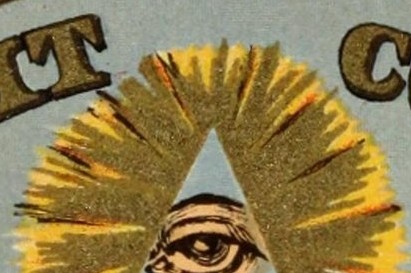
Attention from outside the frame. Note it is almost always placed at a boundary rather than at the centre.
In plain words An eye is set inside a small triangle and the triangle inside a burst of gold rays, floating clear of the pyramid's flat top. Thomson's report, adopted as part of the law with the device, says what it is for: the eye and the motto over it are there to acknowledge how often providence stepped in on the American side. It is an eye of thanks rather than an eye of surveillance, and the motto above it, Annuit Coeptis, is the sentence it belongs to: He has nodded at our undertakings.
Charles Thomson, 1782 “Reverse. The pyramid signifies Strength and Duration: The Eye over it & the Motto allude to the many signal interpositions of providence in favour of the American cause. The date underneath is that of the Declaration of Independence and the words under it signify the beginning of the new American Aera, which commences from that date.”
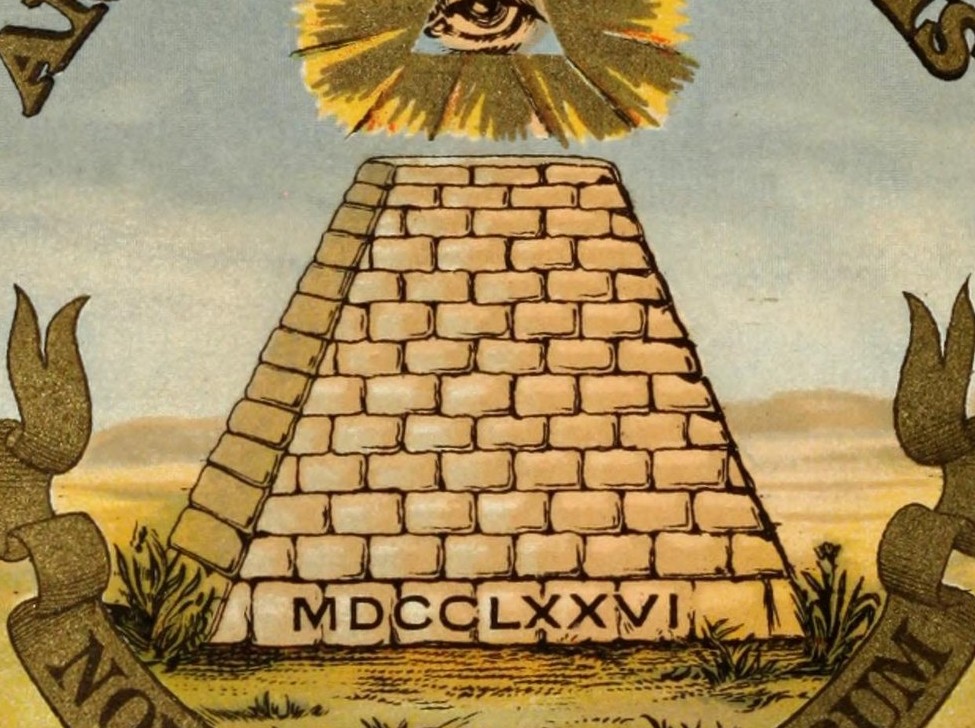
A triangle given a fourth side and set down as a solid. Three of them here, and only one has ever been explained by anybody who worked on it.
In plain words The pyramid is drawn as masonry, course on course, and stops flat instead of coming to a point. The two words attached to it belong to William Barton, who wrote them under his own design of 9 May 1782, six weeks before the device was adopted: the Pyramid signifies Strength and Duration. Thomson kept the sentence when he took the reverse over. Barton counted the courses in the same paragraph, thirteen strata, and the blazon Congress adopted six weeks later leaves the number out altogether: a pyramid unfinished. The archive counts thirteen courses on this plate with the lettered base course counted. The date MDCCLXXVI is cut into that base course, and Thomson says it is the date of the Declaration of Independence and that the words under it mean the American era begins there.
William Barton, 1782 “A Pyramid of thirteen Strata, (or Steps) Or. In the Zenith; an Eye, surrounded with a Glory, proper. The Pyramid signifies Strength & Duration.”
Charles Thomson, 1782 “A pyramid unfinished. In the zenith, an eye in a triangle, surrounded with a glory, proper.”
Charles Thomson, 1782 “Reverse. The pyramid signifies Strength and Duration: The Eye over it & the Motto allude to the many signal interpositions of providence in favour of the American cause. The date underneath is that of the Declaration of Independence and the words under it signify the beginning of the new American Aera, which commences from that date.”
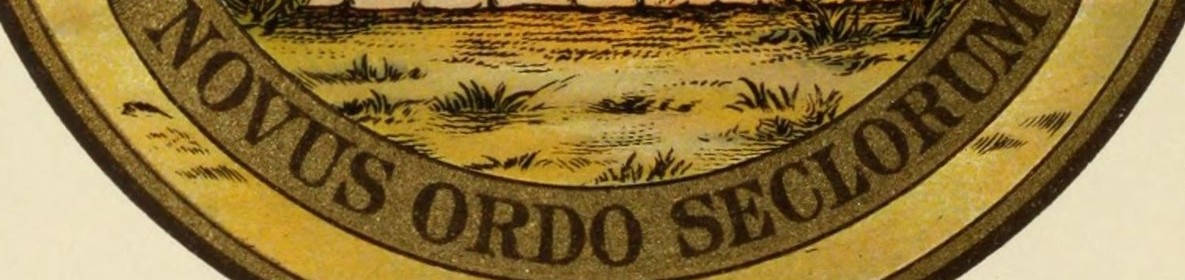
God shown, or pointed at. Look for what stands where a face would be: a name in a cloud, a circle above the top of a diagram, a ring of verses, a sign over a head.
In plain words Two mottoes close the device, one above and one below. Annuit Coeptis is the half of the sentence Thomson pairs with the eye: providence has favoured what was begun. Novus Ordo Seclorum sits under the date and, in his words, signifies the beginning of the new American era, counted from 1776. Neither motto names God. Both are third-person and past tense, which is what makes the reverse a statement of gratitude rather than a claim of authority.
Charles Thomson, 1782 “Reverse. The pyramid signifies Strength and Duration: The Eye over it & the Motto allude to the many signal interpositions of providence in favour of the American cause. The date underneath is that of the Declaration of Independence and the words under it signify the beginning of the new American Aera, which commences from that date.”
Also carrying the Eye
8 works carry it. The 3 where it is the central motif are here. The symbol.
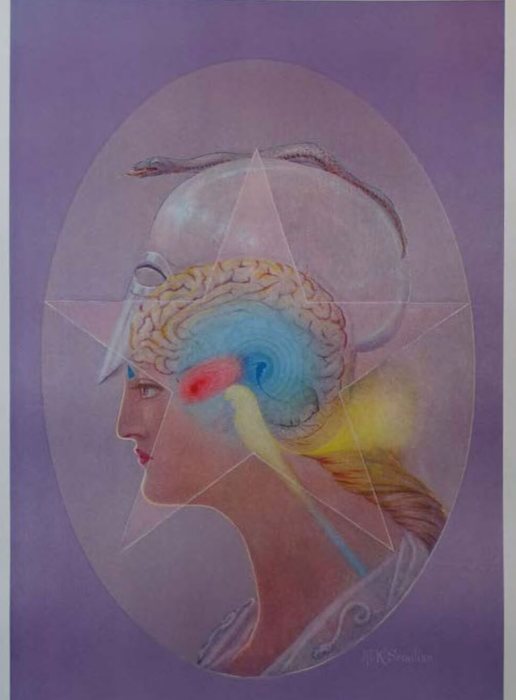
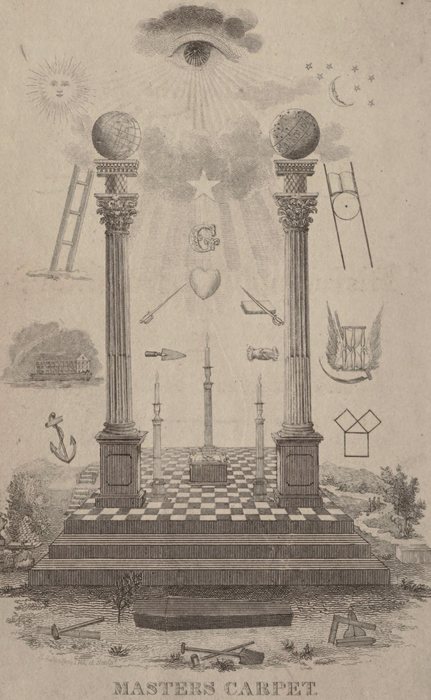
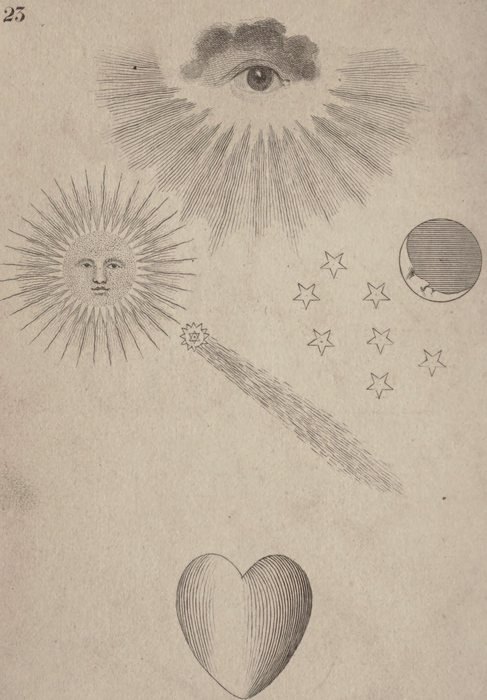
Where the detail is the subject
the Triangle and the Pyramid · the Divine
Each of these is in the picture without being what it is about. Below, one work that is about each.
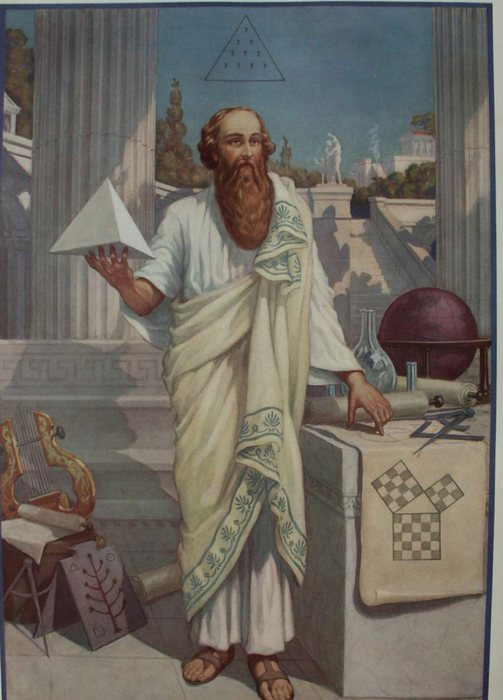
In the same series
Record
One symbol a week, decoded.
This picture is free at full size from its source, linked above. What an address gets is the Sunday letter: one picture, one symbol marked on it, what it meant and who said so, and the master files of the decoded plates as they are verified. Leave any time.
Free, one letter a week, unsubscribe in one click. How the address is used.
Scroll or pinch to zoom · drag to move · double-tap for 1:1 · 1393 by 1400 pixel web copy; the source file is linked under Record