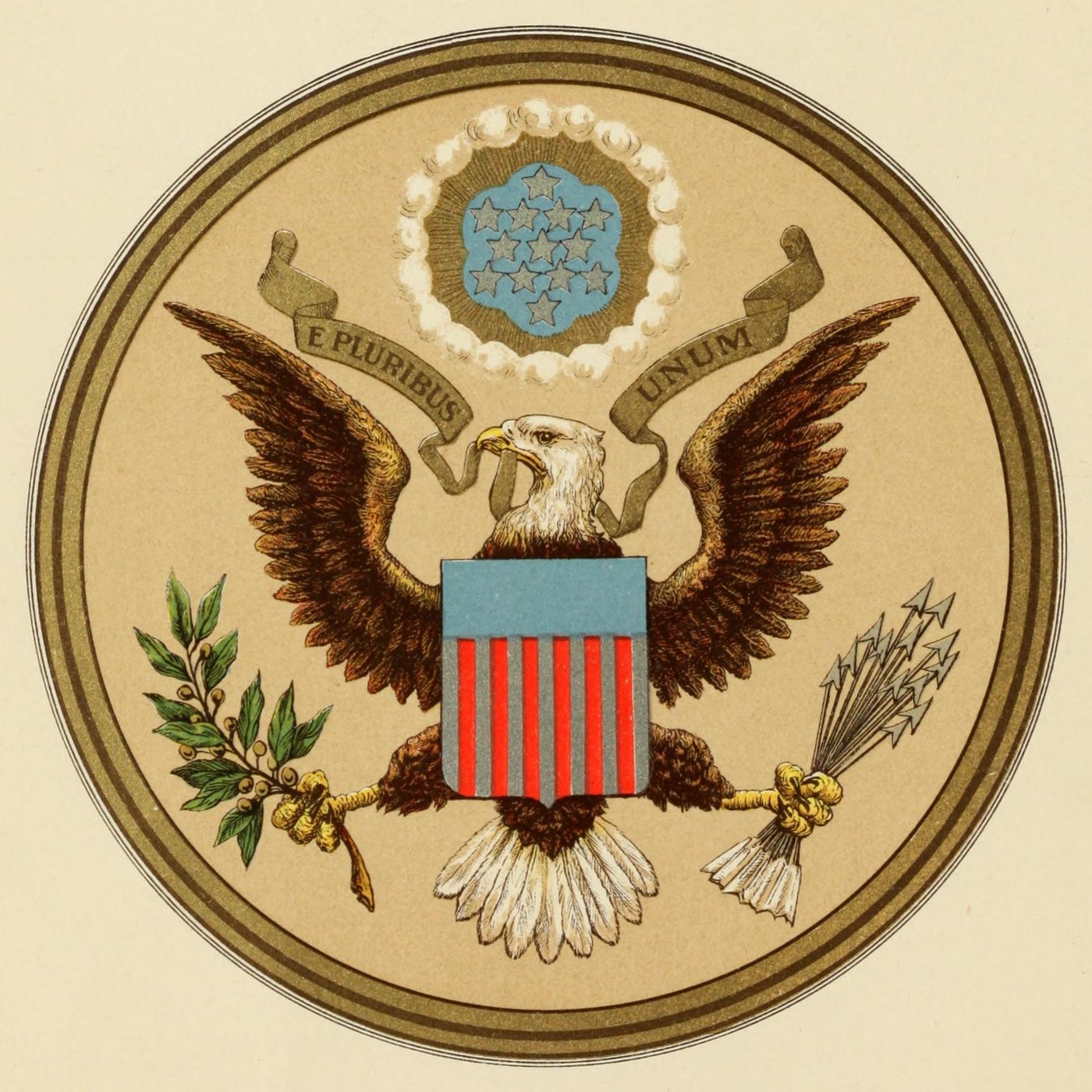
The Great Seal of the United States, the obverse
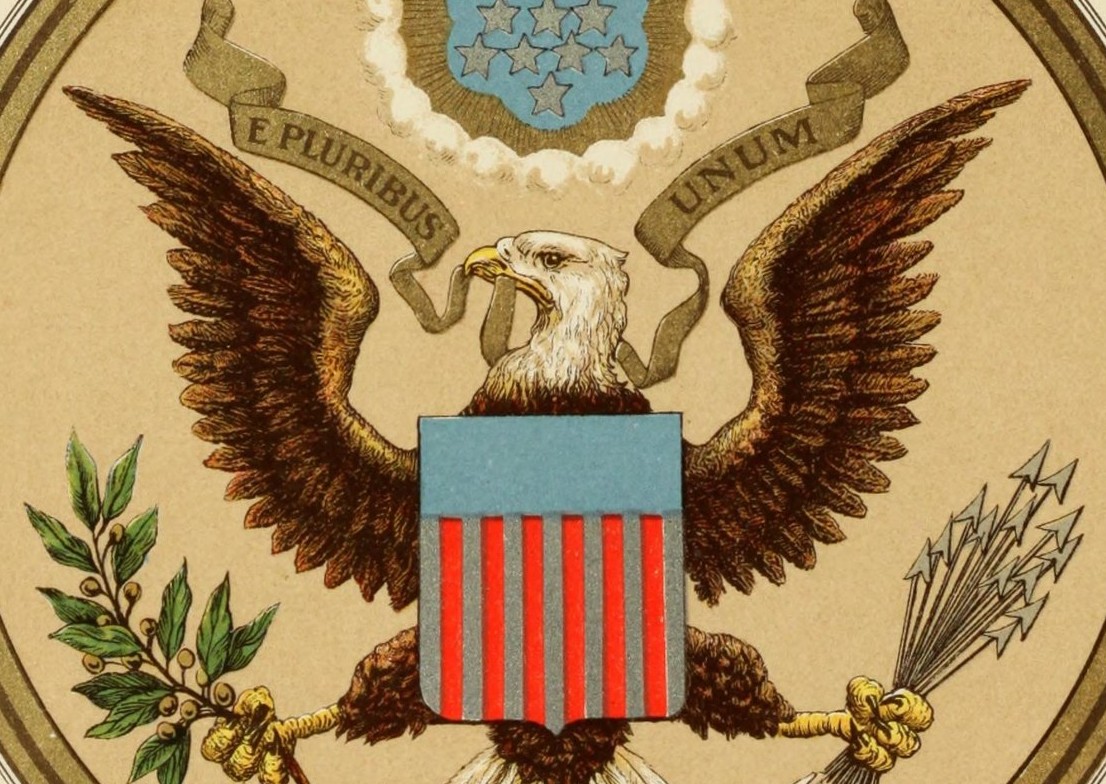
The Bird as the central motif, with the Heavens in a secondary part. From The Great Seal.
What is happening
The Congress of the United States, 1782 “ARMS. Paleways of thirteen pieces, argent and gules; a chief, azure; the escutcheon on the breast of the American eagle displayed proper, holding in his dexter talon an olive branch, and in his sinister a bundle of thirteen arrows, all proper, and in his beak a scroll, inscribed with this motto, E pluribus Unum.”
Symbolica, 2026 The obverse was cut in brass within months of adoption and has been the seal in use ever since. This is the Department of State's colour plate of 1909, the frontispiece to its own history of the seal.
Key · 2 motifs
Tap a motif on the picture, or a line below. Its note opens under the line, with the reading its author gave it.
- Primary motif
- Secondary motifs · 1
The picture
An eagle displayed with a striped shield on its breast, an olive branch in one talon and thirteen arrows in the other, E Pluribus Unum on a scroll in its beak, and above its head thirteen stars set in a six-pointed figure inside a glory breaking through cloud. By eye
The reading
The picture read whole, in the archive's words, from the sources quoted on the marks. Read on, and the picture follows: the motif under discussion keeps its colour.
This is the side that was actually cut. Within months of the adoption on 20 June 1782 the obverse was engraved in brass and pressed into wax over a paper wafer, and the first surviving impression is on a commission of 16 September 1782 giving Washington power to arrange a prisoner exchange with the British. The device has been the seal of the United States without interruption since.
Charles Thomson's report, adopted with the picture, explains the eagle by what is missing from it. ‘The Escutcheon is born on the breast of an American Eagle without any other supporters, to denote that the United States of America ought to rely on their own Virtue.’ European arms are held up by lions, unicorns, angels, saints. This shield is held up by nothing, and the nothing is the argument. In the talons, an olive branch and thirteen arrows: ‘The Olive branch and arrows denote the power of peace & war which is exclusively vested in Congress.’ They are in one pair of feet because they belong to one body.
The shield itself is read stripe by stripe. The thirteen pales are ‘the Several States all joined in one solid compact entire, supporting a Chief, which unites the whole & represents Congress’, and the blue band across the top is that Congress. Thomson then makes the structural point twice over: the pales are held together by the chief, and the chief rests on the strength of their union. The motto in the beak, E Pluribus Unum, is his gloss on the same arrangement.
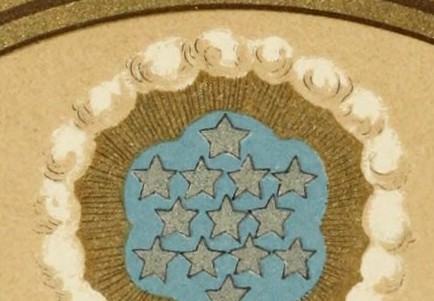
Above the head, thirteen stars in a glory breaking through cloud. The blazon asks for ‘thirteen stars, forming a constellation, argent, on an azure field’ and Thomson explains the figure rather than the number: ‘The Constellation denotes a new State taking its place and rank among other sovereign powers.’ The new state is the United States itself, arriving in the sky of nations. How the thirteen are arranged is the engraver's business, not the law's, and on this plate they fall into a six-pointed figure, one over four over three over four over one. The archive records the arrangement as something it counted on the plate. The report does not name it and does not ask for it.
What makes both faces of this seal worth an archive built on attribution is that Congress adopted the explanation along with the device. Hunt notes that the Remarks and Explanation were left out of the printed journals but ‘constitute an essential part of the fundamental law as Congress adopted it’. Very few pictures anywhere come with their key ratified by a legislature.
Decoded: every motif is marked, and each mark carries the reading its author gave it, quoted from the text, or says that it is observed on the picture and not read. The reading above is the archive's own, made from those sources and no others.
What rises and what comes back down. Note whether the bird is flying, caught, or paired with a second one.
In plain words The eagle stands with its wings spread and carries everything: a shield on its breast with no supporters beside it, an olive branch in one foot and thirteen arrows in the other, and a scroll in its beak reading E Pluribus Unum. Thomson explains the absence rather than the bird. There are no supporters because the country is to lean on nothing but itself. The branch and the arrows are peace and war, and the point of putting both in one pair of talons is that Congress alone holds them.
Charles Thomson, 1782 “The Escutcheon is born on the breast of an American Eagle without any other supporters, to denote that the United States of America ought to rely on their own Virtue.”
Charles Thomson, 1782 “The Olive branch and arrows denote the power of peace & war which is exclusively vested in Congress.”
Charles Thomson, 1782 “The pieces, paly, represent the Several States all joined in one solid compact entire, supporting a Chief, which unites the whole & represents Congress. The Motto alludes to this union.”
A diagram of everything, drawn so that a person can be found inside it. Note where the human figure stands in the scheme.
In plain words Thirteen stars stand on a blue field inside a golden glory, with a ring of white cloud broken open around it. The blazon calls them a constellation and Thomson says what a constellation is for: a new state taking its place among the sovereign powers. The engraver has set the thirteen as a six-pointed figure, one at the top, four, three, four, one, which is what the archive counts on this plate. Neither the blazon nor the report asks for that arrangement or names it.
The Congress of the United States, 1782 “For the CREST. Over the head of the eagle, which appears above the escutcheon, a glory, or, breaking through a cloud, proper, and surrounding thirteen stars, forming a constellation, argent, on an azure field.”
Charles Thomson, 1782 “The Constellation denotes a new State taking its place and rank among other sovereign powers.”
Also carrying the Bird
24 works carry it. The 6 where it is the central motif are here. The symbol.
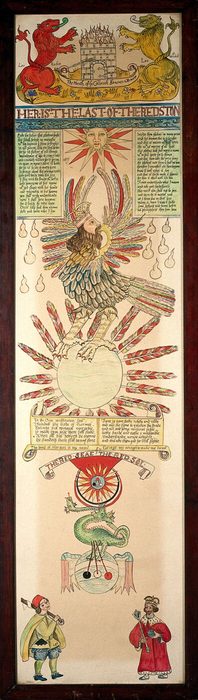
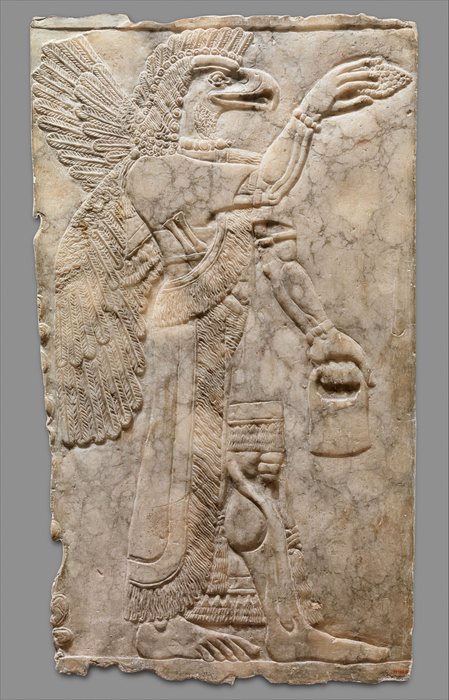
Where the detail is the subject
This is in the picture without being what it is about. Below, one work that is about it.
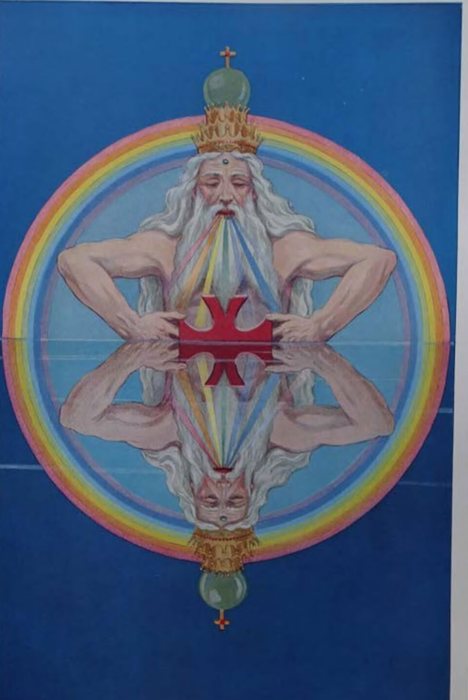
In the same series
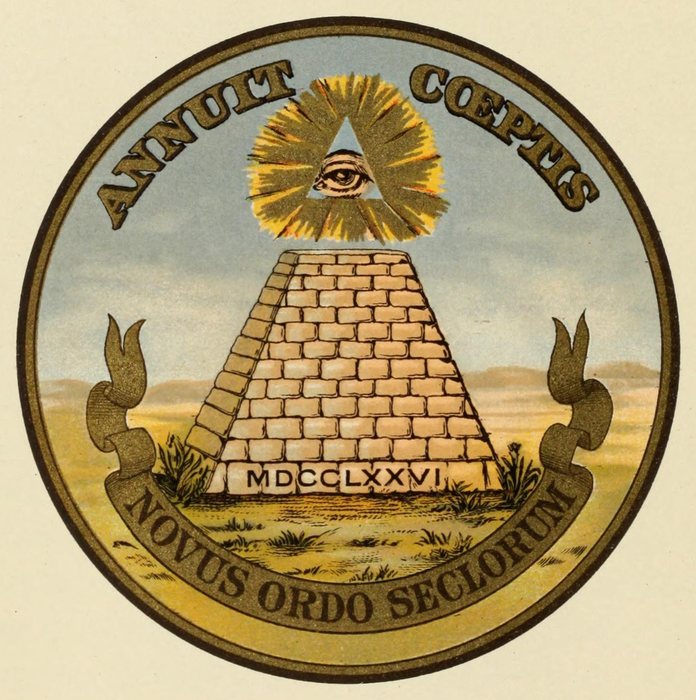
Record
One symbol a week, decoded.
This picture is free at full size from its source, linked above. What an address gets is the Sunday letter: one picture, one symbol marked on it, what it meant and who said so, and the master files of the decoded plates as they are verified. Leave any time.
Free, one letter a week, unsubscribe in one click. How the address is used.
Scroll or pinch to zoom · drag to move · double-tap for 1:1 · 1400 by 1400 pixel web copy; the source file is linked under Record