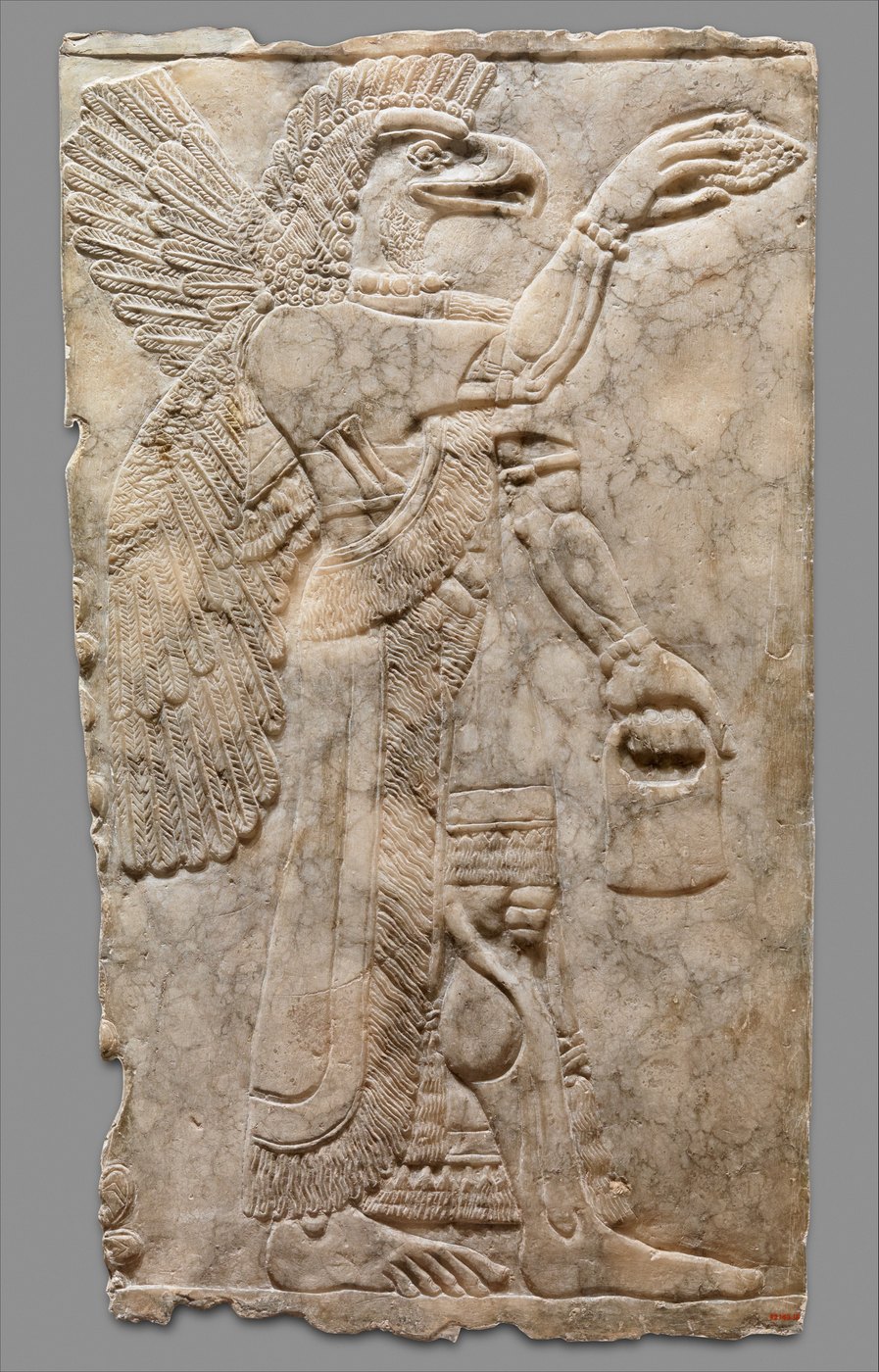
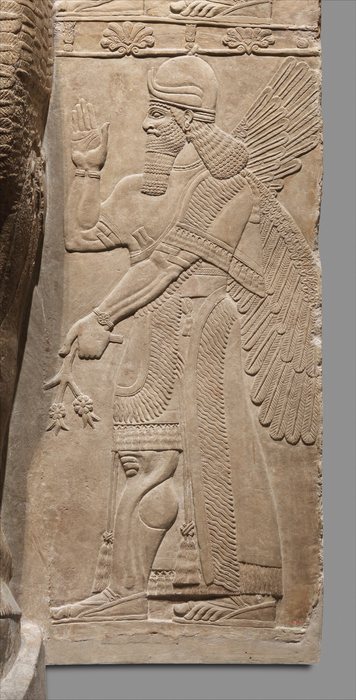
Eagle-headed figure with the bucket and the cone
The Bird as the central motif, with the Angel and the Wing, the Vessel, and the Tree in a secondary part. From Nimrud, 9th century BCE.
What is happening
The Metropolitan Museum of Art, 2026 “This panel from the Northwest Palace at Nimrud (ancient Kalhu) depicts a winged supernatural figure. Such figures appear throughout the palace, sometimes flanking either the figure of the Assyrian king or a stylized “sacred tree.” The reliefs were painted, but today almost none of the original pigment survives.”
The Metropolitan Museum of Art, 2026 “Also unique to the Northwest Palace is the so-called Standard Inscription that ran across the middle of every relief, often cutting across the imagery. The inscription, carved in cuneiform script and written in the Assyrian dialect of the Akkadian language, lists the achievements of Ashurnasirpal II (r. 883–859 B.C.), the builder of the palace.”
Symbolica The writing on these walls is the king's, and it is about the king. A reader who came to the palace wanting the figure explained would have found an ancestry, a list of campaigns and a building account instead.
Key · 4 motifs
Tap a motif on the picture, or a line below. Its note opens under the line, with the reading its author gave it.
- Primary motif
- Secondary motifs · 3
The picture
A standing figure with the head and beak of an eagle, two great wings behind it, a cone raised in the right hand and a handled bucket carried in the left, rosette bracelets at both wrists, and a fringed shawl worn over a long robe. By eye
The reading
The picture read whole, in the archive's words, from the sources quoted on the marks. Read on, and the picture follows: the motif under discussion keeps its colour.
Austen Henry Layard's workmen dug this figure out of a trench at Nimrud in the eighteen forties, and by 1849 he had a name for it. Nisroch, the god in whose temple Sennacherib was killed by his sons. His whole reason was one word: nisr is eagle in the Semitic languages, and this creature has the head of an eagle. The name held for the better part of a century.
Now look at the bottom of the page it appears on. Layard sets a footnote under his own identification and offers, quite differently, that the various forms may be attributes of one deity, and that an eagle-headed figure beating a lion could stand for intellect over strength. He printed the claim and the doubt within an inch of each other. Almost everything written since has kept the first and dropped the second.
Raised in the right hand is a cone, cut in overlapping scales. Layard called it a fir-cone and put it into the best sentence in his book, a walk through galleries his men had just opened, past lines of winged figures carrying fir-cones before what he called the mystic tree. The Metropolitan Museum's entry supplies the reading that has lasted: the cone resembles “the male date spathe used by Mesopotamian farmers, with water, to artificially fertilize female date-palm trees”, so the gesture may be a fertilising one. Against that the museum sets a second fact and leaves both standing, which is that Akkadian names the object a purifier.
In the other hand hangs the bucket, and the bucket is why anyone posts this slab at all. Online it is a handbag. Layard, who drew hundreds of them, called it the square basket, or utensil, and wrote a paragraph on how richly it was decorated without once saying what it held. He does not guess, and neither does the stone.
On page 462 he prints a woodcut of a figure very like this one and grants, directly under it, that a mythic meaning was certainly attached to every image of the kind. Then his sentence turns and runs over the page break: “But I cannot venture, at present, to conjecture the signification of any of them.” The excavator, with more of this material in front of him than anybody before or since, declined to say what it meant.
The name it carries now is Anunnaki, and that arrives by a long road. Zecharia Sitchin published The 12th Planet in New York in 1976, reading the Anunnaki of Sumerian literature as visitors from a planet he calls Nibiru; the book is in copyright and is not quoted here. Two things about this slab settle the matter without opening it. Sumer's cities had been gone for more than a thousand years when Ashurnasirpal's masons cut it, and the language written across it is Akkadian in its Assyrian dialect.
That writing deserves a minute, because it is the nearest thing here to the maker speaking. The Metropolitan Museum's entry describes it running across the middle of every relief in the palace, often straight through the picture, and lists what it holds: the king's ancestry and titles, his campaigns east and west, his building works at Nimrud. Anyone hoping the wall would explain the figure on it got a building account.
The best name anybody has for the creature was found somewhere else. Small figures were buried in groups under Assyrian doorways for protection, ritual texts say who they were, and the museum sets those beside these reliefs to suggest the apkallu, wise sages from the distant past. Somebody wrote that down. Nobody wrote it on the wall.
Decoded: every motif is marked, and each mark carries the reading its author gave it, quoted from the text, or says that it is observed on the picture and not read. The reading above is the archive's own, made from those sources and no others.
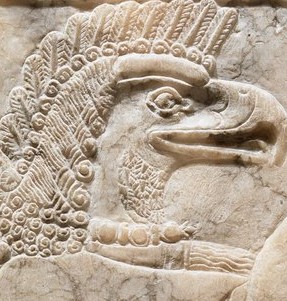
What rises and what comes back down. Note whether the bird is flying, caught, or paired with a second one.
In plain words Layard named this head in 1849 and the name held for the better part of a century. He called it Nisroch, on the strength of a word: nisr is eagle in the Semitic languages, and Nisroch is the god in whose temple Sennacherib was killed. Under the same identification he set a footnote taking most of it back.
Austen Henry Layard, 1849 “identified with the god Nisroch*, in whose temple Sennacherib was slain by his sons; for the word Nisr signifies, in all the Semitic languages, an eagle.”
Austen Henry Layard, 1849 “It is possible that these various forms represent different attributes of one and the same deity, and that the victory of the eagle-headed figure over the lion, or bull, may denote the superiority of intellect over mere physical strength.”
The Metropolitan Museum of Art, 2026 “Because of their resemblance to groups of figurines buried under doorways for protection whose identities are known through ritual texts, it has been suggested that the figures in the palace reliefs represent the apkallu, wise sages from the distant past.”
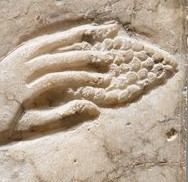
A body drawn as growth. Note which way it grows and what is at the root rather than at the top.
In plain words Layard called it a fir-cone. The Metropolitan Museum's entry offers the reading that has held longest, that the shape is the male flower of the date palm and the gesture a fertilising one, and then sets against it the Akkadian name for the object, which is purifier.
Austen Henry Layard, 1849 “there lines of winged figures, carrying fir-cones and religious emblems, and seemingly in adoration before the mystic tree.”
The Metropolitan Museum of Art, 2026 “One suggestion has been that the gesture, sometimes performed by figures flanking a sacred tree, is symbolic of fertilization: the “cone” resembles the male date spathe used by Mesopotamian farmers, with water, to artificially fertilize female date-palm trees. It does seem likely that the cone was supposed to hold and dispense water from the bucket in this way, but it is described in Akkadian as a “purifier,” and the fact that figures performing this gesture are also shown flanking the king suggests that some purifying or protective meaning is present.”
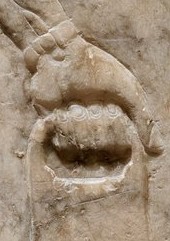
Never the subject. What is inside it is.
In plain words This is the object that put the figure on the internet, where it is a handbag. Layard, who measured and drew hundreds of them, called it the square basket, or utensil, and what he wrote down about it was the decoration, not the contents. What goes in it is not stated on the slab and he does not guess.
Austen Henry Layard, 1849 “The square basket, or utensil, so frequently represented in the Assyrian sculptures, as carried by the winged figures, is generally very elaborately decorated. In the early bas-reliefs of Nimroud, a group of figures is often introduced upon it, and the margin is richly adorned with the honeysuckle ornament, or with the intertwining bands.”
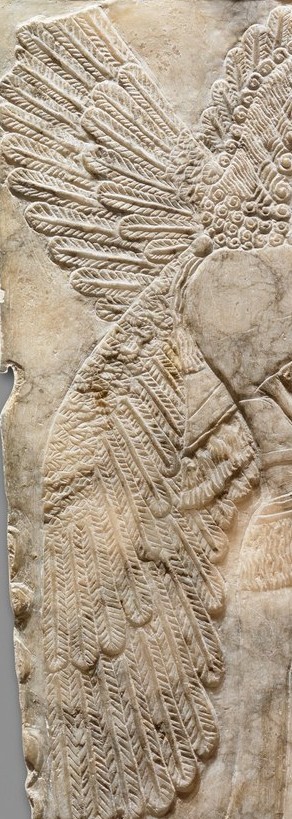
The mark of an errand rather than a nature. Note whether the wings are open, folded, or given to the figure by someone else.
In plain words On page 462 Layard prints a woodcut of a figure like this one, and directly under it he grants that a mythic meaning was certainly attached to all of them. Then he stops. The sentence runs on over the page break and is the most useful thing anybody has written about these walls.
Austen Henry Layard, 1849 “To all these images some mythic meaning was undoubtedly attached. They were emblematical, representing either the attributes of the Deity, or certain physical phenomena in nature. But I cannot venture,”
Austen Henry Layard, 1849 “at present, to conjecture the signification of any of them”
Also carrying the Bird
18 works carry it. The 6 where it is the central motif are here. The symbol.
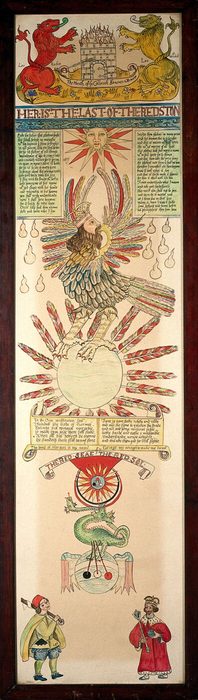
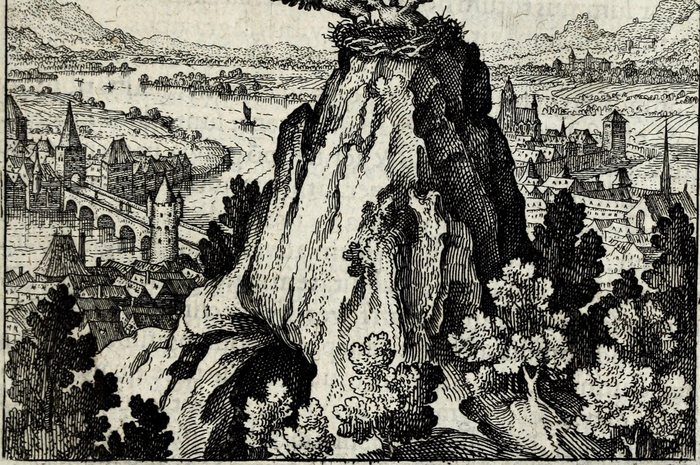
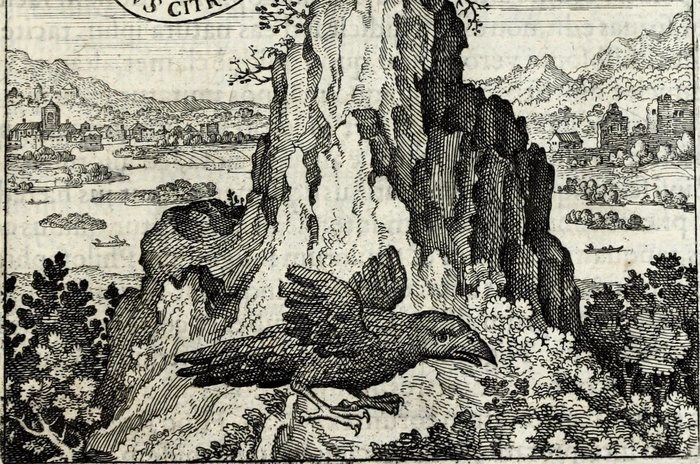
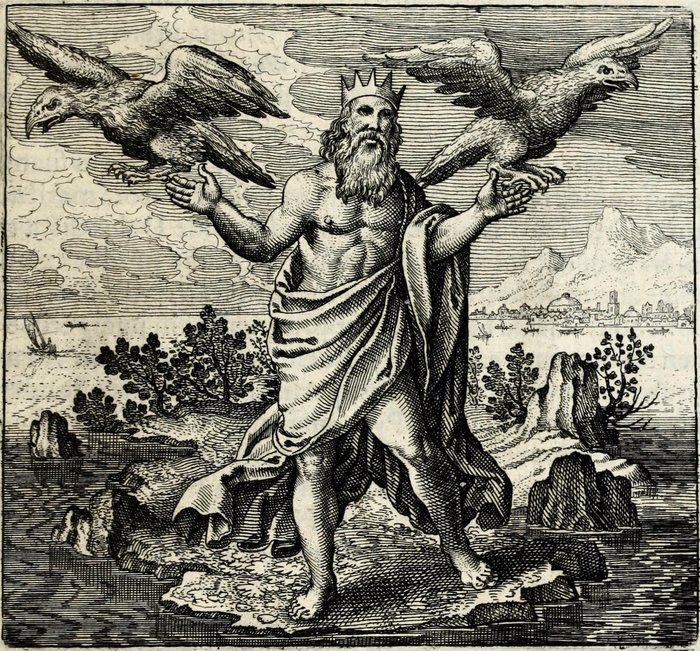
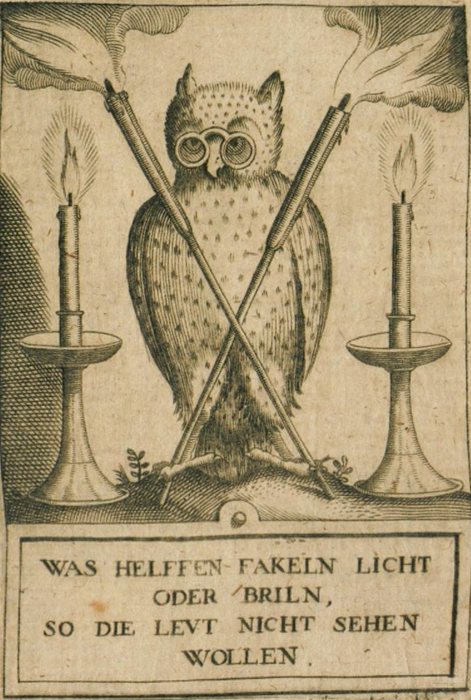
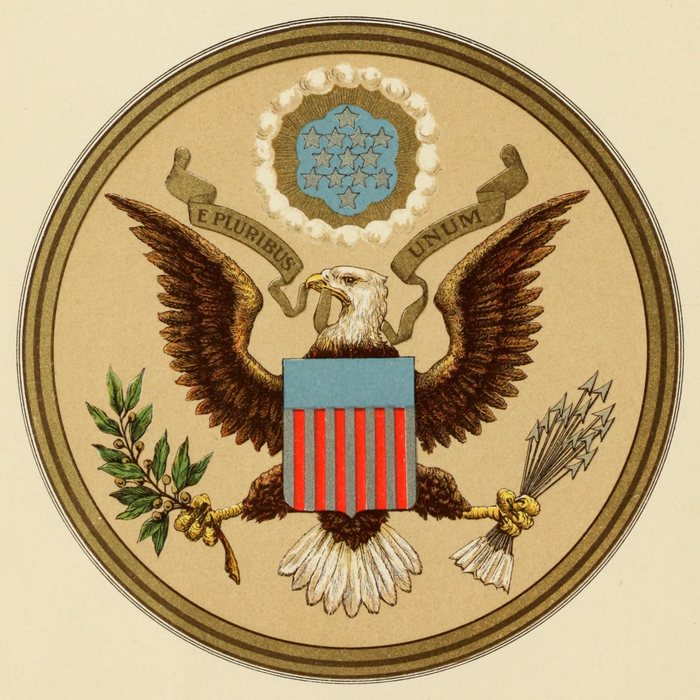
Where the detail is the subject
the Angel and the Wing · the Vessel · the Tree
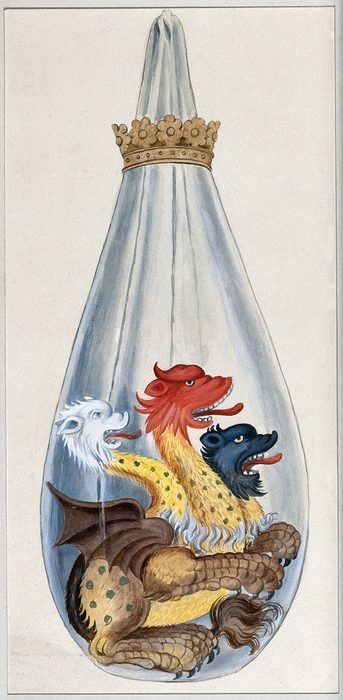
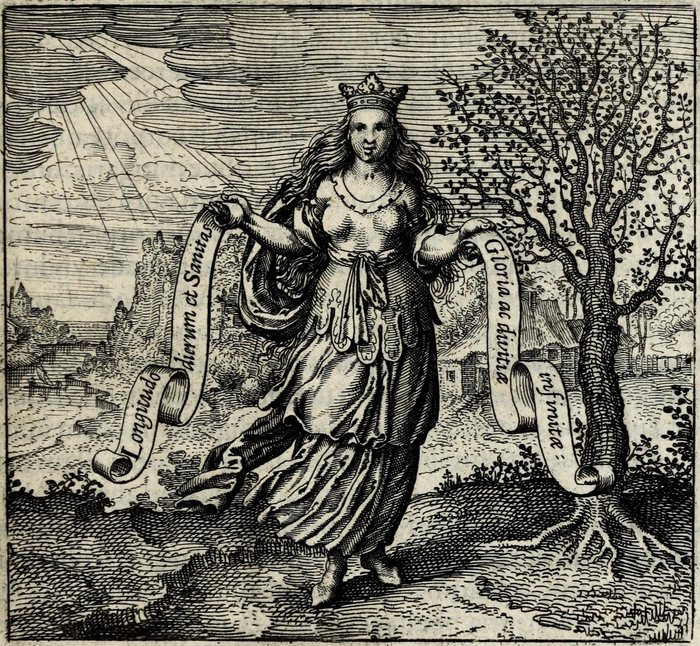
Each of these is in the picture without being what it is about. Below, one work that is about each.
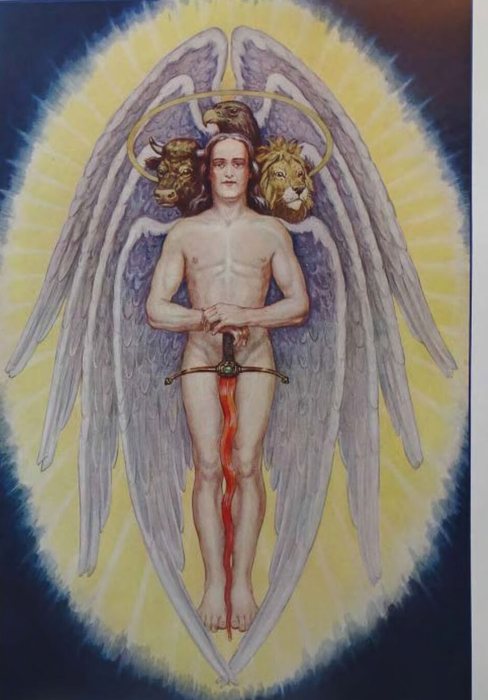
In the same series
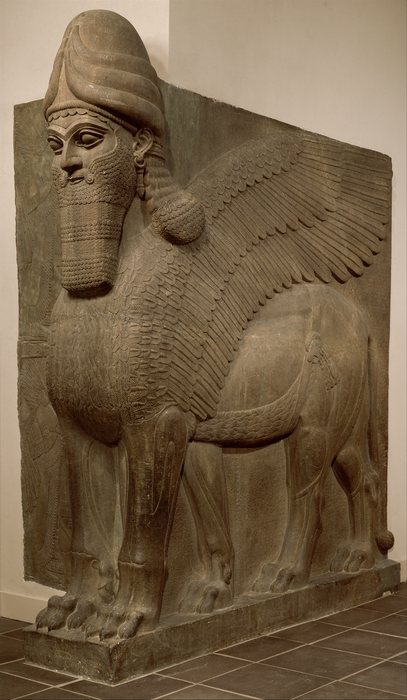
Nimrud, the palaces of Ashurnasirpal II, about 883 to 859 BCE
Record
One symbol a week, decoded.
This picture is free at full size from its source, linked above. What an address gets is the Sunday letter: one picture, one symbol marked on it, what it meant and who said so, and the master files of the decoded plates as they are verified. Leave any time.
Free, one letter a week, unsubscribe in one click. How the address is used.
Scroll or pinch to zoom · drag to move · double-tap for 1:1 · 897 by 1400 pixel web copy; the source file is linked under Record