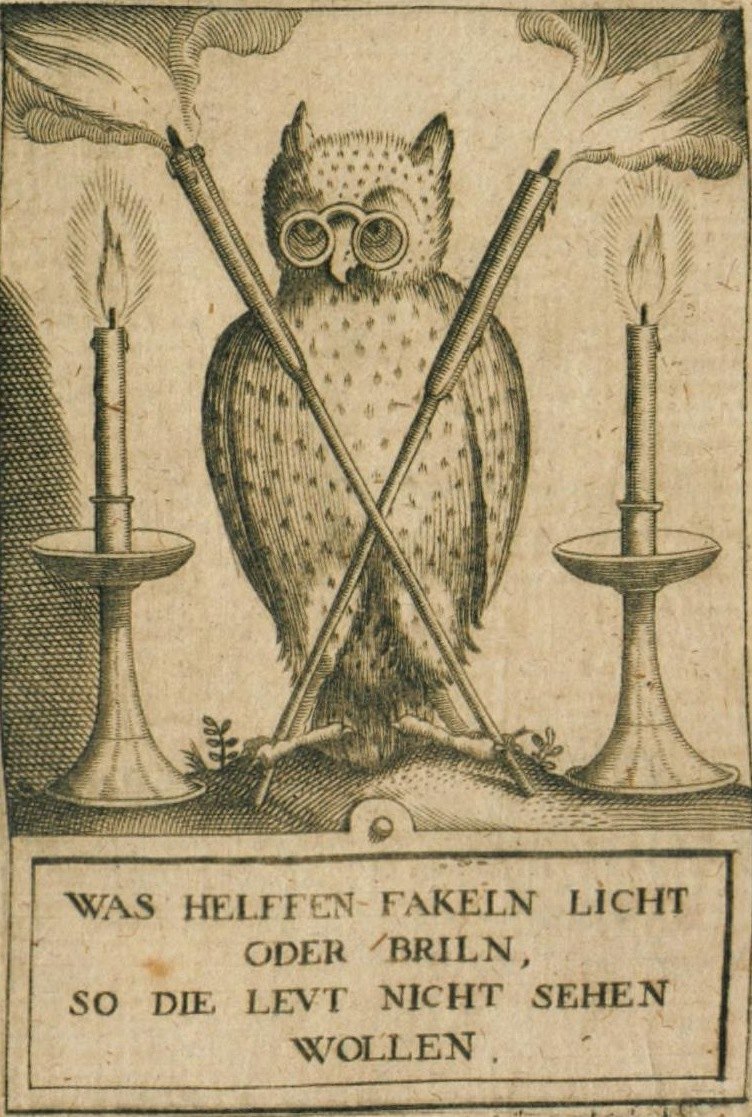
Was helffen Fackeln, Licht oder Brilln, so die Leut nicht sehen wollen
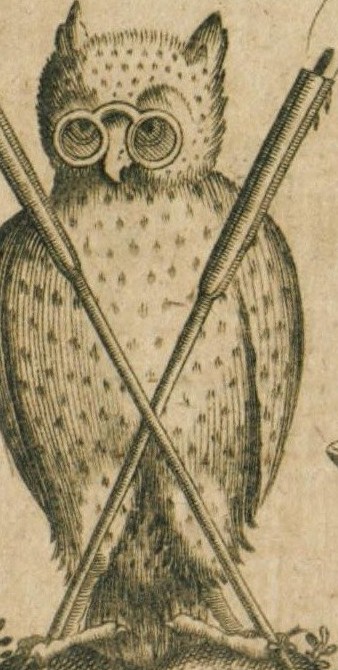
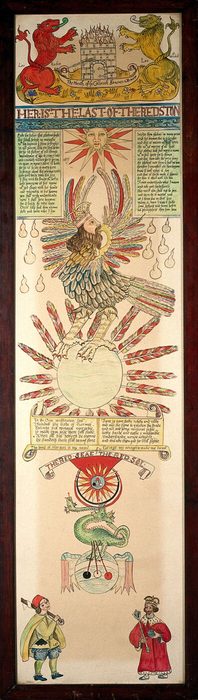
The Bird as the central motif, with Fire and the Eye in a secondary part. From Amphitheatrum.
What is happening
Symbolica, 2026 Khunrath's German, put into English here: What use are torches, light or spectacles, if people will not see.
Key · 3 motifs
Tap a motif on the picture, or a line below. Its note opens under the line, with the reading its author gave it.
- Primary motif
- Secondary motifs · 2
The picture
An owl wearing spectacles between two lit candles and two crossed torches, the motto on a tablet beneath. By eye
The reading
The picture read whole, in the archive's words, from the sources quoted on the marks. Read on, and the picture follows: the motif under discussion keeps its colour.
‘Was helffen Fackeln, Licht oder Brilln, so die Leut nicht sehen wollen.’ What use are torches, light or spectacles, if people will not see. The plate is the motto acted out.
An owl stands on a mound with its wings folded, facing the reader. It has spectacles on its beak. The owl is the bird of night and of Athens, the one that sees where others cannot, and Khunrath gives it every help a day creature could want and reports that it still will not look.
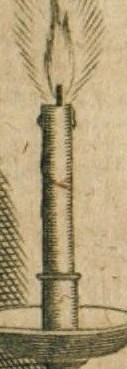
The help is fire: a candle burning on a tall stand at either side of the bird, and two torches crossed behind it, their heads smoking at the top corners. Torches and light, the motto's first two gifts.
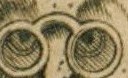
The third gift is the spectacles, and they are what make the owl a portrait. An owl in candlelight is natural history; an owl in spectacles is a reader, and the motto on the tablet below says which reader: the one who has been given torches, light and lenses and will not see. The plate is Khunrath's word to the men his plate against the slanderers answers at length, said here in one line.
It is the smallest of his plates the archive holds and the only one of them without a Latin or Hebrew inscription; the German is for the readers at home, who would not need the rest of the book to take the point.
Decoded: every motif is marked, and each mark carries the reading its author gave it, quoted from the text, or says that it is observed on the picture and not read. The reading above is the archive's own, made from those sources and no others.
What rises and what comes back down. Note whether the bird is flying, caught, or paired with a second one.
In plain words An owl, the bird that sees in the dark, wearing spectacles and set between two lit candles and two burning torches, and still, the motto says, unable to see. Khunrath means the men who will not read him: everything that could help them is provided, and the bird is the reader who refuses.
Heinrich Khunrath, 1609 “Was helffen Fackeln, Licht oder Brilln, so die Leut nicht sehen wollen.”
Symbolica Khunrath's German, put into English here: what use are torches, light or spectacles, if people will not see.
A count, a catastrophe, or the visible part of something that has no body. Note whether the flames are arranged in a number, breaking something, or standing where a figure would be.
In plain words Four lights: a candle on a tall stand at each side, lit, and two torches crossed behind the bird, their heads smoking at the top corners of the plate. The motto counts them, torches and light, before the spectacles. They are the whole apparatus of being shown something.
Heinrich Khunrath, 1609 “Was helffen Fackeln, Licht oder Brilln, so die Leut nicht sehen wollen.”
Symbolica Fackeln and Licht, torches and light, are the motto's first two words for what the owl is given.
Attention from outside the frame. Note it is almost always placed at a boundary rather than at the centre.
In plain words Spectacles, on an owl. The motto's third gift, after torches and light: what use are spectacles if people will not see. The eye here is the one that is helped and refuses the help, which is the only kind Khunrath is angry at.
Heinrich Khunrath, 1609 “Was helffen Fackeln, Licht oder Brilln, so die Leut nicht sehen wollen.”
Symbolica Brilln is spectacles; the eye is tagged for them, since the plate shows no eye but the owl's own behind the lenses.
Also carrying the Bird
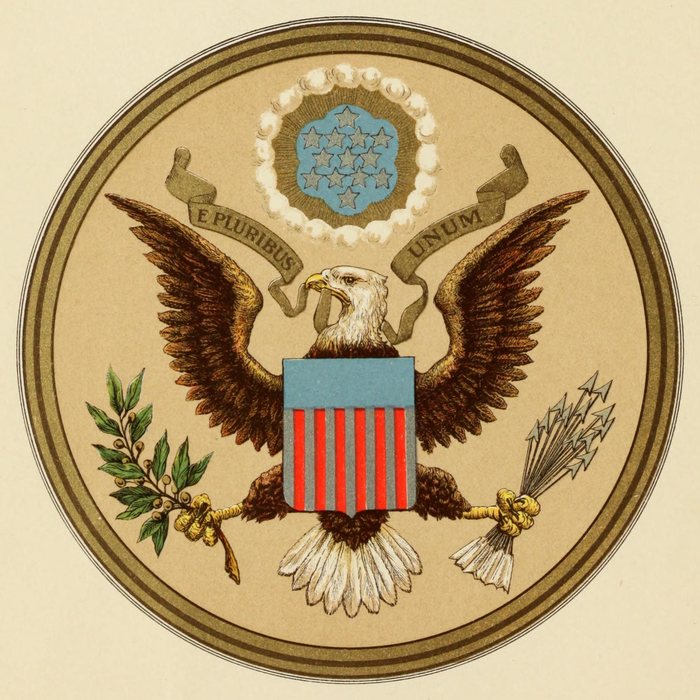
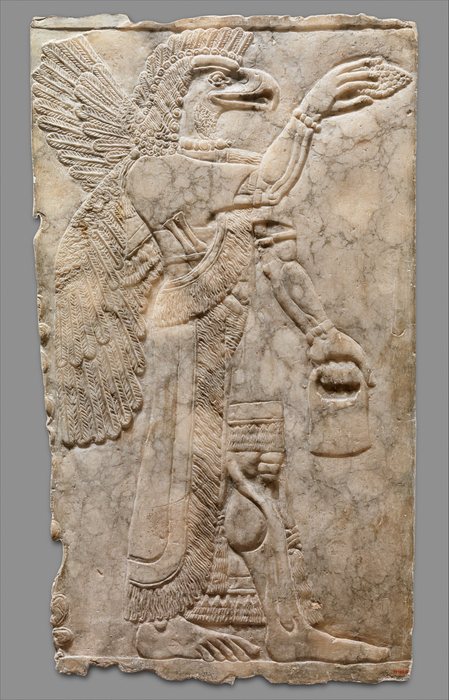
24 works carry it. The 6 where it is the central motif are here. The symbol.
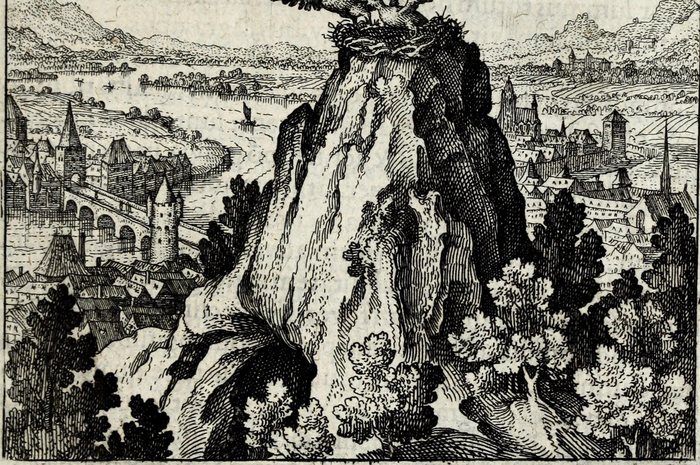
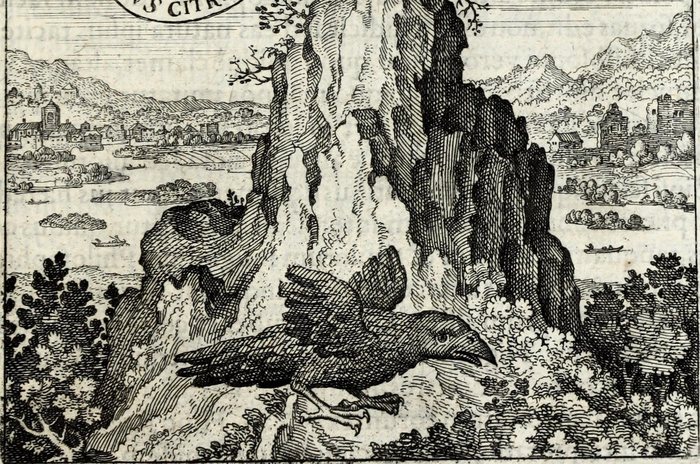
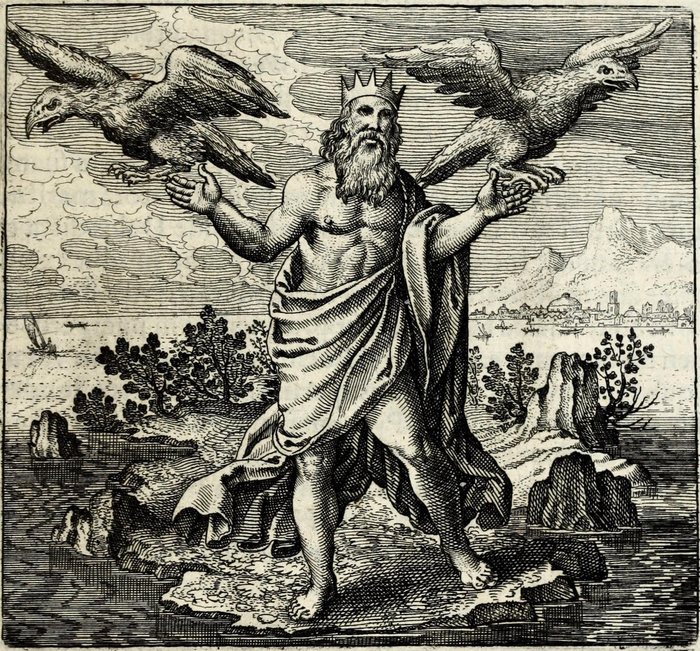
Where the detail is the subject
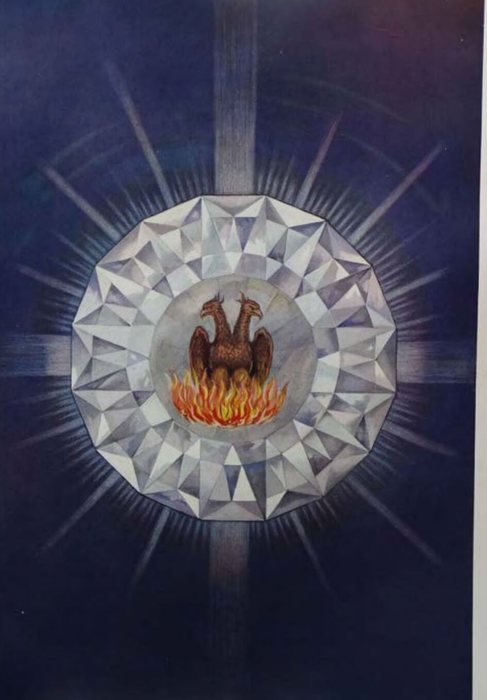
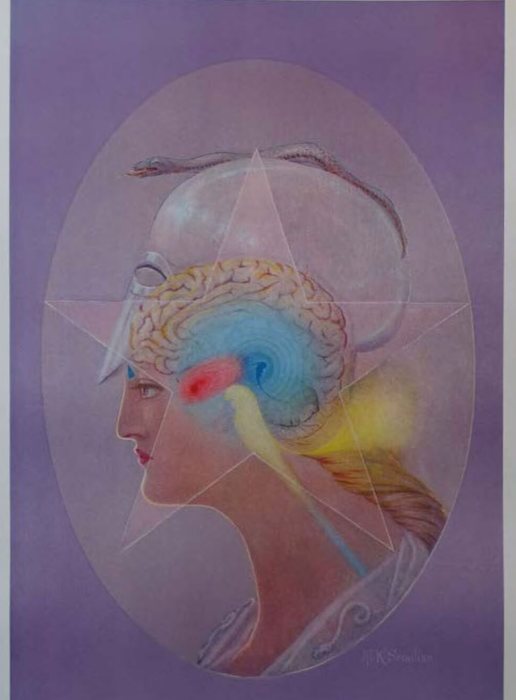
Each of these is in the picture without being what it is about. Below, one work that is about each.
In the same series
Record
One symbol a week, decoded.
This picture is free at full size from its source, linked above. What an address gets is the Sunday letter: one picture, one symbol marked on it, what it meant and who said so, and the master files of the decoded plates as they are verified. Leave any time.
Free, one letter a week, unsubscribe in one click. How the address is used.
Scroll or pinch to zoom · drag to move · double-tap for 1:1 · 752 by 1117 pixel web copy; the source file is linked under Record