Porta Amphitheatri Sapientiae Aeternae
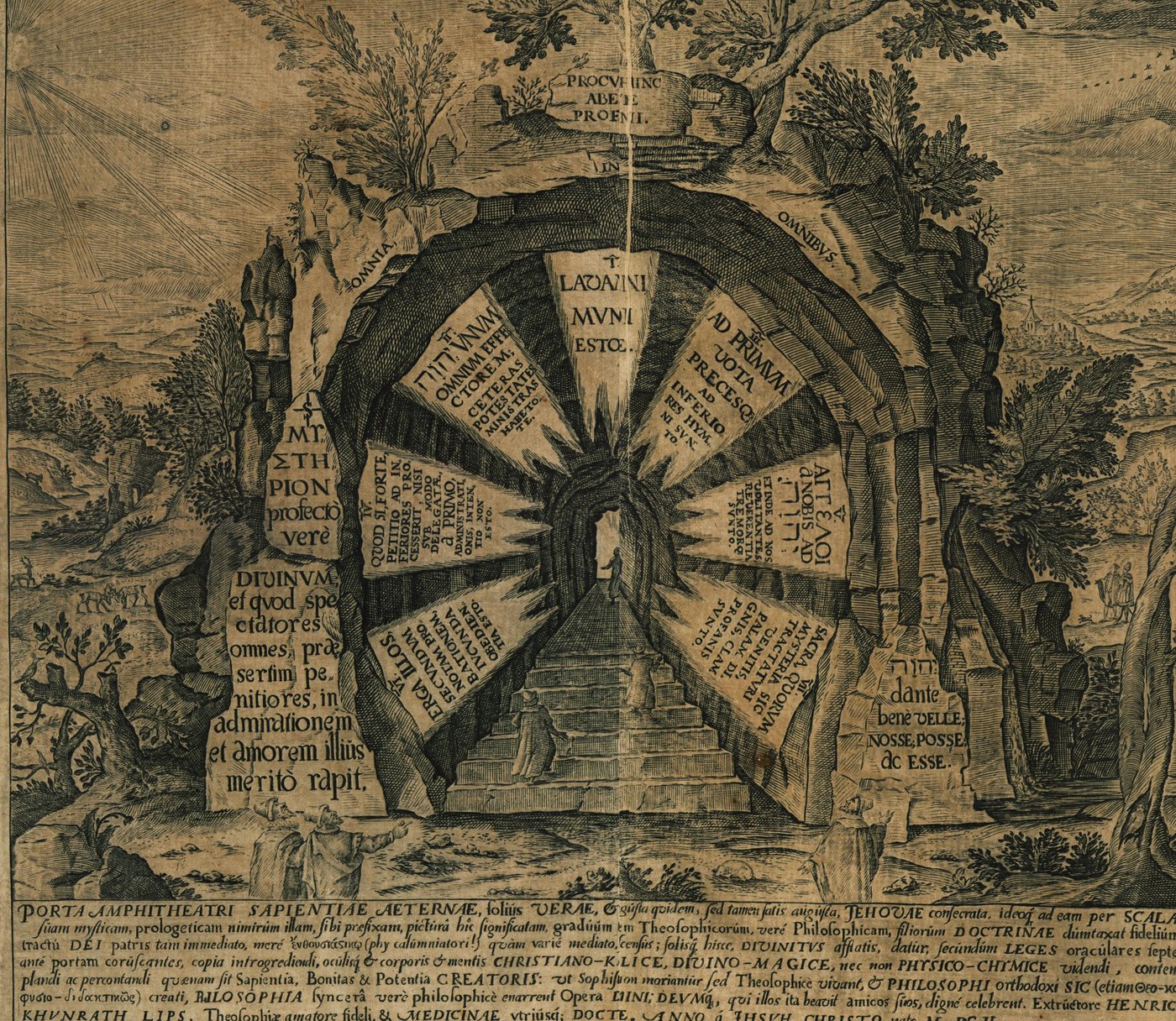
Fire as the central motif, with the Divine in a secondary part. From Amphitheatrum.
What is happening
Heinrich Khunrath, 1602 “Extructore Henrico Khunrath Lips. Theosophiae amatore fideli, et Medicinae utriusque Doctore. Anno a Ihsvh Christo nato M.DC.II.”
Heinrich Khunrath, 1602 “Procul hinc abeste profani.”
Symbolica, 2026 Khunrath's Latin, put into English here: The Gate of the Amphitheatre of Eternal Wisdom, the only true one, narrow indeed but yet august enough, consecrated to Jehovah. Leave to enter is given according to the seven oracular Laws blazing before the gate. Built by Heinrich Khunrath of Leipzig, faithful lover of Theosophy and Doctor of both Medicines, in the year 1602 from the birth of Jesus Christ. The seven rays of fire are those seven laws, and the caption names them as such. Read again at the size of the archive's image, the rays are numbered and lettered with the seven laws, and two of them can be read whole: the second, Hold Jehovah the one maker of all things, and the other powers as his ministers; the third, To the First be vows and prayers, to the lesser ones hymns. Cut in the rock at the right, Jehovah giving it: to will well, to know, to be able, and to be. At the left, A mystery indeed truly divine, and one that rightly carries all who behold it, above all the more inward, into wonder and love of it. Over the gate, Be far from here, profane ones.
Key · 2 motifs
Tap a motif on the picture, or a line below. Its note opens under the line, with the reading its author gave it.
- Primary motif
- Secondary motifs · 1
The picture
A gate cut into a rock, seven rays of fire spreading from the dark doorway, each ray numbered and lettered with a law, a stair leading up into it with men climbing, the Name cut in the rock beside the gate, small figures of the learned looking on from the landscape. By eye
The reading
The picture read whole, in the archive's words, from the sources quoted on the marks. Read on, and the picture follows: the motif under discussion keeps its colour.
‘Porta Amphitheatri Sapientiae Aeternae, solius verae, angusta quidem, sed tamen satis augusta, Jehovae consecrata.’ The gate of the amphitheatre is a doorway cut into a rock, narrow indeed but august enough, with a stair running up into its dark and men on the stair. Over it the rock says ‘Procul hinc abeste profani’, be far from here, profane ones.
Out of the doorway come seven rays of fire, and each ray is lettered. The caption says what they are: leave to enter is given ‘secundum leges oraculares septem ante portam coruscantes’, according to the seven oracular laws blazing before the gate. Each law is numbered on its own ray. The second reads ‘Jehovah, unum omnium effectorem; ceteras potestates ministras habeto’, hold Jehovah the one maker of all things and the other powers as ministers; the third, ‘Ad Primum vota precesque, ad inferiores hymni sunto’, to the First be vows and prayers, to the lesser ones hymns. Some of the rest are taken by the fold of the plate and the size of the letters. The fire is not a hazard and not a furnace: it is the law, written in light, and the stair goes up through it.
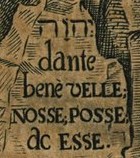
The Name is on the plate twice in Hebrew, at the head of the second law and cut into the rock at the right of the gate over the words ‘Jehovah dante, bene velle, nosse, posse ac esse’: Jehovah giving it, to will well, to know, to be able and to be. On the rock at the left the whole thing is called, with its first word in Greek, ‘Mysterion profecto vere divinum, et quod spectatores omnes, praesertim penitiores, in admirationem et amorem illius merito rapit’, a mystery indeed truly divine, and one that rightly carries all who behold it, above all the more inward, into wonder and love of it.
The men climbing the stair are the beholders. Others stand about in the landscape with books, at a distance, and trees grow on the rock over the gate. Khunrath dated the plate 1602 and signed it in the caption as builder, ‘Extructore Henrico Khunrath Lips.’, the word for a man who puts up a building, and the plate is drawn as one.
Decoded: every motif is marked, and each mark carries the reading its author gave it, quoted from the text, or says that it is observed on the picture and not read. The reading above is the archive's own, made from those sources and no others.
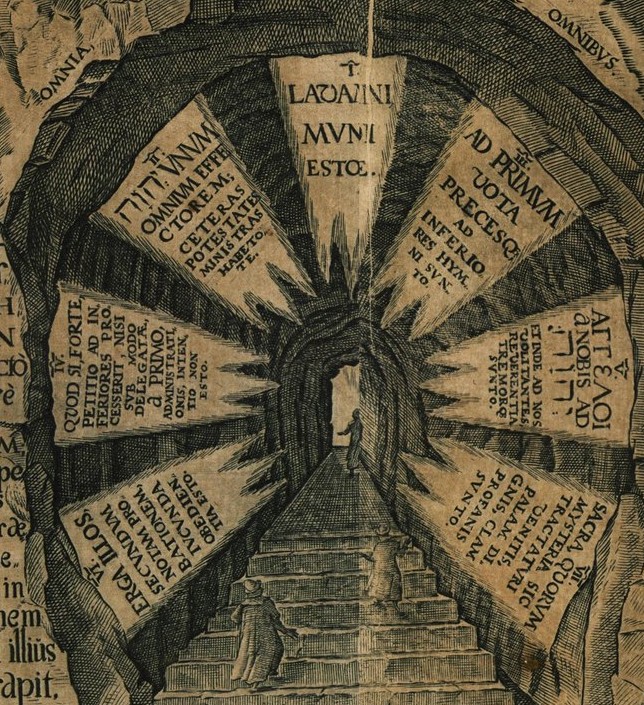
A count, a catastrophe, or the visible part of something that has no body. Note whether the flames are arranged in a number, breaking something, or standing where a figure would be.
In plain words Seven rays of fire come out of the doorway in the rock, and each is a written law. The caption calls them the seven oracular laws blazing before the gate, and says that leave to enter is given according to them. Two can be read whole at the size of the archive's image: hold Jehovah as the one maker of all things and the other powers as his ministers; give vows and prayers to the First and hymns to the lesser ones. The fire is the law, written in light, and the stair goes up through it.
Heinrich Khunrath, 1602 “secundum leges oraculares septem ante portam coruscantes, copia introgrediendi.”
Heinrich Khunrath, 1602 “Jehovah, unum omnium effectorem; ceteras potestates ministras habeto.”
Heinrich Khunrath, 1602 “Ad Primum vota precesque, ad inferiores hymni sunto.”
Symbolica The Latin, put into English here: according to the seven oracular laws blazing before the gate, leave to enter; hold Jehovah the one maker of all things, and the other powers as ministers; to the First be vows and prayers, to the lesser ones hymns.
God shown, or pointed at. Look for what stands where a face would be: a name in a cloud, a circle above the top of a diagram, a ring of verses, a sign over a head.
In plain words The gate is consecrated to Jehovah, the caption says, and the Name is cut twice into the plate in Hebrew: at the head of the second law, which makes him the one maker of all things, and in the rock beside the gate, where the four powers of the adept, to will well, to know, to be able and to be, are said to come by his giving. On the other side of the gate the rock calls the whole a mystery truly divine.
Heinrich Khunrath, 1602 “Porta Amphitheatri Sapientiae Aeternae, solius verae, angusta quidem, sed tamen satis augusta, Jehovae consecrata.”
Heinrich Khunrath, 1602 “Jehovah dante, bene velle, nosse, posse ac esse.”
Heinrich Khunrath, 1602 “Mysterion profecto vere divinum, et quod spectatores omnes, praesertim penitiores, in admirationem et amorem illius merito rapit.”
Symbolica The Latin, put into English here: the Gate of the Amphitheatre of Eternal Wisdom, the only true one, narrow indeed but yet august enough, consecrated to Jehovah; Jehovah giving it, to will well, to know, to be able and to be; a mystery indeed truly divine, and one that rightly carries all who behold it, above all the more inward, into wonder and love of it.
Also carrying Fire
44 works carry it. The 6 where it is the central motif are here. The symbol.
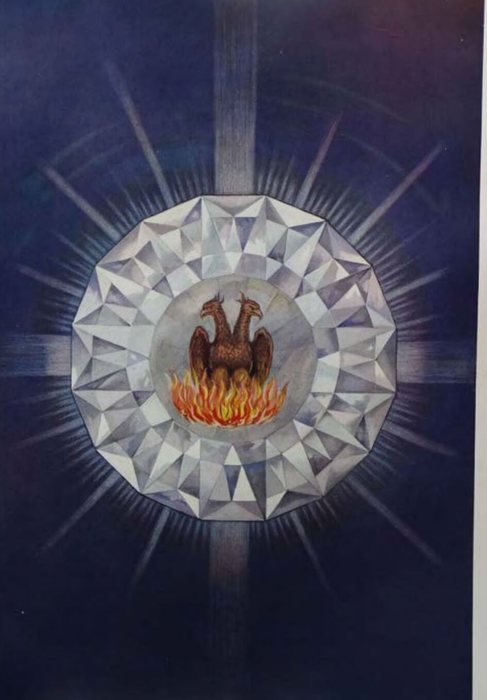
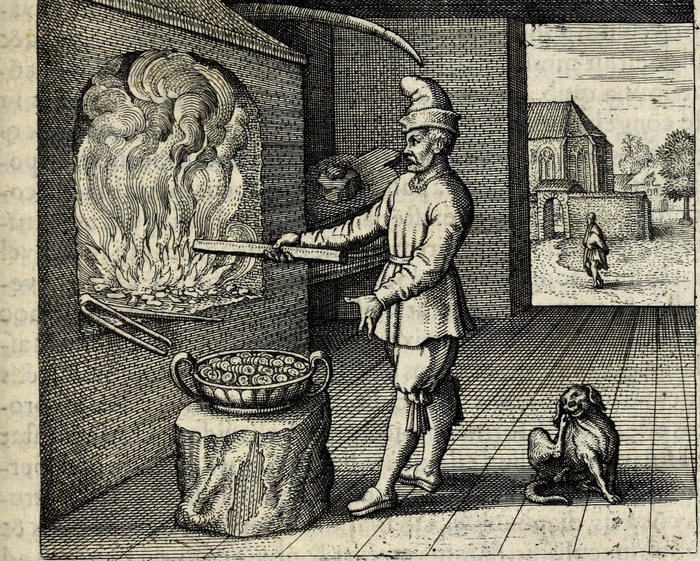
Where the detail is the subject
This is in the picture without being what it is about. Below, one work that is about it.
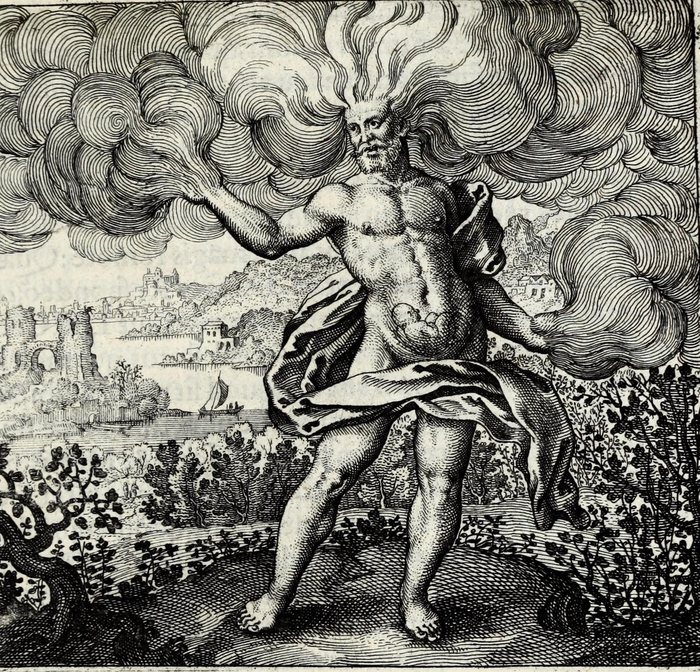
In the same series
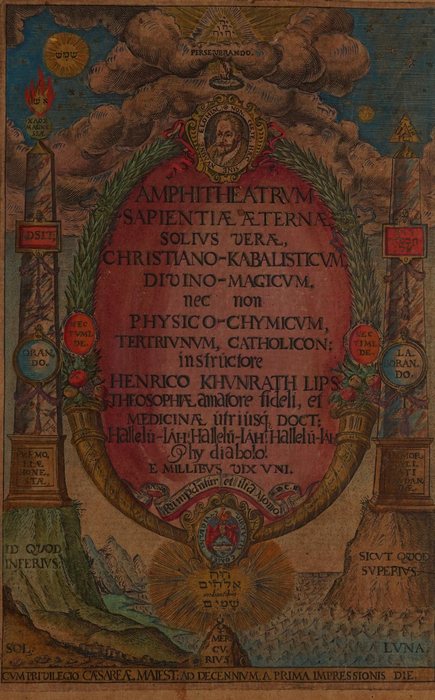 The engraved title of the Amphitheatrum Sapientiae Aeternae
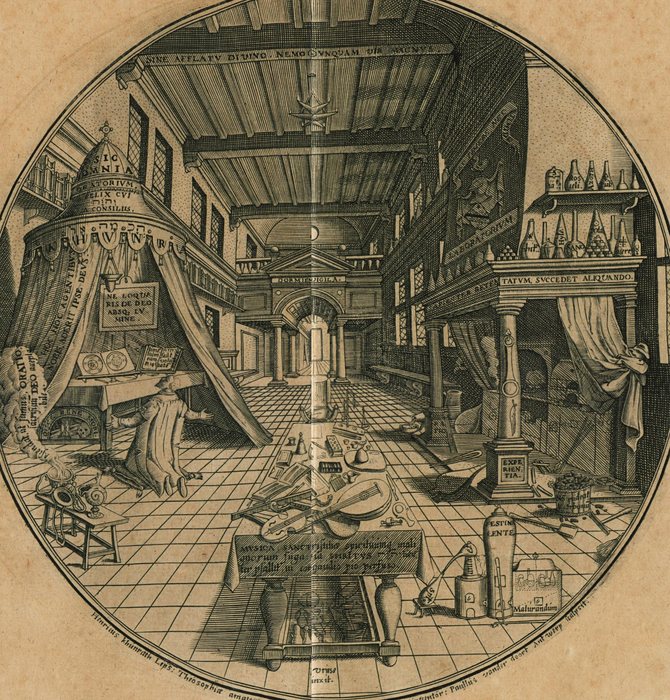 The Oratory and the Laboratory
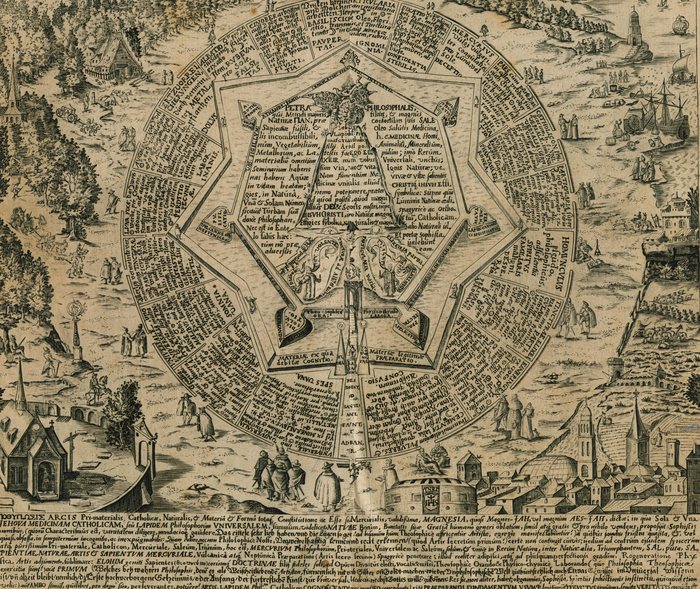 Typosis Arcis Pri-materialis
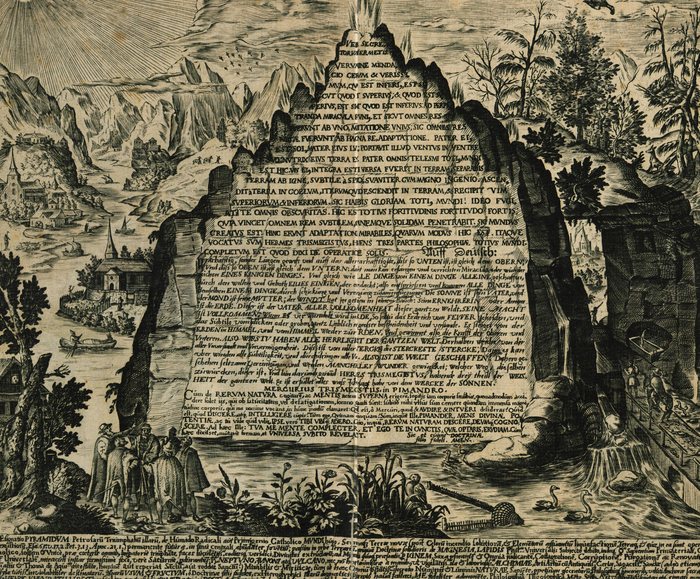 Designatio Pyramidum Petrosarum Triumphalium
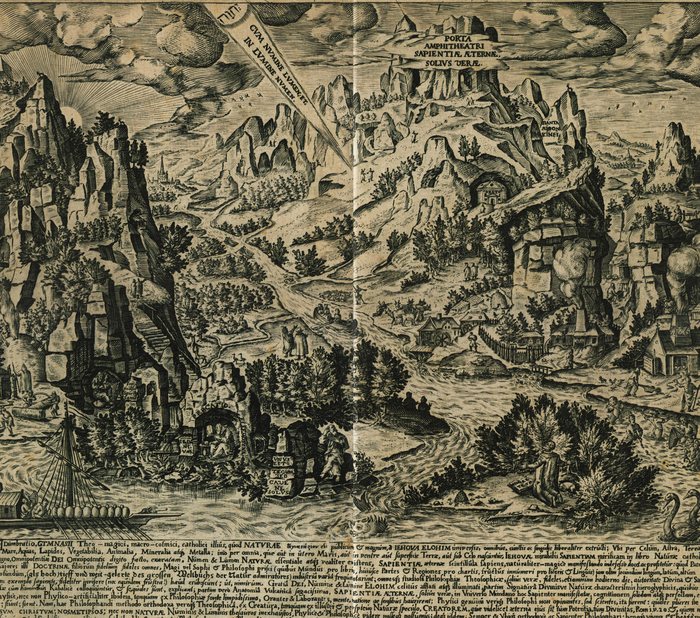 Adumbratio Gymnasii Theo-magici, macro-cosmici, catholici
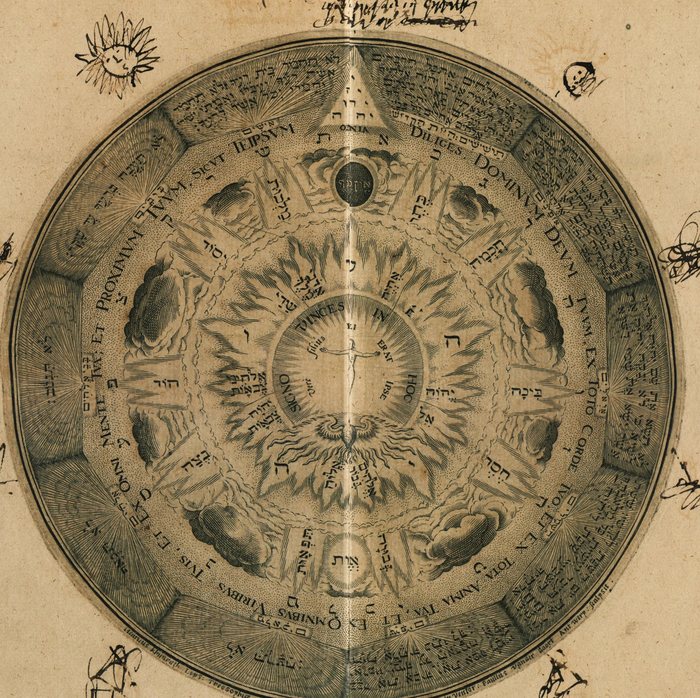 The Name in the pyramid, Christ in the sun, and the two commandments round the rim
Record
One symbol a week, decoded.
This picture is free at full size from its source, linked above. What an address gets is the Sunday letter: one picture, one symbol marked on it, what it meant and who said so, and the master files of the decoded plates as they are verified. Leave any time.
Free, one letter a week, unsubscribe in one click. How the address is used.
Scroll or pinch to zoom · drag to move · double-tap for 1:1 · 1400 by 1216 pixel web copy; the source file is linked under Record