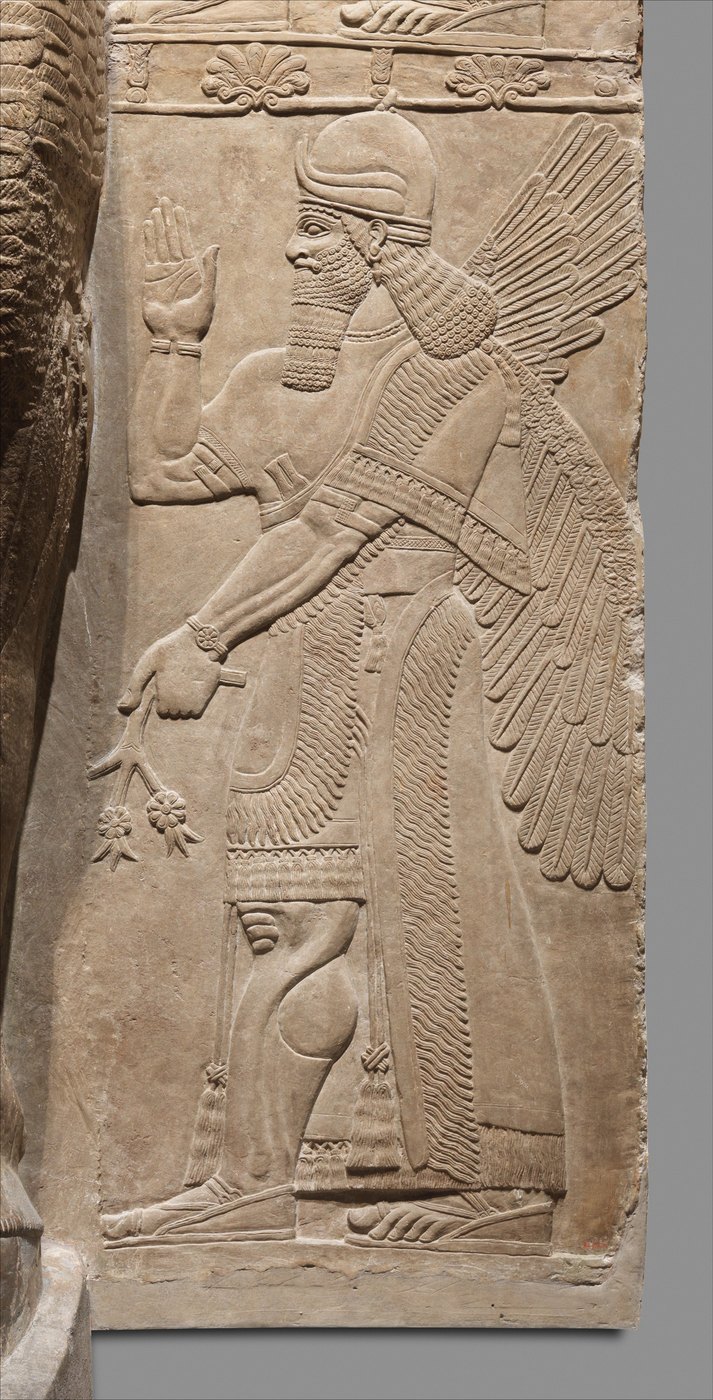
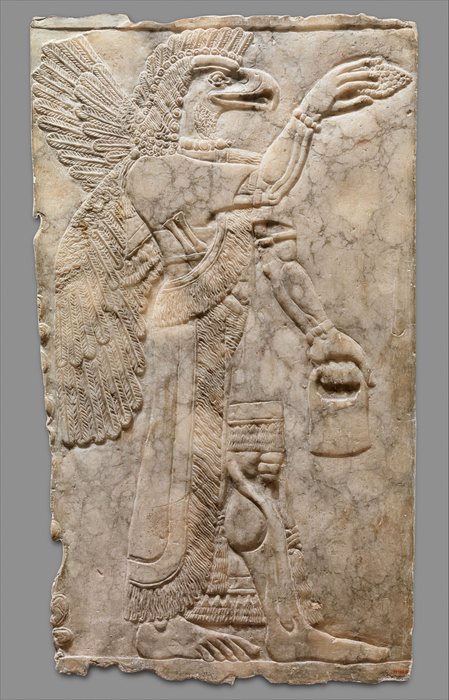
Winged figure with the rosette branch
The Angel and the Wing as the central motif, with the Crown and the Tree in a secondary part. From Nimrud, 9th century BCE.
What is happening
The Metropolitan Museum of Art, 2026 “This panel represents a supernatural protective figure similar to those seen in the Northwest Palace at Nimrud (ancient Kalhu) but comes from another important structure at the same site, the Ninurta Temple. Like the palace, the Ninurta Temple was built by Ashurnasirpal II (r. 883–859 B.C.), and it is very likely that many of the same personnel were involved in producing the relief programs for the two buildings.”
Key · 3 motifs
Tap a motif on the picture, or a line below. Its note opens under the line, with the reading its author gave it.
- Primary motif
- Secondary motifs · 2
The picture
A bearded figure in a horned cap, one hand raised open, the other holding a stem whose three branches end in rosettes, two wings behind him, a band of palmettes running above his head and the wing of a neighbouring colossus at the left edge. By eye
The reading
The picture read whole, in the archive's words, from the sources quoted on the marks. Read on, and the picture follows: the motif under discussion keeps its colour.
Layard dug up hundreds of these and then printed a sentence hardly anybody quotes. On page 464 of his second volume, having described the winged human figures that cover the walls of the Assyrian buildings, he says he cannot determine their character. He offers three answers and takes none: gods, or spirits, or priests wearing what a god was believed to look like.
He then adds the observation that undercuts the first of the three. These figures bow. They are shown adoring the king, whom they walk beside, and adoring the tree, and a god who bows to a man is a strange god. Layard leaves the objection on the page and moves on to the next slab.
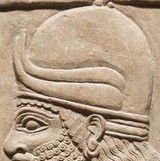
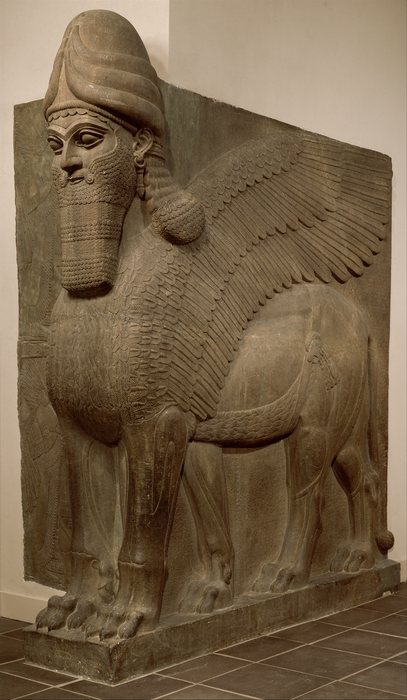
One detail escapes all of it. The cap is horned, and horns on a cap are the Assyrian sign for divinity, which the museum states without hedging of the colossus that came to New York in the same gift: “The horned cap attests to its divinity, and the belt signifies its power.” So the sculptor did write something down. He wrote that this is not a man, and he wrote it in a code that still reads.
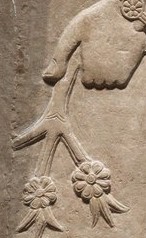
Below the cap the code stops working. In the lowered hand is a stem with three branches, each ending in a rosette, and the Metropolitan Museum's entry declines to name it: “The meaning of this plant is unknown, but it is probably highly stylized and may not represent any real plants.” Rosettes it will vouch for, as a divine sign running through Assyrian art and often Ishtar's. The plant they grow on has kept its own counsel for two thousand nine hundred years.
One thing about this slab is worth separating from the rest, because it changes what building you are standing in. It did not come out of the palace. The museum places it in the Ninurta Temple on the same mound, raised by the same king, probably carved by the same workshop.
Ninurta is remembered for one exploit above the others. He went after the Anzu bird, which had stolen the Tablet of Destinies, and he brought it back. On that tablet, the museum's entry says, was written the future of humanity. His temple is full of figures nobody has been able to read.
Decoded: every motif is marked, and each mark carries the reading its author gave it, quoted from the text, or says that it is observed on the picture and not read. The reading above is the archive's own, made from those sources and no others.
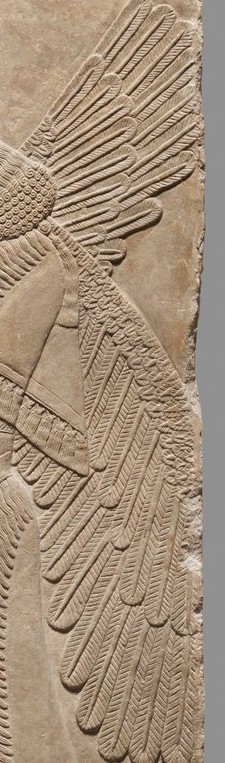
The mark of an errand rather than a nature. Note whether the wings are open, folded, or given to the figure by someone else.
In plain words Layard excavated these by the hundred and then wrote, on page 464, that he could not determine what they were. He offers three answers and takes none of them: gods, spirits, or priests dressed as gods. A few lines later he notices that they bow to the king, which would make gods of them an odd reading.
Austen Henry Layard, 1849 “nor am I able to determine the character of the winged human figures which so frequently occur on the walls of Assyrian buildings. They may be the representations of presiding deities, or genii; or of priests who, during the celebration of sacred ceremonies, assumed that which was believed to be the outward form of the divinities.”
Austen Henry Layard, 1849 “As they are frequently seen in an act of adoration before the king (whom they generally accompany), or before the mystic tree, their divine character may be questioned.”
Completion, and in the Kabbalistic reading the first sephirah, the point at which the work is no longer yours.
In plain words The one thing on this figure nobody argues about is the hat. Horns on a cap mean divinity in Assyrian carving, and the museum says so flatly of the colossus that came out of the same gift. Everything under the cap is disputed.
The Metropolitan Museum of Art, 2026 “The horned cap attests to its divinity, and the belt signifies its power.”
The Metropolitan Museum of Art, 2026 “They appear as either eagle-headed or human-headed and wear a horned crown to indicate divinity. Both types of figure usually have wings.”
A body drawn as growth. Note which way it grows and what is at the root rather than at the top.
In plain words The museum will not name the plant, and says why: it is stylised past the point where a species could be read off it. What it will say is that the rosettes on the ends are a divine sign all through Assyrian art, and often Ishtar's.
The Metropolitan Museum of Art, 2026 “The figure depicted here is winged and human-headed, and holds in his left hand part of a plant whose three branches end in rosettes. The meaning of this plant is unknown, but it is probably highly stylized and may not represent any real plants. Rosettes occur frequently in Assyrian art and have strong divine associations, particularly with the goddess Ishtar.”
Also carrying the Angel and the Wing
35 works carry it. The 6 where it is the central motif are here. The symbol.
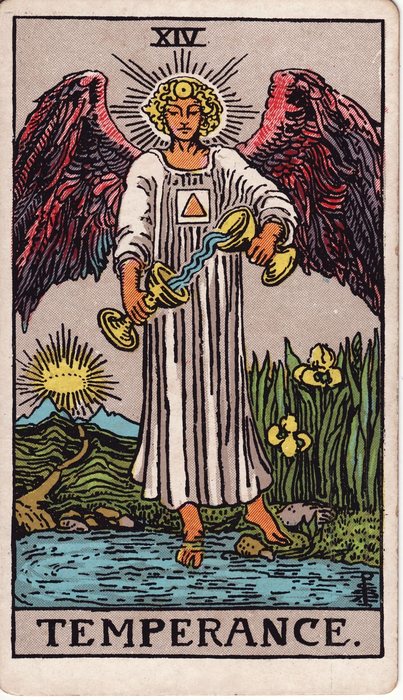
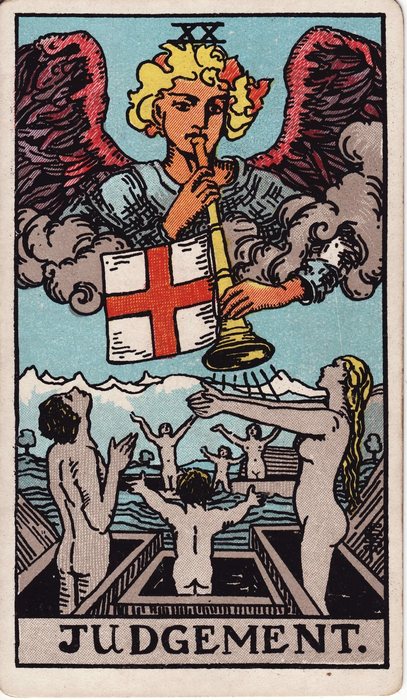
Where the detail is the subject
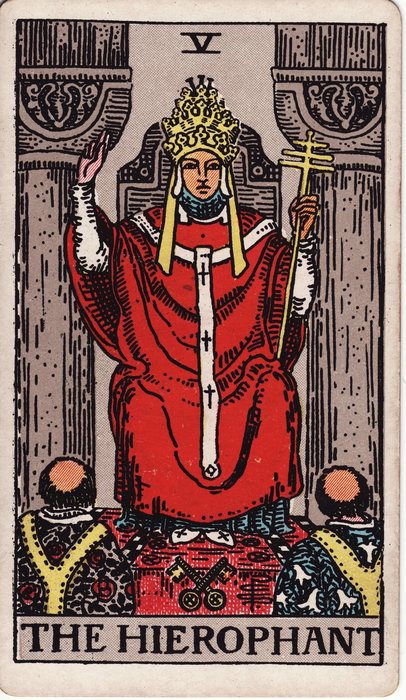
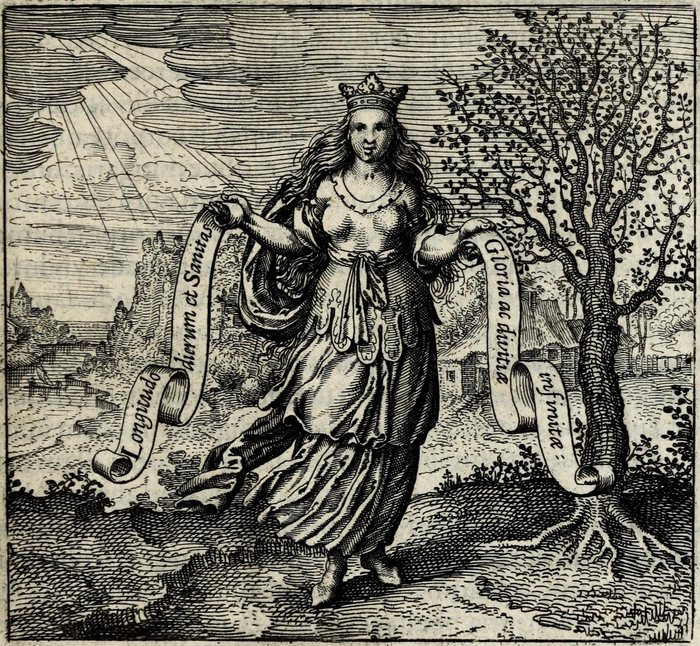
Each of these is in the picture without being what it is about. Below, one work that is about each.
In the same series
Nimrud, the palaces of Ashurnasirpal II, about 883 to 859 BCE
Record
One symbol a week, decoded.
This picture is free at full size from its source, linked above. What an address gets is the Sunday letter: one picture, one symbol marked on it, what it meant and who said so, and the master files of the decoded plates as they are verified. Leave any time.
Free, one letter a week, unsubscribe in one click. How the address is used.
Scroll or pinch to zoom · drag to move · double-tap for 1:1 · 713 by 1400 pixel web copy; the source file is linked under Record