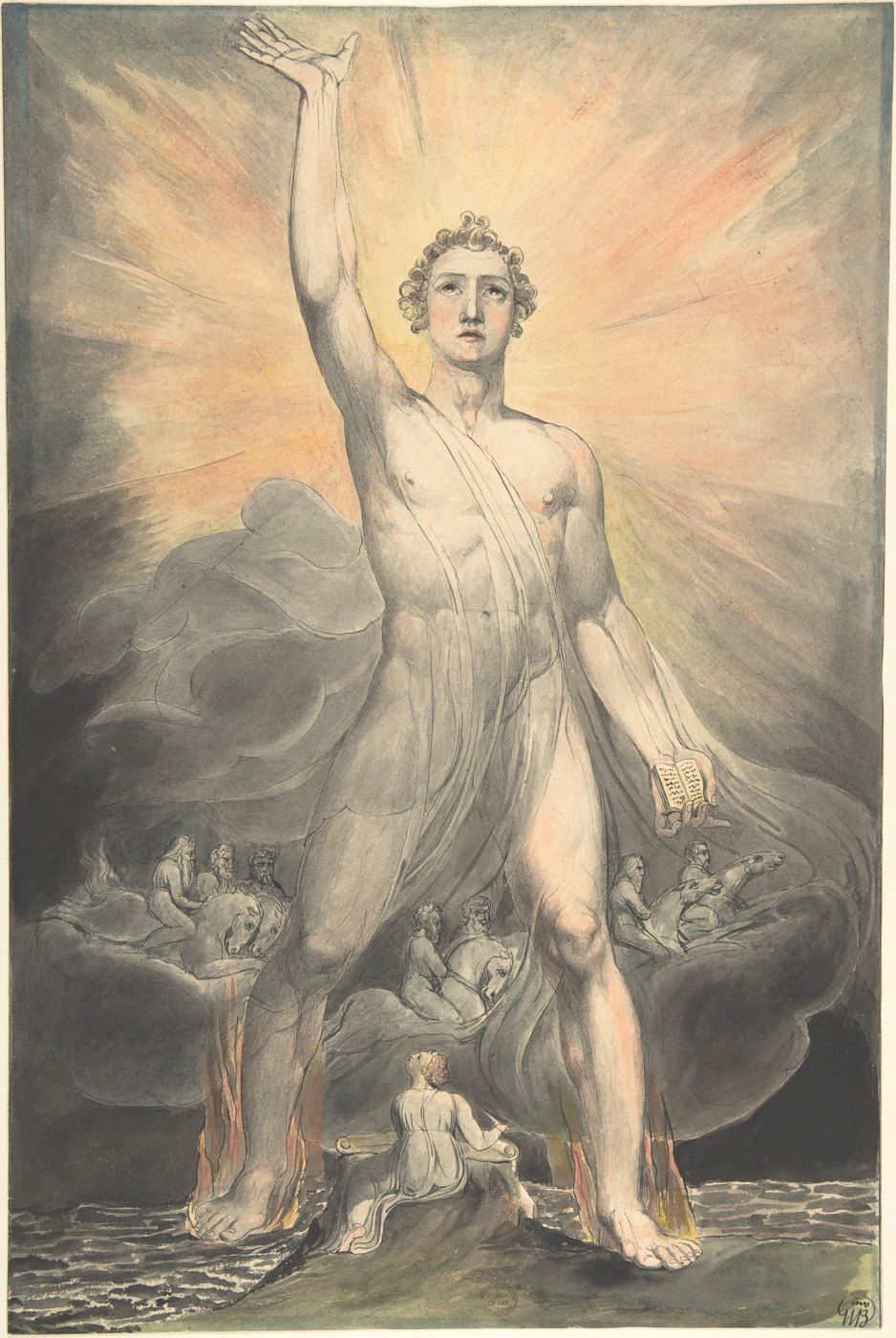
Angel of the Revelation (Book of Revelation, chapter 10)
The Angel and the Wing as the central motif, with the Sun and the Moon, the Heavens, and the Water in a secondary part. From Single sheets.
What is happening
Apocalypse 10:5 “And the angel whom I saw standing upon the sea and upon the earth lifted up his hand to heaven.”
Apocalypse 10:6 “And he swore by him that liveth for ever and ever, who created heaven and the things which are therein, and the earth and the things which are in it, and the sea and the things which are therein: That time shall be no longer.”
Key · 4 motifs
Tap a motif on the picture, or a line below. Its note opens under the line, with the reading its author gave it.
- Primary motif
- Secondary motifs · 2
The picture
The mighty angel of Revelation 10 astride sea and land, the sun behind his head, the seven thunders as horsemen; by eye. By eye
The reading
The picture read whole, in the archive's words, from the sources quoted on the marks. Read on, and the picture follows: the motif under discussion keeps its colour.
Blake painted this watercolour for Thomas Butts around 1803 to 1805, one of a series of Bible subjects, and it is the tenth chapter of the Apocalypse in a single figure. A colossal angel stands astride the world, his right foot in the sea and his left on the land, one arm flung straight up to heaven and the other holding a small open book against his thigh. Behind his head the sky burns like a sunrise. In the cloud at his knees, tiny, seven horsemen ride; and at his feet, smaller still, a man sits on a rock with a book open on his knee, writing. That man is John.
The chapter describes the angel in two verses and Blake follows both. I saw another mighty angel come down from heaven, clothed with a cloud; a rainbow was on his head, and his face as the sun, and his feet as pillars of fire. He had in his hand a little book, open; and he set his right foot upon the sea, and his left foot upon the earth. The cloud is his garment, the rainbow is in the arc of colour round the light, his feet stand in flame at the water's edge, and the little book is in his left hand. Blake gives him no wings, which is why the mark on this record explains itself: the figure is filed under the Angel and the Wing for what he is. He lifts his hand to heaven because the fifth verse says he did, to swear by him that liveth for ever that time shall be no longer.
His face as the sun. Blake does not paint a sun; he paints the sun's light pouring from behind the angel's head across the whole upper half of the sheet, orange into gold into white, so that the angel is the source of the daylight in the picture. The archive files the light under the Sun and the Moon because the text names the sun, and because the whole colour of the painting depends on it.
The seven horsemen in the cloud are Blake's invention on the text's cue. When the angel cried with a loud voice, seven thunders uttered their voices, and John was about to write what they said when a voice from heaven told him to seal it up and write it not. Blake makes the thunders riders, galloping in the cloud round the angel's knees, an army of the unspoken. The archive records them as his, since the text gives them voices and not horses, and files them under the Heavens as the powers of the sky that they are.
The small figure at the bottom is the key to the scale. John sits on Patmos with his book, looking up, and the angel towers over him like a lighthouse over a boat. Blake's picture is about the size of a vision compared with the man who has to write it down, and about the book in the angel's hand that the man at his feet is copying. A few verses on, which Blake does not paint, the angel gives John the book to eat. This is the moment before.
Decoded: every motif is marked, and each mark carries the reading its author gave it, quoted from the text, or says that it is observed on the picture and not read. The reading above is the archive's own, made from those sources and no others.
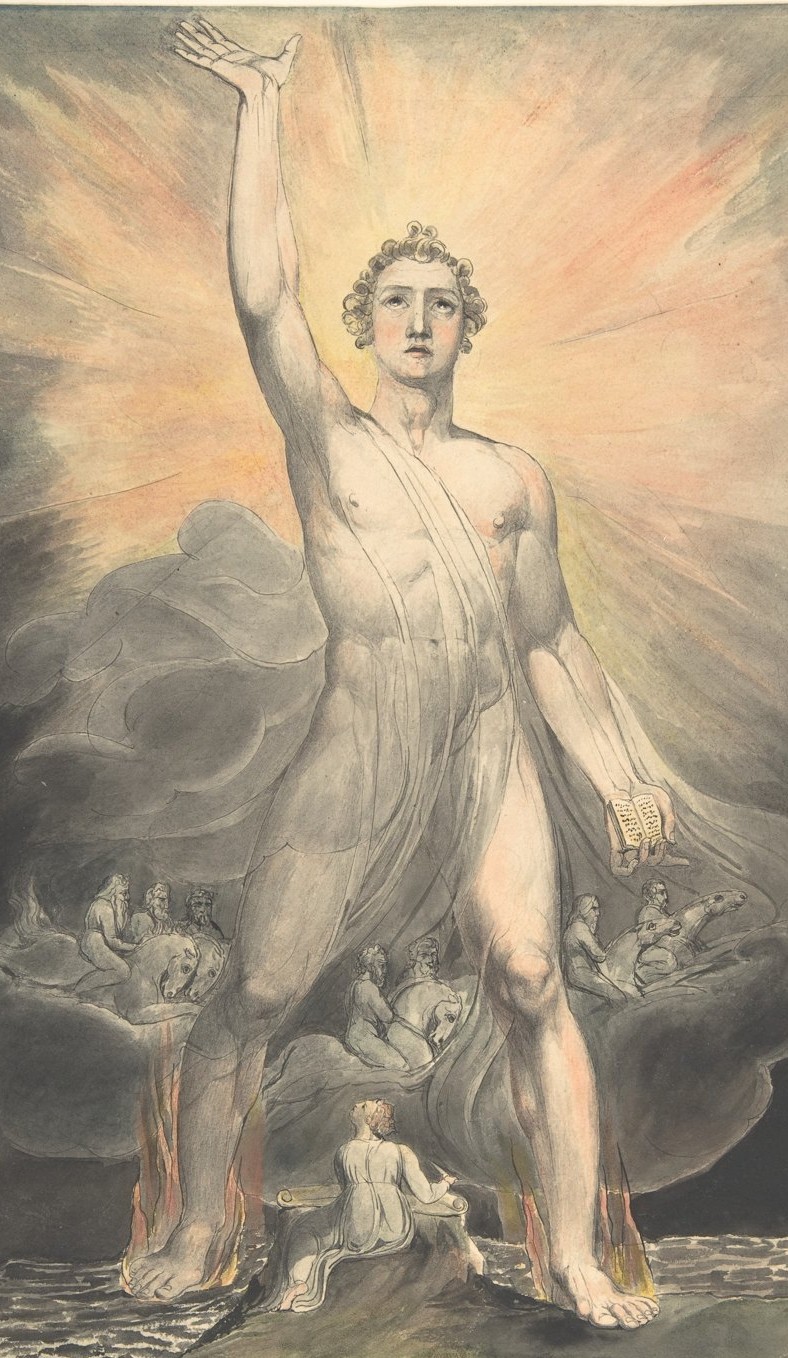
The mark of an errand rather than a nature. Note whether the wings are open, folded, or given to the figure by someone else.
In plain words The angel stands with one foot on the sea and one on the land, a hand raised to heaven and a small open book in the other, exactly as the tenth chapter of the Apocalypse describes him. Blake paints him without wings; the archive files him under the Angel and the Wing because that is what he is, not because of what he has.
Apocalypse 10:1 “And I saw another mighty angel come down from heaven, clothed with a cloud. And a rainbow was on his head: and his face, as the sun, and his feet as pillars of fire.”
Apocalypse 10:2 “And he had in his hand a little book, open. And he set his right foot upon the sea, and his left foot upon the earth.”
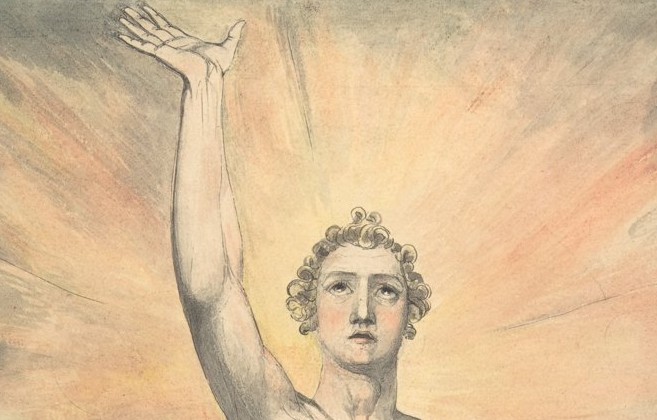
Gold, the perfected metal, and the illuminated intellect. The most overloaded symbol in the tradition.
In plain words The blaze behind his head is the chapter's his face, as the sun. Blake paints the whole sky as that face.
Apocalypse 10:1 “his face, as the sun”
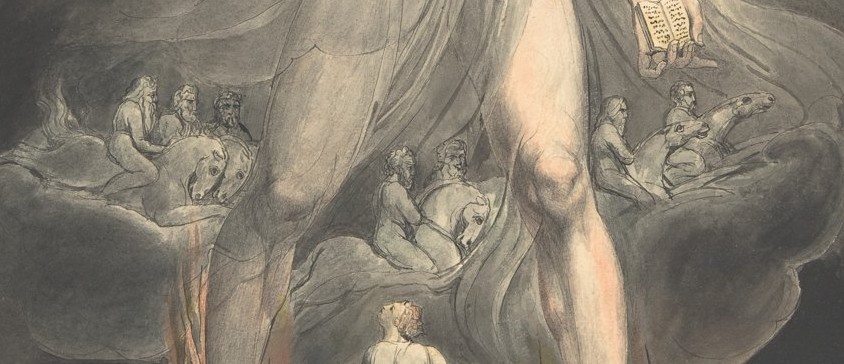
A diagram of everything, drawn so that a person can be found inside it. Note where the human figure stands in the scheme.
In plain words The small riders in the cloud at his knees are the seven thunders that uttered their voices when he cried. The text says they spoke and that John was told not to write it down; it does not say they were horsemen. That is Blake's, and it is left unread.
Apocalypse 10:3 “And when he had cried, seven thunders uttered their voices.”
Symbolica The text says the thunders spoke and that John was forbidden to write what they said; it does not say they were horsemen. That is Blake's, and is left unread rather than guessed.
Also carrying the Angel and the Wing
42 works carry it. The 6 where it is the central motif are here. The symbol.
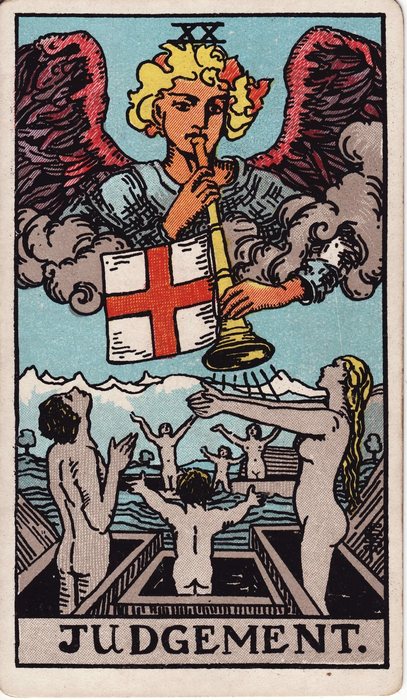
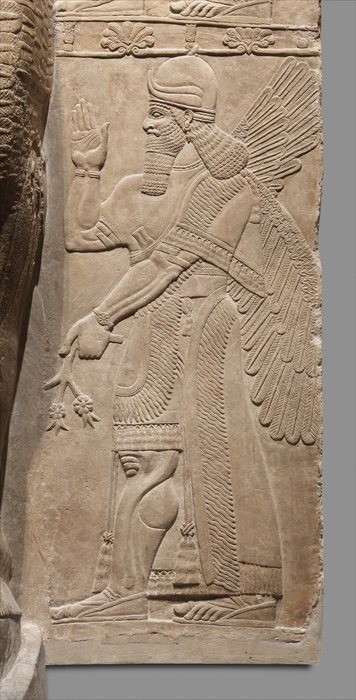
Where the detail is the subject
the Sun and the Moon · the Heavens · the Water
Each of these is in the picture without being what it is about. Below, one work that is about each.
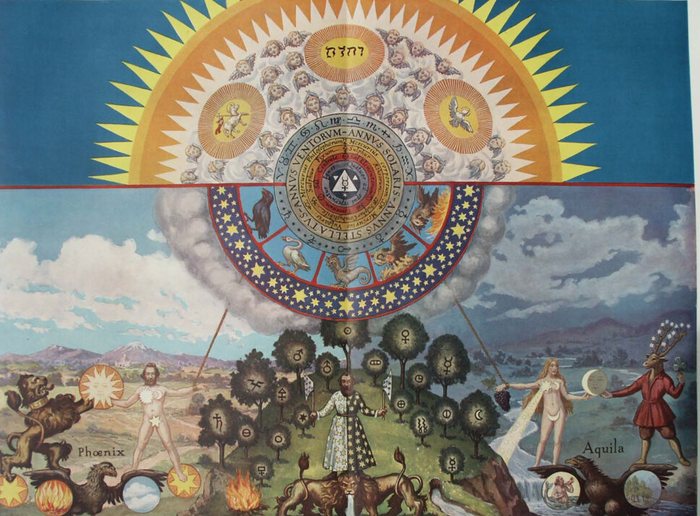
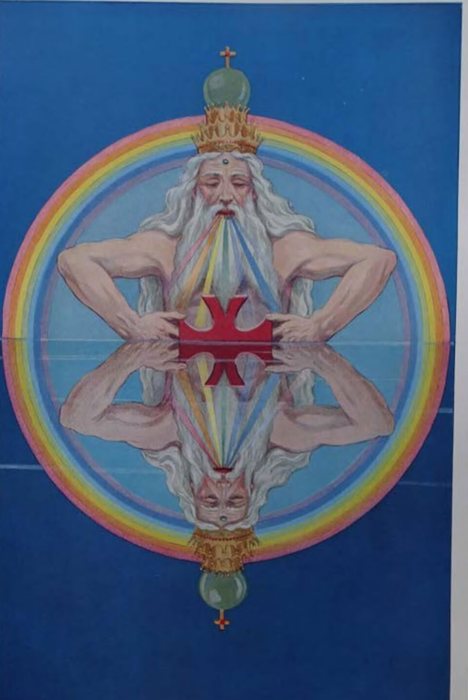
By the same hand
In the same series
Record
One symbol a week, decoded.
This picture is free at full size from its source, linked above. What an address gets is the Sunday letter: one picture, one symbol marked on it, what it meant and who said so, and the master files of the decoded plates as they are verified. Leave any time.
Free, one letter a week, unsubscribe in one click. How the address is used.
Scroll or pinch to zoom · drag to move · double-tap for 1:1 · 938 by 1400 pixel web copy; the source file is linked under Record