Judgement (XX)
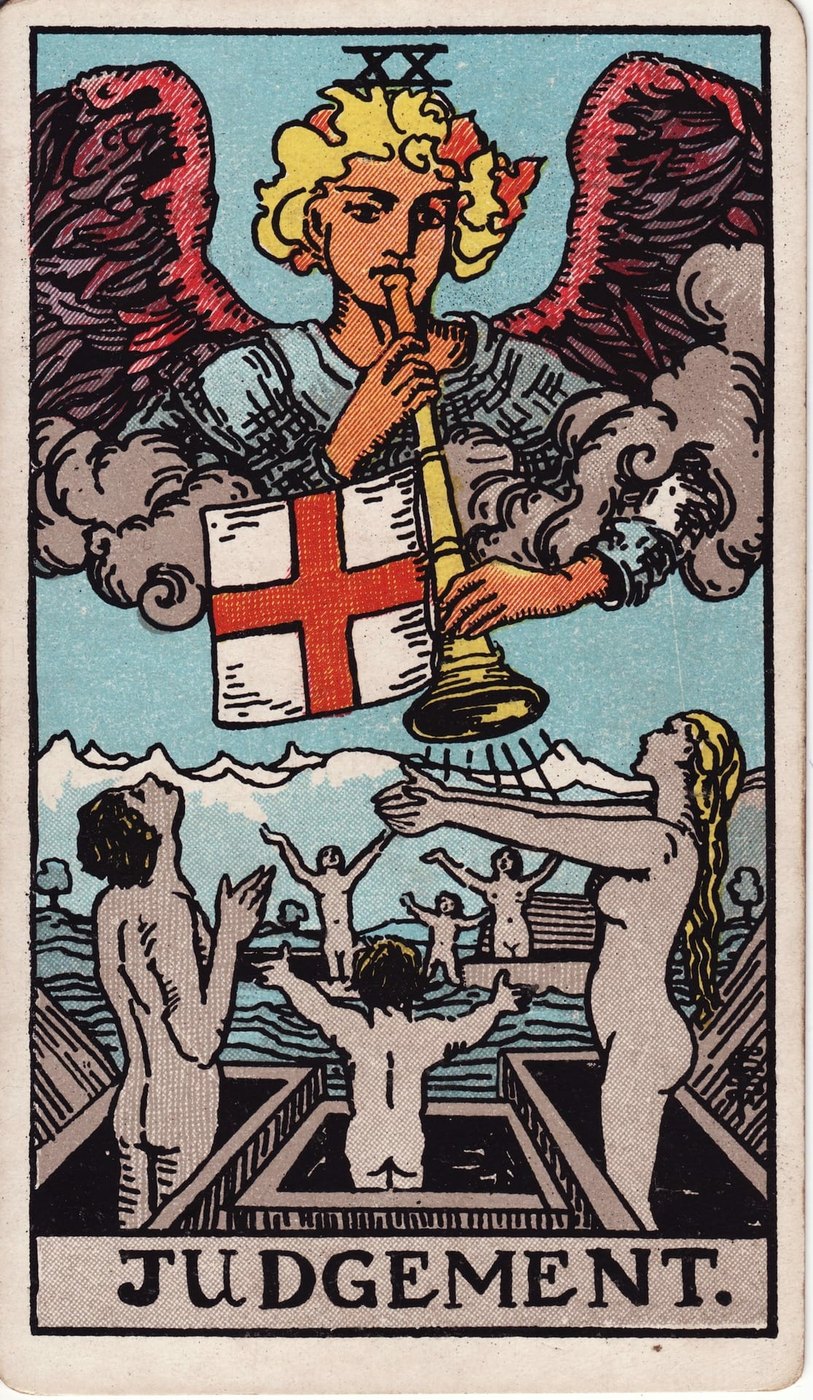
The Angel and the Wing as the central motif, with the Water in a secondary part. From The 1909 tarot.
What is happening
Waite, 1911 “The dead are rising from their tombs--a woman on the right, a man on the left hand, and between them their child, whose back is turned. But in this card there are more than three who are restored, and it has been thought worth while to make this variation as illustrating the insufficiency of current explanations.”
Waite, 1911 “It is the card which registers the accomplishment of the great work of transformation in answer to the summons of the Supernal--which summons is heard and answered from within.”
Key · 2 motifs
Tap a motif on the picture, or a line below. Its note opens under the line, with the reading its author gave it.
- Primary motif
The picture
An angel with red wings in the clouds sounds a trumpet hung with a banner bearing a red cross; grey figures rise from coffins on the sea with arms raised, a woman, a man and a child among them; the Angel as the central motif. By eye
The reading
The picture read whole, in the archive's words, from the sources quoted on the marks. Read on, and the picture follows: the motif under discussion keeps its colour.
Waite says this card cannot be changed, and then changes it. The symbol is essentially invariable in all Tarot sets, he writes, or at least the variations do not alter its character. Then he adds people to it. The older design raises three from the graves; this one raises more, and his reason is really about his rivals: ‘in this card there are more than three who are restored, and it has been thought worth while to make this variation as illustrating the insufficiency of current explanations’.
The angel takes the top of the card. Gabriel by tradition, though Waite never names him, huge in the clouds with red wings and his cheeks full on the trumpet, and the banner hanging from the trumpet is white with the plain red cross of the resurrection. Below him grey figures stand out of coffins floating on a sea, arms lifted, faces turned up: a woman on the right, a man on the left, and between them a child with its back to the reader. Behind that family the lids are open all the way to the mountains. Waite notes that every one of them is as one in the wonder, adoration and ecstasy of their attitudes. Nobody is being judged. Everybody is astonished.
Then he turns the scene inwards, and asks the best question he put to any card in the deck. The summons is heard and answered from within, he says: ‘What is that within us which does sound a trumpet and all that is lower in our nature rises in response, almost in a moment, almost in the twinkling of an eye?’ The last phrase is Paul's, out of the chapter on the resurrection of the dead, and Waite has taken it to describe something that happens to somebody who is still alive.
He leaves both readings standing and lets the reader pick a floor. Let the card go on showing the Last Judgment and the resurrection of the body to those who can see no further, he says, and let those with inward eyes look and find the rest. Of every card in the deck, this is the one whose picture he refused to touch and whose meaning he rewrote entirely.
Decoded: every motif is marked, and each mark carries the reading its author gave it, quoted from the text, or says that it is observed on the picture and not read. The reading above is the archive's own, made from those sources and no others.
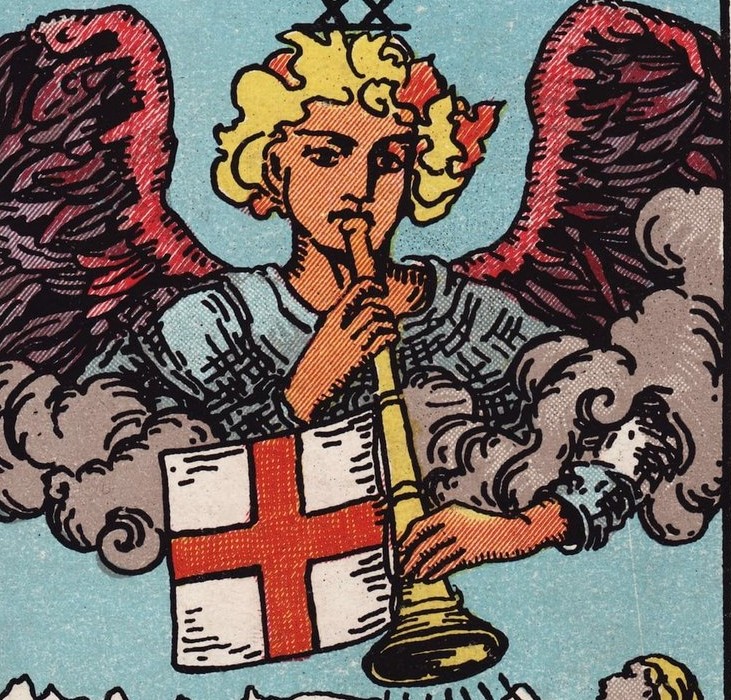
The mark of an errand rather than a nature. Note whether the wings are open, folded, or given to the figure by someone else.
In plain words An angel with red wings leans out of the clouds and blows a trumpet with a flag on it bearing a red cross, and below him the dead stand up in their coffins with their arms raised. Waite says the picture is the same in every tarot deck, and then asks his own question about it: what is it inside us that sounds a trumpet, so that everything lower in us rises at once?
Waite, 1911 “The great angel is here encompassed by clouds, but he blows his bannered trumpet, and the cross as usual is displayed on the banner.”
Waite, 1911 “What is that within us which does sound a trumpet and all that is lower in our nature rises in response--almost in a moment, almost in the twinkling of an eye?”
Also carrying the Angel and the Wing
42 works carry it. The 6 where it is the central motif are here. The symbol.
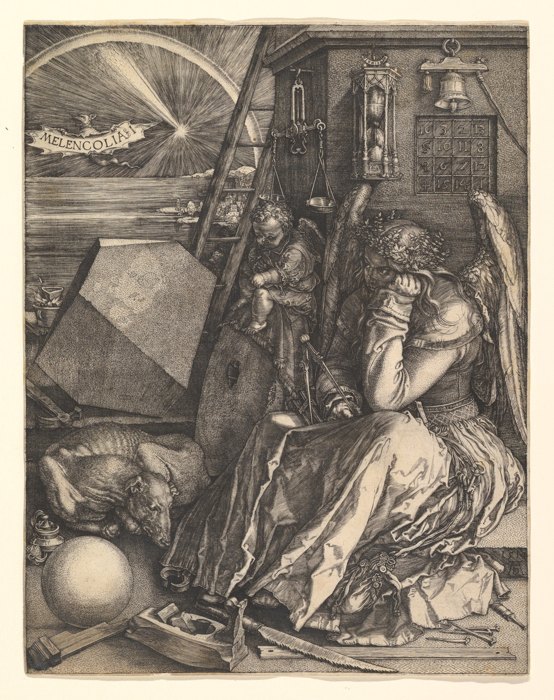
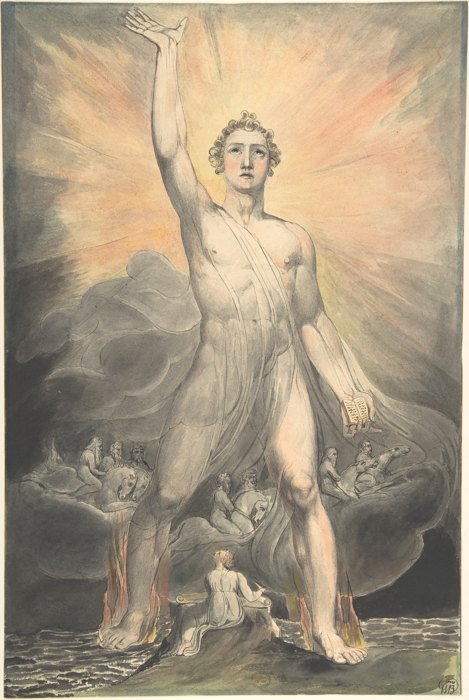
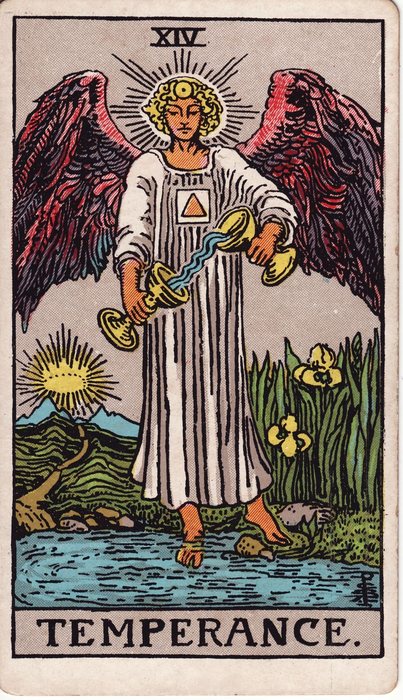
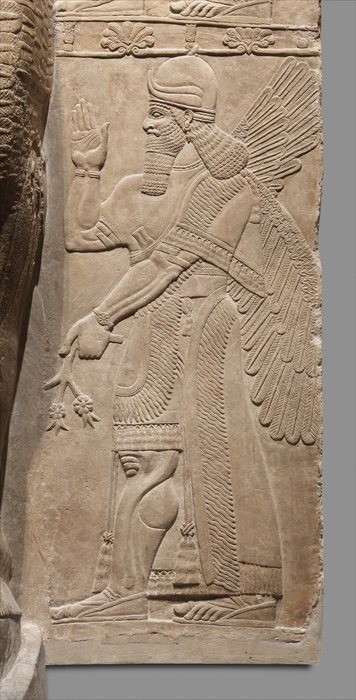
Where the detail is the subject
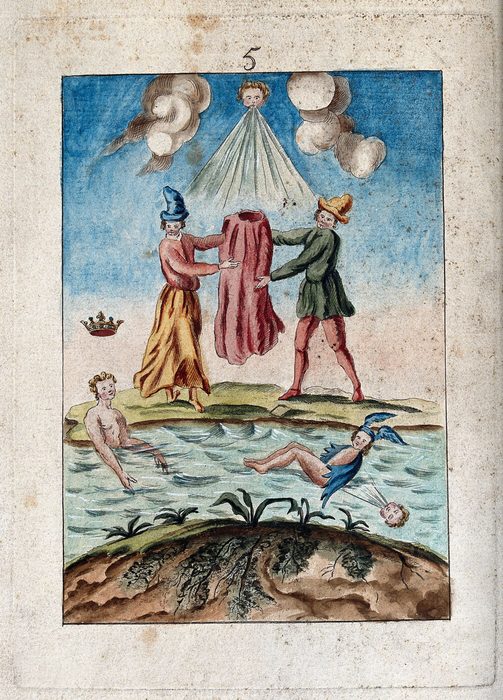
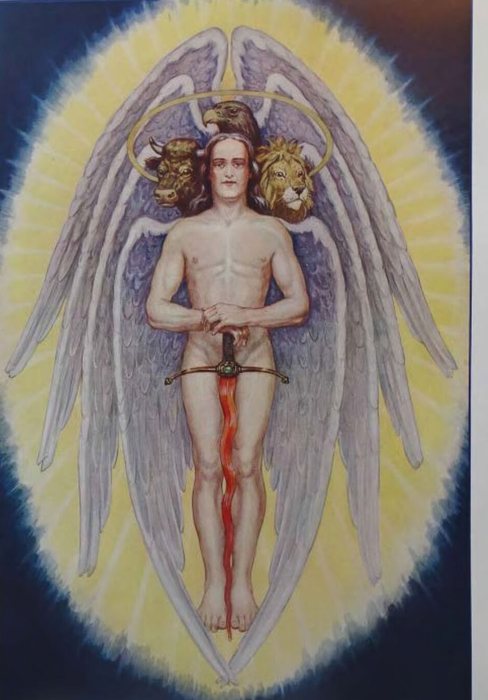
This is in the picture without being what it is about. Below, one work that is about it.
In the same series

Record
One symbol a week, decoded.
This picture is free at full size from its source, linked above. What an address gets is the Sunday letter: one picture, one symbol marked on it, what it meant and who said so, and the master files of the decoded plates as they are verified. Leave any time.
Free, one letter a week, unsubscribe in one click. How the address is used.
Scroll or pinch to zoom · drag to move · double-tap for 1:1 · 813 by 1400 pixel web copy; the source file is linked under Record