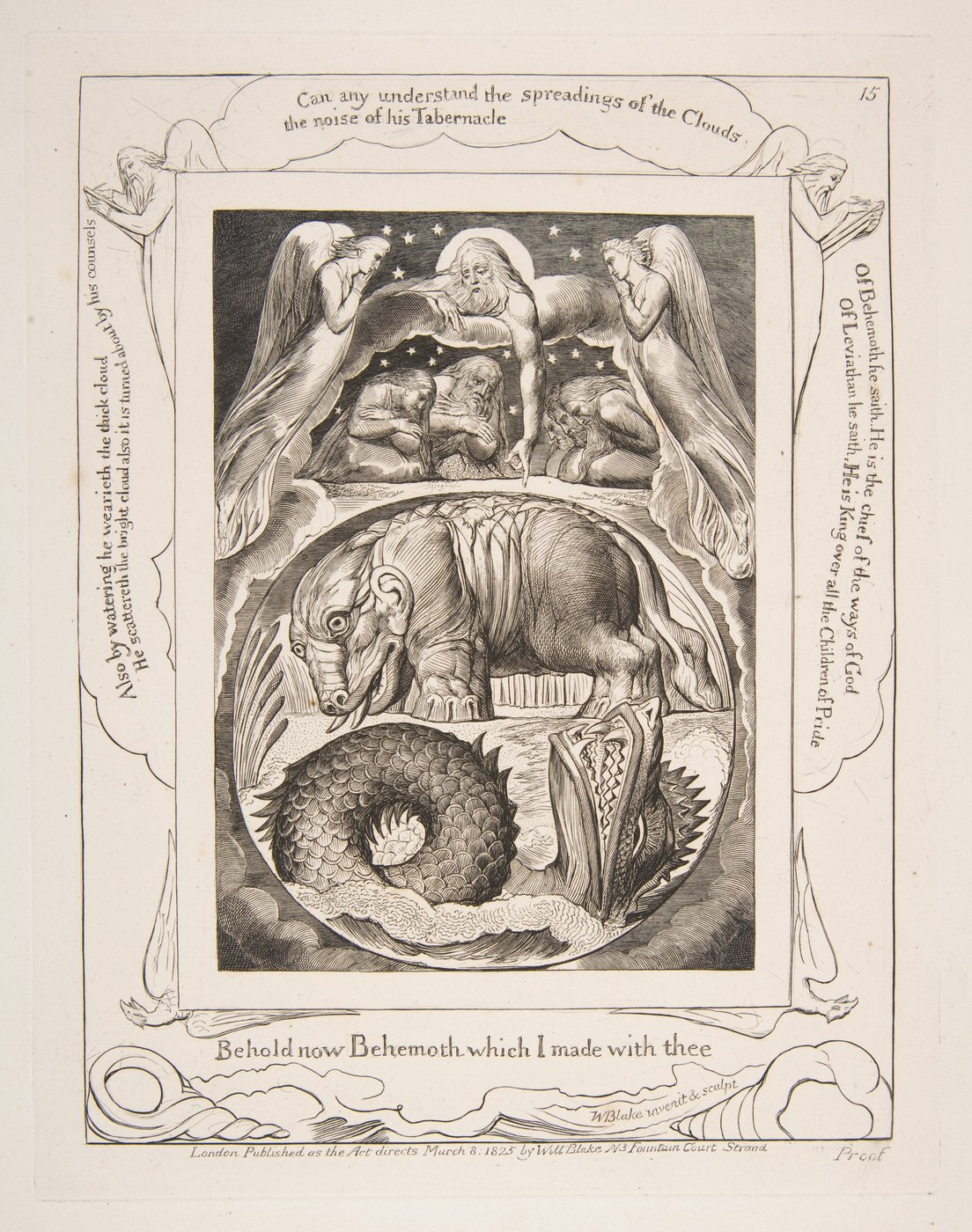
Behold now Behemoth which I made with thee
The Demon and the Monster as the central motif, with the Serpent and the Dragon, the Divine, and the Heavens in a secondary part. From The Book of Job.
What is happening
William Blake, 1825 “London Published as the Act directs March 8. 1825 by Will Blake N 3 Fountain Court Strand”
Symbolica, 2026 Plate 15 of twenty-two. Blake published the series himself in March 1825 and engraved the scripture into the margins of every plate, so the reading of each picture is on the same sheet in the same hand. Which verses he chose, and where he set them, is his argument about the book.
Key · 4 motifs
Tap a motif on the picture, or a line below. Its note opens under the line, with the reading its author gave it.
- Primary motif
- Secondary motifs · 3
The picture
A great four-footed beast standing on land above a coiled scaled monster with its jaws open in water, the two of them held inside one circle; above them God with a ring of stars round his head and both arms flung out, two tall angels at his shoulders and three figures kneeling at his feet; engraved scripture running round all four margins. By eye
The reading
The picture read whole, in the archive's words, from the sources quoted on the marks. Read on, and the picture follows: the motif under discussion keeps its colour.
Job has asked why. This is the answer he gets, and it is not an argument. It is two animals in a circle.
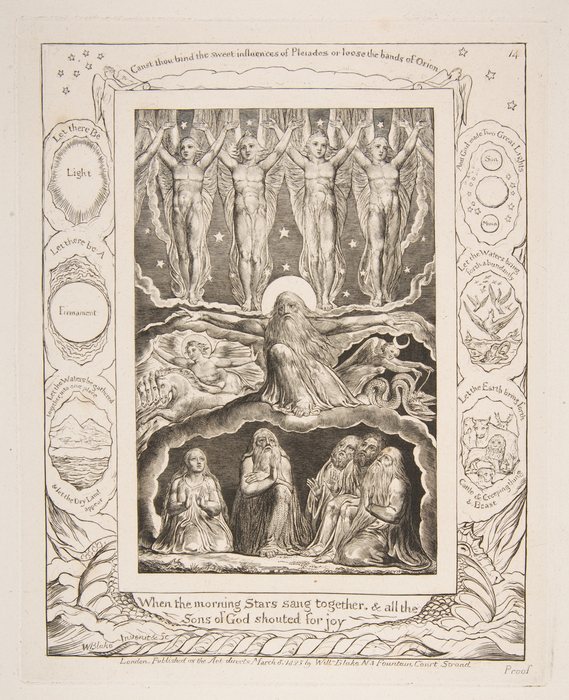
God leans out of the top of the design with both arms thrown wide, a ring of stars round his head, two tall angels folded at his shoulders and Job with his wife and a friend kneeling under his hands. One finger points down. The line Blake sets above him is a question about the weather: ‘Can any understand the spreadings of the Clouds the noise of his Tabernacle’. Up the left margin the same idea again, and still about cloud: ‘Also by watering he wearieth the thick cloud He scattereth the bright cloud also it is turned about by his counsels’. Nothing here answers the question Job asked.
What God points at is Behemoth, a heavy four-footed beast standing on land in the upper half of a circle. Blake's line for him, cut down the right margin, is the one that matters: ‘Of Behemoth he saith, He is the chief of the ways of God’. The chief of the ways. The largest and first thing made, and it is put in front of a man who wants to know why he is in pain.
Below Behemoth, in water, Leviathan lies coiled on himself in overlapping scales with his jaws open. His line is harder: ‘Of Leviathan he saith, He is king over all the Children of Pride’. Land above, water below, both inside one ring, both made, both shown. In this archive the serpent is usually the thing that turns: the ouroboros, the caduceus, the dragon that must be killed. Blake's serpent does not turn into anything. It is simply there, and being there is the reply.
The stars round God's head are the only thing on the plate Blake gives no words for. The archive records them and leaves them unread.
The whole series works this way. Blake published it himself in March 1825, and instead of a caption he cut scripture into all four margins of every plate, choosing the verses and deciding where each one sits. The engraving is the picture and the marginal text together, and on this sheet the arrangement makes the point the words never state: the answer to suffering is placed under the question, in a circle, and it is alive.
Decoded: every motif is marked, and each mark carries the reading its author gave it, quoted from the text, or says that it is observed on the picture and not read. The reading above is the archive's own, made from those sources and no others.
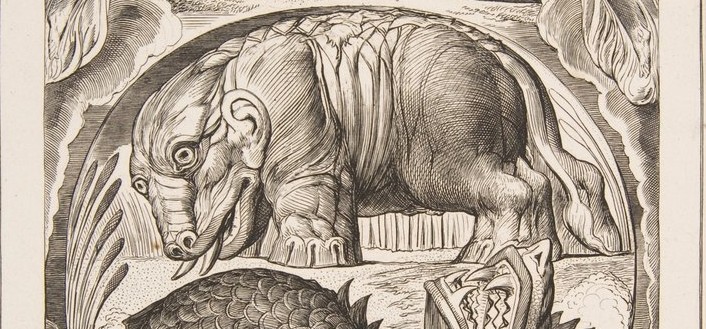
Almost always a composite and almost always subordinate. Note what it is made of and whether it is bound.
In plain words A heavy four-footed animal with a blunt head and small ear fills the top of the circle, drawn with the hide worked in ridges. Blake engraves what God says about him in the right margin: he is the chief of the ways of God. Not a punishment and not an enemy. The first and largest thing God made, shown to a man who has just asked why he is suffering.
William Blake, 1825 “Of Behemoth he saith, He is the chief of the ways of God Of Leviathan he saith, He is king over all the Children of Pride”
William Blake, 1825 “Behold now Behemoth which I made with thee”
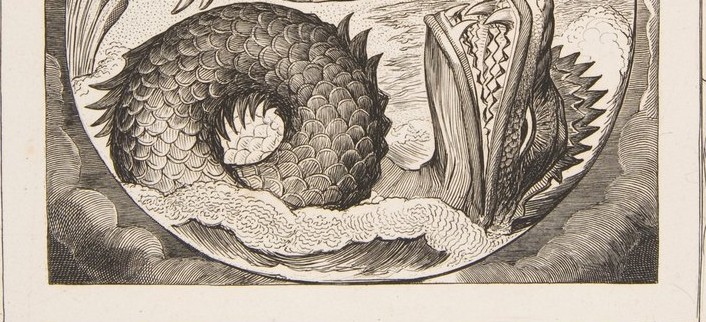
A single creature doing two opposite jobs. Note whether it is bound, killed, or eating itself.
In plain words Under Behemoth, in water, a scaled body is coiled round on itself with the head turned out and the jaws open on rows of teeth. Blake's line for him is the harder one: he is king over all the Children of Pride. The two beasts are stacked in one circle, land over water, and the circle is shown to Job as an answer rather than explained to him.
William Blake, 1825 “Of Behemoth he saith, He is the chief of the ways of God Of Leviathan he saith, He is king over all the Children of Pride”
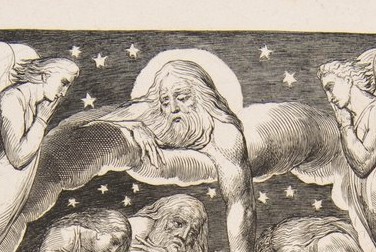
God shown, or pointed at. Look for what stands where a face would be: a name in a cloud, a circle above the top of a diagram, a ring of verses, a sign over a head.
In plain words God leans out of the top of the plate with his arms spread the full width of the design and one finger down at the beasts. He is not speaking to the reader. He is showing Job something. The text Blake sets over his head is a question rather than a statement, and it is about weather: can anyone understand the spreadings of the clouds.
William Blake, 1825 “Can any understand the spreadings of the Clouds the noise of his Tabernacle”
William Blake, 1825 “Also by watering he wearieth the thick cloud He scattereth the bright cloud also it is turned about by his counsels”
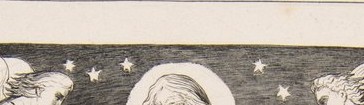
A diagram of everything, drawn so that a person can be found inside it. Note where the human figure stands in the scheme.
In plain words Small stars are cut into the dark all round God's head and out behind the two angels. Blake gives no line for them, and the archive does not supply one. What the left margin does say is about cloud rather than star: he wearies the thick cloud with watering, he scatters the bright cloud, and it is turned about by his counsels.
Symbolica, 2026 Read off the plate. Blake engraved no text for the stars on this sheet, so they are recorded as drawn and left unread.
Also carrying the Demon and the Monster
23 works carry it. The 6 where it is the central motif are here. The symbol.
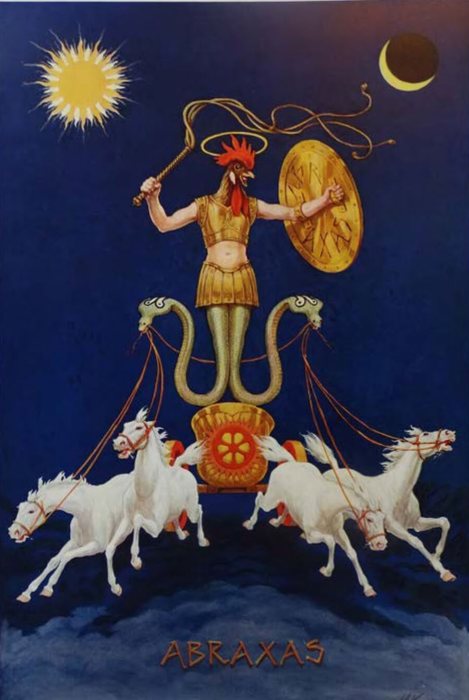 Abraxas, a Gnostic Pantheos
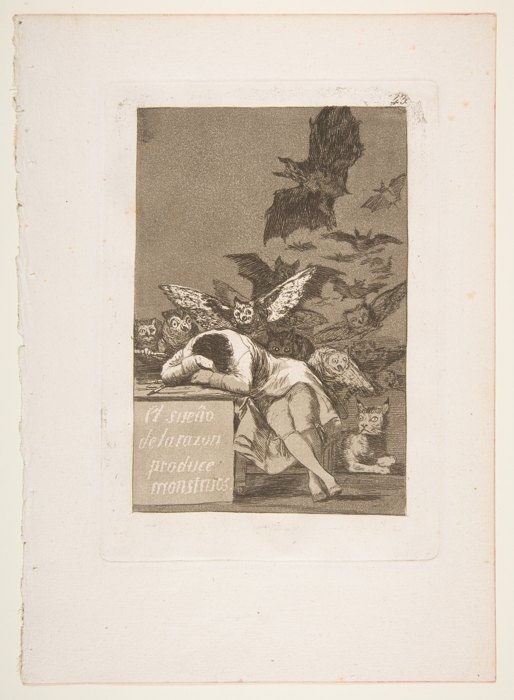 The Sleep of Reason Produces Monsters
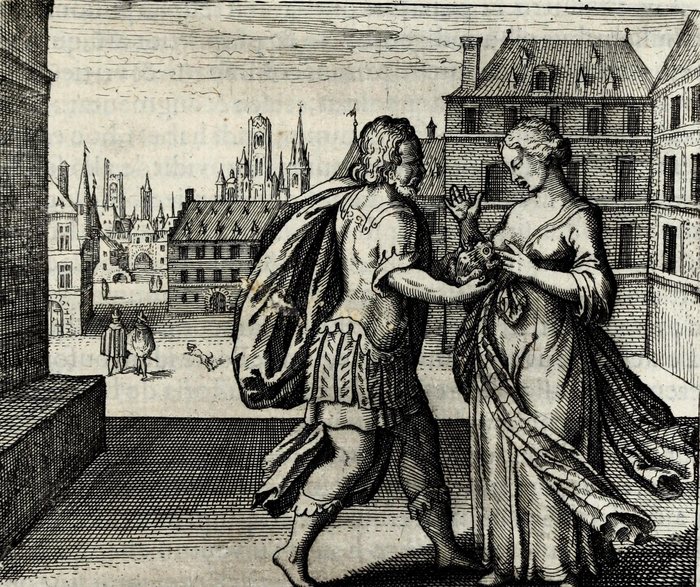 Appone mulieri super mammas bufonem, ut ablactet eum, & moriatur mulier, sitque bufo grossus de lacte
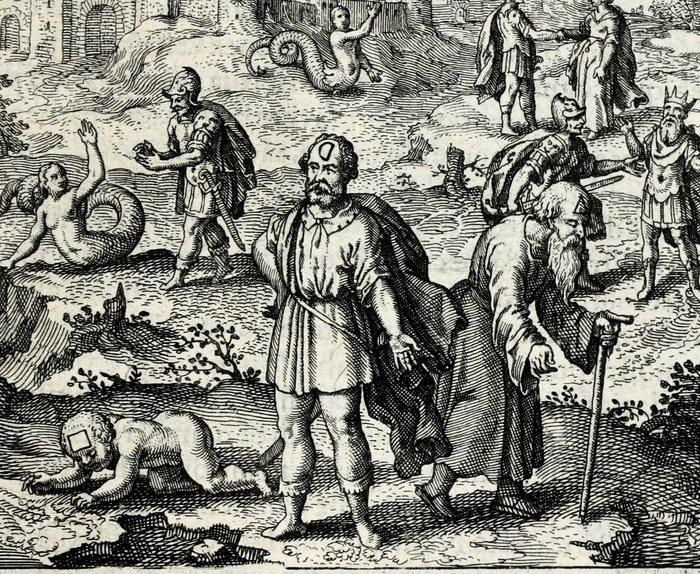 Oedypus Sphynge superata & trucidato Lajo patre matrem ducit in uxorem
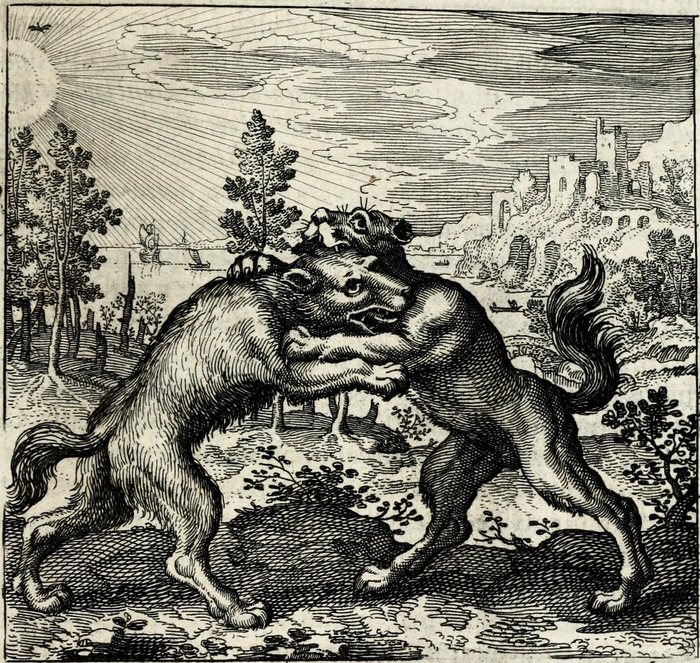 Lupus ab Oriente & Canis ab Occidente venientes se invicem momorderunt
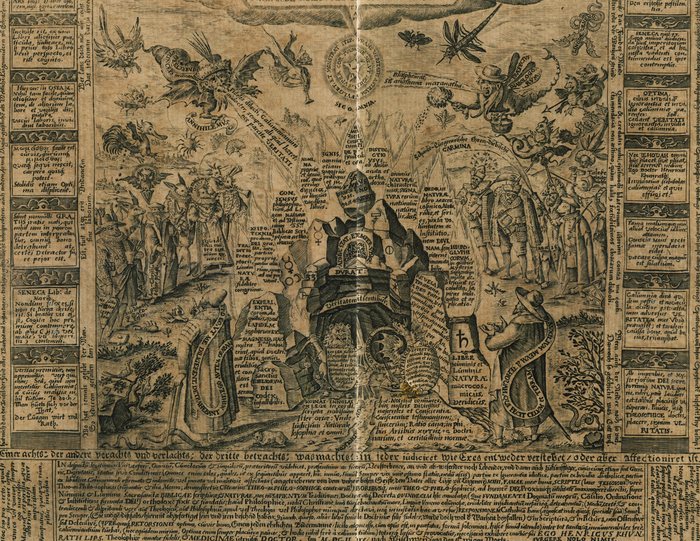 Against the slanderers, by right of retort
Where the detail is the subject
the Serpent and the Dragon · the Divine · the Heavens
Each of these is in the picture without being what it is about. Below, one work that is about each.
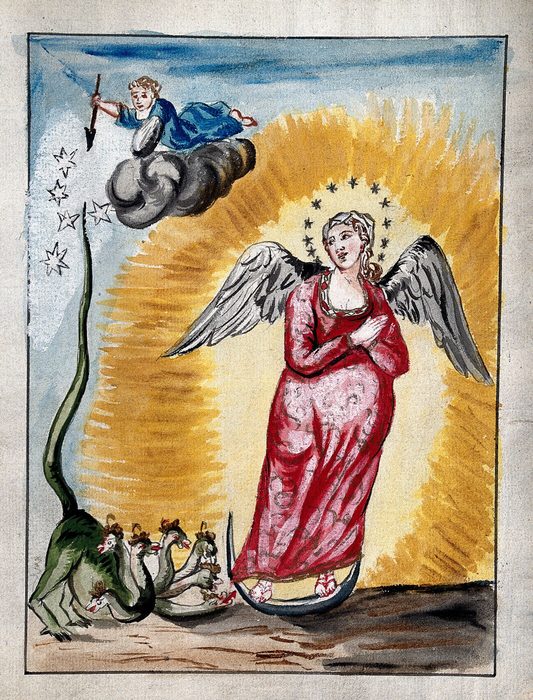
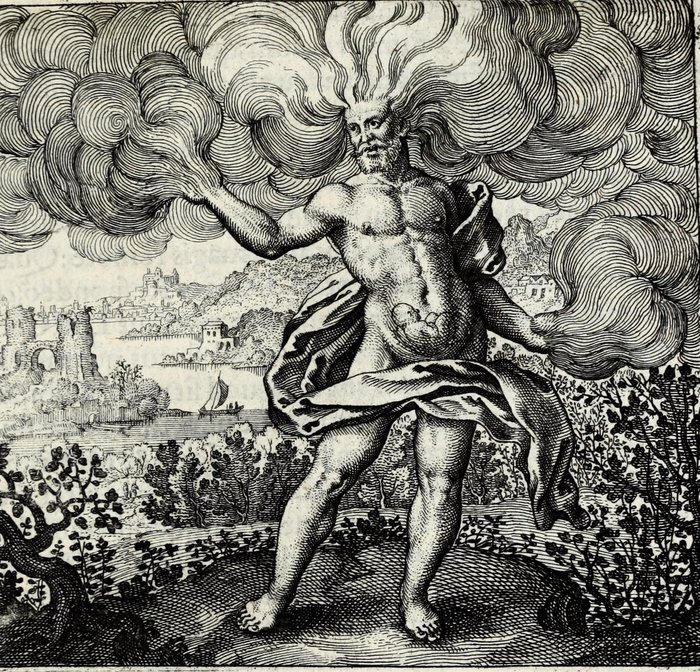
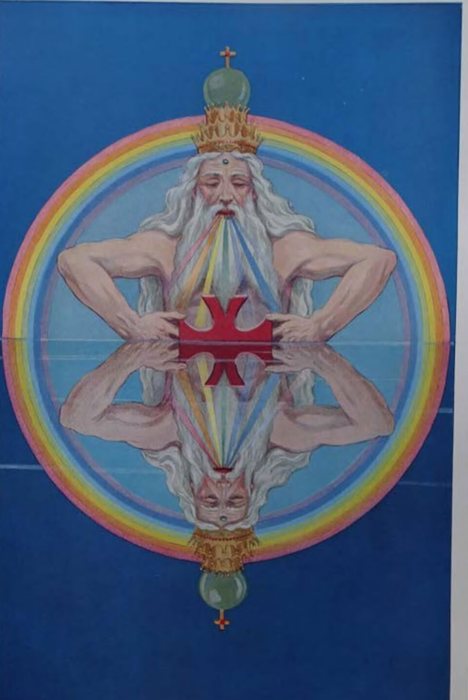
By the same hand
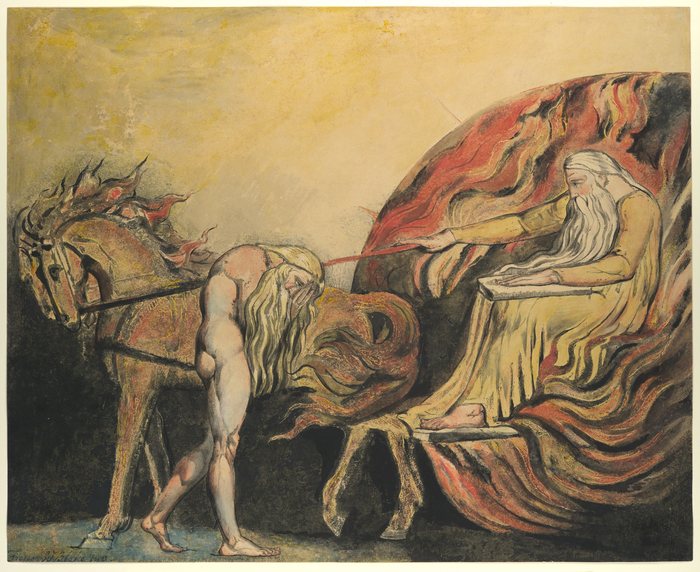
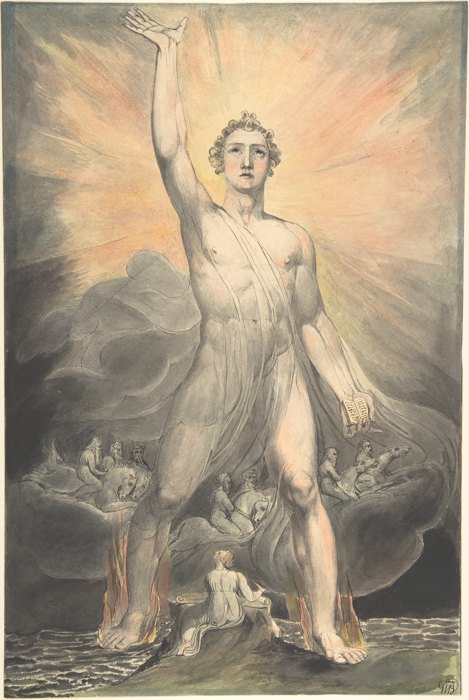
In the same series
Record
One symbol a week, decoded.
This picture is free at full size from its source, linked above. What an address gets is the Sunday letter: one picture, one symbol marked on it, what it meant and who said so, and the master files of the decoded plates as they are verified. Leave any time.
Free, one letter a week, unsubscribe in one click. How the address is used.
Scroll or pinch to zoom · drag to move · double-tap for 1:1 · 1104 by 1400 pixel web copy; the source file is linked under Record