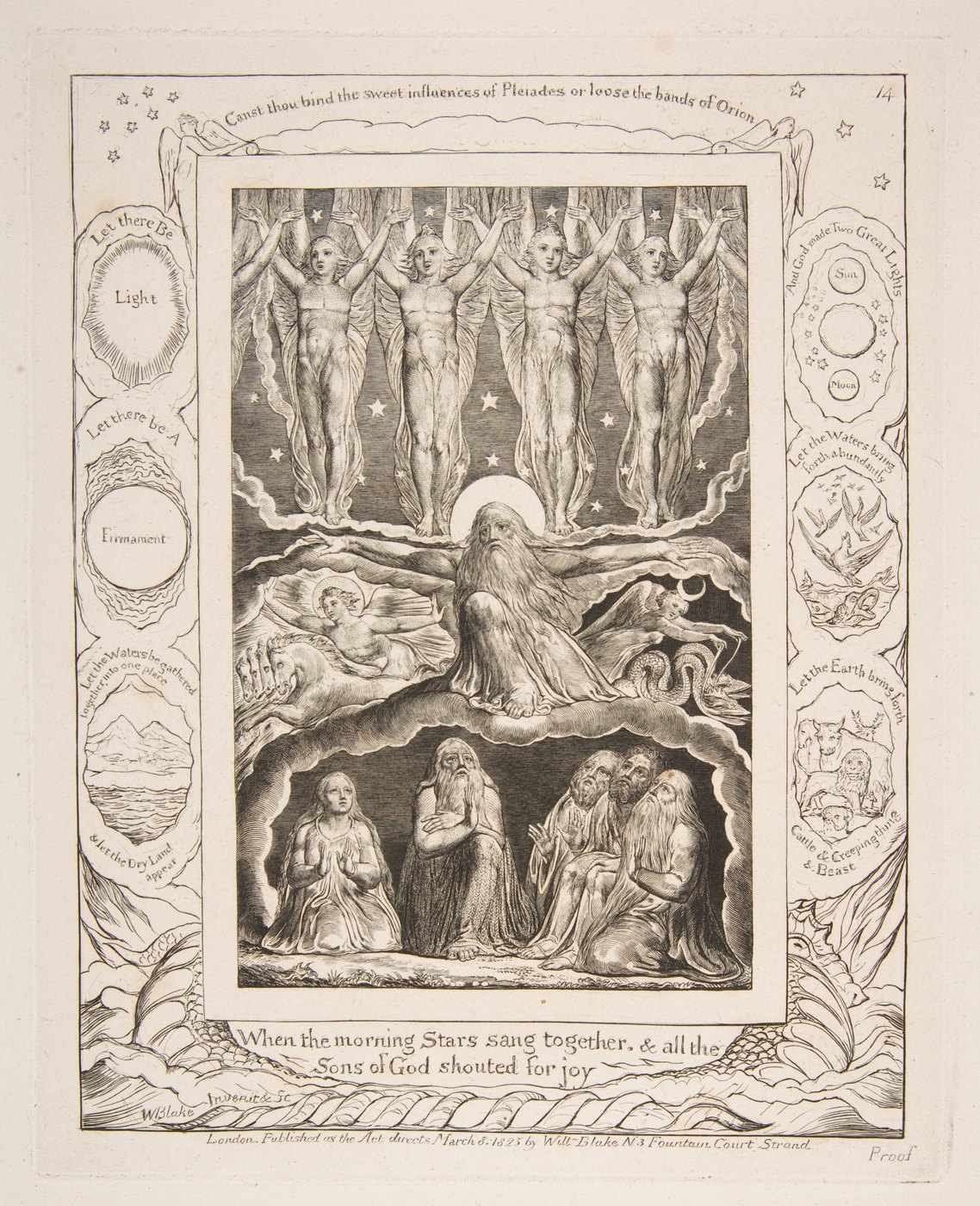
When the morning Stars sang together
The Heavens as the central motif, with the Divine, the Sun and the Moon, and the Horse in a secondary part. From The Book of Job.
What is happening
Symbolica, 2026 Plate 14 of twenty-two. The margins carry the days of creation in medallions, three down each side, each with its own sentence engraved beside it, so the sheet reads as a diagram of Genesis wrapped round a picture of Job being shown it.
Key · 4 motifs
Tap a motif on the picture, or a line below. Its note opens under the line, with the reading its author gave it.
- Primary motif
- Secondary motifs · 3
The picture
Four standing figures with both arms raised on a bank of cloud, stars between them; below, God with his arms spread the width of the plate and a disc of light behind his head; at his right hand a figure riding with horses, at his left a figure under a crescent moon with serpents; Job and four others kneeling in the dark at the foot; six medallions of the days of creation down the margins, each with its own engraved line. By eye
The reading
The picture read whole, in the archive's words, from the sources quoted on the marks. Read on, and the picture follows: the motif under discussion keeps its colour.
Blake published this series himself in March 1825, and he did not treat the margins as decoration. Down each side he set three medallions for the six days of creation, each with its own sentence cut beside it: ‘Let there Be Light’, ‘Let there be A Firmament’, ‘Let the Waters be gathered together unto one place & let the Dry Land appear’ on the left; ‘And God made Two Great Lights’, ‘Let the Waters bring forth abundantly’, ‘Let the Earth bring forth Cattle & Creeping thing & Beast’ on the right. Genesis runs round the picture, and the picture shows what happens to a man who gets shown it.
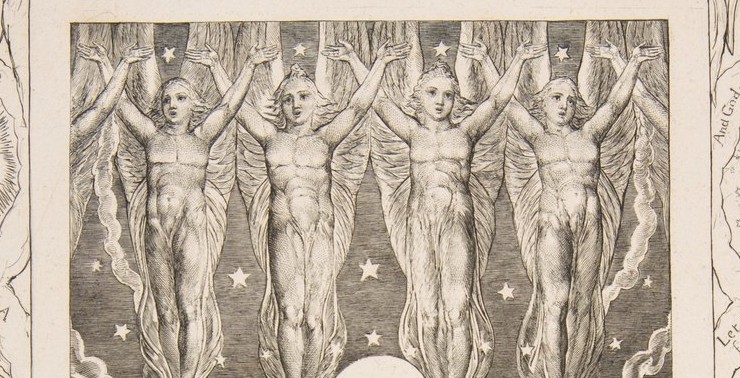
‘When the morning Stars sang together, & all the Sons of God shouted for joy’. Blake draws them as four people on a cloud with their arms up, and cuts stars into the dark around them. Over their heads he sets the question God actually asked: ‘Canst thou bind the sweet influences of Pleiades or loose the bands of Orion’. He gives the stars bodies because in this book they answer and Job does not.
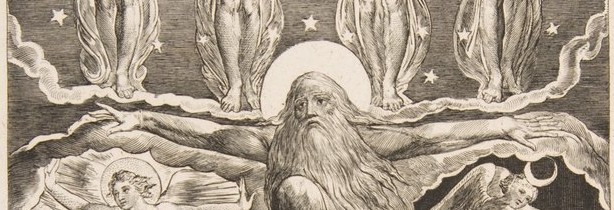
Below them God stretches his arms the whole width of the design with a disc of light behind him, and Blake gives him no words on this plate. He has finished making the world; it hangs in the margins. He turns it instead toward five people kneeling in a dark hollow at the bottom, who look up.
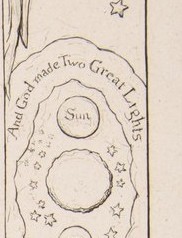
The two great lights appear twice over. The right margin holds them as two lettered discs in a medallion with the sentence beside them. Inside the picture they move: at God's right a figure rides out with the sun, at his left a figure lies under a crescent with serpents below. Blake keeps the doctrine in the border and the thing itself in the design.
The horses under the sun figure carry no line of Blake's at all, and the archive leaves them unread. They have served for centuries as the shorthand for a light that travels, and Blake evidently expected them to need no caption.
Decoded: every motif is marked, and each mark carries the reading its author gave it, quoted from the text, or says that it is observed on the picture and not read. The reading above is the archive's own, made from those sources and no others.
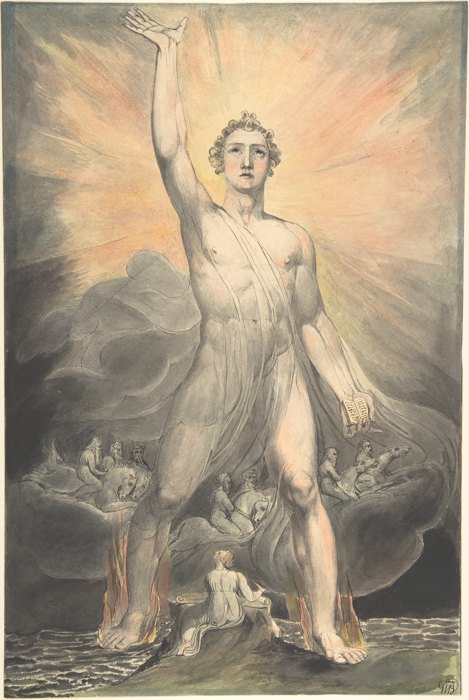
A diagram of everything, drawn so that a person can be found inside it. Note where the human figure stands in the scheme.
In plain words Four figures stand in a row on a bank of cloud with both arms lifted, and stars are cut into the dark between and below them. Blake's line at the foot of the plate names them: these are the morning stars, and they are singing. The line he sets at the head is the harder one, and it is a question God asks Job about whether he could bind the Pleiades or loosen Orion. The stars are drawn as people because in this book they answer.
William Blake, 1825 “When the morning Stars sang together, & all the Sons of God shouted for joy”
William Blake, 1825 “Canst thou bind the sweet influences of Pleiades or loose the bands of Orion”
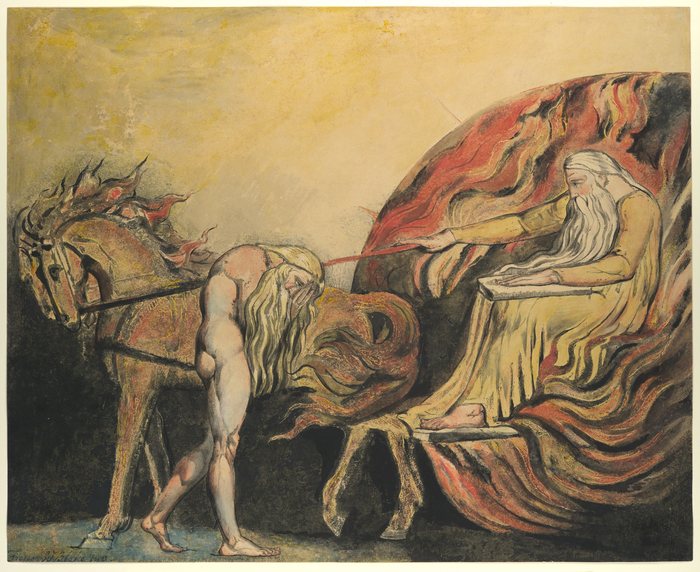
God shown, or pointed at. Look for what stands where a face would be: a name in a cloud, a circle above the top of a diagram, a ring of verses, a sign over a head.
In plain words God spreads his arms until they reach both edges of the picture, with a plain disc of light behind his head. He is not making anything here. Creation is already finished and is drawn in the margins; what he is doing inside the picture is showing it to the five people kneeling in the dark below him.
Symbolica, 2026 Read off the plate. Blake engraved no line for the figure of God on this sheet. The margin medallions carry the sentences of creation and the head and foot carry the stars, and the central figure is left unnamed, so the record leaves him unread.
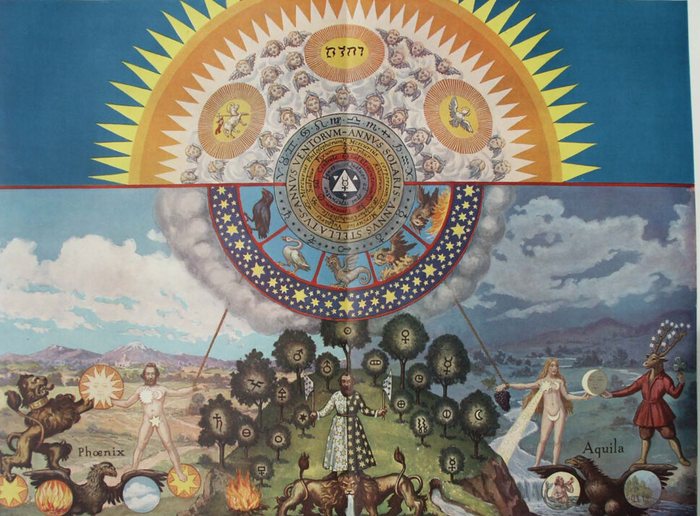
Gold, the perfected metal, and the illuminated intellect. The most overloaded symbol in the tradition.
In plain words High in the right margin, a medallion holds two discs lettered Sun and Moon with stars around them, and beside it Blake has engraved the sentence it illustrates. Inside the picture the same pair appear as people: a figure riding out at God's right hand and, at his left, a figure lying under a crescent with serpents beneath. The margin states the doctrine and the picture acts it.
William Blake, 1825 “And God made Two Great Lights”
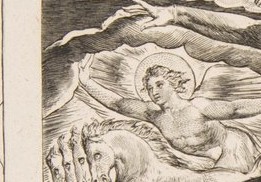
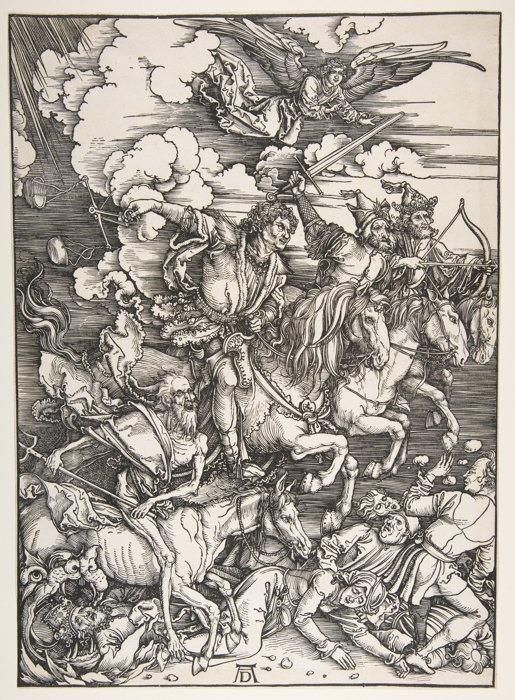
Almost never the subject. Read the rider, then read what the colour of the horse is doing.
In plain words At God's right a figure leans forward over three horses' heads breaking out of the cloud. This is the sun going out, drawn as a chariot team, the oldest way there is of showing that the light moves. Blake engraves nothing about it, and the archive says only what is drawn.
Symbolica, 2026 Read off the plate. The horses carry no engraved line and are recorded as drawn.
Also carrying the Heavens
61 works carry it. The 6 where it is the central motif are here. The symbol.
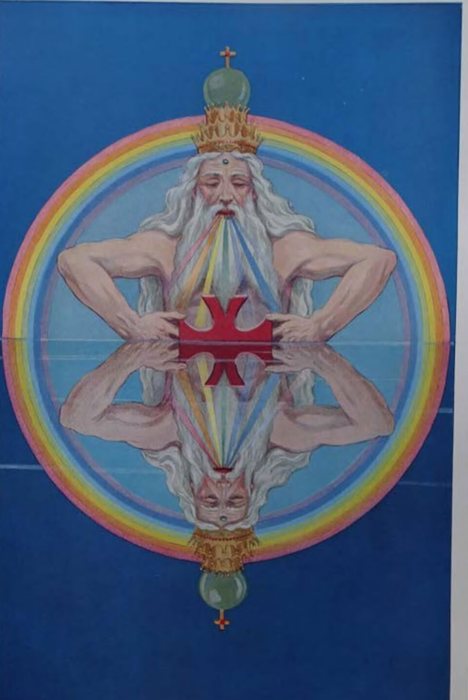
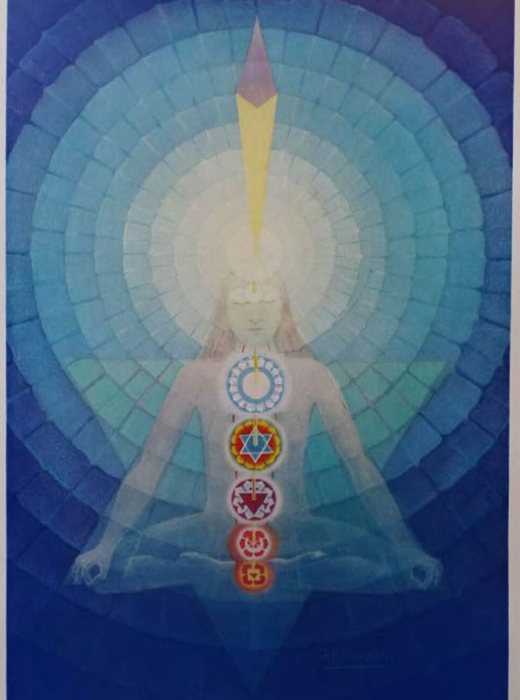
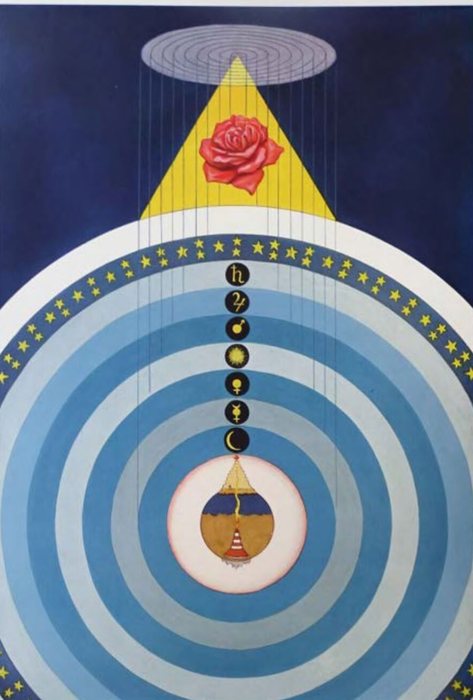
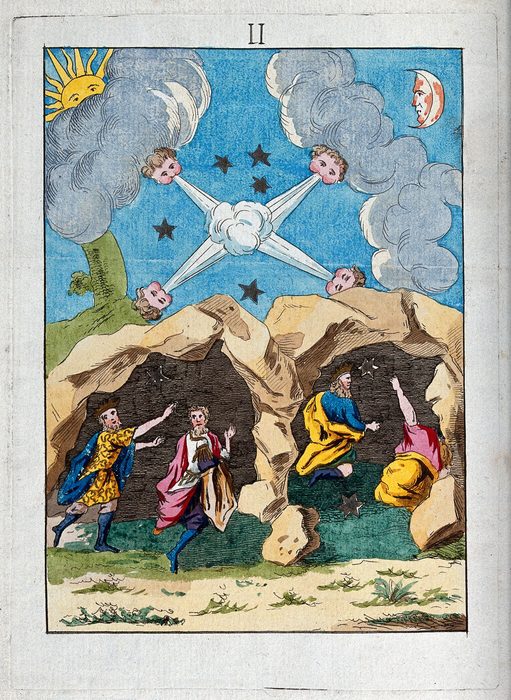
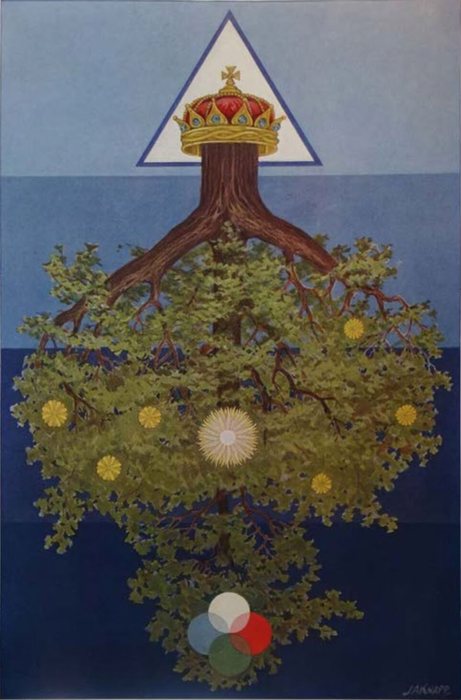
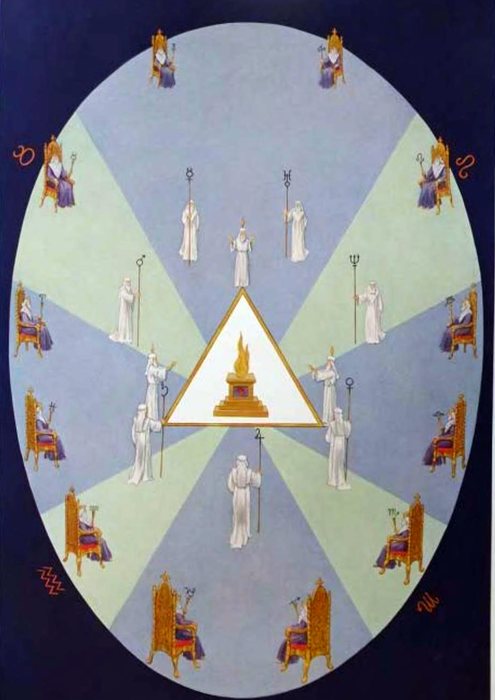
Where the detail is the subject
the Divine · the Sun and the Moon · the Horse
Each of these is in the picture without being what it is about. Below, one work that is about each.
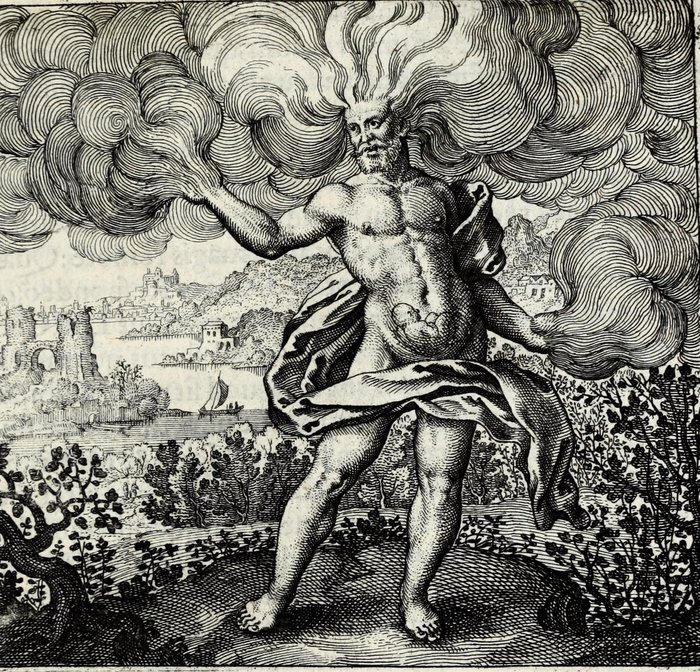
By the same hand
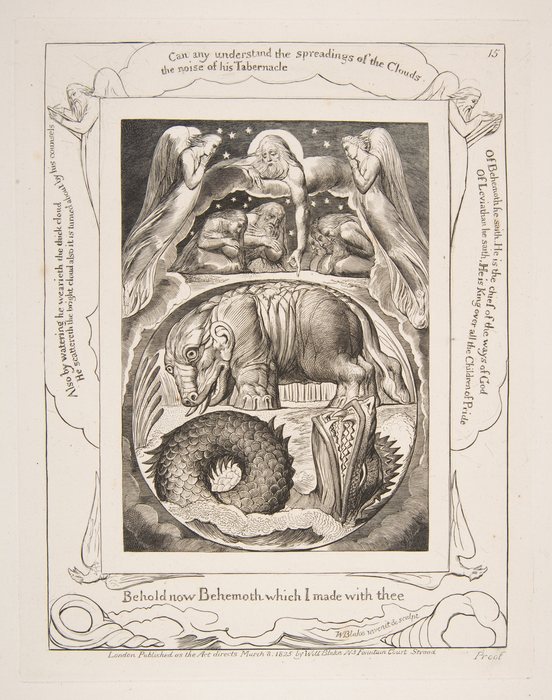
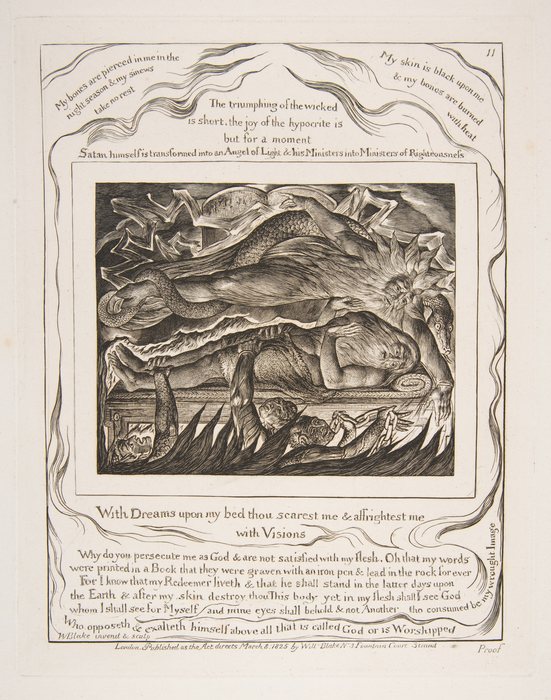
In the same series
Record
One symbol a week, decoded.
This picture is free at full size from its source, linked above. What an address gets is the Sunday letter: one picture, one symbol marked on it, what it meant and who said so, and the master files of the decoded plates as they are verified. Leave any time.
Free, one letter a week, unsubscribe in one click. How the address is used.
Scroll or pinch to zoom · drag to move · double-tap for 1:1 · 1138 by 1400 pixel web copy; the source file is linked under Record