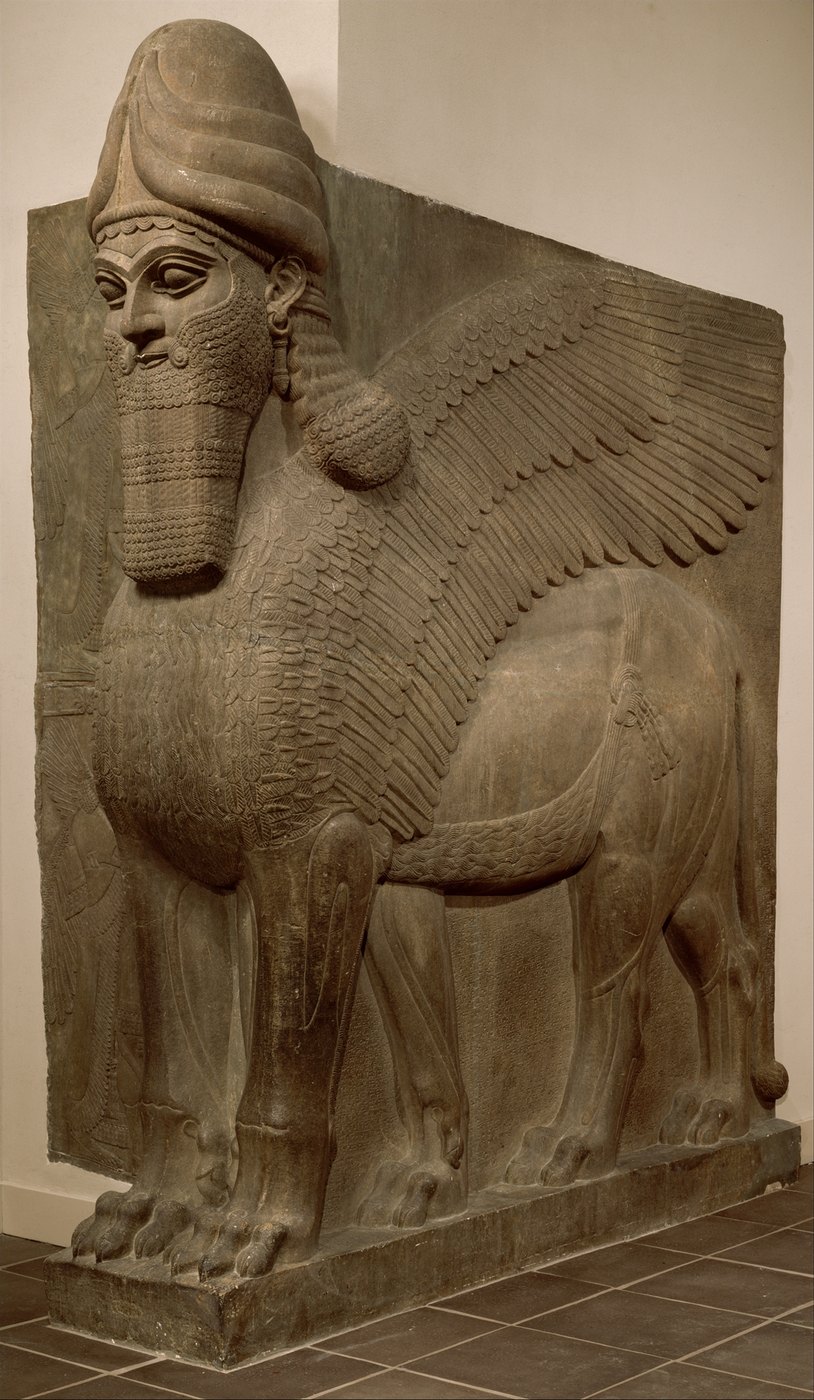
Human-headed winged lion
The Lion as the central motif, with the Angel and the Wing, and the Crown in a secondary part. From Nimrud, 9th century BCE.
What is happening
The Metropolitan Museum of Art, 2026 “I built thereon [a palace with] halls of cedar, cypress, juniper, boxwood, teak, terebinth, and tamarisk [?] as my royal dwelling and for the enduring leisure life of my lordship.”
The Metropolitan Museum of Art, 2026 “Beasts of the mountains and the seas, which I had fashioned out of white limestone and alabaster, I had set up in its gates. I made it [the palace] fittingly imposing.”
Symbolica This is as close as the archive comes to hearing a maker of these things speak, and what he says is that he had the beasts made, in these materials, and put them in the gateways. He does not say what they are for.
Key · 3 motifs
Tap a motif on the picture, or a line below. Its note opens under the line, with the reading its author gave it.
- Primary motif
- Secondary motifs · 2
The picture
A bearded human head in a horned cap on the body of a lion, a wing running the length of the flank, and five legs, two planted at the front and three striding along the side. By eye
The reading
The picture read whole, in the archive's words, from the sources quoted on the marks. Read on, and the picture follows: the motif under discussion keeps its colour.
Count the legs. Stand in front of this animal and it has two, planted, at rest. Walk round to the flank and it is striding, four of them, mid-pace. Five legs, on one lion, cut by a sculptor who knew exactly which two views of a doorway a person gets.
The Metropolitan Museum's entry gives the reason in a sentence, and it is worth noticing what kind of sentence it is. Not a meaning: a method. Somebody worked out that a gateway is seen head-on as you approach and side-on as you pass through, and solved the problem by carving an extra leg. Seven tonnes of alabaster went into a piece of stagecraft.
What the thing is, the sculptor did write down, in the only notation available to him. Horns on the headdress mean a god. The museum reads the cap and the belt as a pair, divinity above and power below, and that is the whole of the caption: a divine guardian, strong, standing in a door.
Layard opened his chapter on these with the sight rather than the sense, calling them the magnificent forms that guarded the portals. Twice in two pages he offers his own reading of the combination, that a human head on an animal body was meant to convey “the union of the greatest intellectual and physical powers”, and twice he declines to insist on it. He then points out that in the sculptures these creatures lose their fights, which sits badly with a high rank.
And here the man who paid for the object speaks. His Standard Inscription ran across the palace walls, and the museum prints the lines that matter. He built halls of cedar, cypress and juniper as his royal dwelling. Then: “Beasts of the mountains and the seas, which I had fashioned out of white limestone and alabaster, I had set up in its gates. I made it [the palace] fittingly imposing.”
Read that twice, because of what is missing from it. Ashurnasirpal names the materials, names the position, and claims the effect. Layard guessed at intellect and strength and would not press the guess. Between the king who paid for the lion and the man who dug it out three thousand years later, nobody has said what it means.
Decoded: every motif is marked, and each mark carries the reading its author gave it, quoted from the text, or says that it is observed on the picture and not read. The reading above is the archive's own, made from those sources and no others.
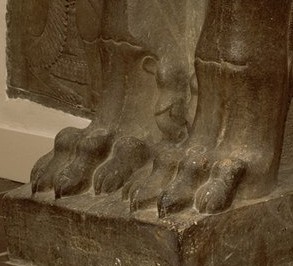
Usually not an animal but one face of a set of four. Count the other three before reading it alone.
In plain words Count them. Two forelegs stand side by side on the front face and four stride along the flank, which is five legs on one animal, and the fifth is the point. The museum explains the trick in one sentence: a doorway is looked at from two directions and the sculptor wanted the beast to be at rest from one and walking from the other.
The Metropolitan Museum of Art, 2026 “The sculptor gave these guardian figures five legs so that they appear to be standing firmly when viewed from the front but striding forward when seen from the side. Lamassu protected and supported important doorways in Assyrian palaces.”
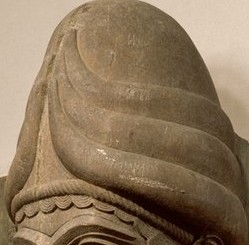
Completion, and in the Kabbalistic reading the first sephirah, the point at which the work is no longer yours.
In plain words The horns are the rank. Assyrian carving puts them on the headdress of anything divine, and the museum reads this cap and the belt below as a two part statement about what the creature is and what it can do.
The Metropolitan Museum of Art, 2026 “The horned cap attests to its divinity, and the belt signifies its power.”
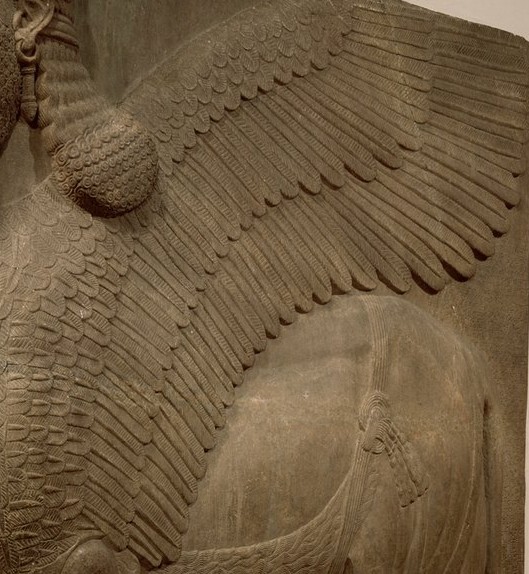
The mark of an errand rather than a nature. Note whether the wings are open, folded, or given to the figure by someone else.
In plain words Layard put these at the head of his chapter on the emblematic figures and described their job before their meaning: they stood in the doorways. His own reading of the combination, offered twice and never pressed, is that a human head on an animal body says intellect and strength at once.
Austen Henry Layard, 1849 “The winged human-headed lions and bulls, those magnificent forms which guarded the portals of the Assyrian temples, next deserve notice.”
Austen Henry Layard, 1849 “I have already ventured to suggest the idea which these singular forms were intended to convey”
Austen Henry Layard, 1849 “the union of the greatest intellectual and physical powers”
Austen Henry Layard, 1849 “but certainly their position with reference to other symbolical figures, would point to an inferiority in the celestial hierarchy.”
Austen Henry Layard, 1849 “The winged bull with the human head is evidently a pure Assyrian type. Its position in the religious system seems to be identical with that of the andro-sphinx; and in the mythic groups, as well as in architecture, they both occupy the same place.”
Also carrying the Lion
14 works carry it. The 6 where it is the central motif are here. The symbol.
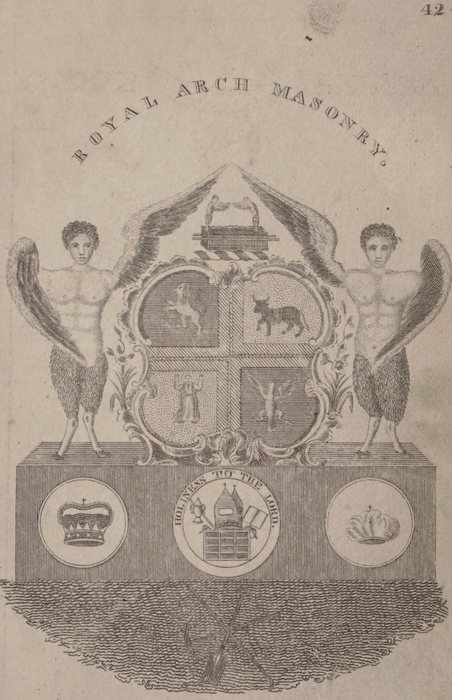
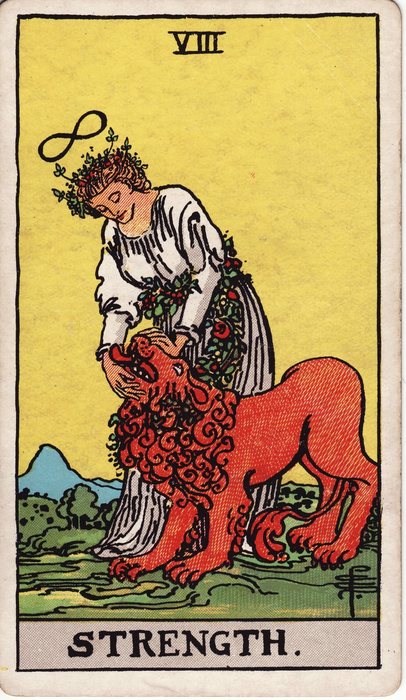
Where the detail is the subject
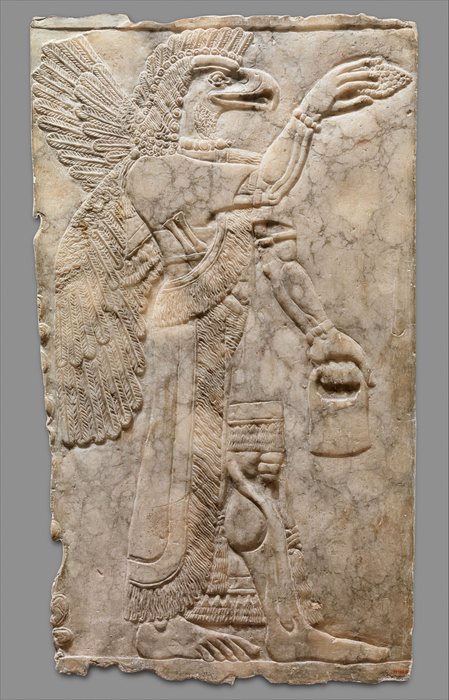
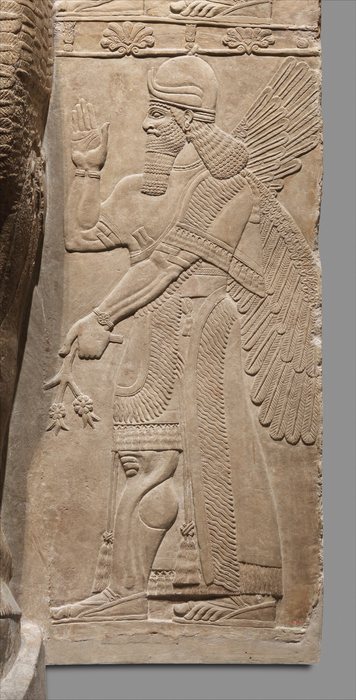
the Angel and the Wing · the Crown
Each of these is in the picture without being what it is about. Below, one work that is about each.
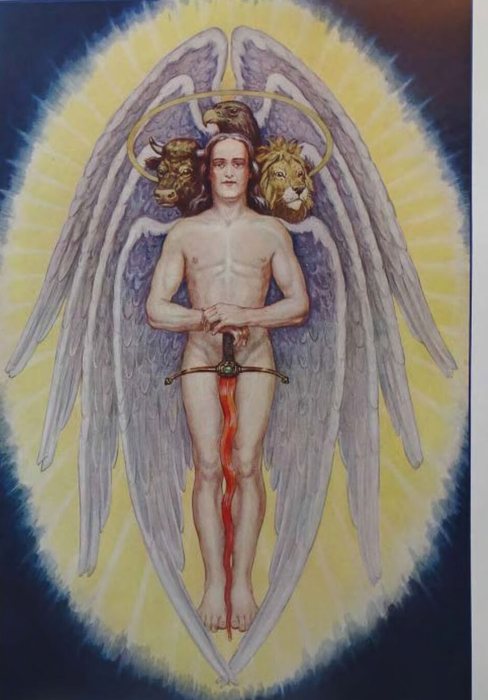
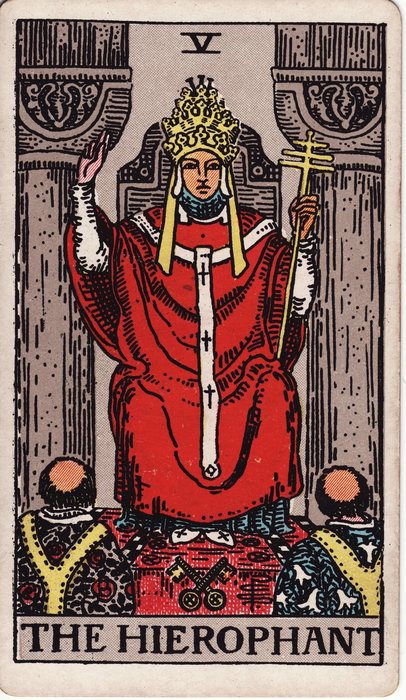
In the same series
Nimrud, the palaces of Ashurnasirpal II, about 883 to 859 BCE
Record
One symbol a week, decoded.
This picture is free at full size from its source, linked above. What an address gets is the Sunday letter: one picture, one symbol marked on it, what it meant and who said so, and the master files of the decoded plates as they are verified. Leave any time.
Free, one letter a week, unsubscribe in one click. How the address is used.
Scroll or pinch to zoom · drag to move · double-tap for 1:1 · 814 by 1400 pixel web copy; the source file is linked under Record