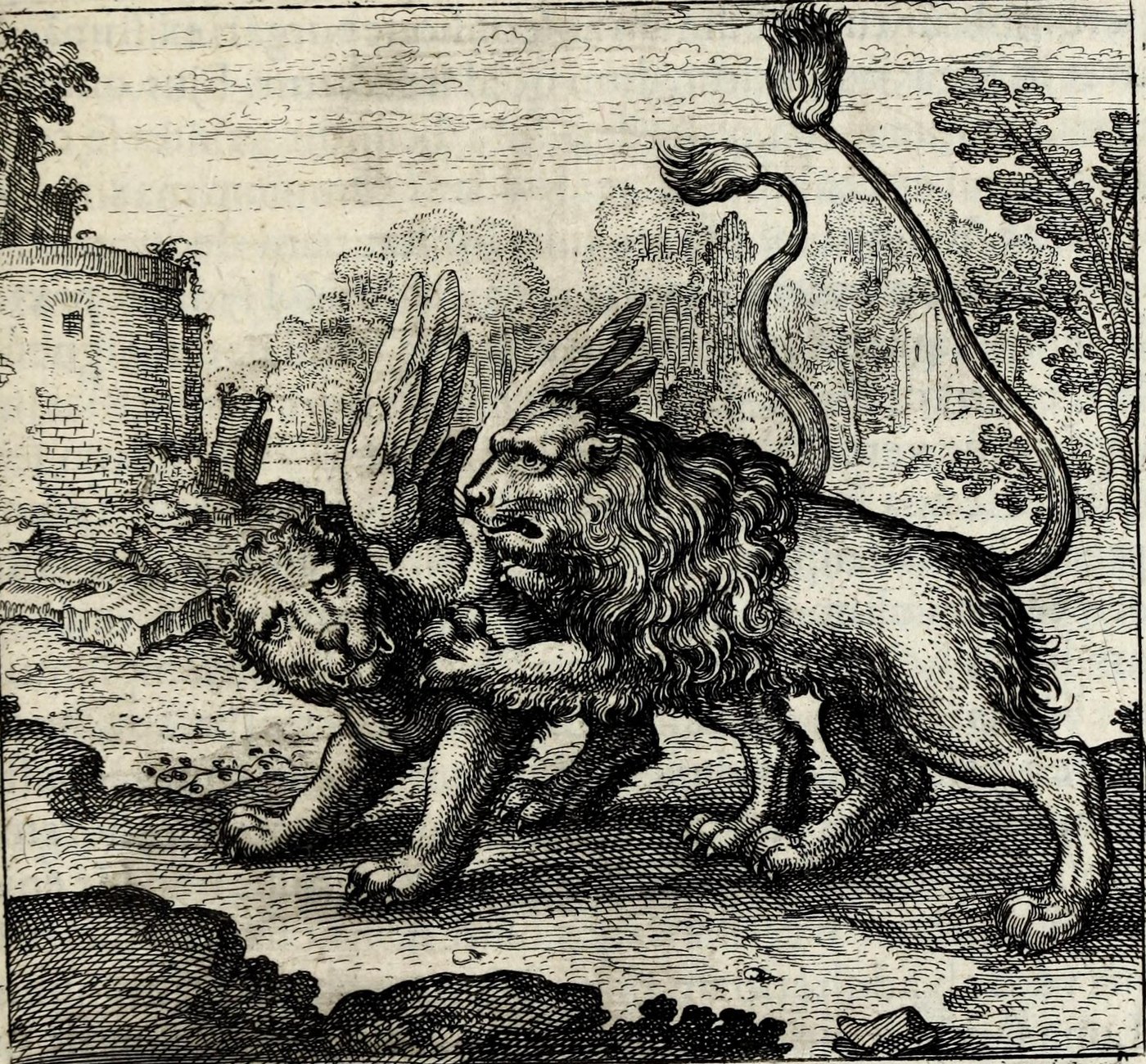
Hic leo, quas plumas non habet, alter habet
The Lion as the central motif, with the Angel and the Wing in a secondary part. From Atalanta Fugiens.
What is happening
Michael Maier, 1618 “Hic leo, quas plumas non habet, alter habet.”
Symbolica, 2026 Maier’s Latin, put into English here: This lion has the feathers the other has not.
Michael Maier, 1618 “Victor quadrupedum LEO pectore fortis & ungue
Absque metu pugnat, dissimulatque fugam:
Aligeram cui tu pedibus conjunge Leaenam,
Quae volat & secum vult relevare marem:
Ille sed immotus stat humo, retinetque volantem,
Haec tibi naturae monstret imago viam.”
Symbolica, 2026 Maier’s epigram, put into English here: The LION, conqueror of four-footed things, strong in breast and claw, fights without fear and will not feign flight. Join to his feet a winged Lioness, who flies and wants to lift the male with her. But he stands unmoved on the ground and holds the flier back. Let this image show you the way of nature.
Key · 2 motifs
Tap a motif on the picture, or a line below. Its note opens under the line, with the reading its author gave it.
- Primary motif
- Secondary motifs · 1
The picture
The winged lion and the wingless lion together, one bearing down on the other. By eye
The reading
The picture read whole, in the archive's words, from the sources quoted on the marks. Read on, and the picture follows: the motif under discussion keeps its colour.
‘Hic leo, quas plumas non habet, alter habet’: this lion has the feathers the other has not. Two lions fill the plate, one winged and one not, and they are fighting or embracing; Merian leaves it hard to say which.
‘Victor quadrupedum LEO pectore fortis & ungue’, the lion, conqueror of four-footed things, strong in breast and claw, fights without fear and will not feign flight. ‘Ille sed immotus stat humo, retinetque volantem’, but he stands unmoved on the ground and holds the flier back. ‘Haec tibi naturae monstret imago viam’: let this image show you the way of nature.
The wings are hers. ‘Aligeram cui tu pedibus conjunge Leaenam’, join to his feet a winged lioness, ‘Quae volat & secum vult relevare marem’, who flies and wants to lift the male with her. In the language of the work the winged one is the volatile, what rises off in the heat, and the wingless one is the fixed, what stays in the vessel. Maier's picture of nature is the fixed holding the volatile down until it stays.
Decoded: every motif is marked, and each mark carries the reading its author gave it, quoted from the text, or says that it is observed on the picture and not read. The reading above is the archive's own, made from those sources and no others.
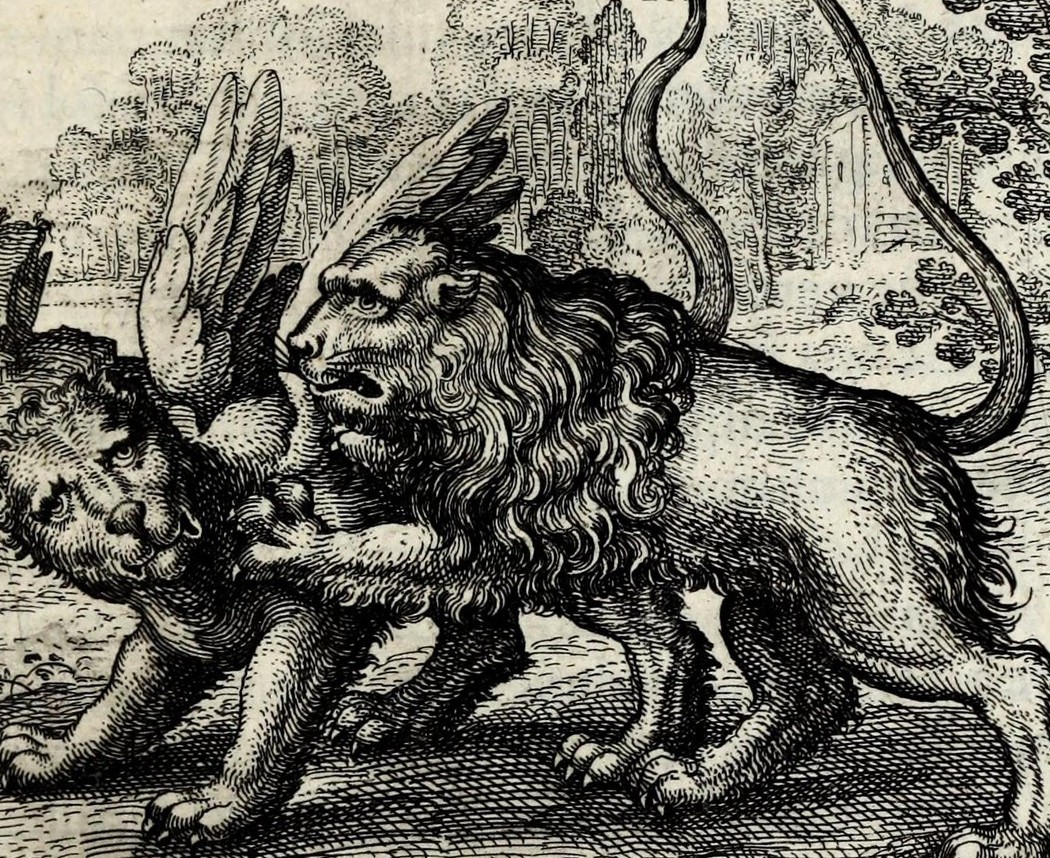
Usually not an animal but one face of a set of four. Count the other three before reading it alone.
In plain words Two lions: a lioness with wings and a lion without, joined at the feet. She wants to fly and lift him with her; he stands on the ground and holds her down. Maier calls it an image of the way of nature: the volatile and the fixed, and the fixed wins.
Michael Maier, 1618 “Ille sed immotus stat humo, retinetque volantem, / Haec tibi naturae monstret imago viam.”
Symbolica Maier's Latin, put into English here: But he stands unmoved on the ground and holds the flier back. Let this image show you the way of nature.
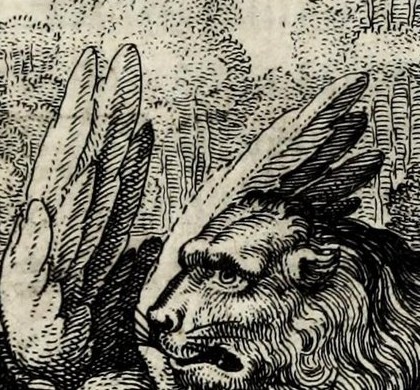
The mark of an errand rather than a nature. Note whether the wings are open, folded, or given to the figure by someone else.
In plain words The wings belong to the female. They are what the motto means by feathers, the plumas one lion has and the other has not: the power to rise, given to one of the pair so that the other can hold it.
Michael Maier, 1618 “Aligeram cui tu pedibus conjunge Leaenam, / Quae volat & secum vult relevare marem:”
Symbolica Maier's Latin, put into English here: Join to his feet a winged Lioness, who flies and wants to lift the male with her.
Also carrying the Lion
15 works carry it. The 6 where it is the central motif are here. The symbol.
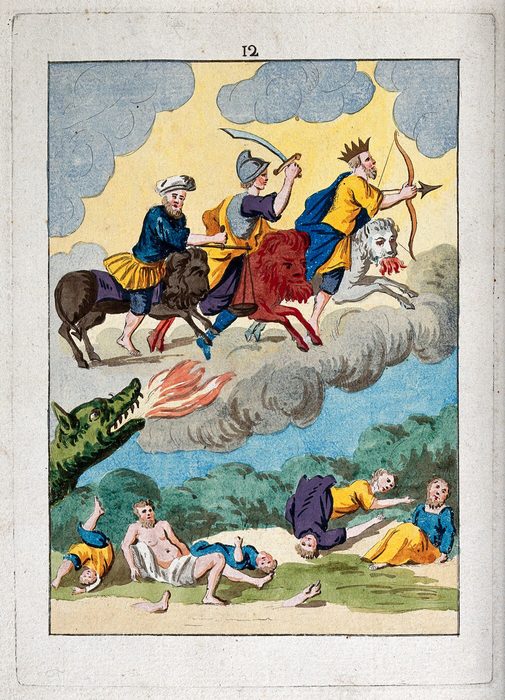
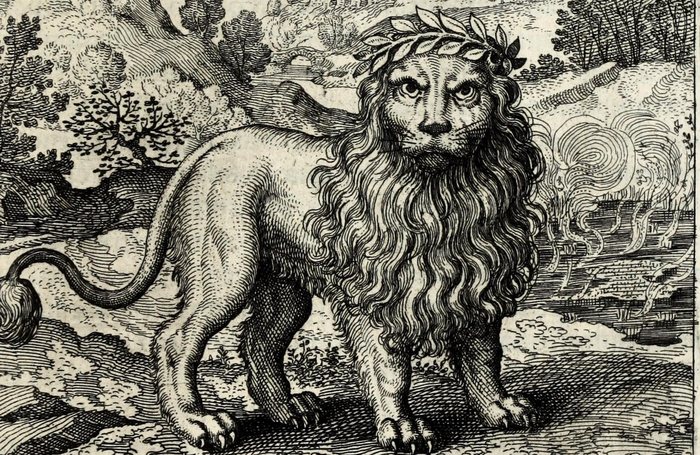
Where the detail is the subject
This is in the picture without being what it is about. Below, one work that is about it.
In the same series
 Portavit eum ventus in ventre suo
 Nutrix ejus terra est
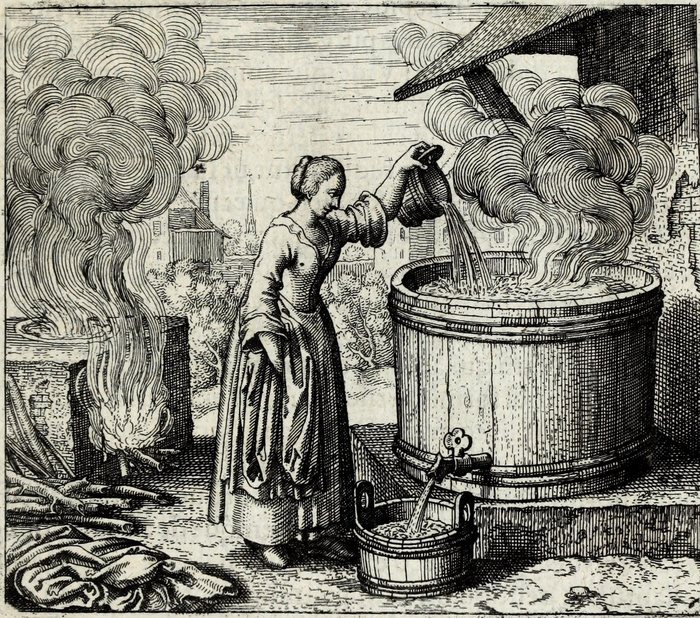 Vade ad mulierem lavantem pannos, tu fac similiter
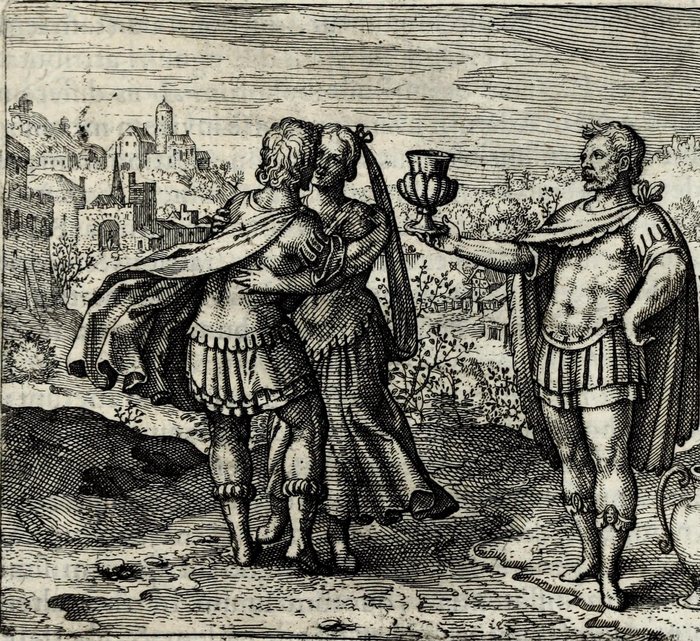 Conjunge fratrem cum sorore & propina illis poculum amoris
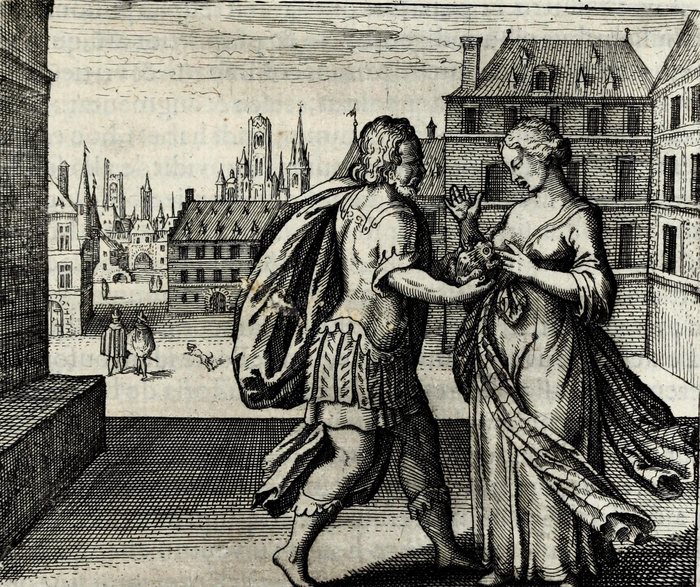 Appone mulieri super mammas bufonem, ut ablactet eum, & moriatur mulier, sitque bufo grossus de lacte
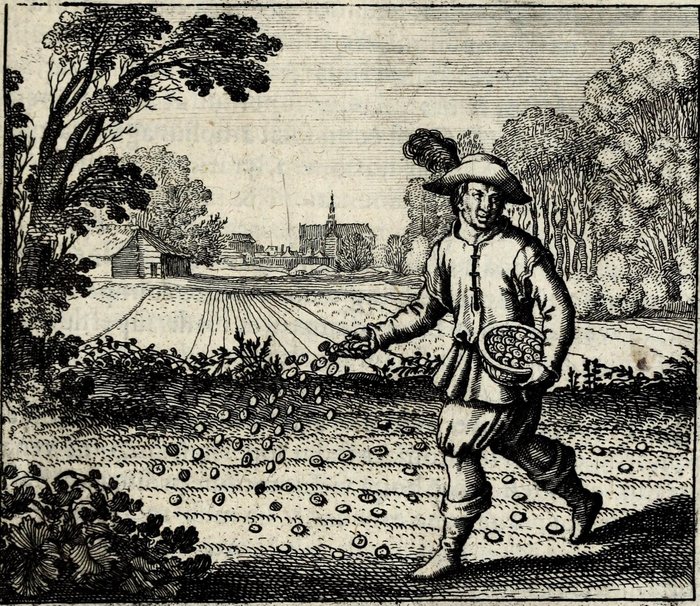 Seminate aurum vestrum in terram albam foliatam
Record
One symbol a week, decoded.
This picture is free at full size from its source, linked above. What an address gets is the Sunday letter: one picture, one symbol marked on it, what it meant and who said so, and the master files of the decoded plates as they are verified. Leave any time.
Free, one letter a week, unsubscribe in one click. How the address is used.
Scroll or pinch to zoom · drag to move · double-tap for 1:1 · 1400 by 1300 pixel web copy; the source file is linked under Record