The Two Pillars
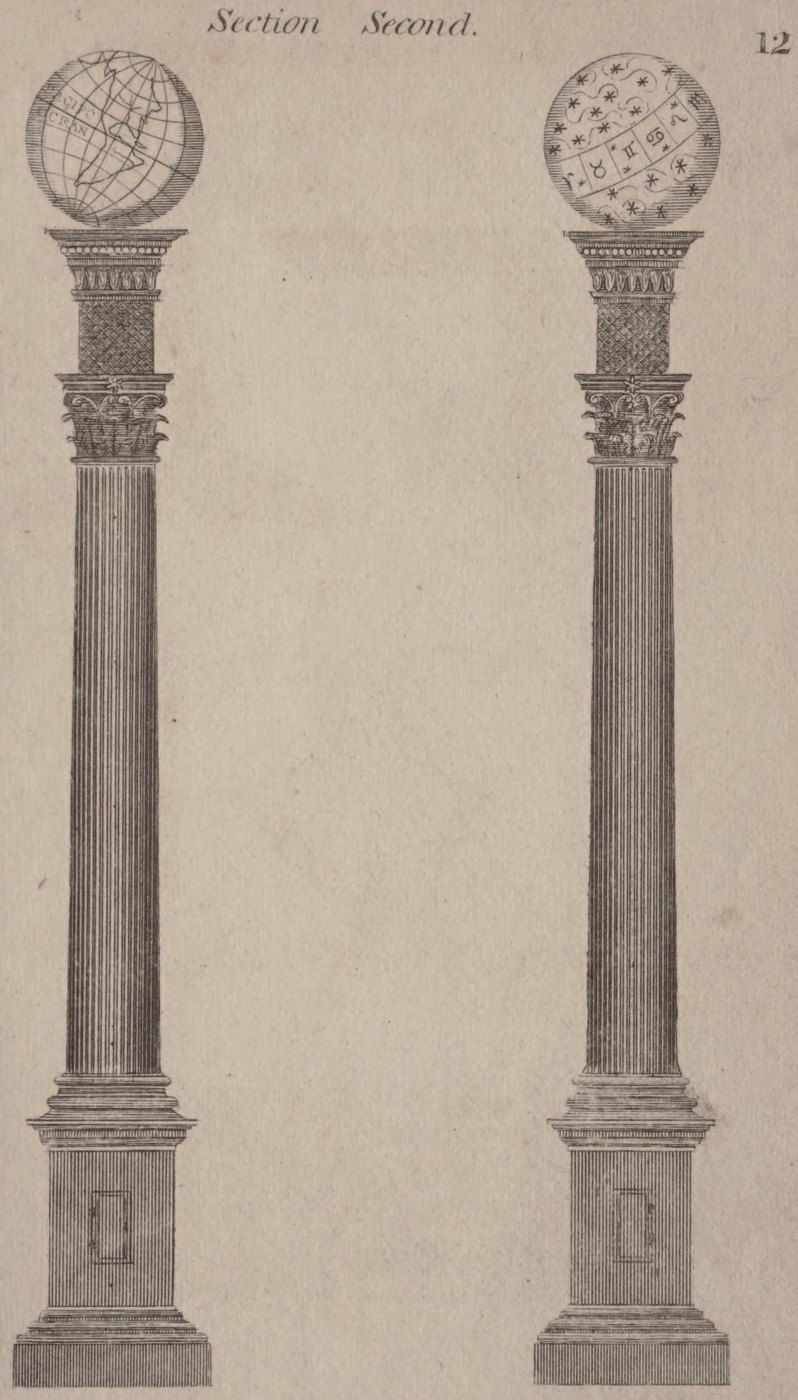
The Pillar as the central motif, with the Heavens in a secondary part. From Masonic Chart.
What is happening
Jeremy L. Cross, 1826 “Section Second.”
Symbolica Plate 12 of the chart, at the head of the second section of the Fellow Craft degree. The monitor prints no lecture on the pillars; the section explains the globes that stand on them, and that explanation is quoted on the mark.
Key · 2 motifs
Tap a motif on the picture, or a line below. Its note opens under the line, with the reading its author gave it.
- Primary motif
- Secondary motifs · 1
The picture
Two Corinthian columns on pedestals, a globe on each capital, the terrestrial on the left and the celestial on the right, under the heading Section Second. By eye
The reading
The picture read whole, in the archive's words, from the sources quoted on the marks. Read on, and the picture follows: the motif under discussion keeps its colour.
Plate 12 stands at the head of the second section of the Fellow Craft degree, and its heading says so: Section Second. Two Corinthian columns on pedestals, a globe on each. The monitor prints no lecture on the pillars themselves; it names them once, in passing, in the Royal Arch degree, when the temple is sacked and the Chaldeans take away ‘all the holy vessels, together with those two famous brazen pillars’. The verse behind the picture is Solomon's: ‘And he set up the two pillars in the porch of the temple: and when he had set up the pillar on the right hand, he called the name thereof Jachin: in like manner he set up the second pillar, and called the name thereof Booz.’
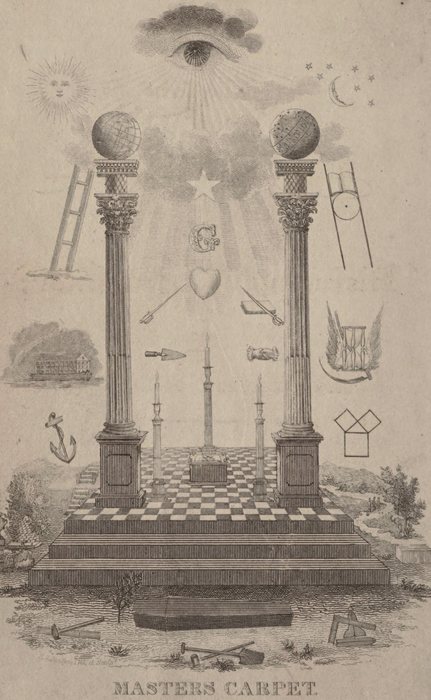
Cross's pillars carry no names and no letters. A fluted shaft, a Corinthian capital and a pedestal each, drawn the same, so that they are told apart by what stands on them and by nothing else.
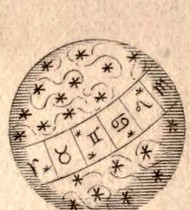
The globes are what the section explains. ‘The Globes are two artificial and spherical bodies; on the convex surface of which are represented, the countries, seas, and various parts of the earth, the face of the heavens, the planetary revolutions, and other particulars.’ The left one carries the map and the right one the zodiac, so the pair is the earth and the sky. Their use, the monitor goes on, is partly practical, to ‘illustrate and explain the phenomena arising from the annual revolution, and the diurnal rotation, of the earth round its own axis’, and partly devotional: ‘Contemplating these bodies, we are inspired with a due reverence for the Deity and his works’.
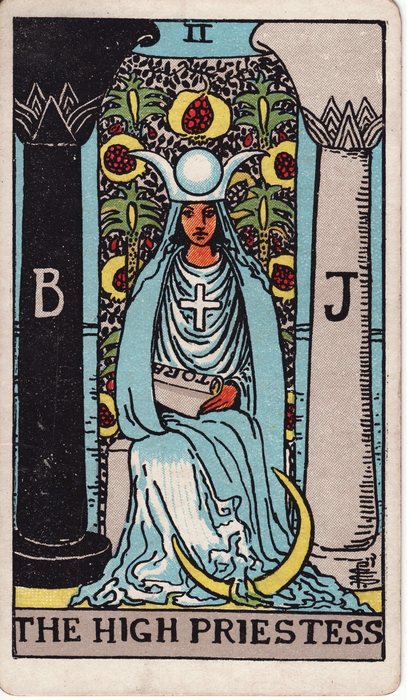
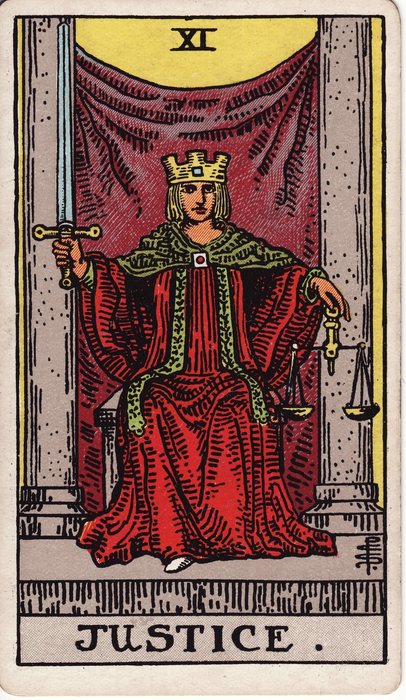
A doorway, then, with the world on one post and the heavens on the other, and a candidate passing between them into the second section of his degree. Waite's High Priestess sits between the same two pillars in 1909 with letters on them. Cross, ninety years earlier, put globes.
Decoded: every motif is marked, and each mark carries the reading its author gave it, quoted from the text, or says that it is observed on the picture and not read. The reading above is the archive's own, made from those sources and no others.

Two columns, and the thing that matters is between them. Note what stands there, and whether the pillars are told apart.
In plain words Two columns, drawn the same, with nothing written on them. The monitor prints no lecture on the pillars; it names them once, in another degree, as the two famous brazen pillars carried off when the temple was sacked. The verse behind them is Solomon's, which names them Jachin and Booz; Cross leaves the names off.
Jeremy L. Cross, 1826 “and took away all the holy vessels, together with those two famous brazen pillars.”
3 Kings 7:21 “And he set up the two pillars in the porch of the temple: and when he had set up the pillar on the right hand, he called the name thereof Jachin: in like manner he set up the second pillar, and called the name thereof Booz.”
A diagram of everything, drawn so that a person can be found inside it. Note where the human figure stands in the scheme.
In plain words A globe on each pillar: the earth with its lands and seas on the left, the sky with the signs of the zodiac on the right. Cross explains the globes in this section of the lecture: they show the countries and seas and the face of the heavens, they teach the turning of the earth, and looking at them is meant to make a man reverent.
Jeremy L. Cross, 1826 “The Globes are two artificial and spherical bodies; on the convex surface of which are represented, the countries, seas, and various parts of the earth, the face of the heavens, the planetary revolutions, and other particulars.”
Jeremy L. Cross, 1826 “Their principal use, beside serving as maps to distinguish the outward parts of the earth, and the situation of the fixed stars, is to illustrate and explain the phenomena arising from the annual revolution, and the diurnal rotation, of the earth round its own axis.”
Jeremy L. Cross, 1826 “Contemplating these bodies, we are inspired with a due reverence for the Deity and his works, and are induced to encourage the studies of astronomy, geography, and navigation, and the arts dependent on them, by which society has been so much benefitted.”
Also carrying the Pillar
10 works carry it. The 3 where it is the central motif are here. The symbol.
Where the detail is the subject
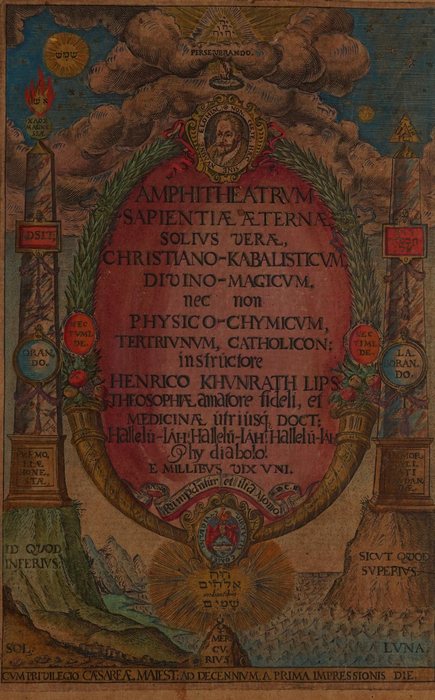
This is in the picture without being what it is about. Below, one work that is about it.
In the same series
Record
One symbol a week, decoded.
This picture is free at full size from its source, linked above. What an address gets is the Sunday letter: one picture, one symbol marked on it, what it meant and who said so, and the master files of the decoded plates as they are verified. Leave any time.
Free, one letter a week, unsubscribe in one click. How the address is used.
Scroll or pinch to zoom · drag to move · double-tap for 1:1 · 798 by 1400 pixel web copy; the source file is linked under Record