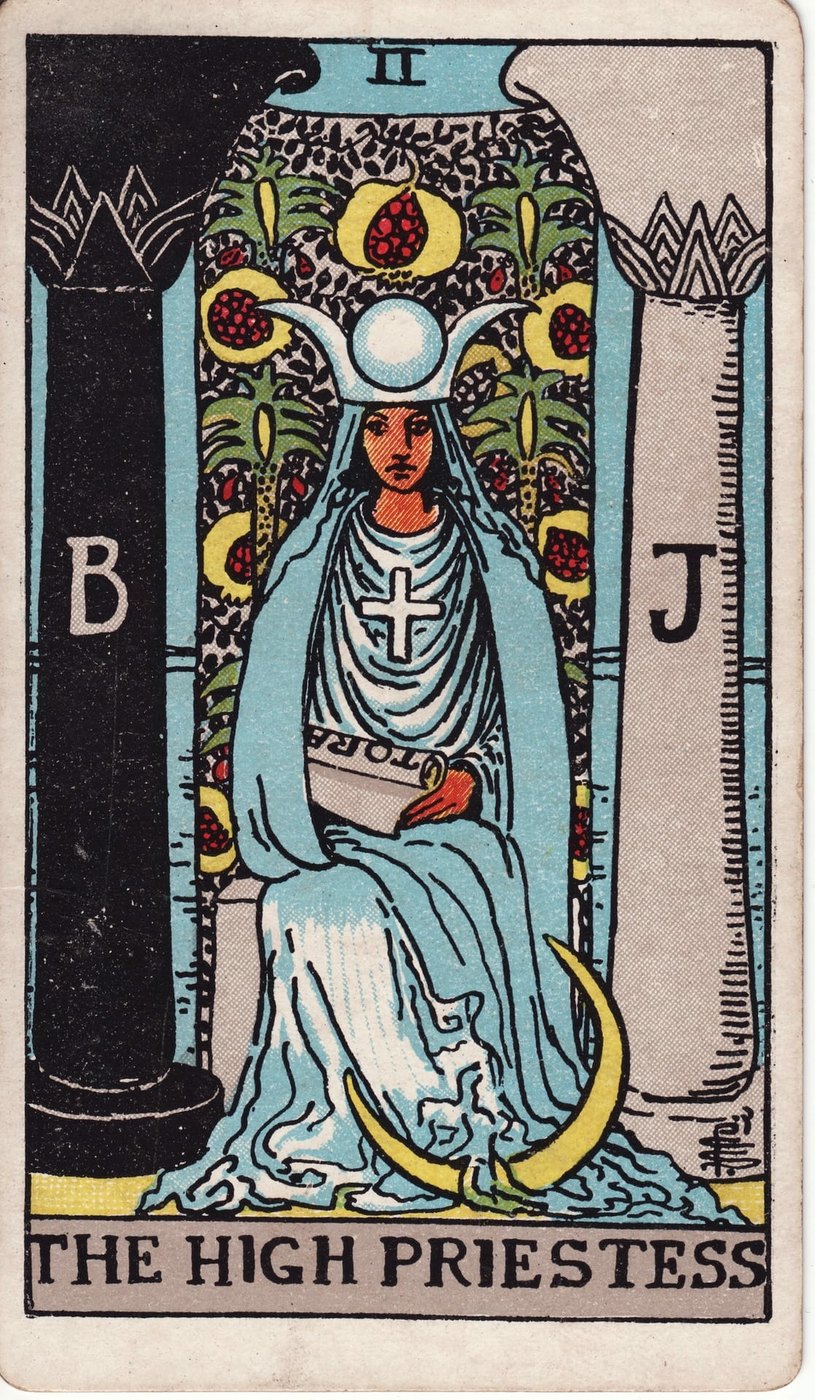
The High Priestess (II)
The High Priestess as the central motif, filed under the Pillar, with the Sun and the Moon, and the Crown in a secondary part. From The 1909 tarot.
Key · 3 motifs
Tap a motif on the picture, or a line below. Its note opens under the line, with the reading its author gave it.
- Primary motif
- Secondary motifs · 2
The picture
A seated woman in blue between a black pillar lettered B and a white pillar lettered J, a veil of palms and pomegranates behind her, a horned diadem with a globe on her head, a solar cross on her breast, a scroll in her lap and the crescent moon at her feet. By eye
The reading
The picture read whole, in the archive's words, from the sources quoted on the marks. Read on, and the picture follows: the motif under discussion keeps its colour.
Waite spends most of his one paragraph on this card trying names on her and does not settle until the last line. Occult Science on the threshold of the Sanctuary of Isis, which he rejects. The Secret Church. The spiritual Bride and Mother. The daughter of the stars. The Queen of the borrowed light. Shekinah. The picture is easier than the list: a doorway, with a woman sitting in it.
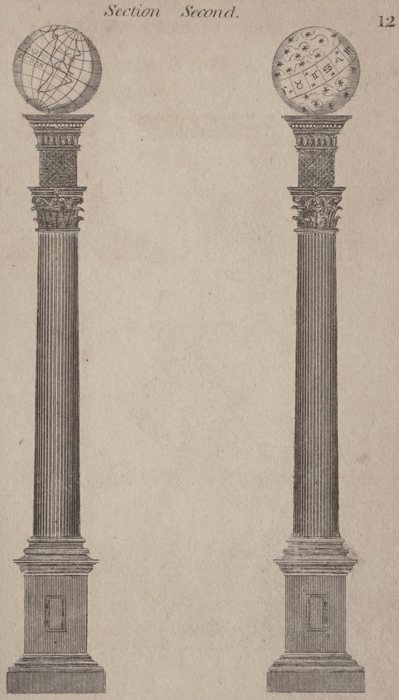
Start with the two letters. B and J are Boaz and Jachin, the pillars of brass cast for the porch of Solomon's temple, and the third book of Kings gives their names and their measurements and not one word about what they mean. Challoner's note in the Douay Bible glosses Jachin as firmly established and Boaz as in its strength, and reads the pair as the firmness of the church. Masonic lodges drew the same two, and Cross's chart of 1819, elsewhere in this archive, sets a globe on each. Waite calls them the pillars of the mystic Temple and gives only the initials. The black and the white are Smith's: the verse gives no colours, and neither man explains them.
Behind her the doorway is shut with a veil that Waite says is embroidered with palms and pomegranates. The pomegranates are Solomon's too. The verses just before the naming of the pillars hang two hundred of them in rows round the capitals. So the furniture of this card is the temple porch out of Kings, and she is sitting in the gap with the way through curtained off behind her.
Then the moon, three times over: a crescent at her feet, a horned diadem with a globe between the horns, and a solar cross on her breast. The name that does the work is the one Waite gives her here, ‘the Queen of the borrowed light, but this is the light of all’. Borrowed light is moonlight, which is the sun's light handed on, and everything about her is a handing on of something she does not own. The scroll in her lap reads TORA and her mantle covers half of it, he says, to shew that some things are implied and some spoken.
The headdress he records and does not read. A diadem is a crown; this one is horned, and the horns are a crescent, so it belongs with the moon at her feet rather than with rule. He raises Isis only to put her aside, and says nothing about where the shape came from.
Every one of his names describes the same position: seated between two pillars, in front of a veil, holding a law that is half shown. She is not the sanctuary. She is what a reader has to get past.
Decoded: every motif is marked, and each mark carries the reading its author gave it, quoted from the text, or says that it is observed on the picture and not read. The reading above is the archive's own, made from those sources and no others.

Two columns, and the thing that matters is between them. Note what stands there, and whether the pillars are told apart.
In plain words B and J are the initials of Boaz and Jachin, the two pillars of brass, as the Douay Bible has it, cast for the porch of Solomon's temple in Jerusalem. The verse and its note are quoted below; the note glosses the names as ‘in its strength’ and ‘firmly established’. Masonic lodges drew the same two pillars, and Cross's chart of 1819, elsewhere in this archive, sets a globe on each. Waite, who wrote the key to this deck, calls them the pillars of the mystic Temple and gives only their initials. The colours are the card's own: the verse gives none, and neither Waite nor Smith explains them.
Waite, 1911 “She is seated between the white and black pillars--J. and B.--of the mystic Temple, and the veil of the Temple is behind her: it is embroidered with palms and pomegranates.”
3 Kings 7:21 “And he set up the two pillars in the porch of the temple: and when he had set up the pillar on the right hand, he called the name thereof Jachin: in like manner he set up the second pillar, and called the name thereof Booz.”
3 Kings 7:21 “Jachin.... That is, firmly established. Booz.... That is, in its strength.”
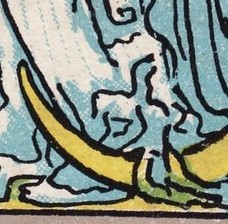
The borrowed light, the mother of the work, and the crescent a woman stands on. The one body here that every source explains against another.
In plain words The crescent under her feet and the horned headdress with a globe between the horns are both moon signs, and Waite reads the whole card through them: she is the moon, whose light is borrowed from the sun, and what she gives is a light that is not her own. He names the solar cross on her breast in the same sentence and leaves it unexplained.
Waite, 1911 “She has the lunar crescent at her feet, a horned diadem on her head, with a globe in the middle place, and a large solar cross on her breast.”
Waite, 1911 “She is, in fine, the Queen of the borrowed light, but this is the light of all. She is the Moon nourished by the milk of the Supernal Mother.”
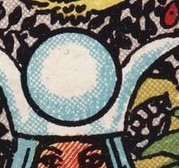
Completion, and in the Kabbalistic reading the first sephirah, the point at which the work is no longer yours.
In plain words A diadem is a crown, and this one is horned, with a globe held between the horns. The horns are a crescent, so the headdress belongs with the moon at her feet rather than with rule. Waite records it without reading it, and mentions Isis only to set her aside.
Waite, 1911 “She has the lunar crescent at her feet, a horned diadem on her head, with a globe in the middle place.”
Also carrying the Pillar
10 works carry it. The 3 where it is the central motif are here. The symbol.
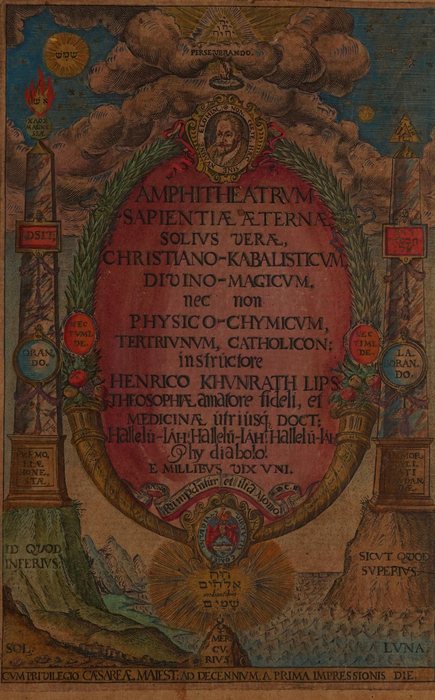
Where the detail is the subject
the Sun and the Moon · the Crown
Each of these is in the picture without being what it is about. Below, one work that is about each.
In the same series
Record
One symbol a week, decoded.
This picture is free at full size from its source, linked above. What an address gets is the Sunday letter: one picture, one symbol marked on it, what it meant and who said so, and the master files of the decoded plates as they are verified. Leave any time.
Free, one letter a week, unsubscribe in one click. How the address is used.
Scroll or pinch to zoom · drag to move · double-tap for 1:1 · 815 by 1400 pixel web copy; the source file is linked under Record