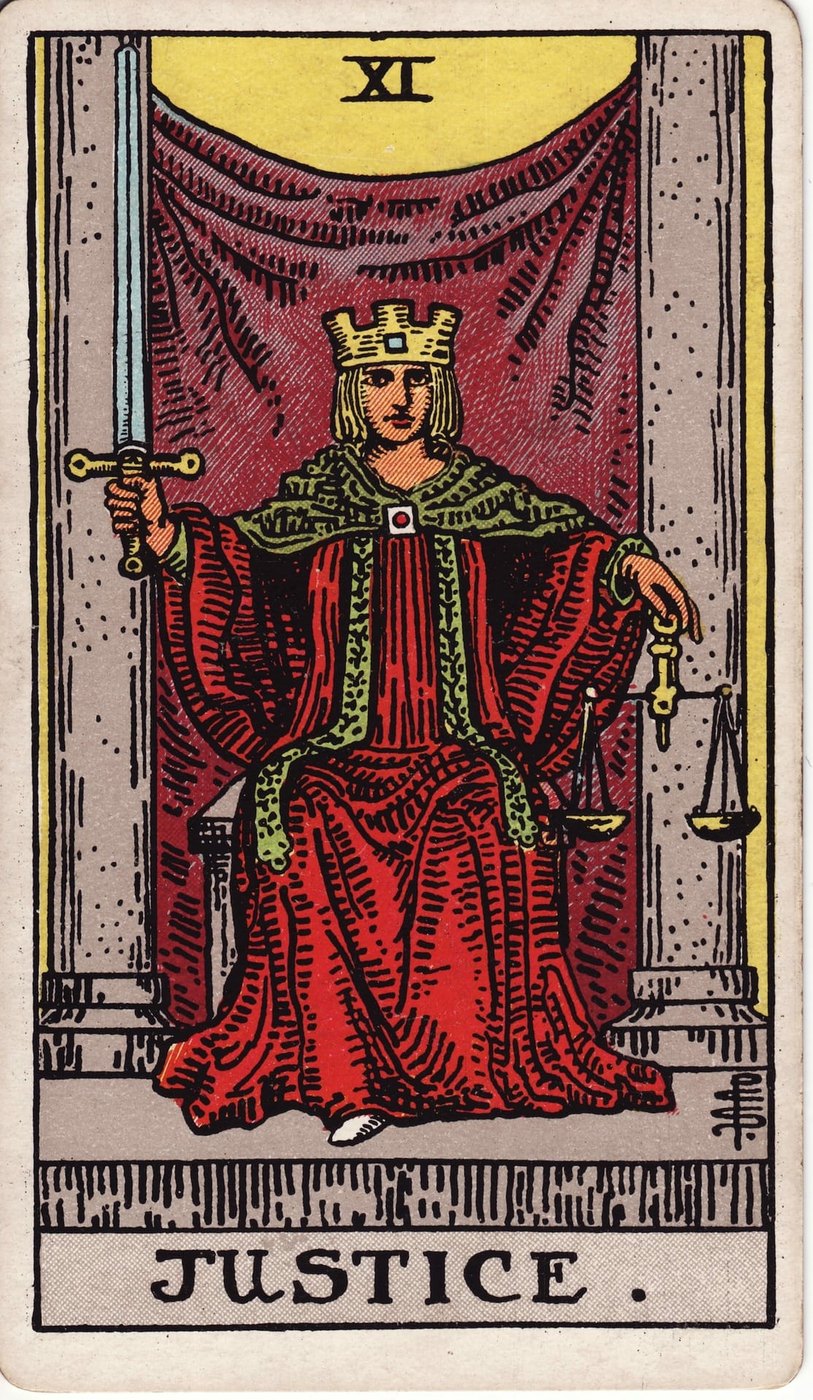
Justice (XI)
Justice as the central motif, filed under the Pillar, with the Hand and the Crown in a secondary part. From The 1909 tarot.
Key · 3 motifs
Tap a motif on the picture, or a line below. Its note opens under the line, with the reading its author gave it.
- Primary motif
- Secondary motifs · 2
The picture
A crowned woman in red seated between two grey pillars before a violet curtain, a raised sword in her right hand and a pair of scales in her left; Justice as the central motif. By eye
The reading
The picture read whole, in the archive's words, from the sources quoted on the marks. Read on, and the picture follows: the motif under discussion keeps its colour.
Waite has almost nothing to say about this card and admits it in his first line: it ‘follows the traditional symbolism and carries above all its obvious meanings’. A crowned woman, a sword, a pair of scales. In Part I he adds that the figure is said to be Astraea, drawn with the same emblems, and notes in passing that the deck comes up one cardinal virtue short. Prudence is nowhere in it.
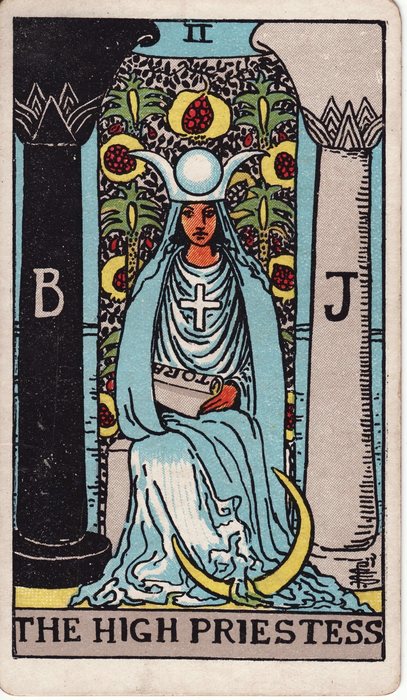
What does interest him is the furniture. She sits between two columns as the High Priestess does, and he uses the likeness to split justice in two. This one is ‘the moral principle which deals unto every man according to his works’. The other is the spiritual justice bound up with the idea of election, which belongs to a mysterious order of Providence and about which, he says, ‘we have no canon of criticism or ground of explanation’. It is like ‘the gracious gifts of the poet: we have them or have not’.
The sword and the scales are the tools of the first kind, the kind that can be explained. Weigh the act, deliver the sentence. Smith paints the sword upright and the pans level, and Waite trusts a reader to work out the rest. Grace is simply outside this woman's jurisdiction, and he says so: ‘the law of Justice is not however involved by either alternative’.
His last sentence closes the comparison and is worth the whole card: ‘the pillars of Justice open into one world and the pillars of the High Priestess into another’. Two columns, a curtain between them, and a different room behind each. This is the world of deserts and consequences. Hers is the one nobody earns their way into. The crown Justice wears, with its square stone set in the front, Waite never mentions at all.
Readings quoted
Waite, 1911 “The latter belongs to a mysterious order of Providence, in virtue of which it is possible for certain men to conceive the idea of dedication to the highest things. The operation of this is like the breathing of the Spirit where it wills, and we have no canon of criticism or ground of explanation concerning it.”
Waite, 1911 “It is analogous to the possession of the fairy gifts and the high gifts and the gracious gifts of the poet: we have them or have not, and their presence is as much a mystery as their absence. The law of Justice is not however involved by either alternative.”
Waite, 1911 “The Tarot has, therefore, its justice, its Temperance also and its Fortitude, but--owing to a curious omission--it does not offer us any type of Prudence, though it may be admitted that, in some respects, the isolation of the Hermit, pursuing a solitary path by the light of his own lamp, gives, to those who can receive it, a certain high counsel in respect of the via prudentie.”
Decoded: every motif is marked, and each mark carries the reading its author gave it, quoted from the text, or says that it is observed on the picture and not read. The reading above is the archive's own, made from those sources and no others.

Two columns, and the thing that matters is between them. Note what stands there, and whether the pillars are told apart.
In plain words Two grey pillars and a curtain between them, the same stage set as the High Priestess and the Hierophant. Waite uses the likeness to draw a line: this Justice is the everyday kind, giving each person what their acts deserve, and it is not the same as the justice of heaven, which chooses whom it will. ‘The pillars of Justice open into one world and the pillars of the High Priestess into another.’
Waite, 1911 “It will be seen, however, that the figure is seated between pillars, like the High Priestess, and on this account it seems desirable to indicate that the moral principle which deals unto every man according to his works--while, of course, it is in strict analogy with higher things;--differs in its essence from the spiritual justice which is involved in the idea of election.”
Waite, 1911 “In conclusion, the pillars of Justice open into one world and the pillars of the High Priestess into another.”
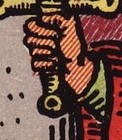
The hand as a sign in itself: what it holds, where it points, which fingers are raised. On the Hand of the Mysteries every finger carries a sign of its own.
In plain words Sword up, scales level: the two things Justice has held in pictures for centuries, weighing first and cutting after. Waite says the card ‘carries above all its obvious meanings’ and does not gloss them; in the first part of his book he notes that the figure has been called Astraea, the Greek goddess of justice, who carries the same two things.
Waite, 1911 “As this card follows the traditional symbolism and carries above all its obvious meanings, there is little to say regarding it outside the few considerations collected in the first part, to which the reader is referred.”
Waite, 1911 “The female figure of the eleventh card is said to be Astreea, who personified the same virtue and is represented by the same symbols.”
Completion, and in the Kabbalistic reading the first sephirah, the point at which the work is no longer yours.
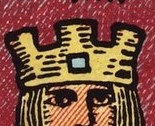
In plain words A gold crown with a square blue stone set in the front. Waite does not mention it; the archive records it and no more.
Symbolica The crown, with its square stone, is on the card and not in Waite's text. Marked as observed, and left unread rather than guessed.
Also carrying the Pillar
10 works carry it. The 3 where it is the central motif are here. The symbol.
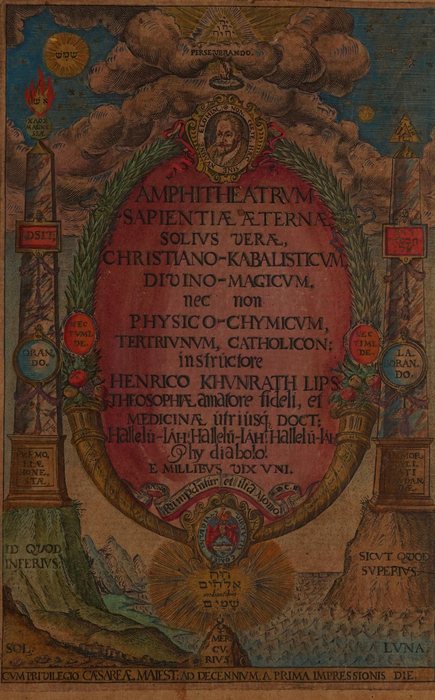
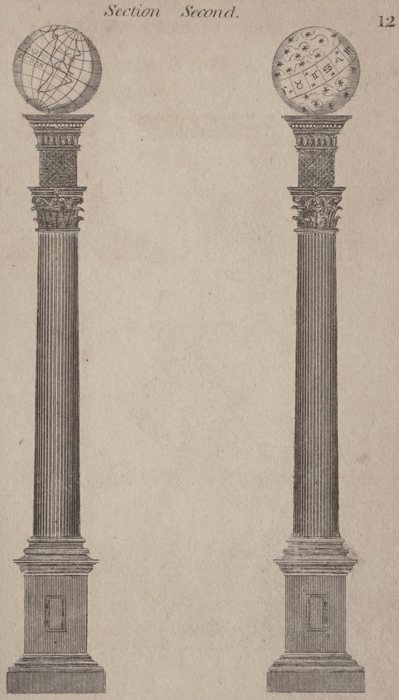
Where the detail is the subject
Each of these is in the picture without being what it is about. Below, one work that is about each.
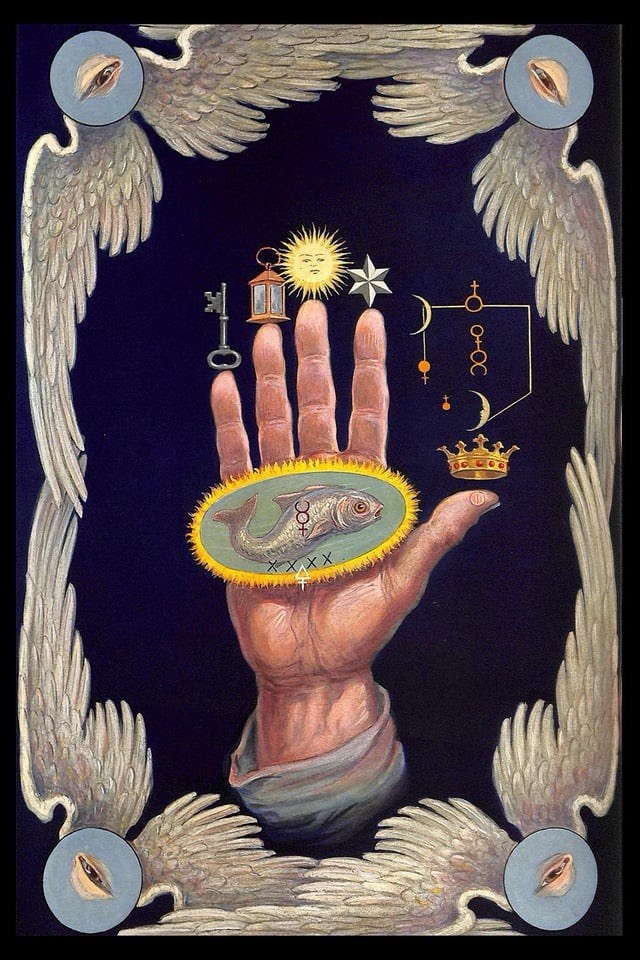
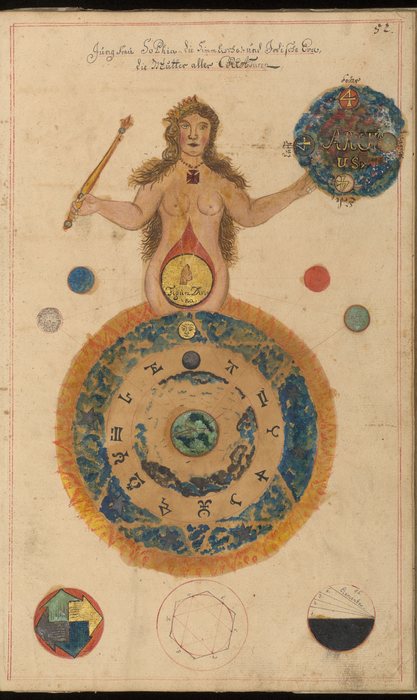
In the same series
Record
One symbol a week, decoded.
This picture is free at full size from its source, linked above. What an address gets is the Sunday letter: one picture, one symbol marked on it, what it meant and who said so, and the master files of the decoded plates as they are verified. Leave any time.
Free, one letter a week, unsubscribe in one click. How the address is used.
Scroll or pinch to zoom · drag to move · double-tap for 1:1 · 813 by 1400 pixel web copy; the source file is linked under Record