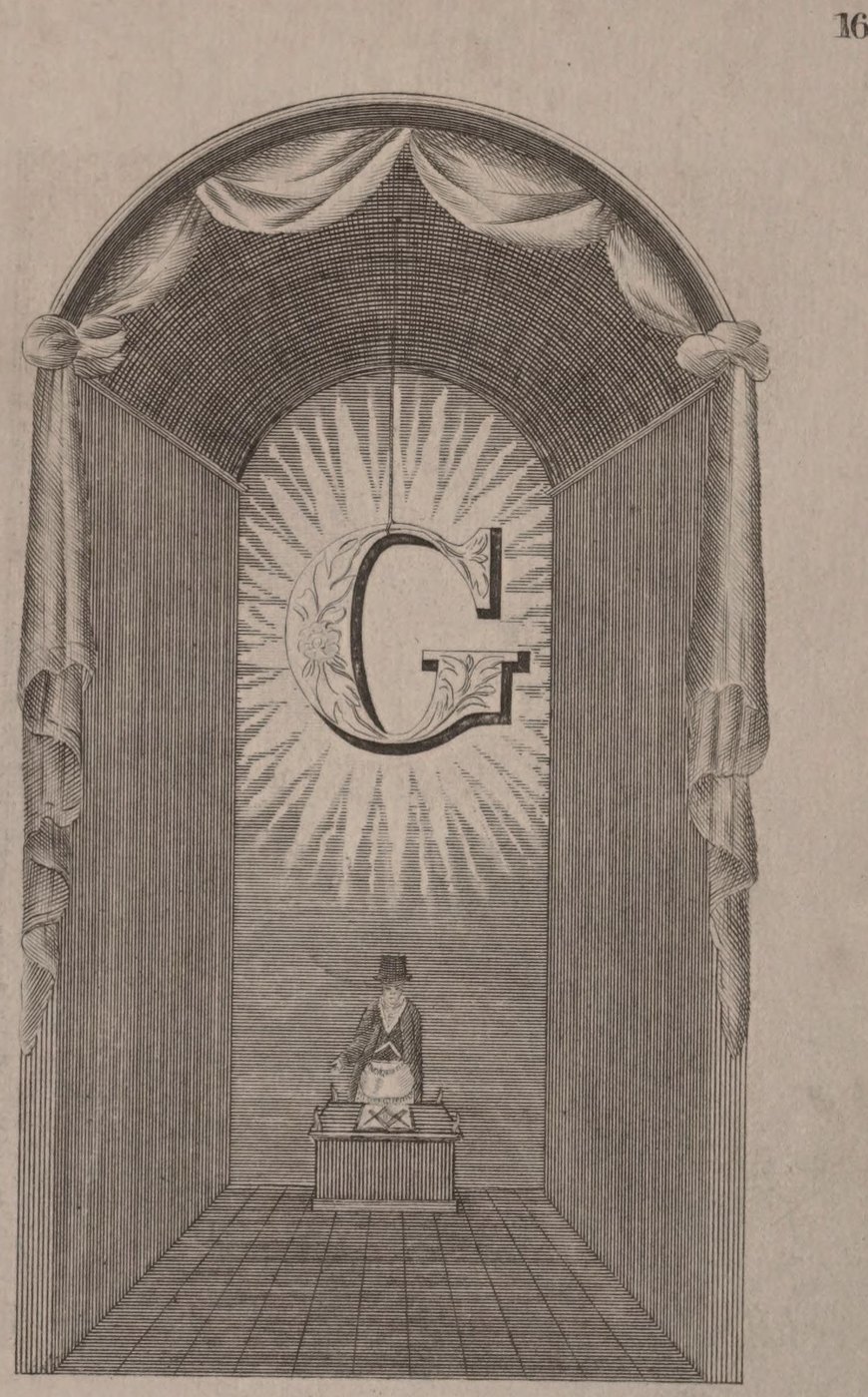
The Letter G
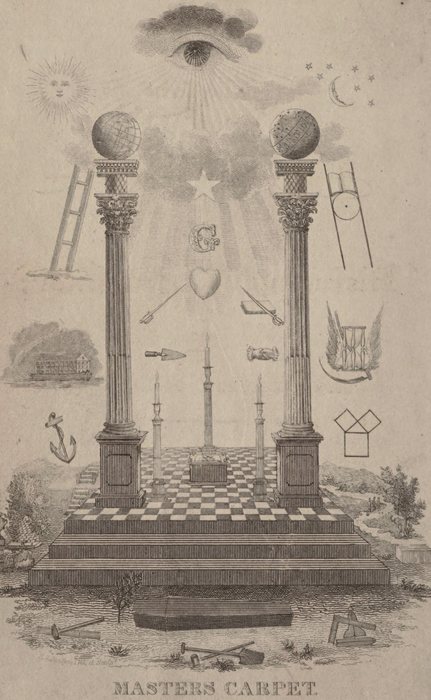
The Divine as the central motif, with Fire in a secondary part. From Masonic Chart.
What is happening
Jeremy L. Cross, 1826 “G.”
Symbolica, 2026 Plate 16 of the chart, in the Master Mason degree. Cross prints no lecture on this plate and no scripture is read against it. The absence was looked for rather than assumed: the whole of the Master Mason degree, pages 35 to 41 was read against the page images of the monitor, and Thomas Smith Webb's Freemason's Monitor of 1808, which Cross's chart illustrates, is silent in the same place. This is a part of the work that was never printed. The picture was published and the words that went with it were carried by mouth.
Key · 2 motifs
The motifs the picture carries, filed by role. The marks on the picture itself come with the entry.
- 1The Divinecentral motif as it reads here: The Letter G
- 2Firesecondary motif
The picture
A curtained archway opening on a lodge room, the letter G blazing in a glory over the master seated at his table. By eye
Not yet decoded: the motifs are tagged by eye and the readings above are quoted from their sources. The marks on the picture and the sourced notes come with the entry.
Also carrying the Divine
39 works carry it. The 6 where it is the central motif are here. The symbol.
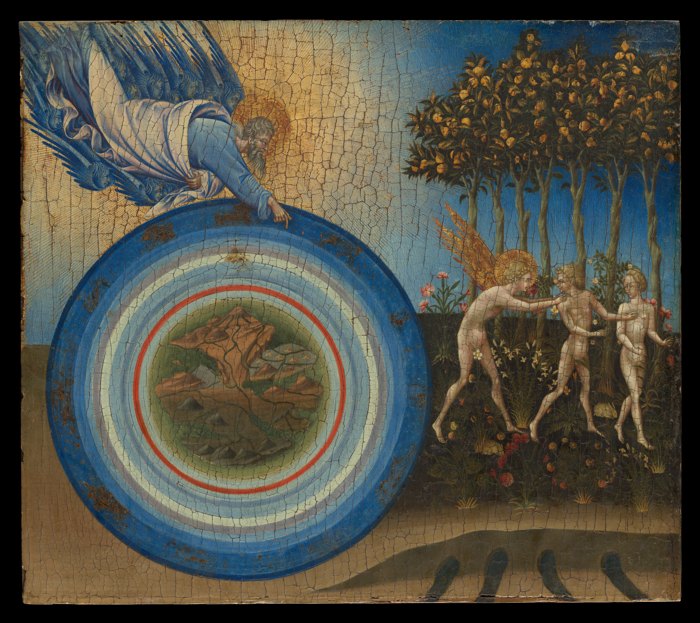
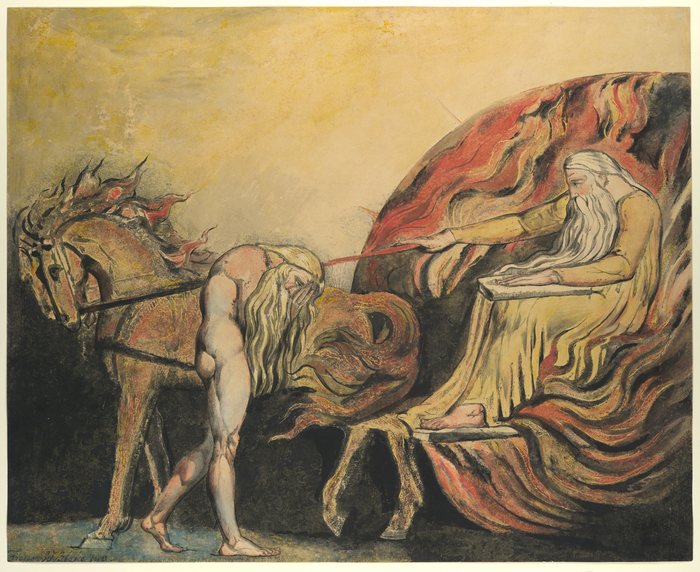
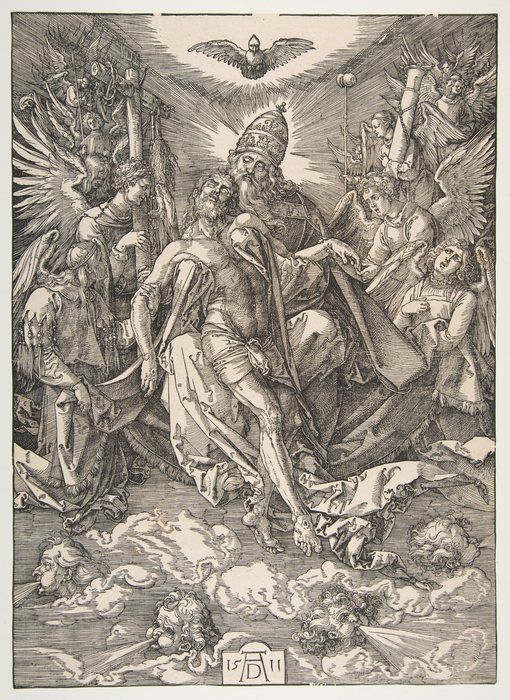
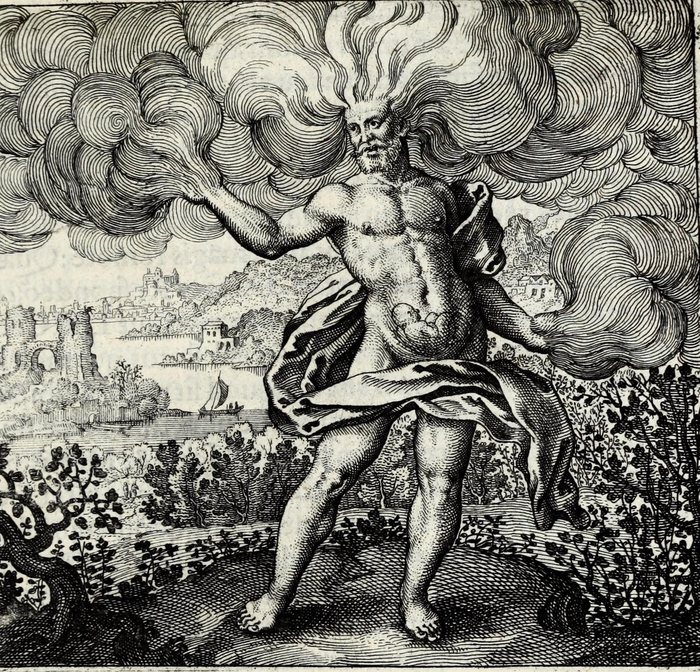
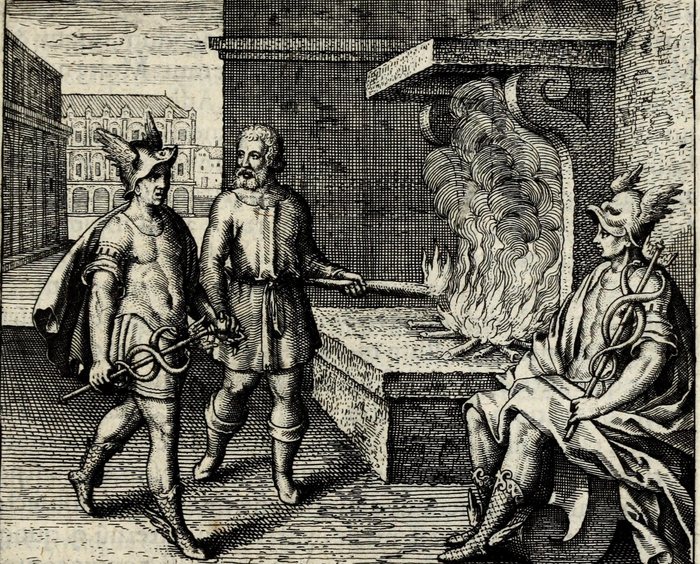
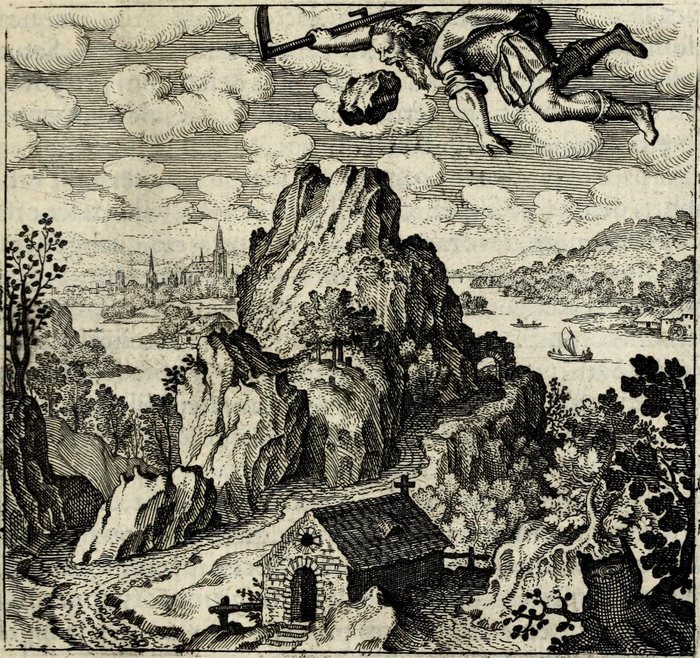
Where the detail is the subject
This is in the picture without being what it is about. Below, one work that is about it.
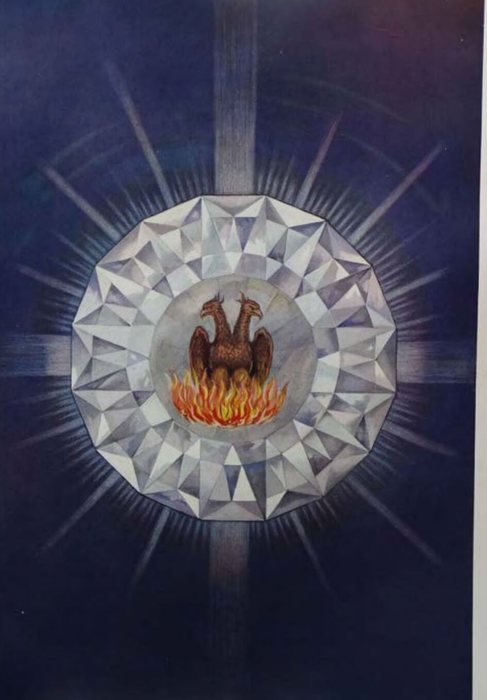
In the same series
Record
One symbol a week, decoded.
This picture is free at full size from its source, linked above. What an address gets is the Sunday letter: one picture, one symbol marked on it, what it meant and who said so, and the master files of the decoded plates as they are verified. Leave any time.
Free, one letter a week, unsubscribe in one click. How the address is used.
Scroll or pinch to zoom · drag to move · double-tap for 1:1 · 870 by 1400 pixel web copy; the source file is linked under Record