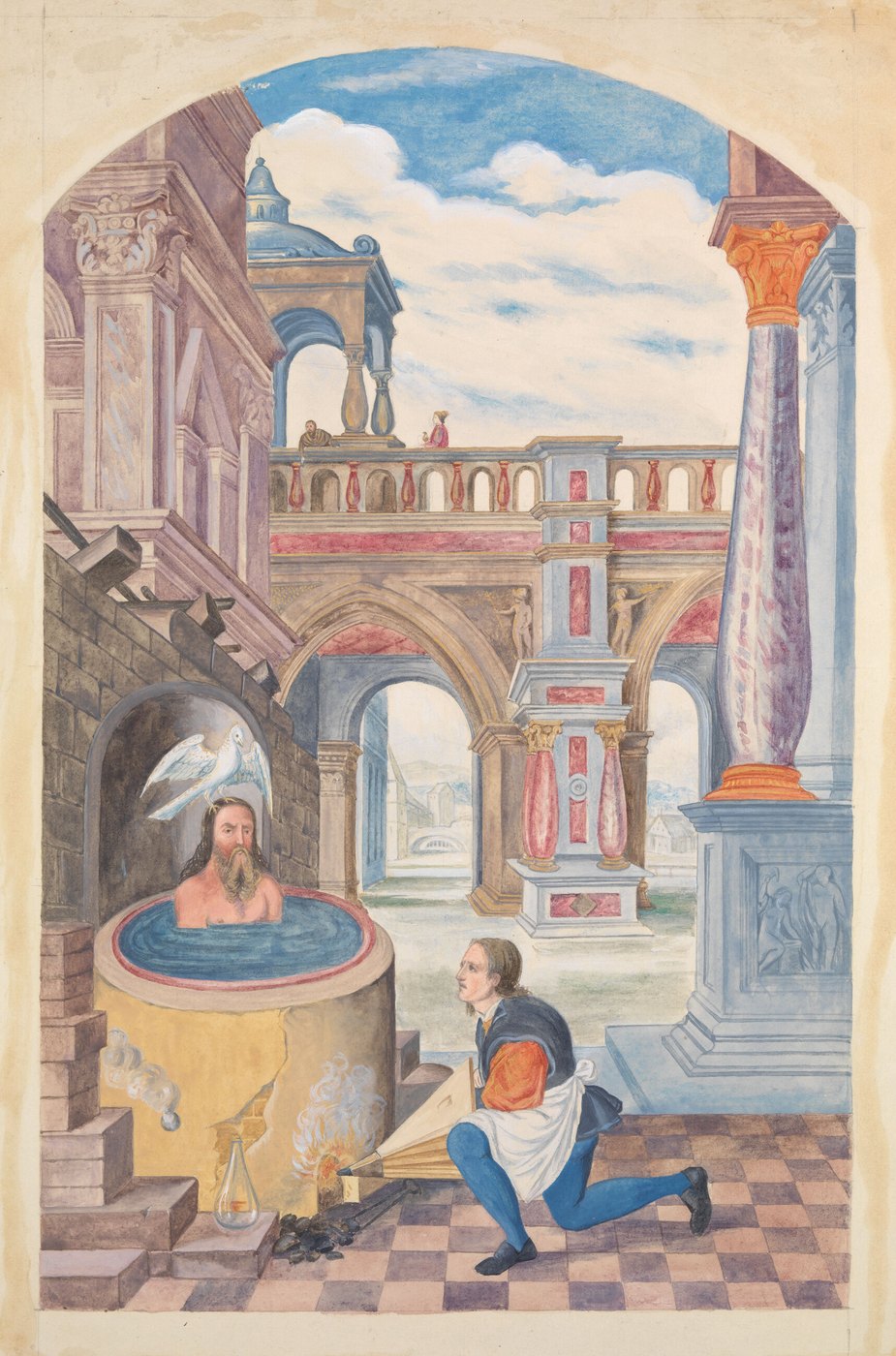
The man in the boiling bath with the dove on his head
The Vessel as the central motif, with the Bird and Fire in a secondary part. From Splendor Solis.
What is happening
J. K., who wrote the 1920 elucidation, 1920 “In a court yard of a magnificent palace and under a corridor is a circular furnace on which is an iron vessel or copper boiler filled with water, and in which is a naked man with red skin, breast high. On his head stands a dove, with outspread white wings, blue shaded.”
J. K., who wrote the 1920 elucidation, 1920 “A man is blowing at the furnace with a pair of bellows very intently and anxiously. His inner garment is red, his nether garment blue, his coat black and edged with blue, slippers black, apron white, hair longish and careless. The whole figure betrays the workman.”
Symbolica The Wellcome titles this sheet Aeson, after the old man in Ovid whose blood Medea replaces to make him young. J. K. does not mention Aeson and neither does the plate. The archive keeps the museum’s title on the record and leaves the identification to the museum.
Key · 3 motifs
Tap a motif on the picture, or a line below. Its note opens under the line, with the reading its author gave it.
- Primary motif
- Secondary motifs · 2
The picture
A naked red-skinned man standing breast high in a copper boiler set on a round furnace, a white dove with its wings out standing on his head, a workman in an apron kneeling at the bellows, and a palace courtyard of arches and columns rising behind. By eye
The reading
The picture read whole, in the archive's words, from the sources quoted on the marks. Read on, and the picture follows: the motif under discussion keeps its colour.
A courtyard of red and blue marble, arches going back three deep, and in the corner of it a man standing in a copper pot of water over a fire. A white dove stands on his head with its wings out. A workman kneels at the bellows and blows.
“a circular furnace on which is an iron vessel or copper boiler filled with water, and in which is a naked man with red skin, breast high”. He stands up in it. J. K. later calls it the hot bath and the man in it a patient of the work rather than its victim.
“On his head stands a dove, with outspread white wings, blue shaded”. The whitest thing in the picture balances on the reddest, and neither J. K. nor the treatise says why. The archive marks it and leaves it.
“A man is blowing at the furnace with a pair of bellows very intently and anxiously. The whole figure betrays the workman”. Anxiously is doing a great deal of work in that sentence. Across twenty-two descriptions J. K. gives a figure a state of mind exactly once, and he gives it to the man whose only job is to keep the heat where it should be.
Decoded: every motif is marked, and each mark carries the reading its author gave it, quoted from the text, or says that it is observed on the picture and not read. The reading above is the archive's own, made from those sources and no others.
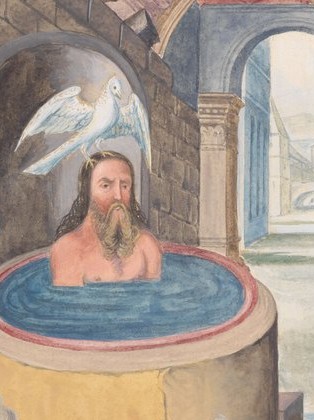
Never the subject. What is inside it is.
In plain words A wide metal vessel of water set on a drum of masonry, deep enough to take a man to the chest. He stands in it upright, facing out.
J. K., who wrote the 1920 elucidation, 1920 “a circular furnace on which is an iron vessel or copper boiler filled with water, and in which is a naked man with red skin, breast high”
Symbolica A bath, not a grave. The man stands rather than lies, and his skin has already gone red.
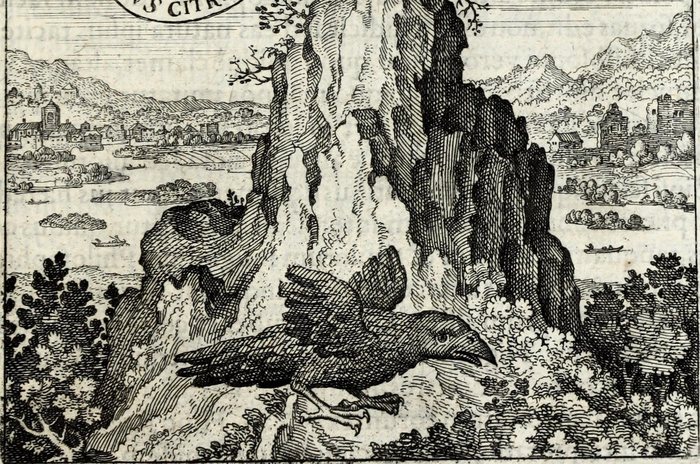
What rises and what comes back down. Note whether the bird is flying, caught, or paired with a second one.
In plain words A dove balanced on his crown with both wings open, white with blue in the shadows.
J. K., who wrote the 1920 elucidation, 1920 “On his head stands a dove, with outspread white wings, blue shaded.”
Symbolica The whitest thing on the sheet sits on top of the reddest. J. K. records the arrangement and offers no account of it.
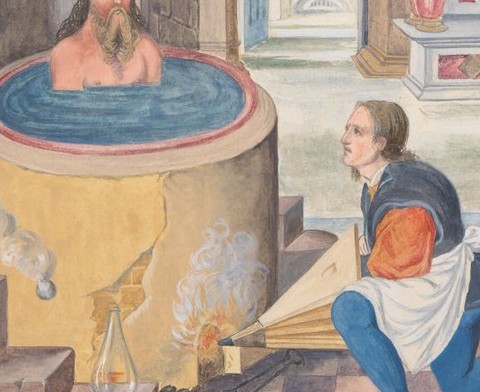
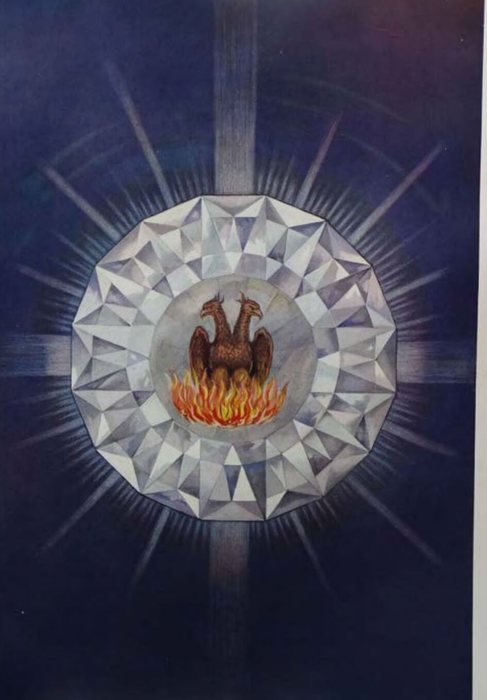
A count, a catastrophe, or the visible part of something that has no body. Note whether the flames are arranged in a number, breaking something, or standing where a figure would be.
In plain words A man in a white apron down on one knee, working a long pair of bellows into the mouth of the furnace. Coals and a small flask stand on the tiles beside him.
J. K., who wrote the 1920 elucidation, 1920 “A man is blowing at the furnace with a pair of bellows very intently and anxiously. The whole figure betrays the workman.”
Symbolica Intently and anxiously. The heat has to be right and the man at the bellows knows it, which is the only emotion J. K. records anywhere in the twenty-two.
Also carrying the Vessel
32 works carry it. The 6 where it is the central motif are here. The symbol.
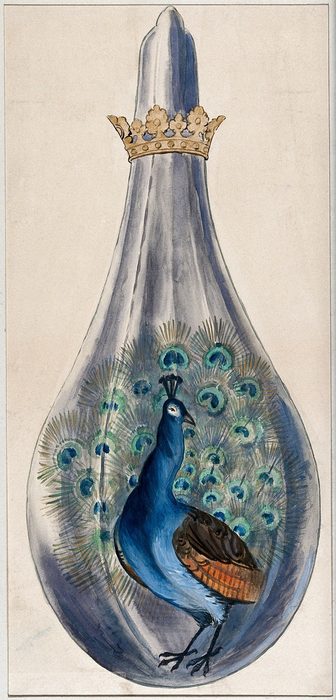
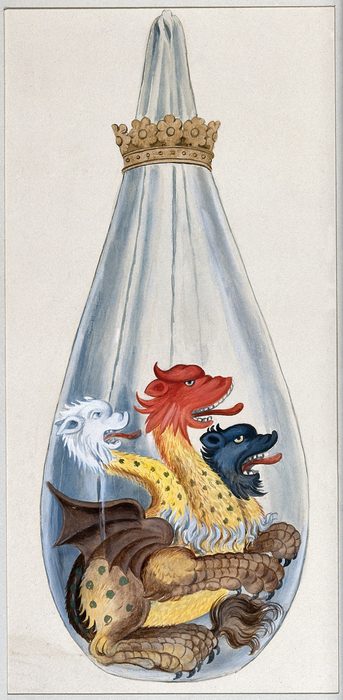
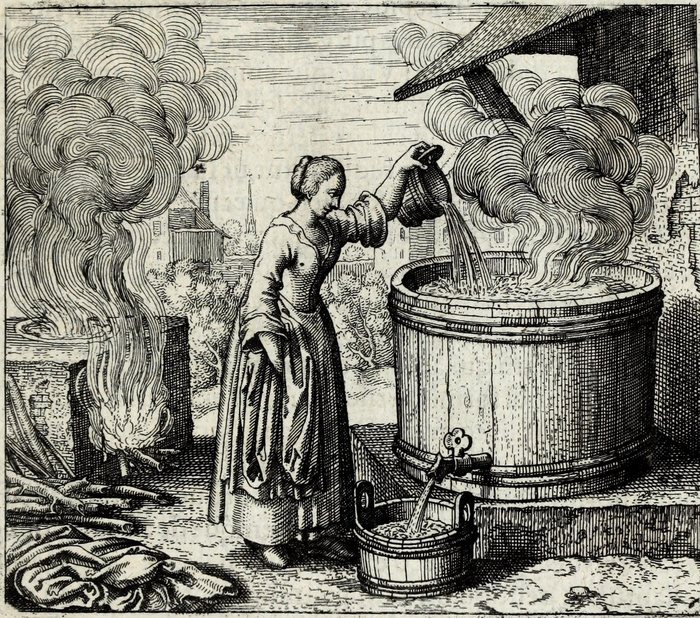
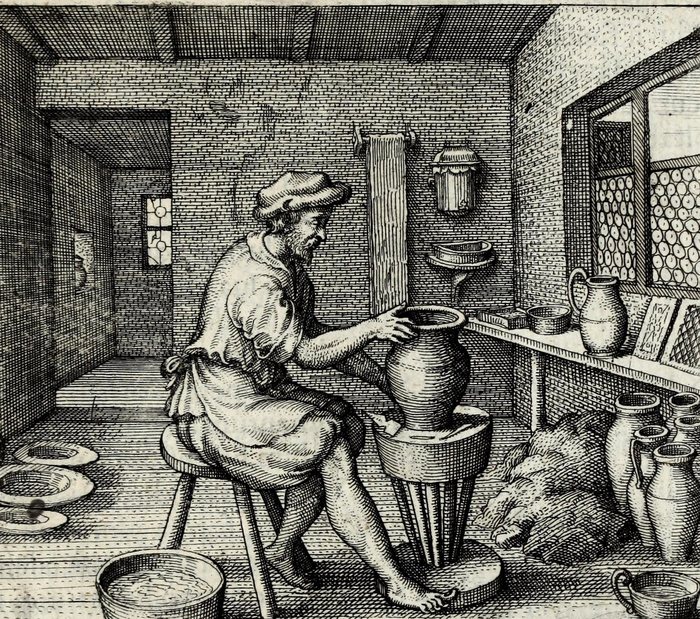
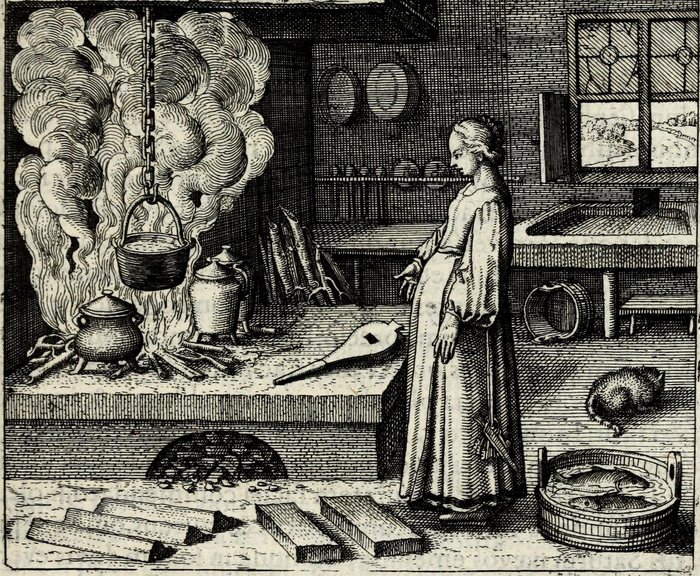
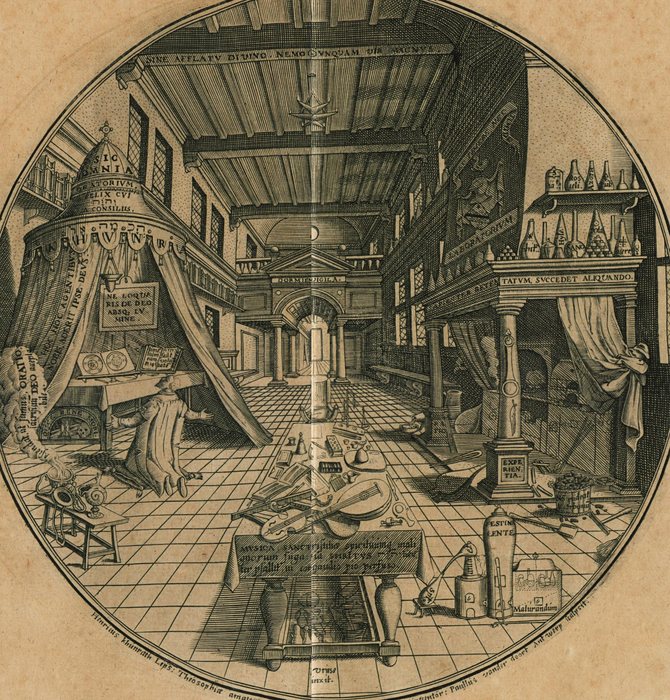
Where the detail is the subject
Each of these is in the picture without being what it is about. Below, one work that is about each.
In the same series
After Splendor Solis, watercolours by Edith A. Ibbs, 1900 to 1909
Record
One symbol a week, decoded.
This picture is free at full size from its source, linked above. What an address gets is the Sunday letter: one picture, one symbol marked on it, what it meant and who said so, and the master files of the decoded plates as they are verified. Leave any time.
Free, one letter a week, unsubscribe in one click. How the address is used.
Scroll or pinch to zoom · drag to move · double-tap for 1:1 · 925 by 1400 pixel web copy; the source file is linked under Record