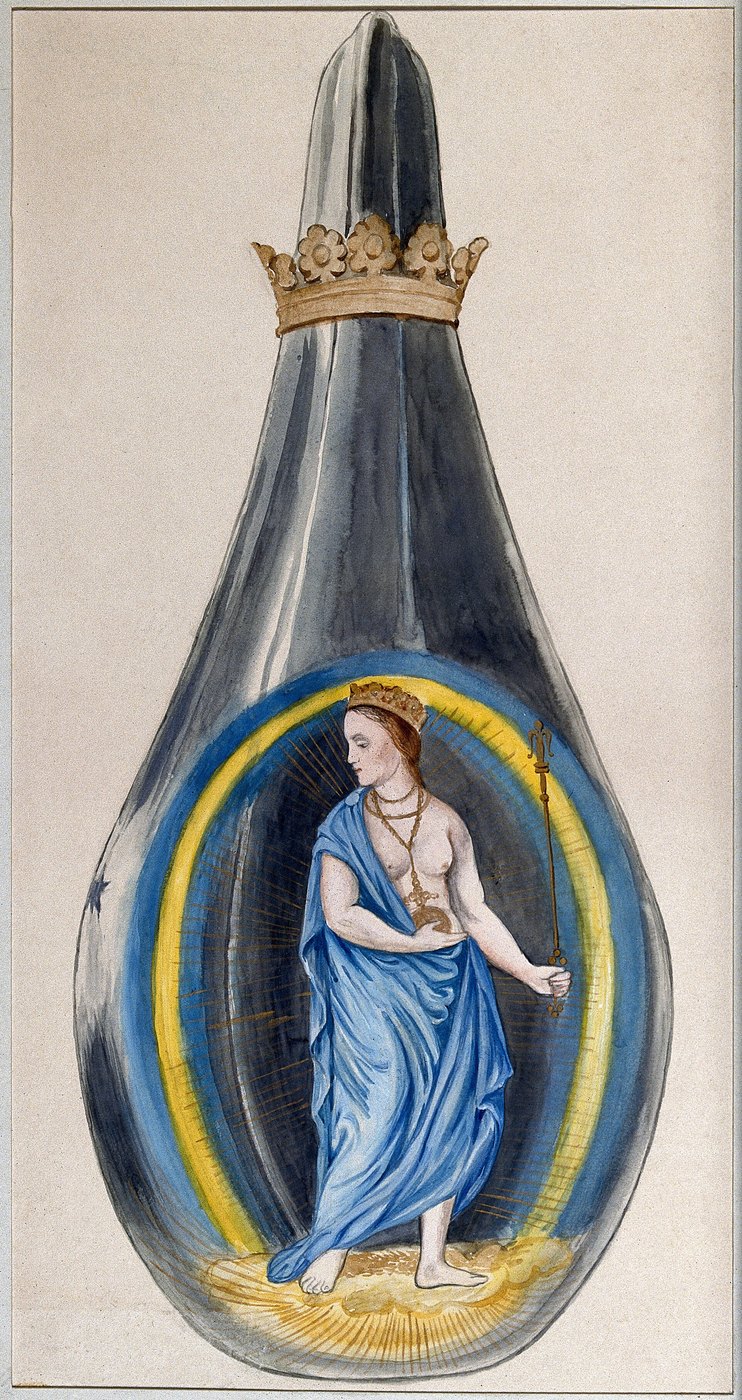
The queen in the crowned flask
The King and the Queen as the central motif, with the Vessel, the Crown, and the Sun and the Moon in a secondary part. From Splendor Solis.
What is happening
J. K., who wrote the 1920 elucidation, 1920 “A similar Cucurbit and golden niche as in picture number Fourteen. In the Cucurbit is the figure of a Queen with the upper part of her body naked, but with a pale blue robe thrown loosely round the rest of the body except the feet and ankles are bare. Around her is an oval shaped halo”
J. K., who wrote the 1920 elucidation, 1920 “like a blue and yellow rainbow. Beneath her feet is a golden side face of the Sun”
Salomon Trismosin, attributed, 1920 “Though the stone is obtained through one operation, nevertheless has the operation of the Fire to be changed thrice. In the first operation of the work shall the heat be mild moderate and warm, till the matter turns black continually, and further till it becomes white again.”
Symbolica The white stage of the work, standing up in a glass. The treatise sets the order: black first, then white, then red. This queen comes one plate before the red king and one after the peacock, which is where the white belongs.
Key · 4 motifs
Tap a motif on the picture, or a line below. Its note opens under the line, with the reading its author gave it.
- Primary motif
- Secondary motifs · 3
The picture
A dark flask crowned in gold, and standing inside it a woman with her upper body bare and a pale blue robe round the rest, ringed by an oval halo of blue and yellow, a small gold sun face beneath her feet. By eye
The reading
The picture read whole, in the archive's words, from the sources quoted on the marks. Read on, and the picture follows: the motif under discussion keeps its colour.
Seventeenth of the twenty-two and the fourth crowned flask the archive holds. A woman stands in the glass, bare to the waist with a pale blue robe round the rest of her, inside an oval of blue and yellow light.
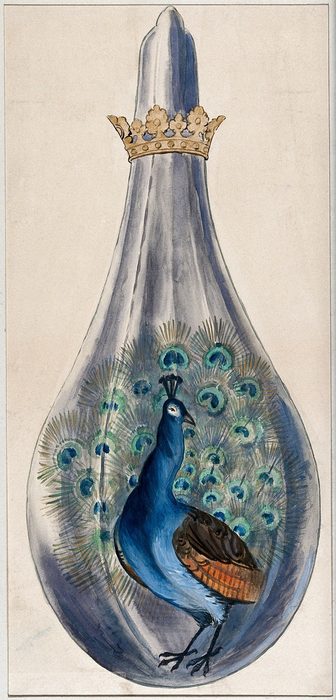
“In the Cucurbit is the figure of a Queen with the upper part of her body naked, but with a pale blue robe thrown loosely round the rest of the body except the feet and ankles are bare”. [sym:vessel] “A similar Cucurbit and golden niche as in picture number Fourteen”. J. K. points back to the bird rather than describe the glass twice, which tells a reader how he wants the run of seven taken.
“Beneath her feet is a golden side face of the Sun”. Worth holding on to, because the next flask in the book puts a crescent moon under its figure instead. The white one stands on the sun and the red one stands on the moon.
Where she sits in the order is not guesswork. “Though the stone is obtained through one operation, nevertheless has the operation of the Fire to be changed thrice. In the first operation of the work shall the heat be mild moderate and warm, till the matter turns black continually, and further till it becomes white again.” Black, then white. She comes after the peacock, where every colour appears at once, and before the king, who is red.
Six flasks into the sequence the archive can watch a painter working to a text. He had a chapter telling him the order of the colours, and he gave each colour a person and shut it in the same glass.
Decoded: every motif is marked, and each mark carries the reading its author gave it, quoted from the text, or says that it is observed on the picture and not read. The reading above is the archive's own, made from those sources and no others.
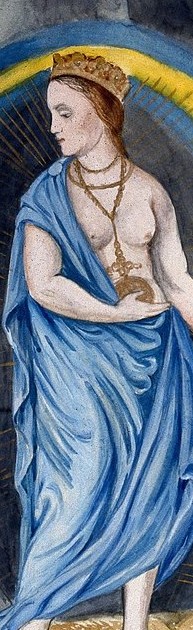
A rank rather than a person. Read the robe, the throne and what comes out of the mouth before you read the face.
In plain words A figure with bare shoulders and breast, a pale blue robe wrapped from the waist down, crowned, holding a small sceptre, feet and ankles left bare.
J. K., who wrote the 1920 elucidation, 1920 “In the Cucurbit is the figure of a Queen with the upper part of her body naked, but with a pale blue robe thrown loosely round the rest of the body except the feet and ankles are bare.”
Symbolica J. K. counts what is covered and what is not, twice, which for him counts as emphasis.
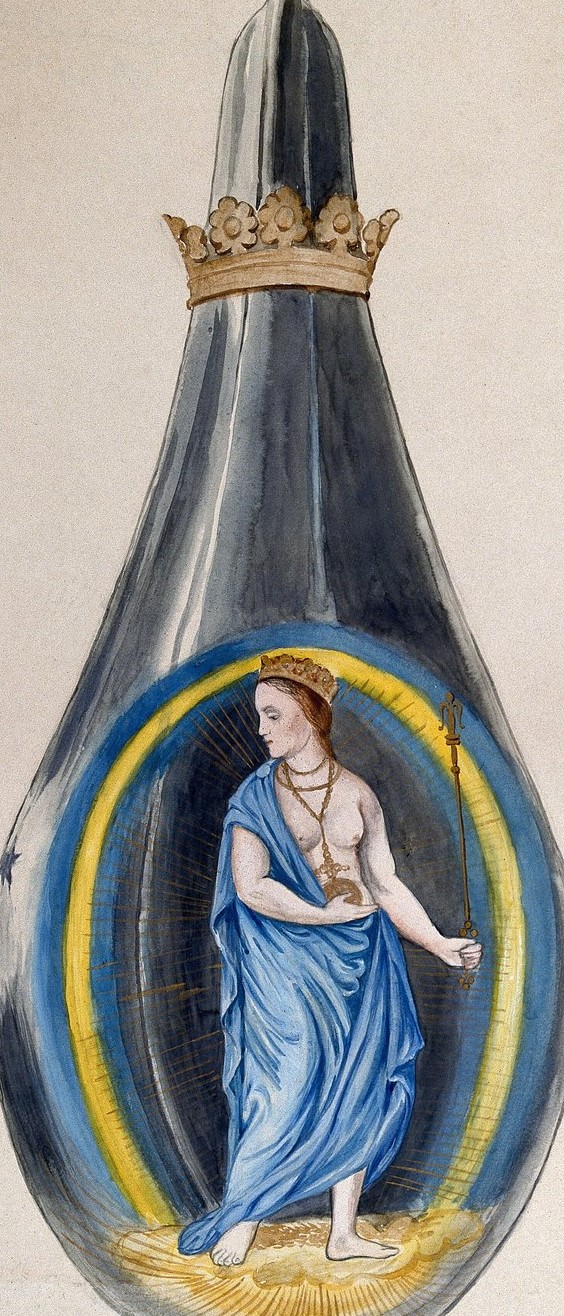
Never the subject. What is inside it is.
In plain words The same shape of glass again, dark against the paper, sealed at the point.
J. K., who wrote the 1920 elucidation, 1920 “A similar Cucurbit and golden niche as in picture number Fourteen.”
Symbolica J. K. numbers it back to the bird rather than describe the glass again. The sequence is meant to be read as one thing.
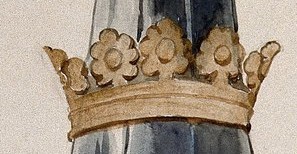
Completion, and in the Kabbalistic reading the first sephirah, the point at which the work is no longer yours.
In plain words The gold band again, clasped a quarter of the way down the glass.
Symbolica The crown on the vessel repeats unchanged through the sequence and J. K. stops describing it after the twelfth. Recorded as observed.
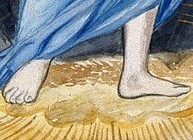
Gold, the perfected metal, and the illuminated intellect. The most overloaded symbol in the tradition.
In plain words A gold disc with a profile face, set low in the glass with her bare feet standing on it.
J. K., who wrote the 1920 elucidation, 1920 “Beneath her feet is a golden side face of the Sun”
Symbolica The sun goes under the white figure, and one plate later the moon goes under the red one. The pair swap places between the two sheets.
Also carrying the King and the Queen
35 works carry it. The 6 where it is the central motif are here. The symbol.
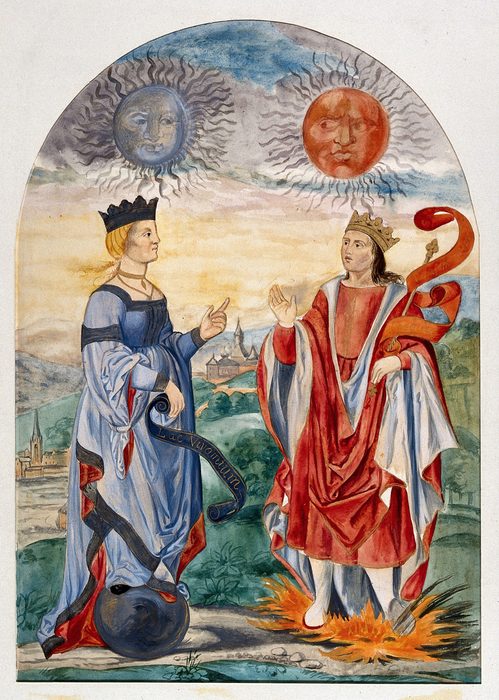
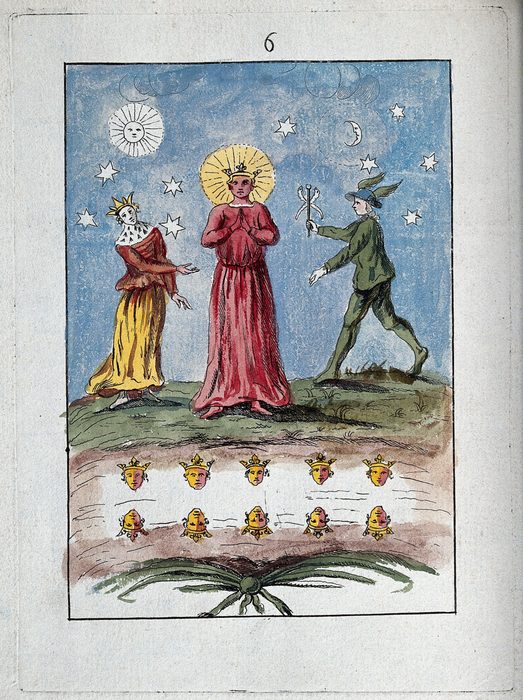
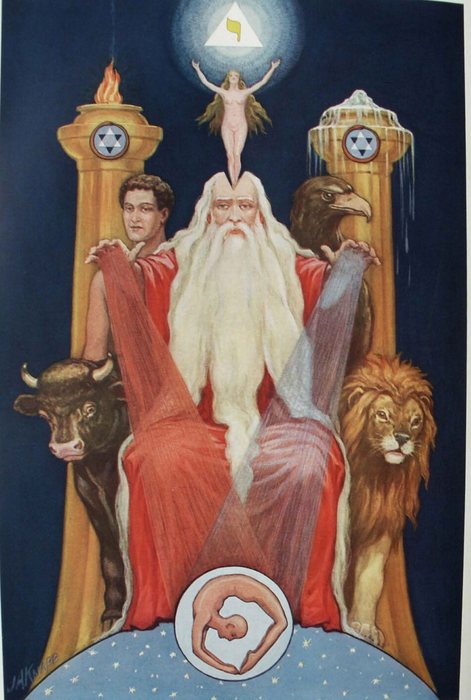
Where the detail is the subject
the Vessel · the Crown · the Sun and the Moon
Each of these is in the picture without being what it is about. Below, one work that is about each.
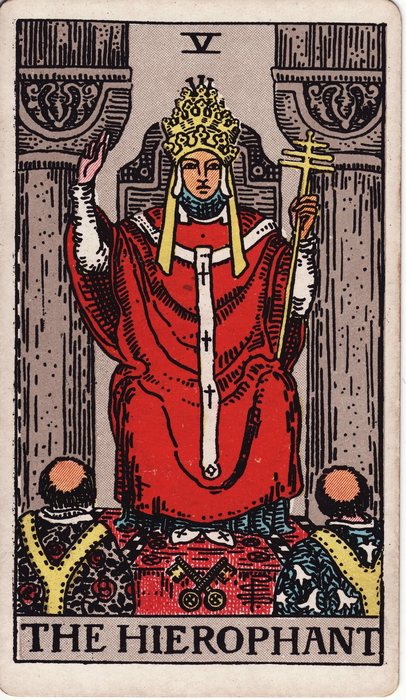
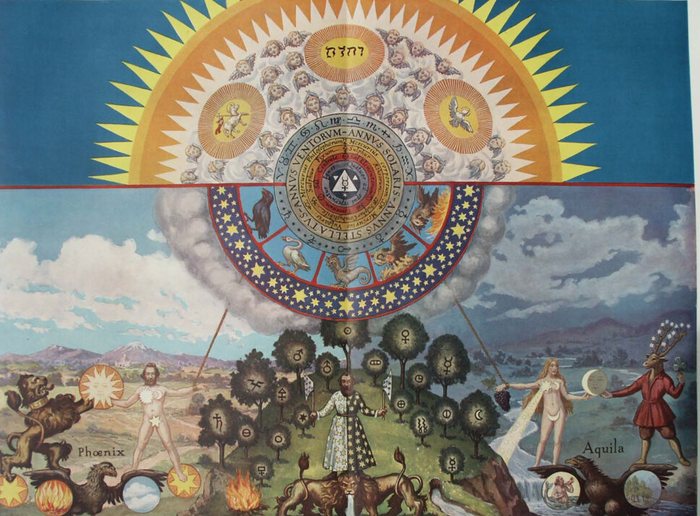
In the same series
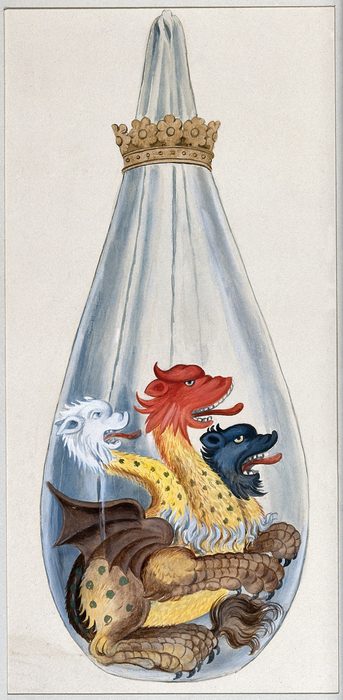
After Splendor Solis, watercolours by Edith A. Ibbs, 1900 to 1909
Record
One symbol a week, decoded.
This picture is free at full size from its source, linked above. What an address gets is the Sunday letter: one picture, one symbol marked on it, what it meant and who said so, and the master files of the decoded plates as they are verified. Leave any time.
Free, one letter a week, unsubscribe in one click. How the address is used.
Scroll or pinch to zoom · drag to move · double-tap for 1:1 · 742 by 1400 pixel web copy; the source file is linked under Record