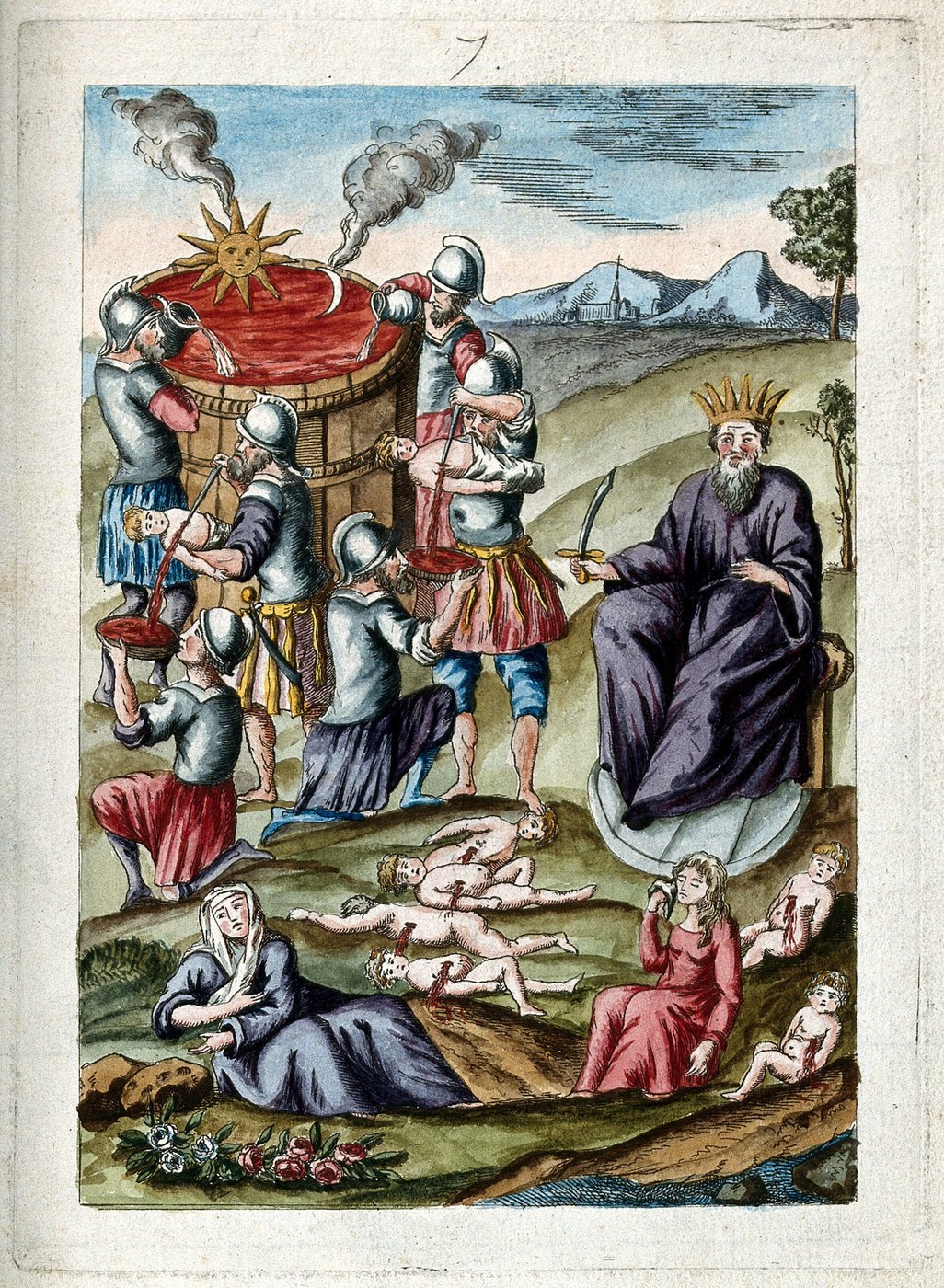
The King with the Falchion, and the Blood of the Infants
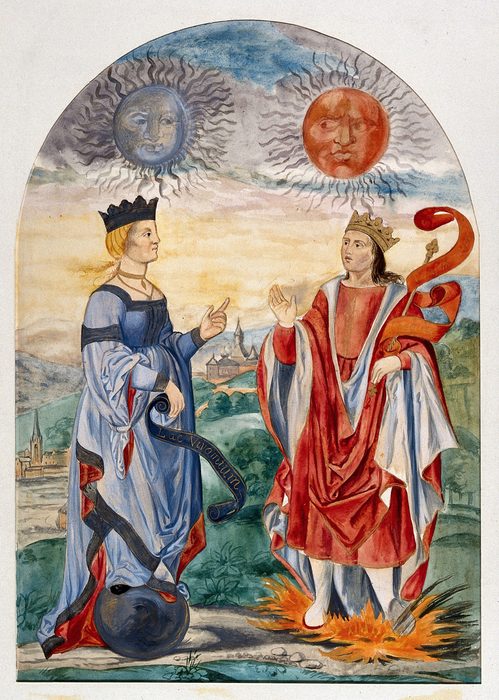
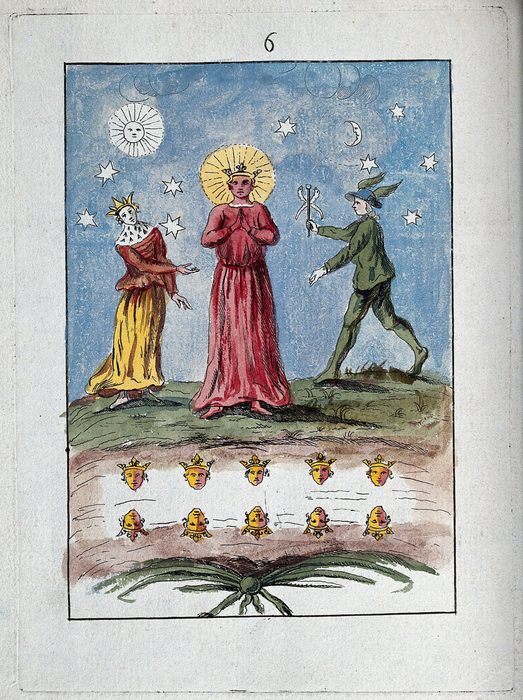
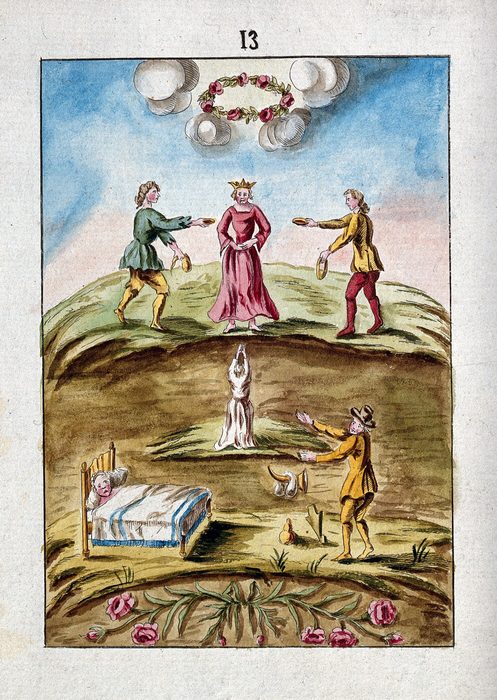
The King and the Queen as the central motif, with the Vessel, and the Sun and the Moon in a secondary part. From The Flamel figures.
What is happening
Wellcome Collection, 2026 “The Livre takes its inspiration from a text by Nicolas Flamel (ca. 1330-1417) first published in France in 1612, then in England in 1624. Flamel tells of how a book written by one Abraham the Jew fell into his hands and goes on to describe its illustrations, which he does not attempt to reproduce. Only in 1672, in W. Salmon's edition of the book, did the images come to be actualised.”
Symbolica The museum reads the scene as the stage of putrefaction. Flamel's own sentence for it is four clauses long and every one of them is on the plate.
Key · 3 motifs
Tap a motif on the picture, or a line below. Its note opens under the line, with the reading its author gave it.
- Primary motif
- Secondary motifs · 2
The picture
A crowned king in violet sits at the right with a curved blade held loosely in one hand; seven helmeted soldiers carry infants and pour bowls of blood into a great banded tub, on whose red surface a gold sun and a white crescent float; two women sit at the foot among the dead children; roses and white flowers lie in the near corner. By eye
The reading
The picture read whole, in the archive's words, from the sources quoted on the marks. Read on, and the picture follows: the motif under discussion keeps its colour.
A king sits on a cushion at the right of this plate holding a curved sword he has not used, and everything else in the picture is being done for him. He is there because of one sentence written down by a Paris notary who said he was describing a page in a book he had bought secondhand.
Flamel's sentence runs four clauses and the engraver drew every one. The first: “a King with a great Fauchion, who made to be killed in his presence by some Souldiers a great multitude of little Infants”. In his presence, not by his hand. So the king sits, holds the blade loosely by the hilt as though it were a sceptre, and watches seven helmeted men do it.
The second clause is the two women at the foot of the plate: “whose Mothers wept at the feet of the vnpittifull Souldiers”. The engraver has moved them out of the way, down into the foreground, one in blue and one in red, sitting on the ground among their children with their heads turned. Nobody in the working party looks at them. In the near corner somebody has laid roses and white flowers on the grass.
Third: the blood was gathered up by other soldiers and put in a great vessel. The plate makes a production line of it. One soldier carries a child, a second holds the shallow bowl, a third walks the bowl up the slope, a fourth tips it over the rim of a banded wooden tub filled to the brim and steaming.
The fourth clause settles the question of whether the man who cut this plate had the book open beside him: “wherein the Sunne and the Moone came to bathe themselues.” A sun and a moon belong in the sky, and there is a great deal of sky here going spare. They are not in it. A gold sun with a face and a white crescent lie on the surface of the blood, half sunk, with the smoke going up past them.
Flamel then explains why he chose the churchyard of the Holy Innocents for the arch he paid to have painted, and the reason is this page: “because that this History did represent the more part of that of the Innocents slaine by Herod, and that in this Booke I learned the greatest part of the Art, this was one of the causes, why I placed in their Churchyard these Hieroglyphick Symbols of this secret science.” He picked a burial ground to rhyme with a picture nobody would draw for another two hundred and fifty years.
Decoded: every motif is marked, and each mark carries the reading its author gave it, quoted from the text, or says that it is observed on the picture and not read. The reading above is the archive's own, made from those sources and no others.
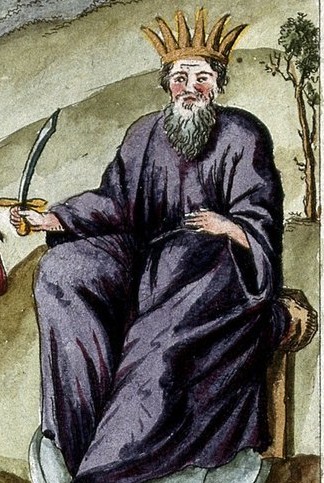
A rank rather than a person. Read the robe, the throne and what comes out of the mouth before you read the face.
In plain words He does nothing. Flamel has him make the killing happen in his presence, and the engraver took the phrase at its word: the king sits down, holds the falchion loosely by the hilt as though it were a sceptre, and watches other men use theirs.
Nicolas Flamel, 1624 “On the last side of the fift leafe, there was a King with a great Fauchion, who made to be killed in his presence by some Souldiers a great multitude of little Infants,”
Nicolas Flamel, 1624 “whose Mothers wept at the feet of the vnpittifull Souldiers:”
Nicolas Flamel, 1624 “And because that this History did represent the more part of that of the Innocents slaine by Herod, and that in this Booke I learned the greatest part of the Art, this was one of the causes, why I placed in their Churchyard these Hieroglyphick Symbols of this secret science.”
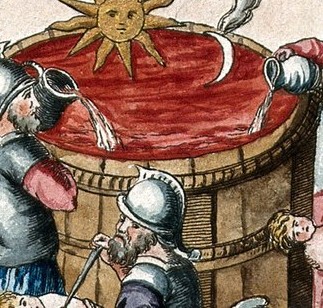
Never the subject. What is inside it is.
In plain words Flamel says the blood was gathered up and put in a great vessel, and the plate does the gathering as a chain of work: one soldier holds a child, a second catches the blood in a shallow bowl, a third carries the bowl up a step, a fourth tips it over the rim. Smoke comes off the top.
Nicolas Flamel, 1624 “the bloud of which Infants was afterwards by other Souldiers gathered vp, and put in a great vessell,”
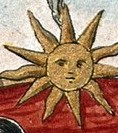
Gold, the perfected metal, and the illuminated intellect. The most overloaded symbol in the tradition.
In plain words This is the clause that proves the engraver was reading. A sun and a moon in a picture go in the sky; anybody would put them there. Flamel says they came to bathe in the vessel, and on this plate they are in the vessel, floating on the red like two things dropped in the bath, with the smoke going up past them.
Nicolas Flamel, 1624 “wherein the Sunne and the Moone came to bathe themselues.”
Also carrying the King and the Queen
27 works carry it. The 6 where it is the central motif are here. The symbol.
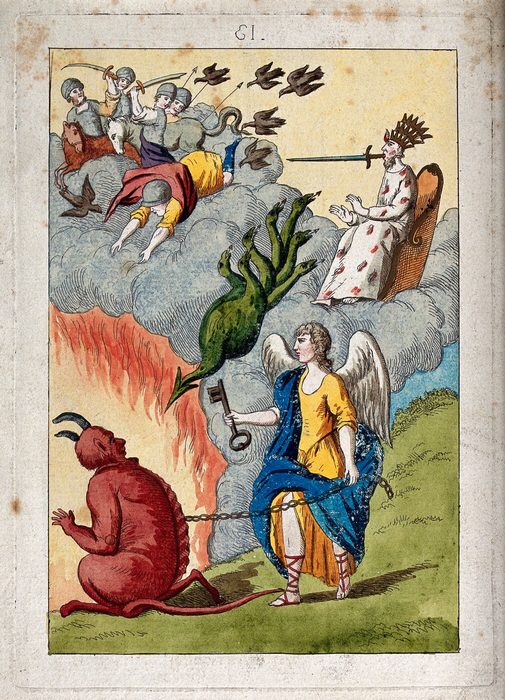
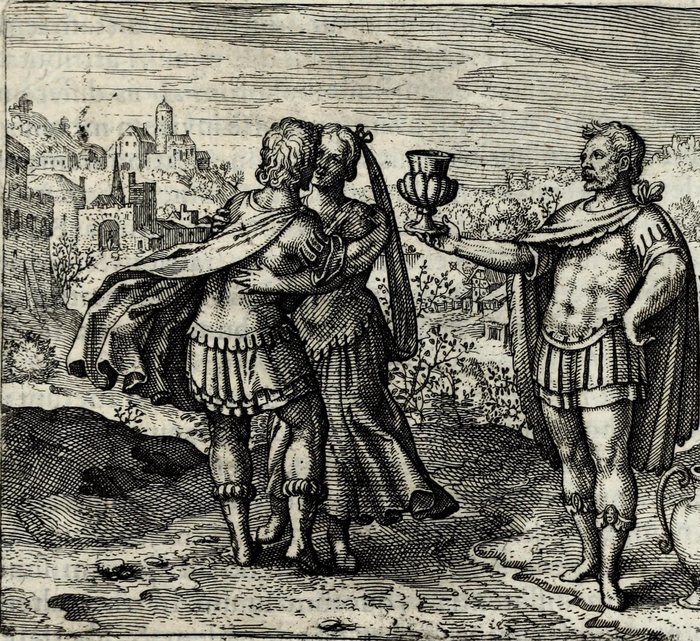
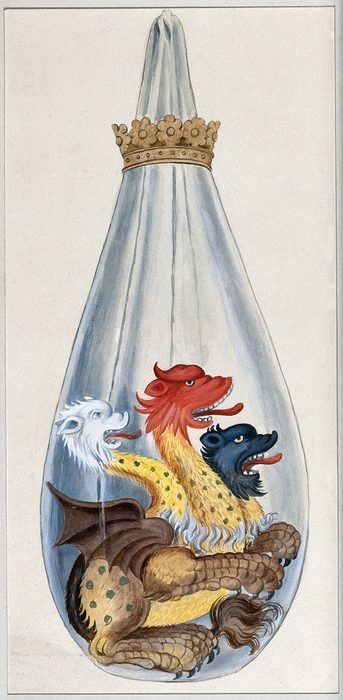
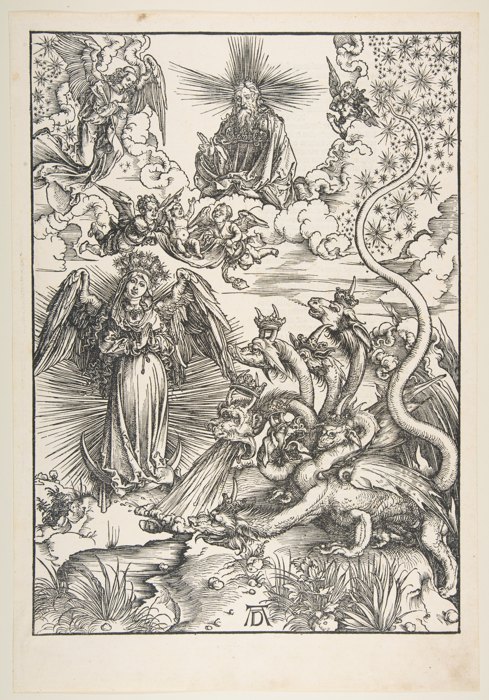
Where the detail is the subject
the Vessel · the Sun and the Moon
Each of these is in the picture without being what it is about. Below, one work that is about each.
In the same series
Record
One symbol a week, decoded.
This picture is free at full size from its source, linked above. What an address gets is the Sunday letter: one picture, one symbol marked on it, what it meant and who said so, and the master files of the decoded plates as they are verified. Leave any time.
Free, one letter a week, unsubscribe in one click. How the address is used.
Scroll or pinch to zoom · drag to move · double-tap for 1:1 · 1026 by 1400 pixel web copy; the source file is linked under Record