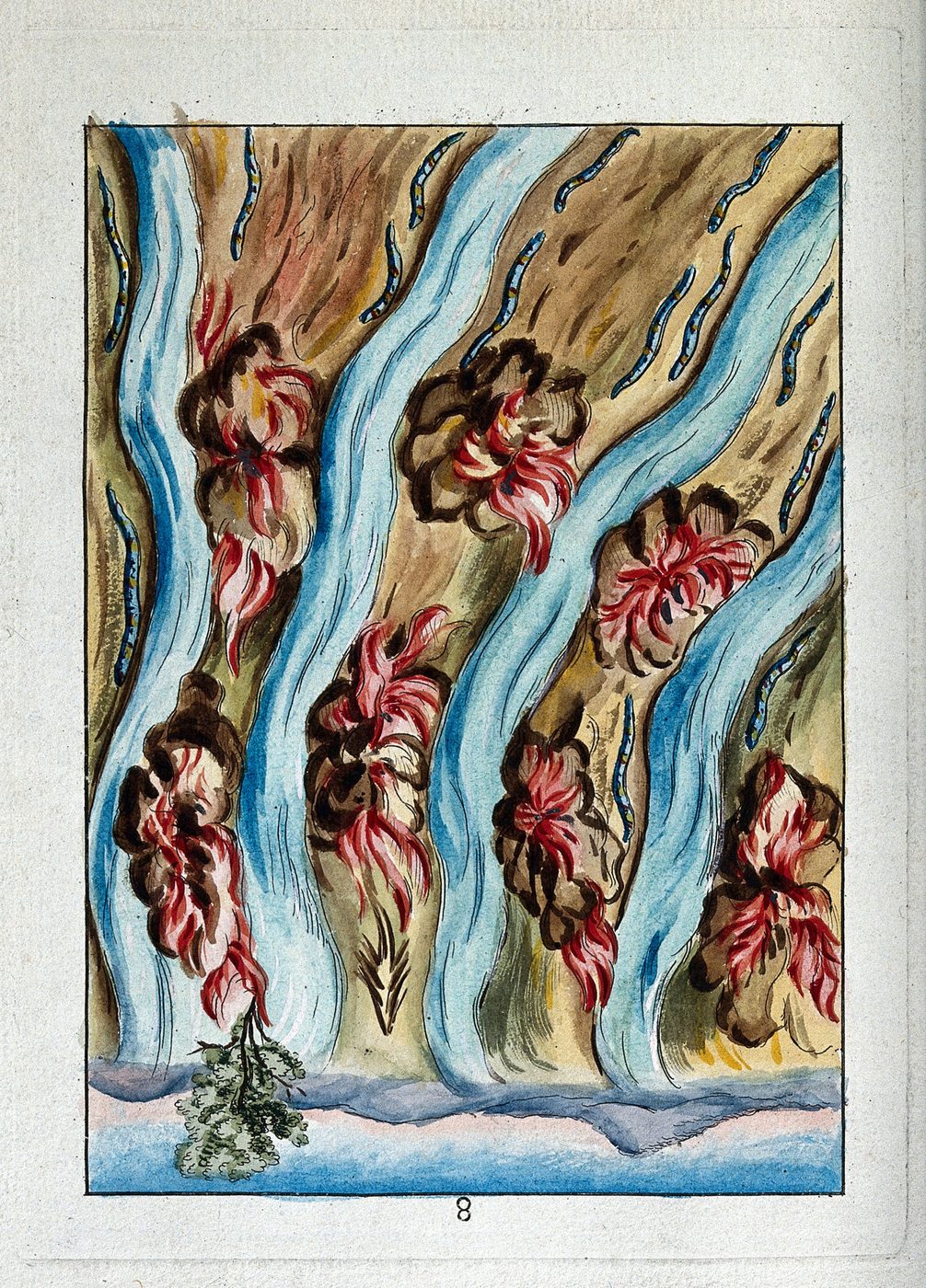
Rivers in the Wilderness, with Serpents and Fire
The Serpent and the Dragon as the central motif, with the Water and Fire in a secondary part. From The Flamel figures.
Key · 3 motifs
Tap a motif on the picture, or a line below. Its note opens under the line, with the reading its author gave it.
- Primary motif
- Secondary motifs · 2
The picture
Seven pale streams come down a bare tawny slope; more than twenty small banded serpents swim in them and lie on the ground between them; eight dark rosettes with red and white tongues sit at the heads of the streams; one green bush at the foot, and nothing else in the landscape. By eye
The reading
The picture read whole, in the archive's words, from the sources quoted on the marks. Read on, and the picture follows: the motif under discussion keeps its colour.
Flamel counts the leaves of the book before he describes any of them, and the count is the point. Thrice seven, numbered in the top corner, and every seventh leaf had no writing on it at all. Three leaves in twenty-one carried a picture and nothing else. This sheet is the last of the three.
On the last of them, he says, were painted “Desarts, or Wildernesses, in the middest whereof ran many faire fountaines”. Taken at his word, that is a slope with nothing on it, and a slope with nothing on it is what the engraver drew: no town, no figure, no path, seven pale streams coming down bare tawny ground, and one small green bush at the bottom left that is the only living thing in the picture.
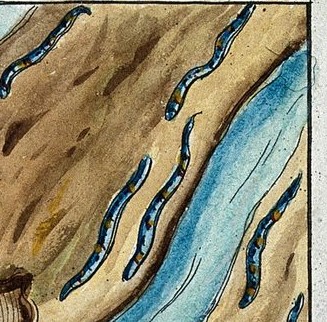
Out of the fountains, he goes on, “there issued out a number of Serpents, which ran vp and downe here and there.” Count them: more than twenty, banded blue and yellow, some swimming and some on the dry ground between the streams, and they are the only movement in the scene. That is the one clause in the whole sentence describing an action, and it is the clause the sheet spends most of its ink on.
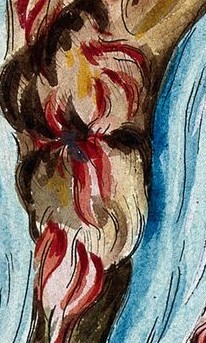
Eight dark rosettes with red and white tongues sit at the heads of the streams, and the museum's title for the sheet calls them fire. Each one sits exactly where a stream begins, which would make them the fountains rather than anything burning. Flamel's sentence gives no help either way, so both readings stand on the page and neither is settled.
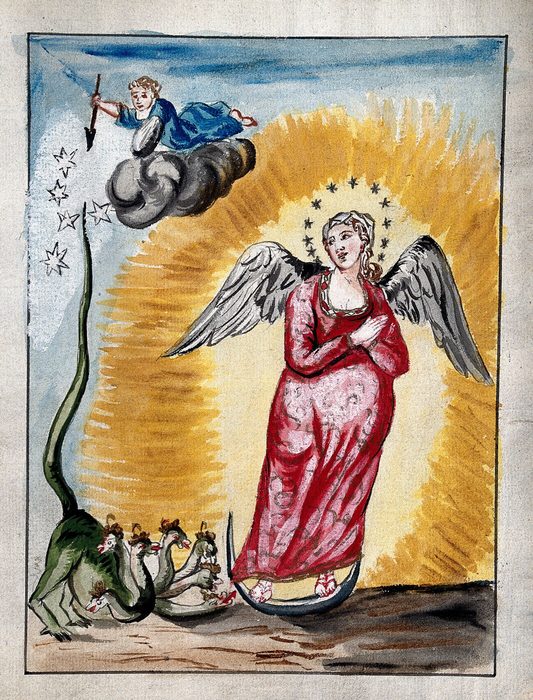
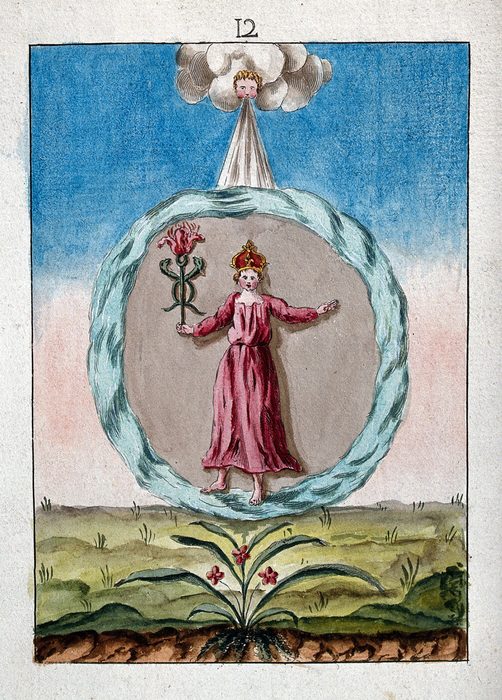
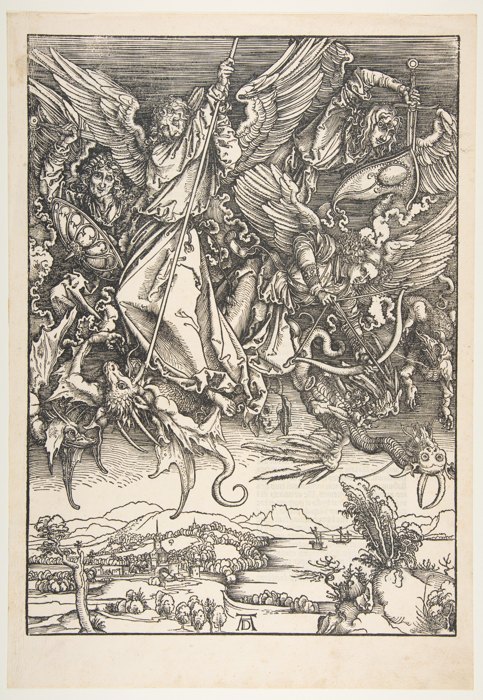
Two of the seventh leaves are missing from this run and are worth knowing anyway. On the first, Flamel says, was painted “a Virgin, and Serpents swallowing her vp”; on the second, “a Crosse where a Serpent was crucified”. Wellcome holds a crowned woman in glory with the beasts beaten at her feet, filed here under the twelfth chapter of the Apocalypse, which is where her details actually come from. Somewhere between Flamel's sentence and that sheet, the serpents stopped winning.
Decoded: every motif is marked, and each mark carries the reading its author gave it, quoted from the text, or says that it is observed on the picture and not read. The reading above is the archive's own, made from those sources and no others.
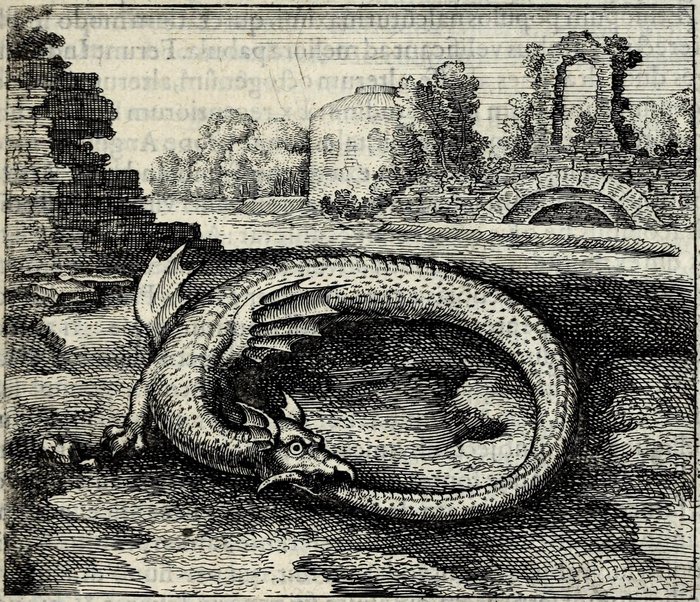
A single creature doing two opposite jobs. Note whether it is bound, killed, or eating itself.
In plain words Count them and you get more than twenty, going in every direction, some in the water and some on the dry ground beside it. Flamel's phrase for that is up and down here and there, and it is the only detail in the sentence that describes movement.
Nicolas Flamel, 1624 “there were painted Desarts, or Wildernesses, in the middest whereof ran many faire fountaines, from whence there issued out a number of Serpents, which ran vp and downe here and there.”

Where a thing is taken apart rather than destroyed. Note whether the figure is in the water, on it, or pouring it.
In plain words Seven streams come down a bare tawny slope and none of them has a source in the sky or a mouth at the bottom. Flamel calls them fountains running in the middle of a wilderness, which is what the sheet draws: water in a place with nothing else in it.
Nicolas Flamel, 1624 “It contained thrice seuen leaues, for so were they counted in the top of the leaues, and alwayes euery seuenth leafe was without any writing, but in stead thereof, vpon the first seuenth leafe, there was painted a Virgin, and Serpents swallowing her vp; In the second seuenth, a Crosse where a Serpent was crucified;”
A count, a catastrophe, or the visible part of something that has no body. Note whether the flames are arranged in a number, breaking something, or standing where a figure would be.
In plain words These are the one thing on the sheet the sentence does not account for. The museum's description reads them as fire between the rivers. They sit where each stream begins, which would make them the fountains themselves rather than something burning. Flamel says nothing about either, and the archive leaves it there.
Wellcome Collection, 2026 “Rivers running in the wilderness, with serpents and fire between them; representing the stage of 'multiplication' in the alchemical process.”
Also carrying the Serpent and the Dragon
30 works carry it. The 6 where it is the central motif are here. The symbol.
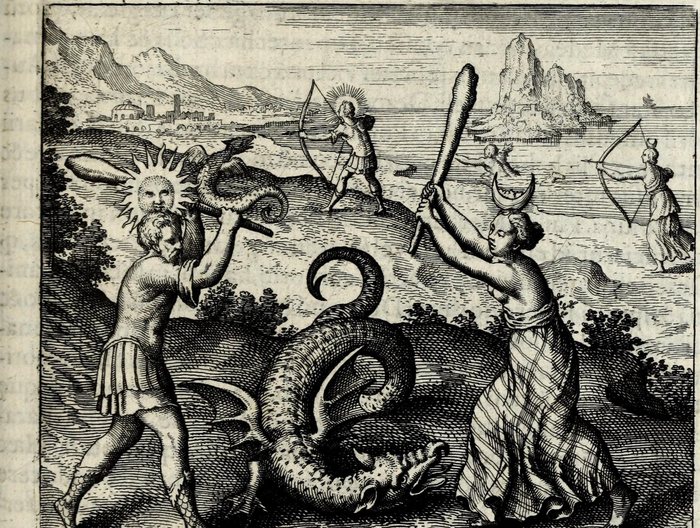
Where the detail is the subject
Each of these is in the picture without being what it is about. Below, one work that is about each.
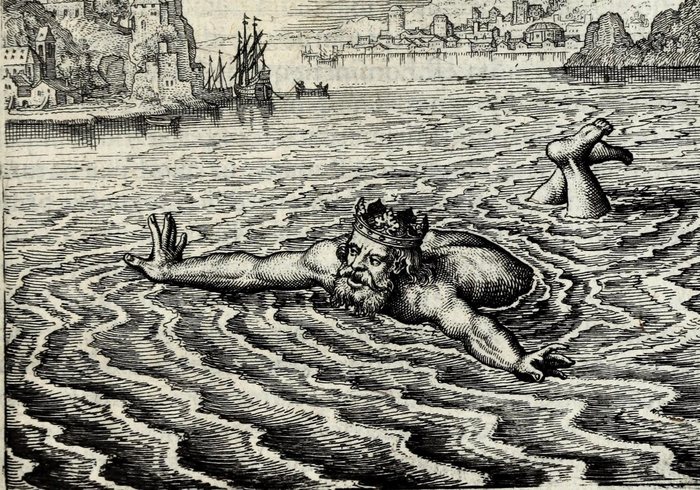
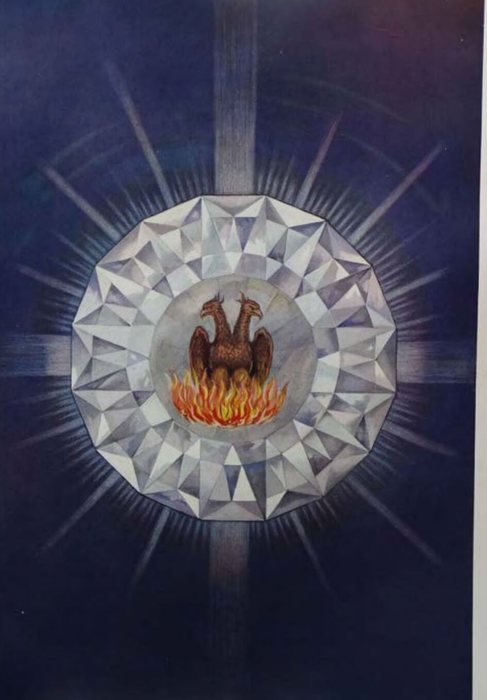
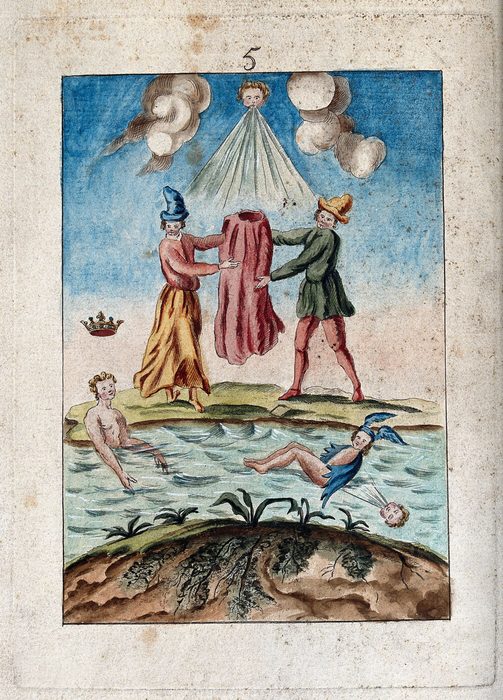
In the same series
Record
One symbol a week, decoded.
This picture is free at full size from its source, linked above. What an address gets is the Sunday letter: one picture, one symbol marked on it, what it meant and who said so, and the master files of the decoded plates as they are verified. Leave any time.
Free, one letter a week, unsubscribe in one click. How the address is used.
Scroll or pinch to zoom · drag to move · double-tap for 1:1 · 1006 by 1400 pixel web copy; the source file is linked under Record