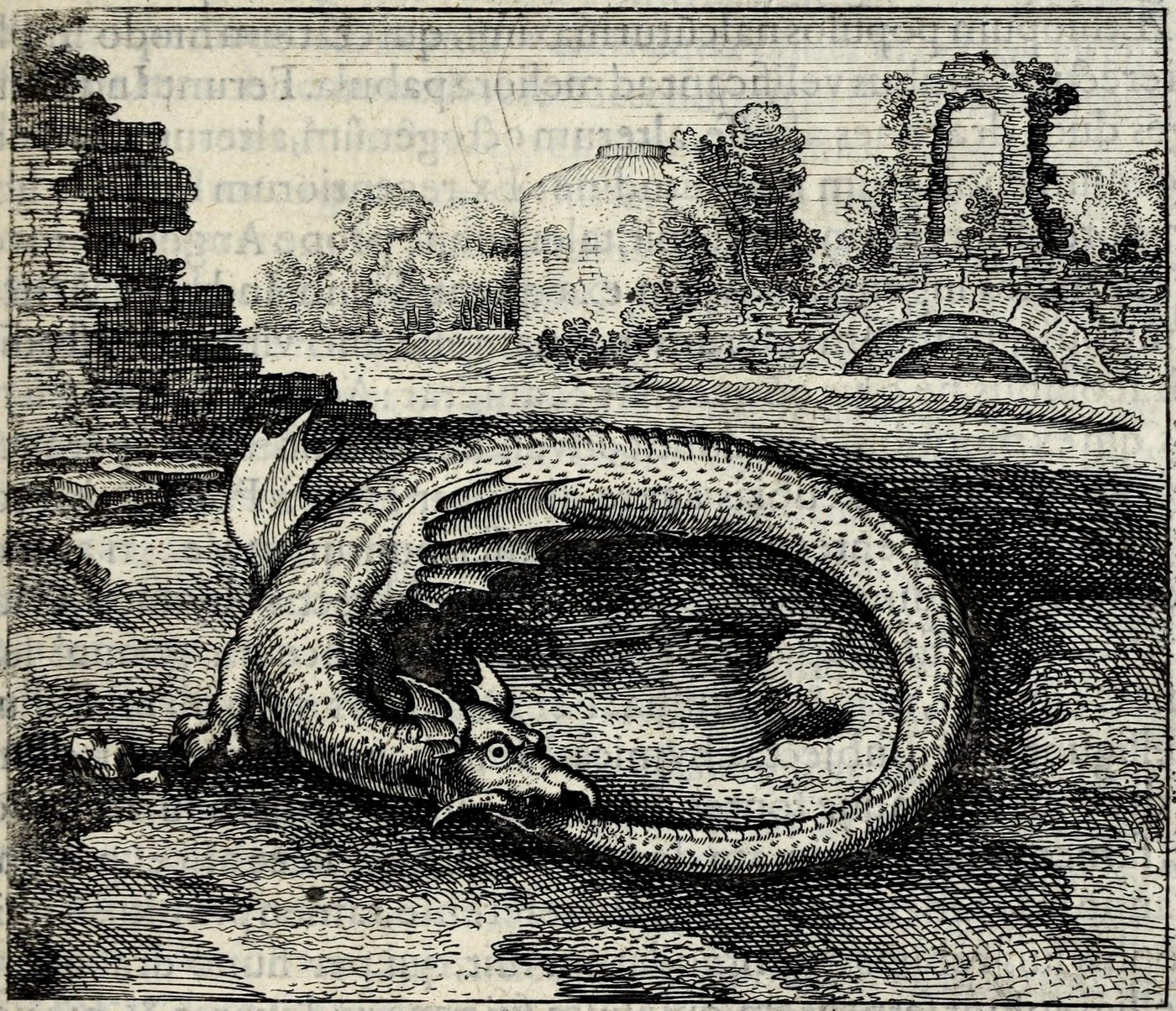
Hic est Draco caudam suam devorans
The Serpent and the Dragon as the central motif. From Atalanta Fugiens.
What is happening
Michael Maier, 1618 “Hic est Draco caudam suam devorans.”
Symbolica, 2026 Maier’s Latin, put into English here: This is the dragon devouring its own tail.
Michael Maier, 1618 “Dira fames Polypos docuit sua rodere crura,
Humanaque homines se nutriisse dape.
Dente Draco caudam dum mordet & ingerit alvo,
Magna parte sui fit cibus ipse sibi.
Ille domandus erit ferro, fame, carcere, donec
Se voret & revomat, se necet & pariat.”
Symbolica, 2026 Maier’s epigram, put into English here: Dire hunger taught the octopus to gnaw its own limbs, and taught men to feed themselves on human meat. While the Dragon bites its tail with its teeth and takes it into its belly, it becomes its own food in great part. That one must be tamed with iron, with hunger, with prison, until it devours and vomits itself up, kills itself and gives birth to itself.
Key · 1 motif
Tap a motif on the picture, or a line below. Its note opens under the line, with the reading its author gave it.
- Primary motif
The picture
The dragon coiled and eating its own tail before a ruined arch: the ouroboros drawn plainly. By eye
The reading
The picture read whole, in the archive's words, from the sources quoted on the marks. Read on, and the picture follows: the motif under discussion keeps its colour.
‘Hic est Draco caudam suam devorans’: this is the dragon devouring its own tail. Merian drew it as a real beast, winged and scaled, lying in a ring before a ruined arch, and the ring is the whole picture.
Maier begins with hunger. ‘Dira fames Polypos docuit sua rodere crura’, dire hunger taught the octopus to gnaw its own limbs, and taught men to eat men. ‘Dente Draco caudam dum mordet & ingerit alvo’, while the dragon bites its tail with its teeth and takes it into its belly, ‘Magna parte sui fit cibus ipse sibi’, it becomes its own food in great part. Then the instruction, which is the emblem's real content: ‘Ille domandus erit ferro, fame, carcere, donec / Se voret & revomat, se necet & pariat’, that one must be tamed with iron, with hunger, with prison, until it devours and vomits itself up, kills itself and gives birth to itself.
Iron is the fire, hunger the withholding of food, prison the sealed glass; the dragon is the matter, and the ring it makes with its own body is the work going round. The ouroboros has an entry of its own in this archive, and this is the plainest picture of it the archive holds.
Decoded: every motif is marked, and each mark carries the reading its author gave it, quoted from the text, or says that it is observed on the picture and not read. The reading above is the archive's own, made from those sources and no others.
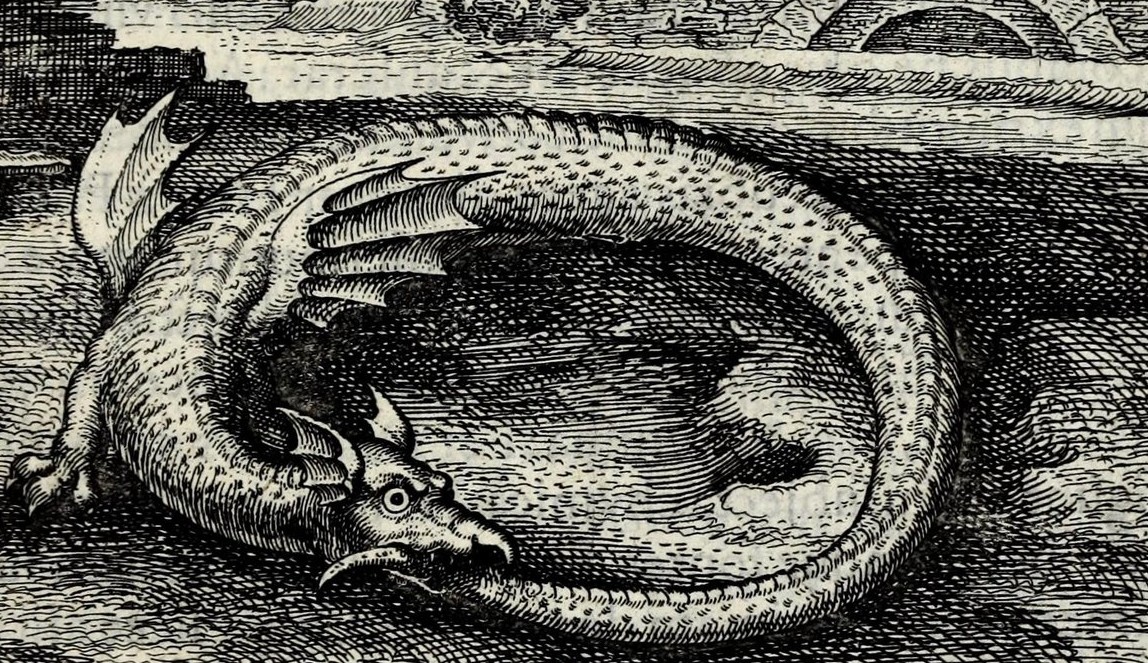
The serpent that eats its own tail. The one thing that feeds on itself and so never ends.
In plain words A dragon lies in a ring on the ground with its tail in its mouth: the ouroboros, drawn as an animal rather than a diagram. Maier's instruction is to tame it with iron, hunger and prison until it eats itself, vomits itself up, kills itself and gives birth to itself. A thing that feeds on itself, and is renewed by it.
Michael Maier, 1618 “Dente Draco caudam dum mordet & ingerit alvo, / Magna parte sui fit cibus ipse sibi.”
Symbolica Maier's Latin, put into English here: While the Dragon bites its tail with its teeth and takes it into its belly, it becomes its own food in great part.
Also carrying the Serpent and the Dragon
30 works carry it. The 6 where it is the central motif are here. The symbol.
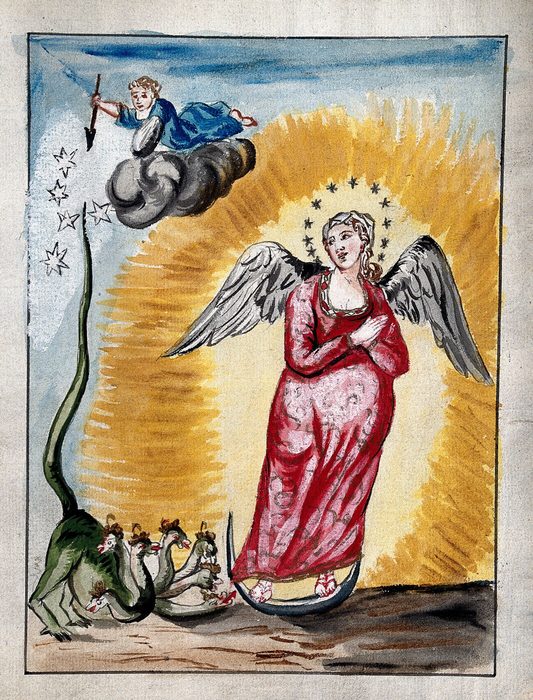 The Virgin with a Dragon at Her Feet
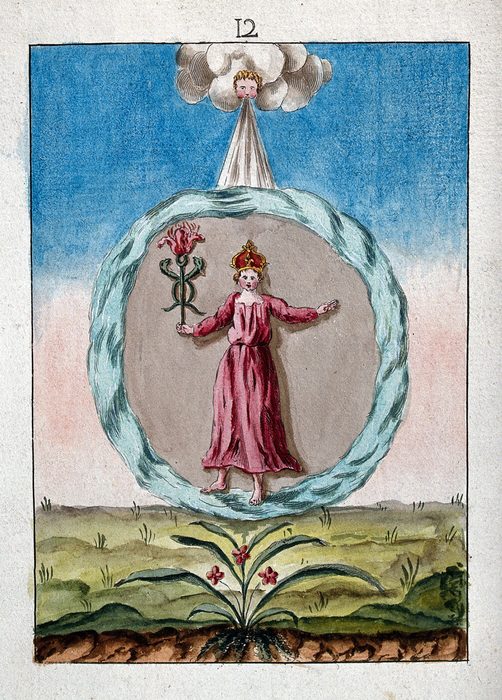 A Crowned Woman with a Rose-Topped Caduceus, in a Circle of Water
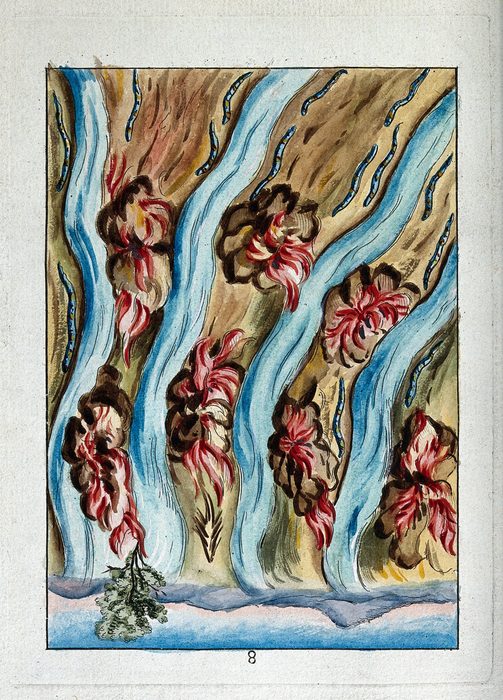 Rivers in the Wilderness, with Serpents and Fire
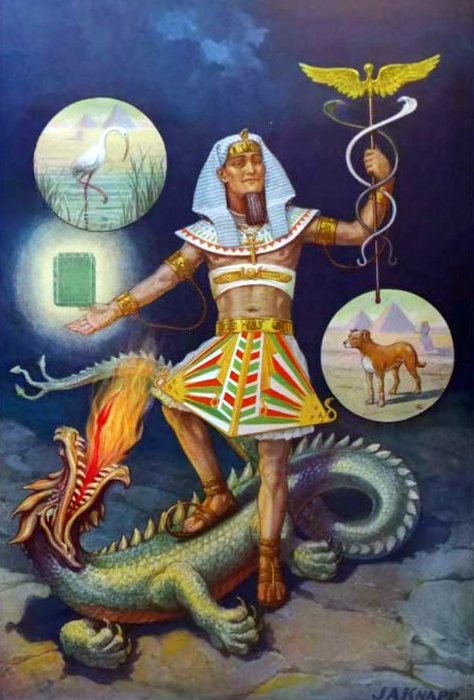 Hermes Standing upon the Back of Typhon
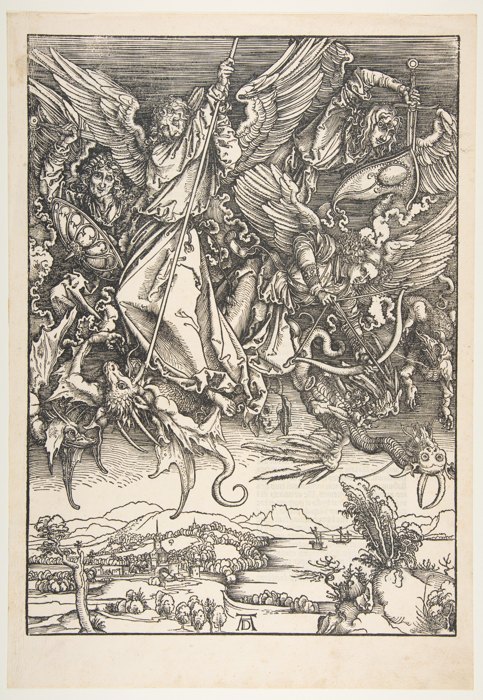 Saint Michael Fighting the Dragon
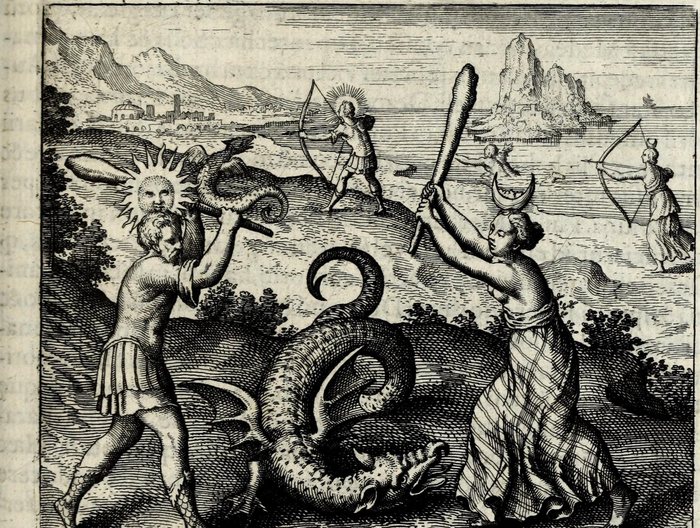 DRACO non moritur, nisi cum fratre & sorore sua interficiatur, qui sunt Sol & Luna
In the same series
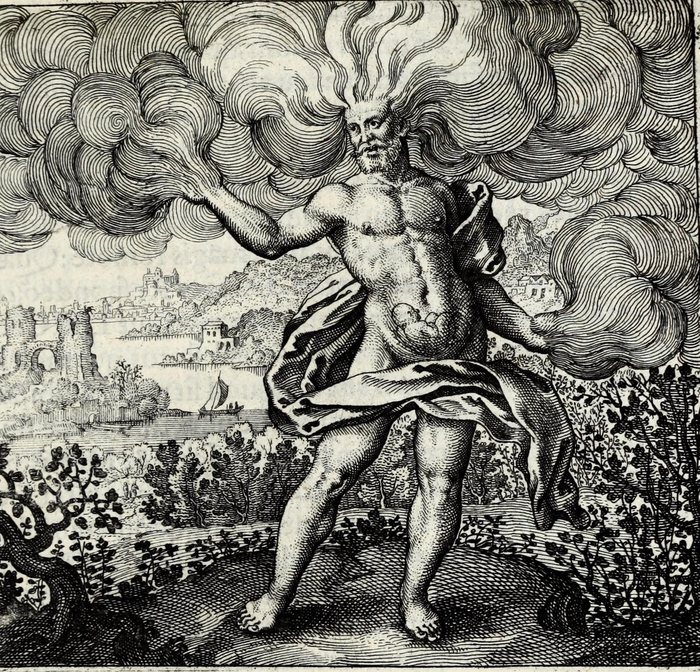 Portavit eum ventus in ventre suo
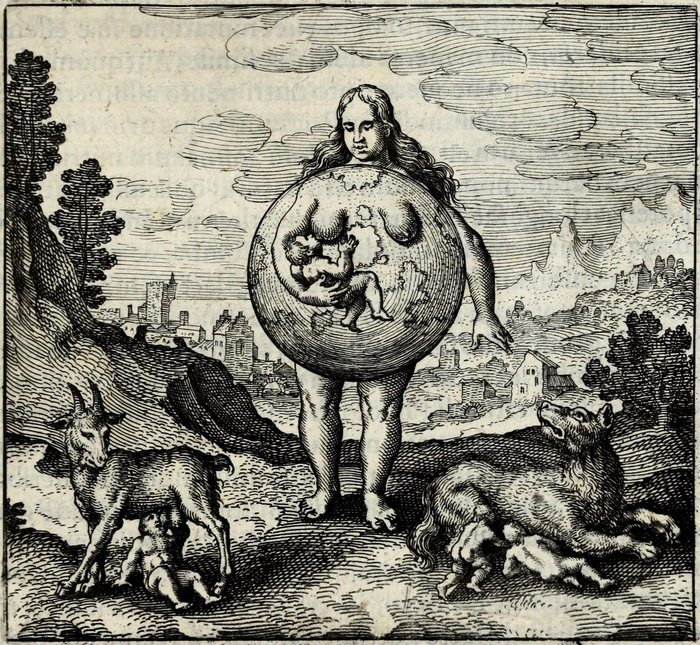 Nutrix ejus terra est
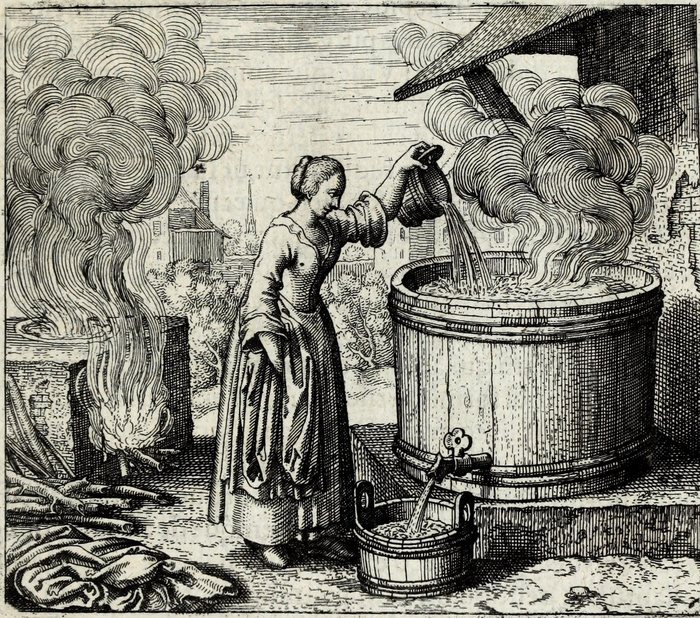 Vade ad mulierem lavantem pannos, tu fac similiter
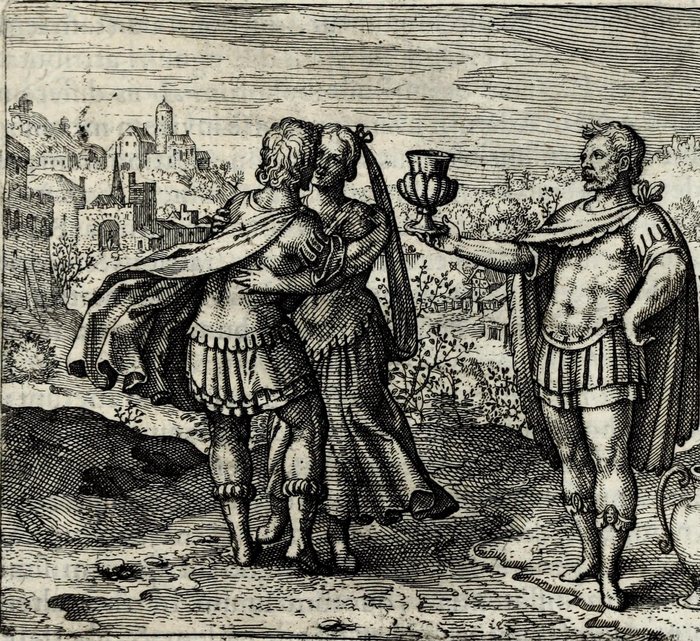 Conjunge fratrem cum sorore & propina illis poculum amoris
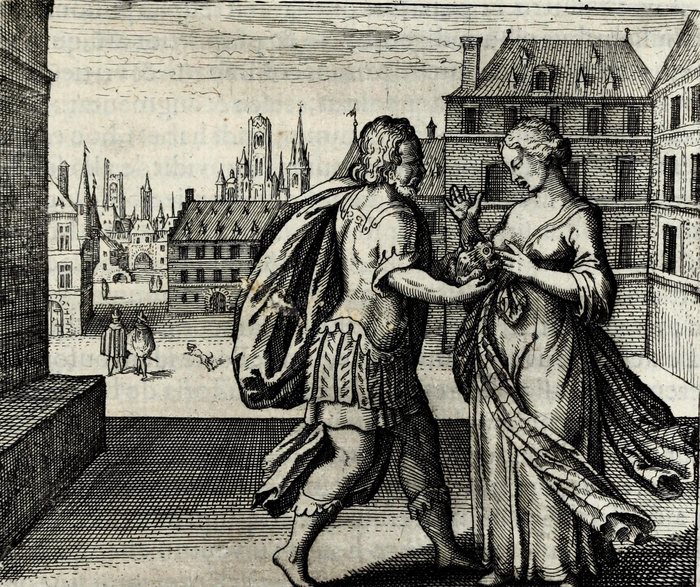 Appone mulieri super mammas bufonem, ut ablactet eum, & moriatur mulier, sitque bufo grossus de lacte
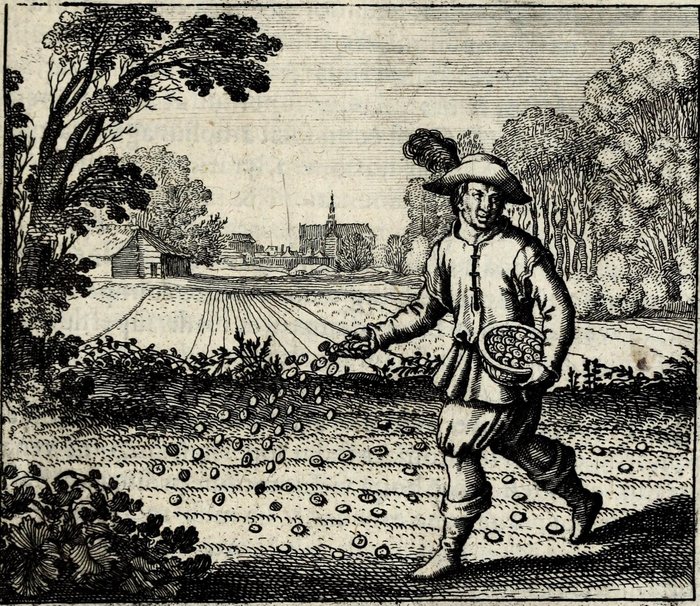 Seminate aurum vestrum in terram albam foliatam
Record
One symbol a week, decoded.
This picture is free at full size from its source, linked above. What an address gets is the Sunday letter: one picture, one symbol marked on it, what it meant and who said so, and the master files of the decoded plates as they are verified. Leave any time.
Free, one letter a week, unsubscribe in one click. How the address is used.
Scroll or pinch to zoom · drag to move · double-tap for 1:1 · 1400 by 1204 pixel web copy; the source file is linked under Record