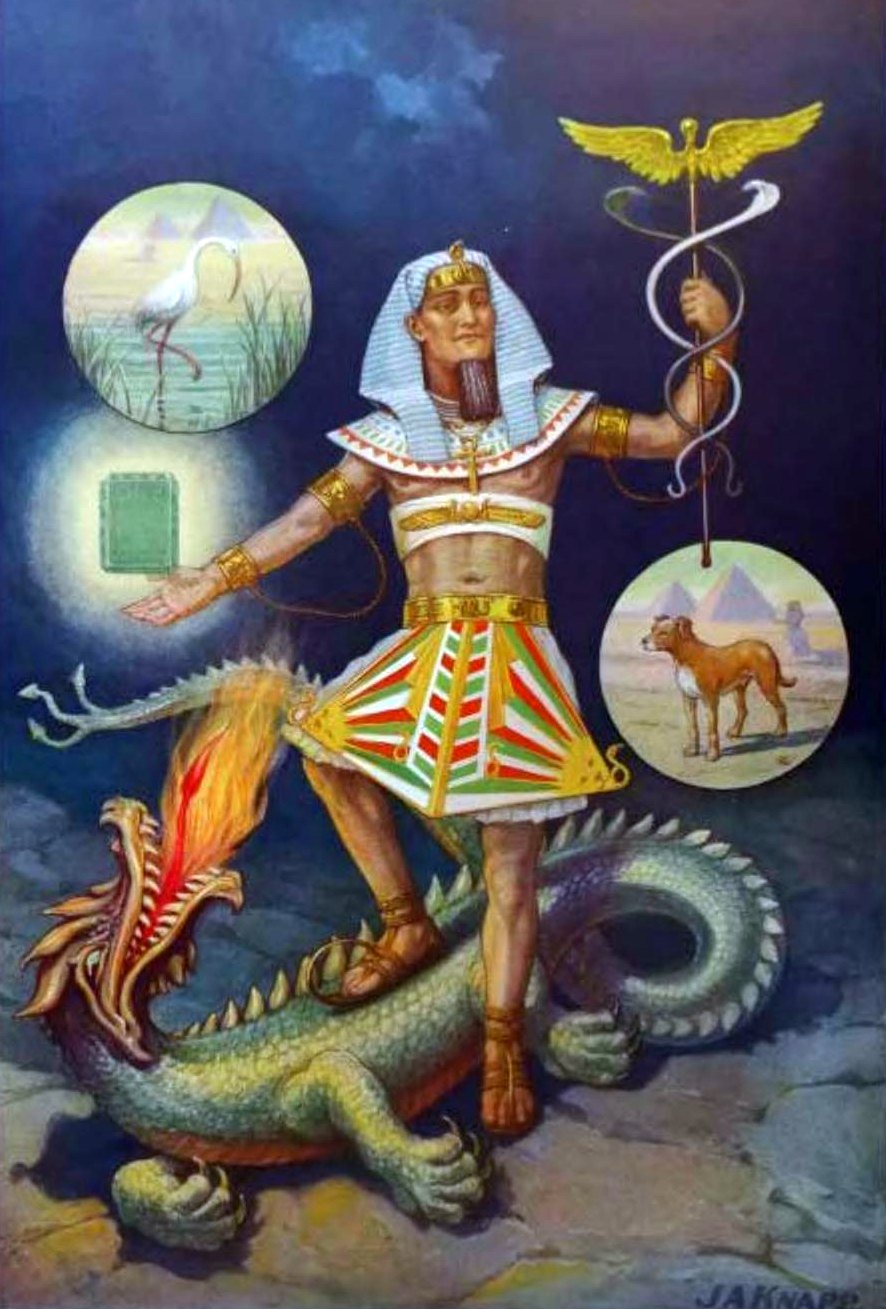
Hermes Standing upon the Back of Typhon
Hermes Trismegistus as the central motif, filed under the Serpent and the Dragon, with the Demon and the Monster, Fire, the Bird, the Hand, and the Divine in a secondary part. From The Secret Teachings.
What is happening
Hall, 1928 “The candidate, in his plain white robe, gazed into the utter blackness framed by the two great Lotus-headed columns between which the veil had hung.”
Hall, 1928 “"All hail Thee, Thoth Hermes, Thrice Greatest; all hail Thee, Prince of Men; all hail Thee who standeth upon the head of Typhon!"”
Key · 6 motifs
Tap a motif on the picture, or a line below. Its note opens under the line, with the reading its author gave it.
- Primary motif
- Secondary motifs · 5
The picture
Hermes in the dress of a pharaoh, a winged caduceus raised in his right hand and a green tablet glowing over his left, standing on a green dragon that breathes fire, an ibis among reeds in a medallion at the upper left and a dog before pyramids in a medallion at the right; Hermes Trismegistus as the central motif. By eye
The reading
The picture read whole, in the archive's words, from the sources quoted on the marks. Read on, and the picture follows: the motif under discussion keeps its colour.
Knapp painted an initiation. Hall's chapter on Hermes opens as a scene rather than an argument: thunder, a torn veil, a candidate in white between ‘two great Lotus-headed columns’, and then, ‘through the gleaming mist a figure appeared, surrounded by a flickering greenish sheen’. The plate is that figure, ‘considerably larger than that of a mortal man’, with the two things Hall says the candidate saw inside him drawn outside him: the heart that ‘changed into an ibis’ in a medallion at his left, and the brain that became ‘a flashing emerald’, held out in his hand.
‘In Its hand this mysterious Being bore a winged rod, entwined with serpents.’ That is the caduceus, and it is what he fights with. Hall's initiator names him in three cries: ‘All hail Thee, Thoth Hermes, Thrice Greatest; all hail Thee, Prince of Men; all hail Thee who standeth upon the head of Typhon!’ The picture obeys the third cry literally.
Typhon arrives as ‘a lurid writhing dragon’, ‘a hideous monster, part serpent, part crocodile, and part hog’, breathing ‘sheets of flame’. Hermes strikes it with the staff, it falls, and ‘Hermes placed His foot upon the skull of the vanquished Typhon’. Elsewhere Hall says what the beast means: Typhon is ‘the Egyptian Demon or Spirit of the Adversary’, and ‘according to Plutarch the word Typhon means insolence and pride’, which he calls the deadly enemies of understanding and truth. So the god of the mind stands on pride.
The green tablet is the one object in the picture with a text behind it. Hall's chapter on Hermetic medicine calls it ‘the Smaragdine, or Emerald Tablet found in the valley of Ebron and generally accredited to Hermes’, and says it ‘is in reality a chemical formula of a high and secret order’; in his alchemy chapters he prints a translation of its dozen sentences, the ones that say, in most versions, that what is below is like what is above. Knapp gives it to the god to hold, glowing, over an open palm: the gift he has come to offer.
The dog in the second medallion, before the pyramids, Hall does not explain on this page. In his chapter on the tarot he pairs ‘Anubis and Typhon’ as ‘the principles of good and evil’ clinging to the Wheel of Fortune, and Anubis is the dog of Egypt's gods; the archive notes the likeness and leaves the medallion unmarked, since Hall's text about this plate does not name it. The caption printed under the plate calls the picture Hermes standing upon the back of Typhon; the rest of the caption is too small in the archive's copy to be read, and is not quoted.
Readings quoted
Hall, 1928 “To its rim cling Anubis and Typhon - the principles of good and evil.”
Decoded: every motif is marked, and each mark carries the reading its author gave it, quoted from the text, or says that it is observed on the picture and not read. The reading above is the archive's own, made from those sources and no others.
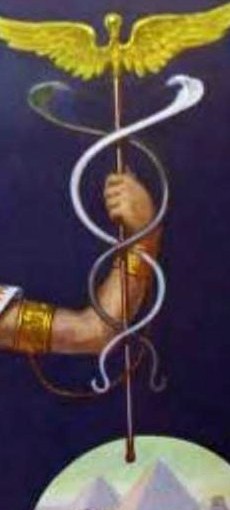
A single creature doing two opposite jobs. Note whether it is bound, killed, or eating itself.
In plain words A staff with two serpents twined up it and wings at the top: the caduceus, the wand Hermes carries in Greek art and Mercury in Roman. Hall's chapter stages the plate as an initiation: a candidate in an Egyptian temple sees the god appear through a green mist, carrying exactly this rod, and sees him strike the dragon down with it.
Hall, 1928 “In Its hand this mysterious Being bore a winged rod, entwined with serpents.”
Hall, 1928 “Suddenly Hermes struck the advancing reptile with the serpent-wound staff and with snarling cry the dragon fell over upon its side, while the flames about it slowly died away.”
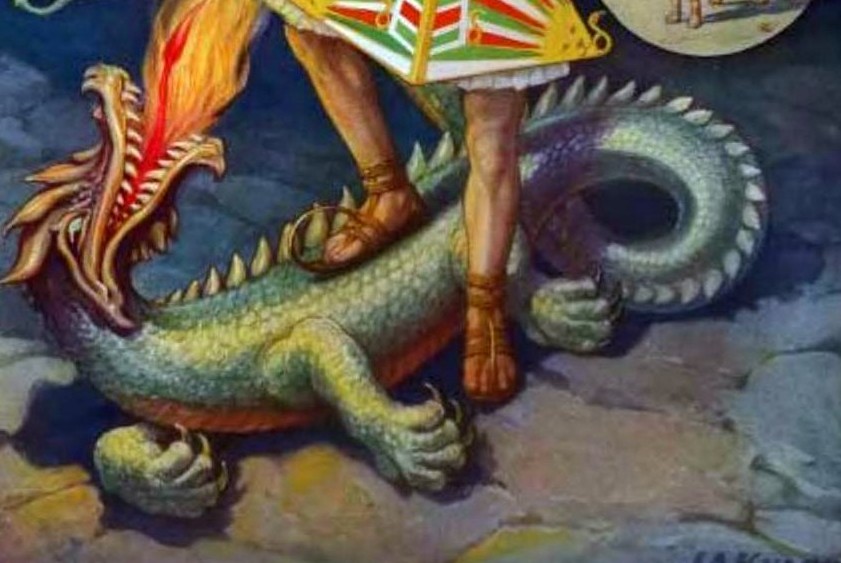
Almost always a composite and almost always subordinate. Note what it is made of and whether it is bound.
In plain words The dragon is Typhon, the Egyptian spirit of disorder, drawn by Knapp as a scaled, crested beast with a crocodile's body. In Hall's telling it attacks, is struck down with the caduceus, and ends under the god's foot. Standing on the beaten monster is the oldest way of drawing a victory, and Hall says what is beaten: insolence and pride, the enemies of understanding.
Hall, 1928 “At the same instant a lurid writhing dragon appeared - a hideous monster, part serpent, part crocodile, and part hog. From its mouth and nostrils poured sheets of flame and horrible sounds echoed through the vaulted chambers.”
Hall, 1928 “Hermes placed His foot upon the skull of the vanquished Typhon.”
Hall, 1928 “Typhon, the Egyptian Demon or Spirit of the Adversary, was born upon the third day. Typhon is often symbolized by a crocodile; sometimes his body is a combination of crocodile and hog. Isis stands for knowledge and wisdom, and according to Plutarch the word Typhon means insolence and pride.”
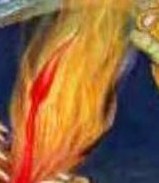
A count, a catastrophe, or the visible part of something that has no body. Note whether the flames are arranged in a number, breaking something, or standing where a figure would be.
In plain words Fire pours from the dragon's open jaws toward the god's feet and does not reach them. In Hall's scene the flames die down as the monster falls; Knapp paints the moment just before.
Hall, 1928 “From its mouth and nostrils poured sheets of flame and horrible sounds echoed through the vaulted chambers.”
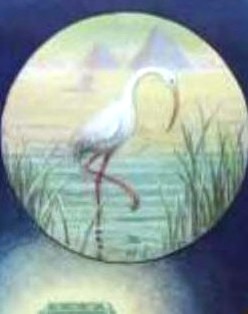
What rises and what comes back down. Note whether the bird is flying, caught, or paired with a second one.
In plain words A white ibis wading among reeds, pyramids behind it. The ibis was the bird of Thoth, the Egyptian god the Greeks matched with Hermes, and in Hall's vision the god's heart turns into one. Hall adds the reason the Egyptians gave for the pairing: an ibis with its head under its wing is shaped like a heart.
Hall, 1928 “As the candidate watched, the heart changed into an ibis, and the brain into a flashing emerald.”
Hall, 1928 “The ibis was sacred to Thoth, and when its head and neck were tucked under its wing its body closely resembled a human heart.”
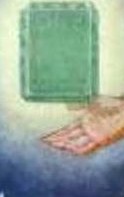
The short text the whole tradition quotes, and the one sentence of it everybody knows. This collection holds it four ways: printed entire, carved into a rock, split across two obelisks, and held out in a hand.
In plain words The green slab floating over his open hand is the Emerald Tablet, the short text on which alchemy hung its whole method, credited to Hermes for centuries. In Hall's vision it is the god's brain, turned to emerald. Hall calls it a chemical formula and prints a translation of it in his alchemy chapter.
Hall, 1928 “As the candidate watched, the heart changed into an ibis, and the brain into a flashing emerald.”
Hall, 1928 “The Smaragdine, or Emerald Tablet found in the valley of Ebron and generally accredited to Hermes, is in reality a chemical formula of a high and secret order.”
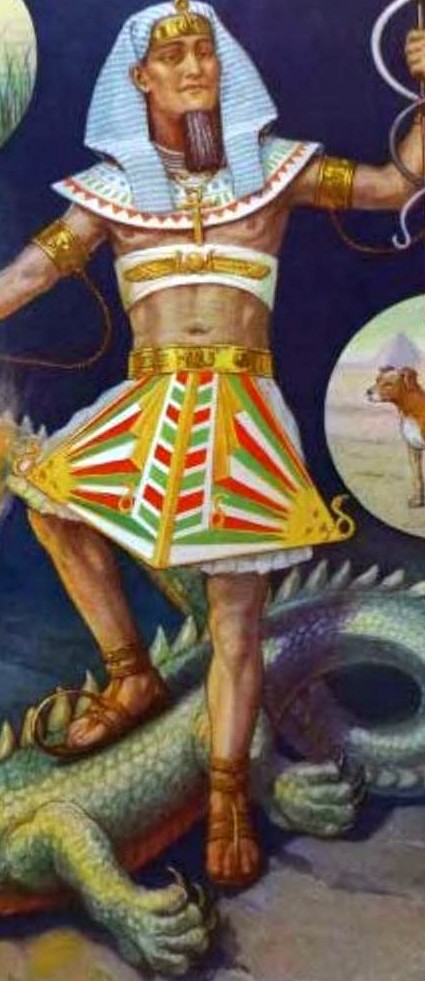
God shown, or pointed at. Look for what stands where a face would be: a name in a cloud, a circle above the top of a diagram, a ring of verses, a sign over a head.
In plain words A young man in the striped headcloth, collar and kilt of a pharaoh, calm, looking up. Hall gives him a string of titles, scribe of the gods, keeper of the books of life, thrice greatest, and one definition: the universal mind embodied. He is filed under the Divine because that is what Hall says he is, a god appearing to a candidate, not the portrait of a man.
Hall, 1928 “Suddenly, through the gleaming mist a figure appeared, surrounded by a flickering greenish sheen.”
Hall, 1928 “The Form before him was considerably larger than that of a mortal man. The body seemed partly transparent so that the heart and brain could be seen pulsating and radiant.”
Hall, 1928 “Master of all arts and sciences, perfect in all crafts. Ruler of the Three Worlds, Scribe of the Gods, and Keeper of the Books of Life, Thoth Hermes Trismegistus - the Three Times Greatest, the "First Intelligencer" - was regarded by the ancient Egyptians as the embodiment of the Universal Mind.”
Also carrying the Serpent and the Dragon
30 works carry it. The 6 where it is the central motif are here. The symbol.
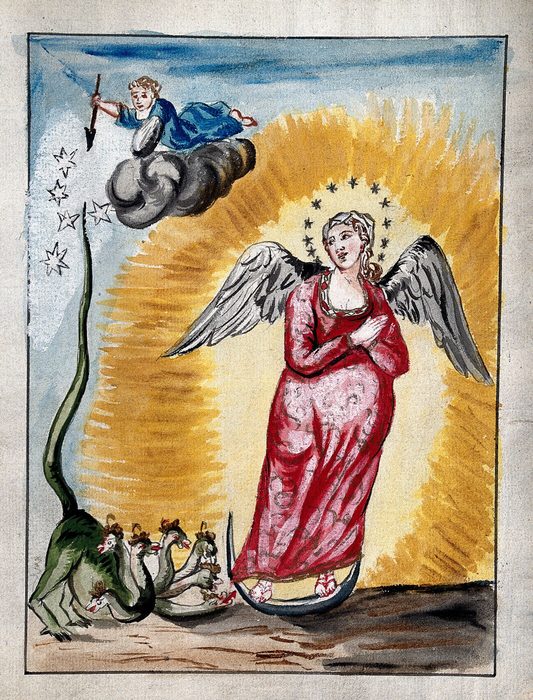 The Virgin with a Dragon at Her Feet
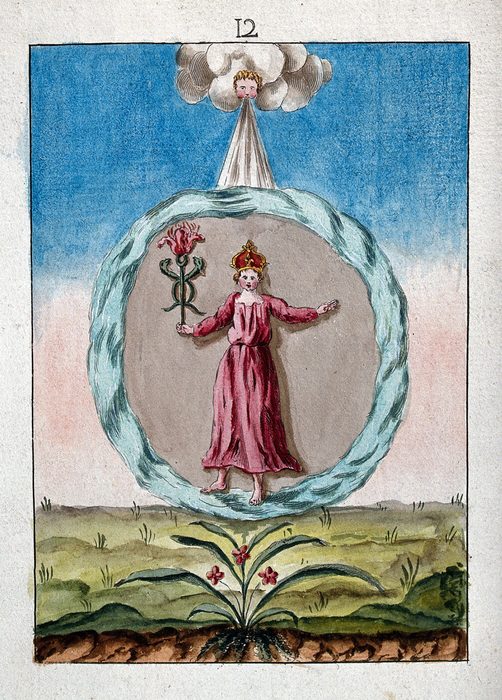 A Crowned Woman with a Rose-Topped Caduceus, in a Circle of Water
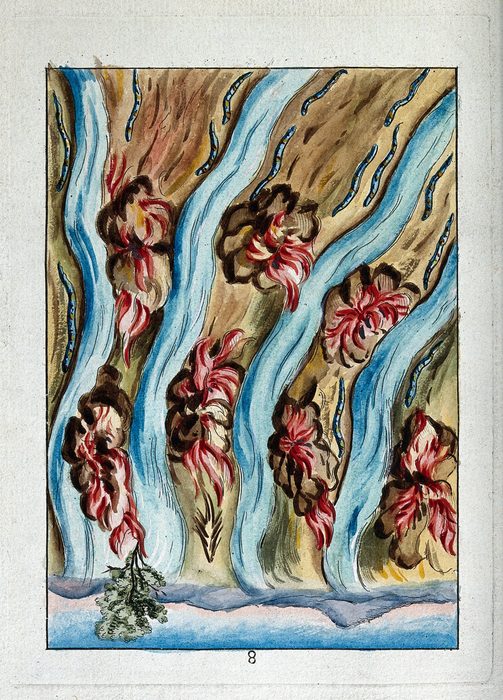 Rivers in the Wilderness, with Serpents and Fire
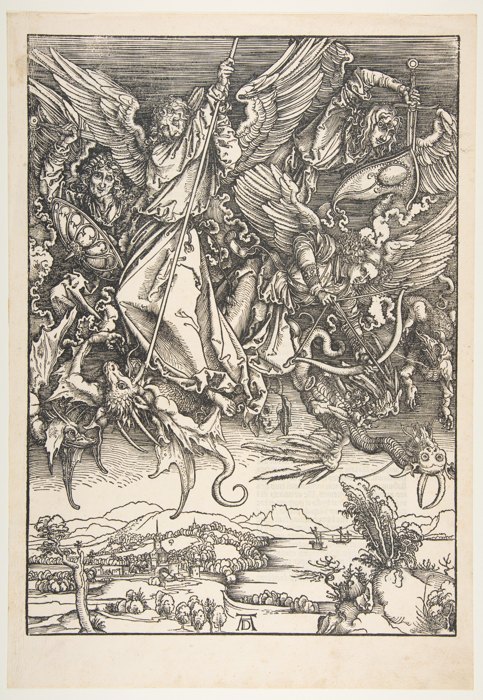 Saint Michael Fighting the Dragon
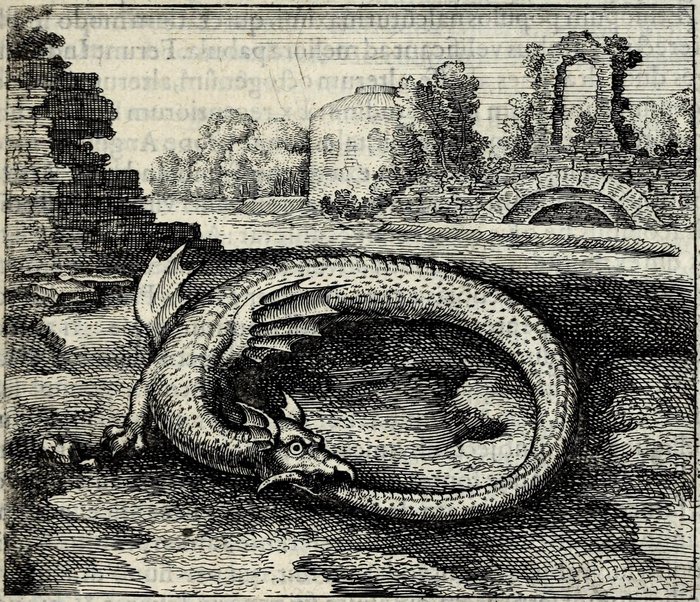 Hic est Draco caudam suam devorans
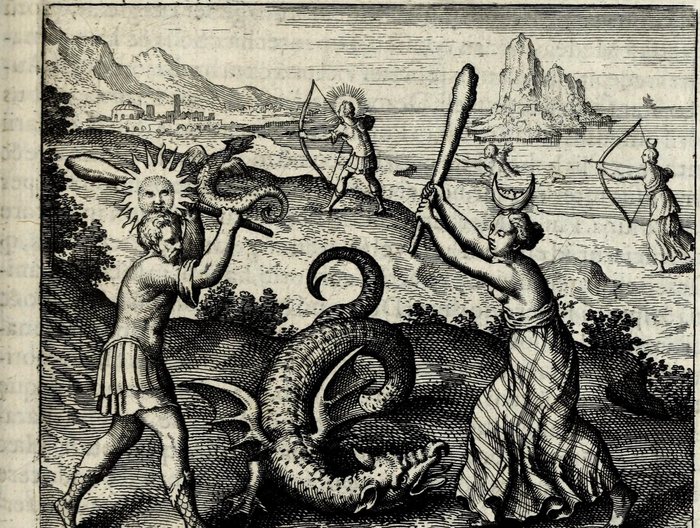 DRACO non moritur, nisi cum fratre & sorore sua interficiatur, qui sunt Sol & Luna
Where the detail is the subject
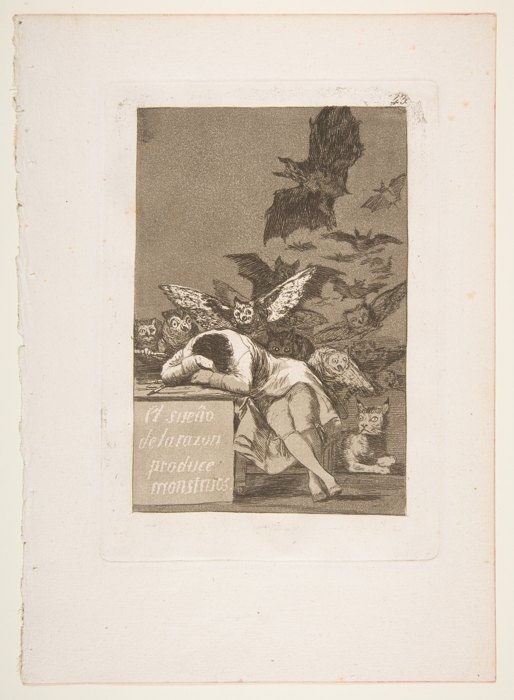
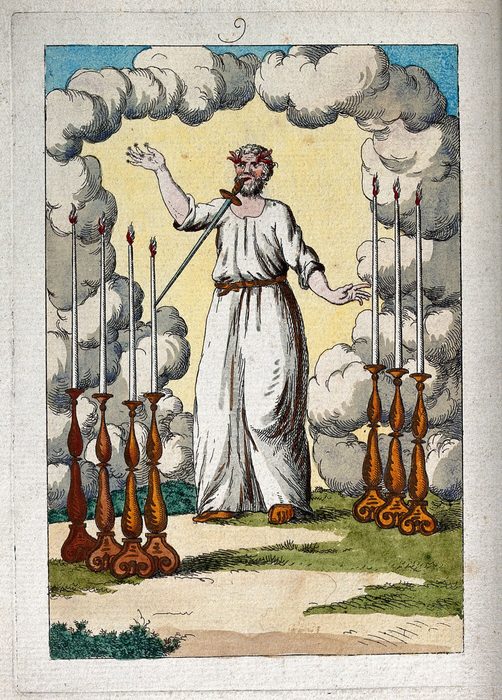
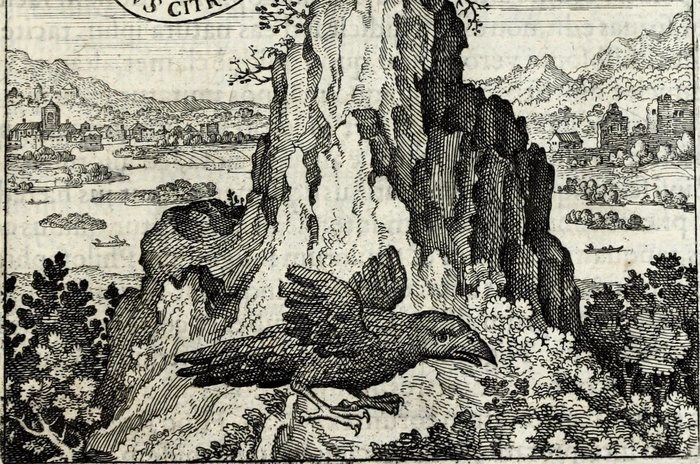
the Demon and the Monster · Fire · the Bird · the Hand · the Divine
Each of these is in the picture without being what it is about. Below, one work that is about each.
By the same hand
In the same series
Record
One symbol a week, decoded.
This picture is free at full size from its source, linked above. What an address gets is the Sunday letter: one picture, one symbol marked on it, what it meant and who said so, and the master files of the decoded plates as they are verified. Leave any time.
Free, one letter a week, unsubscribe in one click. How the address is used.
Scroll or pinch to zoom · drag to move · double-tap for 1:1 · 886 by 1309 pixel web copy; the source file is linked under Record