The tree of the sun and the tree of the moon
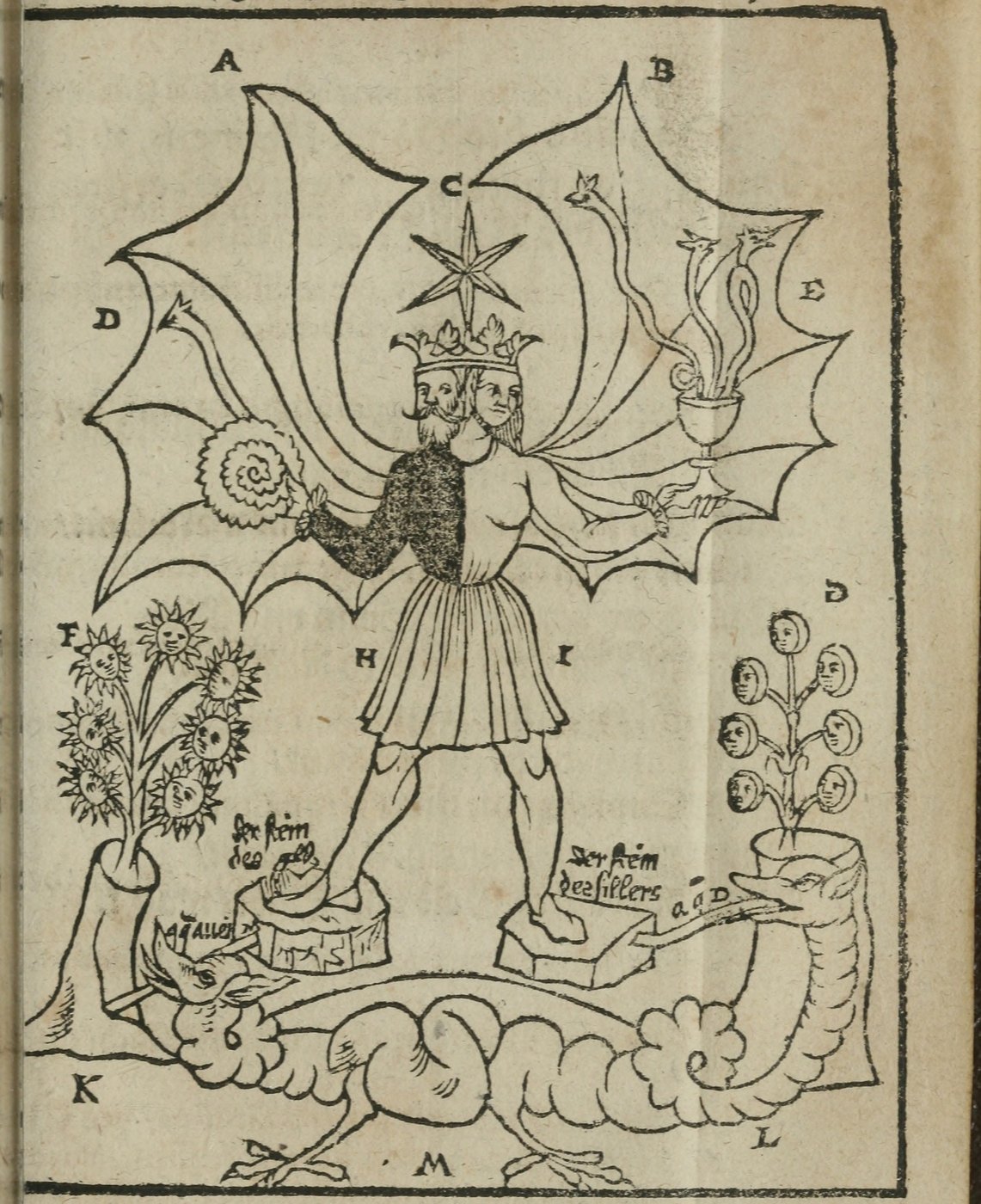
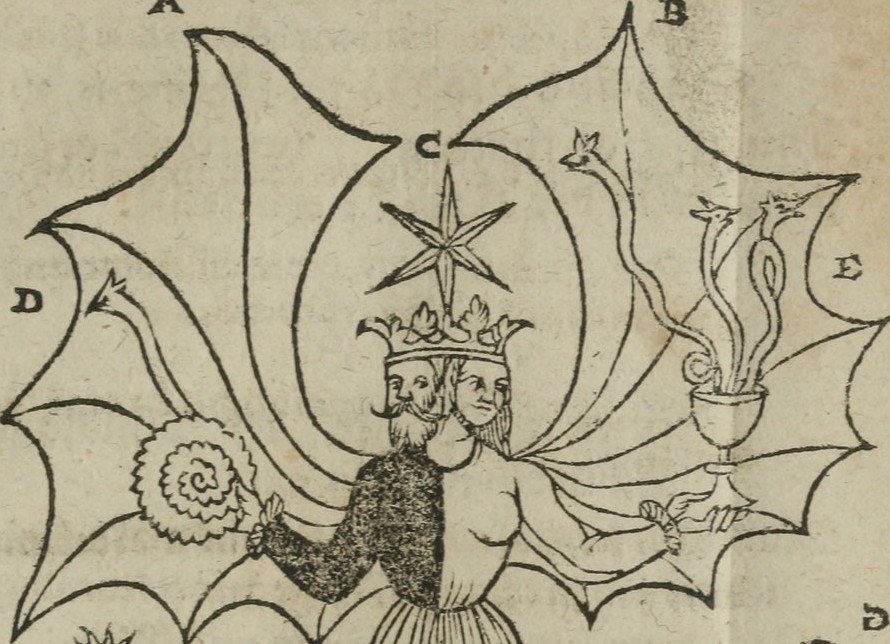
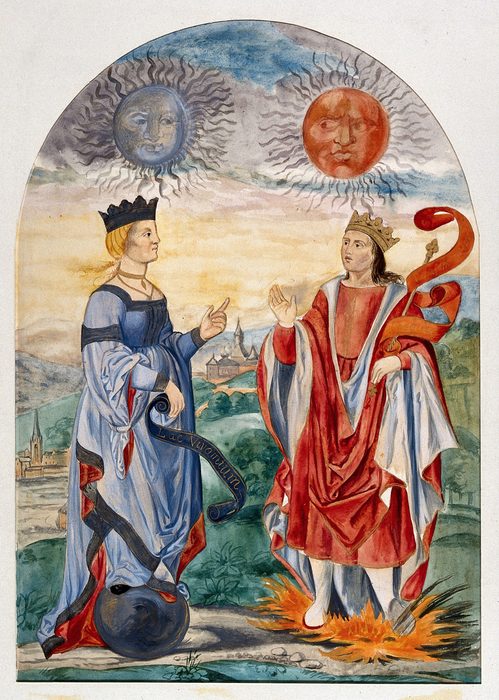
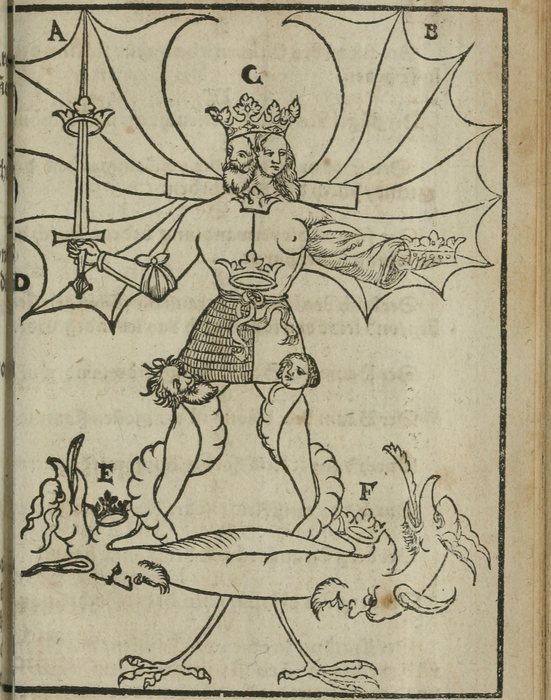
The King and the Queen as the central motif, with the Crown, the Angel and the Wing, the Heavens, the Vessel, the Tree, the Sun and the Moon, and the Serpent and the Dragon in a secondary part. From Pandora, 1582.
What is happening
The book, which names no author, 1582 “A. Der flügel des Grünen leben / thut sich inn dem lufft heben. B. Der flügel des Mones erleucht die nacht schöne. C. Der Sterne bedeut die vollkommenheit des Steins / durch die Kron erheben. D. Der schneck die verwandlnng bedeut / durch die verlosung seiner haupt. E. Der kelch des läbens / darauß die schlangen streben / vnd leiden den todt / durch das lebendig Gold. F. Der Baum der Sonne / bringt fröwt vnd wunne. G. Der Baum des Mons ist der Sonnen stammen. H. Durch das rot kleid / sol die Kunst werden bereit. I. Durch das weiß kleid / ist die Kunst gantz bereit. K. Der berg darauß wächßt der Sonne baum. L. Der berg des Mons / erleucht die Nacht schon. M. Der Track verzert die zwen Brunnen / des Mons vnd der Sonnen / wann es ist sein rechte speiß / durch rot vnnd weiß / wirt die Kunst zu ende bracht / als die Philosophi haben gedacht.”
Symbolica The key entire, put into English here. A, the wing of the green life lifts itself in the air. B, the wing of the moon lights the night. C, the star signifies the perfection of the Stone, raised by the crown. D, the snail signifies the transformation, through the losing of its head. E, the cup of life, out of which the serpents strive and suffer death, by the living Gold. F, the tree of the sun brings joy and delight. G, the tree of the moon is the sun’s stem. H, by the red garment shall the Art be made ready. I, by the white garment the Art stands wholly ready. K, the mountain out of which the sun’s tree grows. L, the mountain of the moon lights the night. M, the dragon consumes the two wells, of the moon and of the sun, for that is its proper food; by red and white the Art is brought to its end, as the Philosophers have thought. The printing has verwandlnng for verwandlung at D, and the archive leaves the compositor’s slip where he set it.
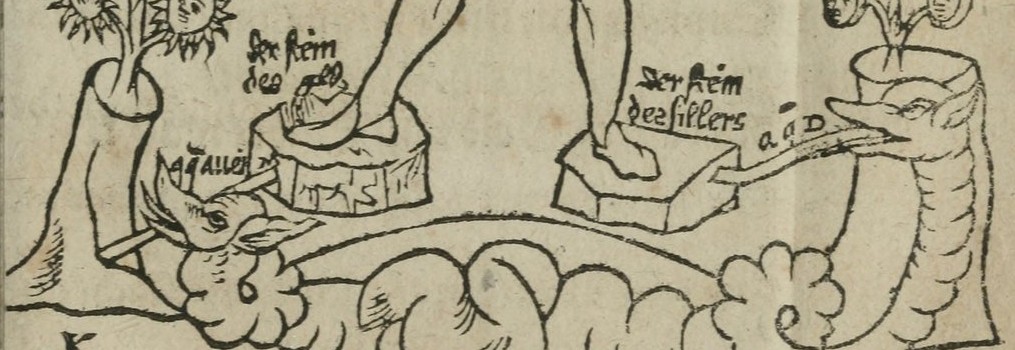
The block itself, 1582 “Der Stein des gold”
The block itself, 1582 “Der Stein des Sillbers”
Symbolica The stone of gold and the stone of silver. Two pieces of writing cut into the block itself, naming what the figure stands on, and the key on the facing page never mentions either.
Key · 8 motifs
Tap a motif on the picture, or a line below. Its note opens under the line, with the reading its author gave it.
- Primary motif
- Secondary motifs · 7
The picture
Four wings, a six-pointed star over a single crown on two heads, a snail in one hand and a cup with serpents in the other, a body half hatched dark and half left bare, a tree of sun faces and a tree of moon faces on two mountains, two lettered stones underfoot, and a two-headed dragon below. By eye
The reading
The picture read whole, in the archive's words, from the sources quoted on the marks. Read on, and the picture follows: the motif under discussion keeps its colour.
A reader who opens Pandora at page 224 meets thirteen sentences and no picture. Turn the leaf and the picture arrives with thirteen letters standing on it, A to M, each waiting for the line left behind on the page before. Thirteen letters and thirteen lines, set by the same shop that cut the block.
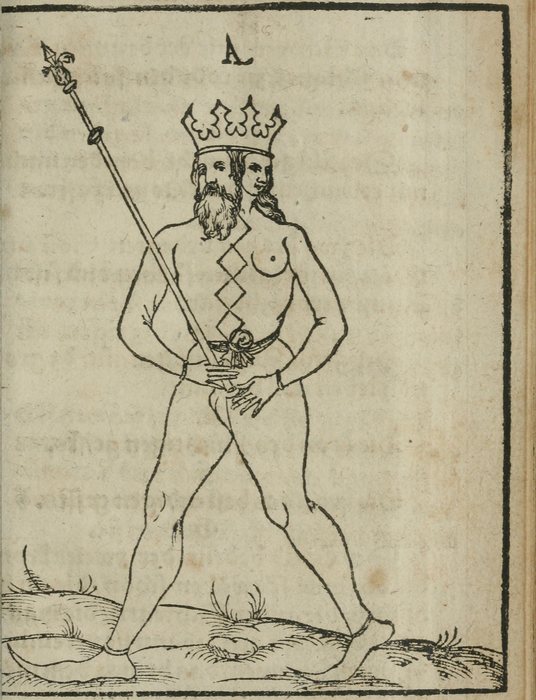
One body again, two heads, one crown, and this time the cutter split the body down the middle: the man’s half hatched solid black from shoulder to wrist, the woman’s left bare. The key calls the two halves clothes. “Durch das rot kleid / sol die Kunst werden bereit.” By the red garment shall the Art be made ready. “Durch das weiß kleid / ist die Kunst gantz bereit.” By the white garment the Art stands wholly ready. Red first and white after, worn at the same moment by one person who has both arms.
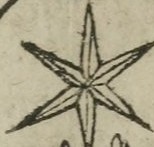
Above the crown hangs a star of six points. “Der Sterne bedeut die vollkommenheit des Steins / durch die Kron erheben.” The star signifies the perfection of the Stone, raised by the crown. The line ties the two together and gives the crown its only mention in the whole key.
“Der flügel des Grünen leben / thut sich inn dem lufft heben.” The wing of the green life lifts itself in the air. “Der flügel des Mones erleucht die nacht schöne” The wing of the moon lights the night. Two wings named, one for growth and one for the dark half of the month, and the lower pair left without a letter.
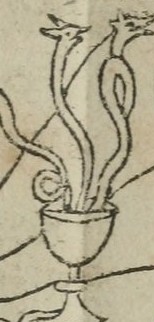
The bare hand carries a footed cup with two serpents climbing out of the bowl. “Der kelch des läbens / darauß die schlangen streben / vnd leiden den todt / durch das lebendig Gold.” The cup of life, out of which the serpents strive, and suffer death, by the living Gold. The key lets them out and kills them inside one sentence. The dark hand opposite holds a snail, and the snail gets a line of its own: “Der schneck die verwandlnng bedeut / durch die verlosung seiner haupt.”, the snail signifies the transformation, through the losing of its head.
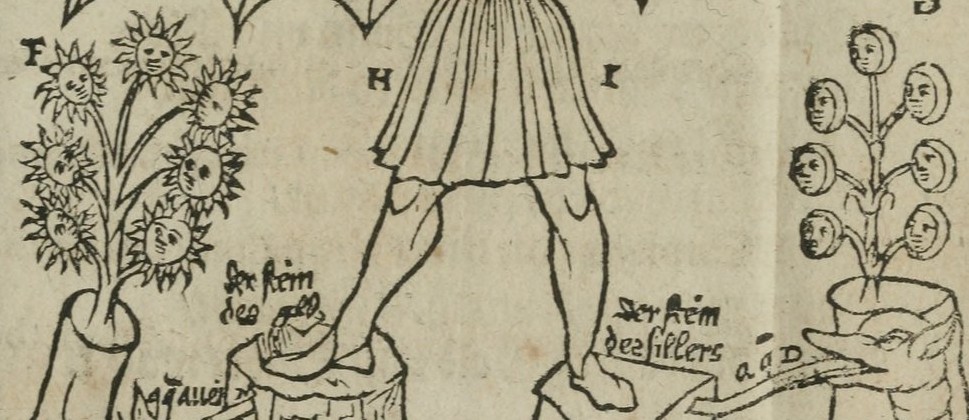
“Der Baum der Sonne / bringt fröwt vnd wunne.” The tree of the sun brings joy and delight. “Der Baum des Mons ist der Sonnen stammen.” The tree of the moon is the sun’s stem. One tree carries rayed faces, the other faces in profile, and the second line puts the moon under the sun rather than beside it.
The pair gets named twice more at ground level. “Der berg darauß wächßt der Sonne baum.” The mountain out of which the sun’s tree grows. “Der berg des Mons / erleucht die Nacht schon.” The mountain of the moon lights the night. Then the cutter wrote two more words into the block by hand, under the feet, where the key never goes: “Der Stein des gold” on the stone under the left foot and “Der Stein des Sillbers” under the right. The stone of gold and the stone of silver.
“Der Track verzert die zwen Brunnen / des Mons vnd der Sonnen / wann es ist sein rechte speiß / durch rot vnnd weiß / wirt die Kunst zu ende bracht / als die Philosophi haben gedacht.” The dragon consumes the two wells, of the moon and of the sun, for that is its proper food; by red and white the Art is brought to its end, as the Philosophers have thought. It runs the full width of the block on two clawed feet with a head at either end, and it closes the key by naming the thing every other letter has been circling.
Decoded: every motif is marked, and each mark carries the reading its author gave it, quoted from the text, or says that it is observed on the picture and not read. The reading above is the archive's own, made from those sources and no others.
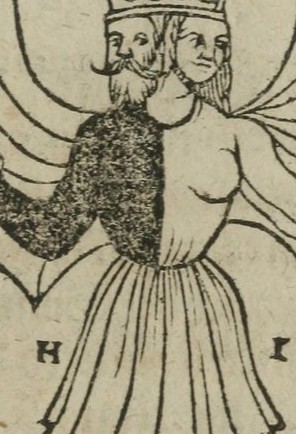
The conjunction completed. One body, two heads, and the end of the argument between sun and moon.
In plain words Two heads share a neck and the body below splits down the middle, the man’s half hatched black from shoulder to wrist, the woman’s left bare. The key calls the two halves clothes and tells a reader what each of them does.
The book, which names no author, 1582 “Durch das rot kleid / sol die Kunst werden bereit.”
The book, which names no author, 1582 “Durch das weiß kleid / ist die Kunst gantz bereit.”
Symbolica By the red garment the Art shall be made ready; by the white garment it stands wholly ready. Red first and white after, printed on one body wearing both at once.
A diagram of everything, drawn so that a person can be found inside it. Note where the human figure stands in the scheme.
In plain words A star of six points hangs directly above the crown, between the two raised wings.
The book, which names no author, 1582 “Der Sterne bedeut die vollkommenheit des Steins / durch die Kron erheben.”
Symbolica The star signifies the perfection of the Stone, raised by the crown. The key ties the star to the crown under it in one clause.
Completion, and in the Kabbalistic reading the first sephirah, the point at which the work is no longer yours.
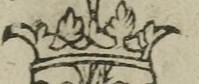
In plain words One crown again, over a bearded head and a woman’s head together. The key names it only in passing, as the thing that raises the star.
The book, which names no author, 1582 “Der Sterne bedeut die vollkommenheit des Steins / durch die Kron erheben.”
Symbolica The crown enters the key inside the star’s line and gets none of its own. Recorded as read there and nowhere else.
The mark of an errand rather than a nature. Note whether the wings are open, folded, or given to the figure by someone else.
In plain words Four wings fill the upper half of the block. The key reads the two upper ones and lets the lower pair alone.
The book, which names no author, 1582 “Der flügel des Grünen leben / thut sich inn dem lufft heben.”
The book, which names no author, 1582 “Der flügel des Mones erleucht die nacht schöne”
Symbolica The wing of the green life lifts itself in the air; the wing of the moon lights the night. A wing for growth and a wing for the dark half of the month.
Never the subject. What is inside it is.
In plain words The bare hand holds a footed cup at shoulder height and two serpents rise out of its bowl and open their mouths.
The book, which names no author, 1582 “Der kelch des läbens / darauß die schlangen streben / vnd leiden den todt / durch das lebendig Gold.”
Symbolica The cup of life, out of which the serpents strive, and suffer death, by the living Gold. The key kills them in the same sentence that lets them out.
A body drawn as growth. Note which way it grows and what is at the root rather than at the top.
In plain words Two plants stand at the outer edges, one bearing flower heads with rayed sun faces, the other bearing flower heads with moon faces in profile.
The book, which names no author, 1582 “Der Baum der Sonne / bringt fröwt vnd wunne.”
The book, which names no author, 1582 “Der Baum des Mons ist der Sonnen stammen.”
Symbolica The tree of the sun brings joy and delight; the tree of the moon is the sun’s stem. The second line subordinates one tree to the other rather than pairing them.
Gold, the perfected metal, and the illuminated intellect. The most overloaded symbol in the tradition.
In plain words Each tree stands in a vessel set on a pale mound. The key gives the mounds a line each and assigns one to the sun and one to the moon.
The book, which names no author, 1582 “Der berg darauß wächßt der Sonne baum.”
The book, which names no author, 1582 “Der berg des Mons / erleucht die Nacht schon.”
Symbolica The mountain out of which the sun’s tree grows; the mountain of the moon, which lights the night. The pair is named on the ground before it is named in the sky.
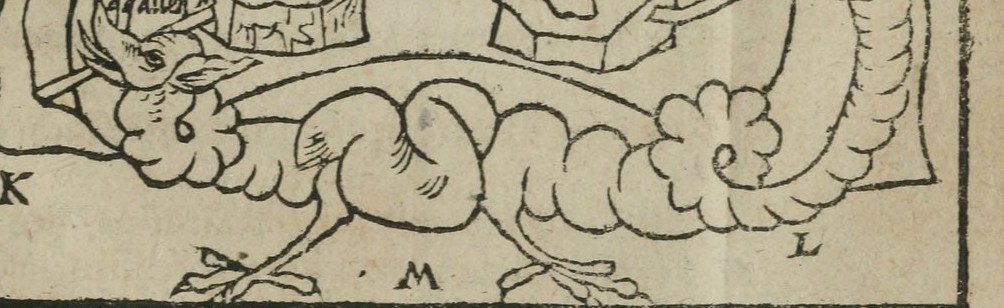
A single creature doing two opposite jobs. Note whether it is bound, killed, or eating itself.
In plain words One long body on two clawed feet crosses the foot of the block, with a head at each end reaching toward the vessel the nearer tree stands in.
The book, which names no author, 1582 “Der Track verzert die zwen Brunnen / des Mons vnd der Sonnen / wann es ist sein rechte speiß / durch rot vnnd weiß / wirt die Kunst zu ende bracht / als die Philosophi haben gedacht.”
Symbolica The dragon consumes the two wells, of the moon and of the sun, for that is its proper food; by red and white the Art is brought to its end, as the Philosophers have thought. The only line of the key that names an ending.
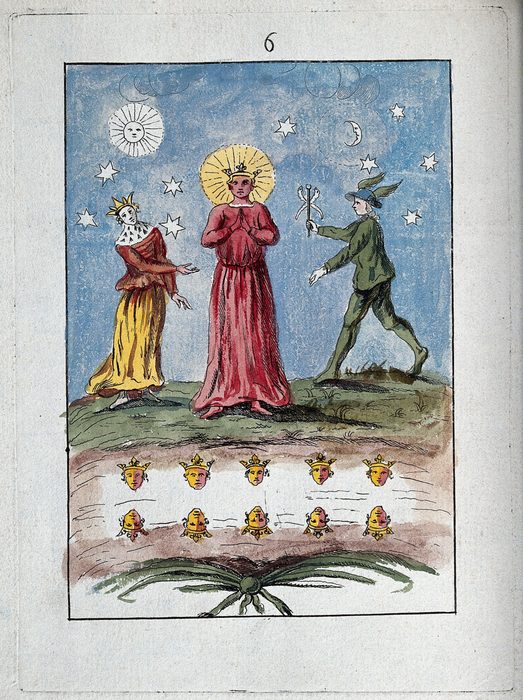
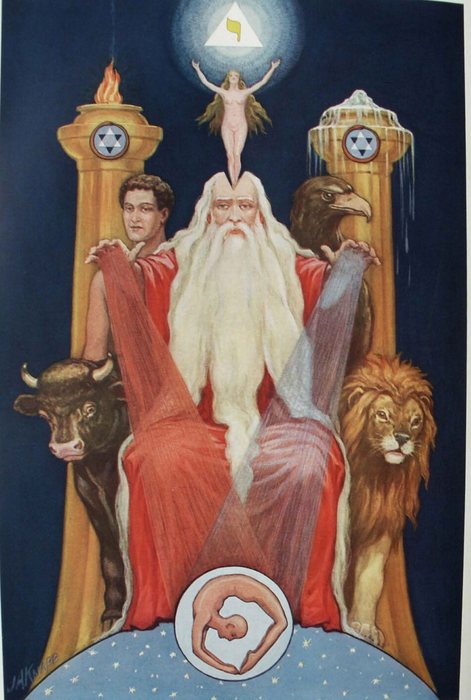
Also carrying the King and the Queen
35 works carry it. The 6 where it is the central motif are here. The symbol.
Where the detail is the subject
the Crown · the Angel and the Wing · the Heavens · the Vessel · the Tree · the Sun and the Moon · the Serpent and the Dragon
Each of these is in the picture without being what it is about. Below, one work that is about each.
In the same series
Record
One symbol a week, decoded.
This picture is free at full size from its source, linked above. What an address gets is the Sunday letter: one picture, one symbol marked on it, what it meant and who said so, and the master files of the decoded plates as they are verified. Leave any time.
Free, one letter a week, unsubscribe in one click. How the address is used.
Scroll or pinch to zoom · drag to move · double-tap for 1:1 · 1141 by 1400 pixel web copy; the source file is linked under Record