The king and the queen in one body
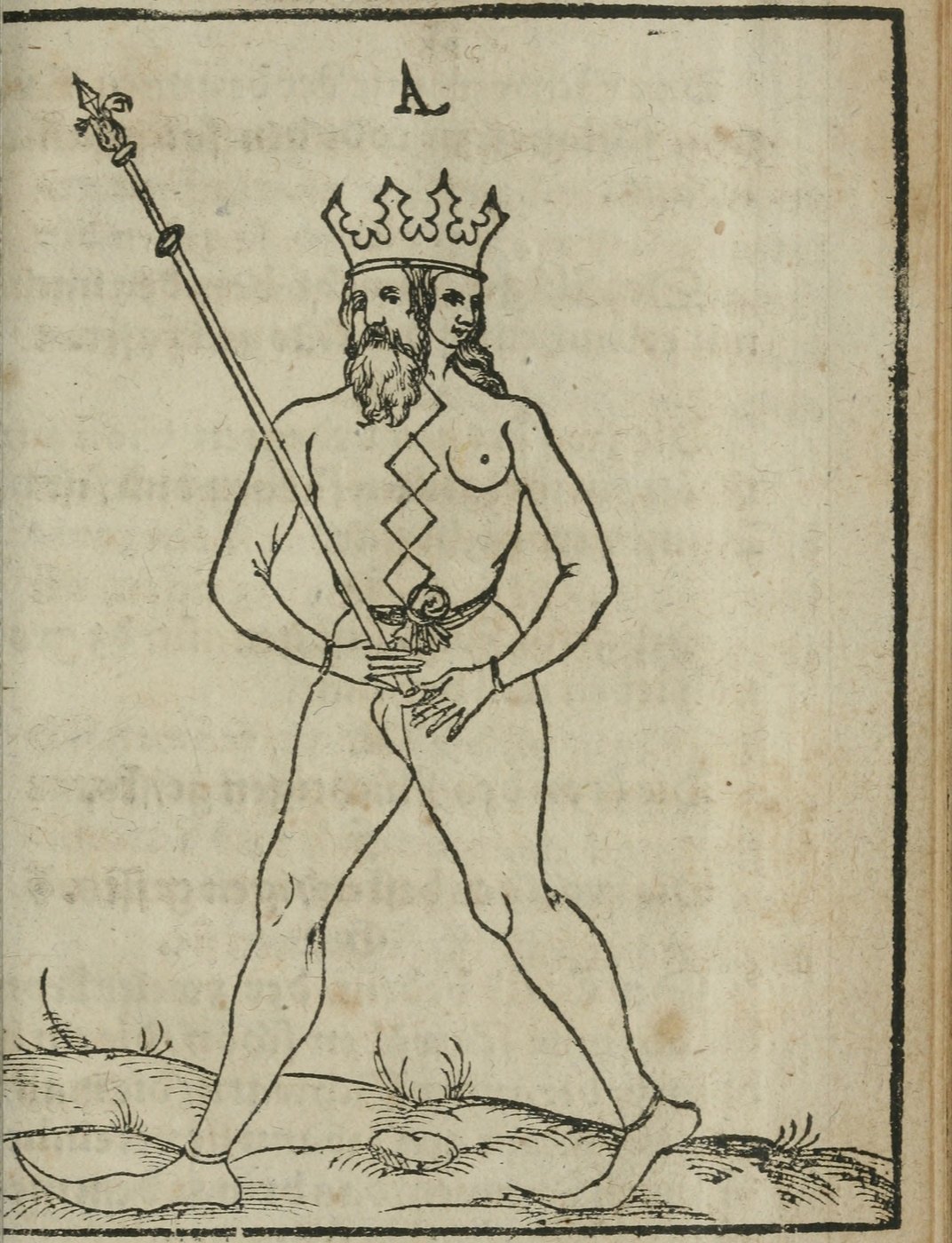
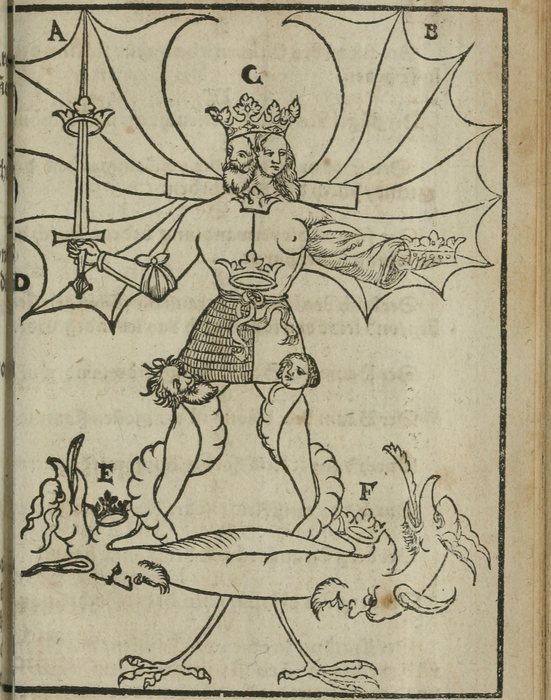
The King and the Queen as the central motif, with the Crown in a secondary part. From Pandora, 1582.
What is happening
The book, which names no author, 1582 “Der könig vnd die königin sind großmechtig / sie mögen kein vberlast nit geliden / gibe inn nach / dann sie geben dir ihr augen vmb ir haupt / vnsers königs haupt ist rot / sein füß sind weiß / seine augen die sind schwartz.”
Symbolica The key to this plate, put into English here: the king and the queen are great in power, they will suffer no burden laid on them; give way to them, for they give you their eyes about their head; our king’s head is red, his feet are white, his eyes are black. Two paragraphs further down the same page the book says why the two can stand in one skin, and that sentence is quoted on the mark below.
Key · 2 motifs
Tap a motif on the picture, or a line below. Its note opens under the line, with the reading its author gave it.
- Primary motif
- Secondary motifs · 1
The picture
One naked body on rock, two heads under a single crown, a bearded man and a long-haired woman, a breast on one side and a chain of lozenges down the middle, a sceptre through both hands. By eye
The reading
The picture read whole, in the archive's words, from the sources quoted on the marks. Read on, and the picture follows: the motif under discussion keeps its colour.
Basel, 1582. A printer set this block on a right-hand page and put its reading on the page facing it, so a reader holding the book open keeps the picture under one thumb and the words under the other. The words run under a single letter A. They talk about two people.
The block draws one. A bearded head and a long-haired head grow out of one neck, and the chest below them belongs to both, a flat plate on his side and a breast on hers, with a chain of lozenges down the join. The page opposite declines to notice any of it. “Der könig vnd die königin sind großmechtig / sie mögen kein vberlast nit geliden / gibe inn nach / dann sie geben dir ihr augen vmb ir haupt / vnsers königs haupt ist rot / sein füß sind weiß / seine augen die sind schwartz.” The king and the queen are great in power, it opens, they will suffer no burden laid on them. Two paragraphs later it gives the reason the pair can stand in one skin: “Die könig vnd die königin fröwen sich vnd gehnt inn ihren könig stül / dann sie sind von einer wurtzel”, for they are of one root.
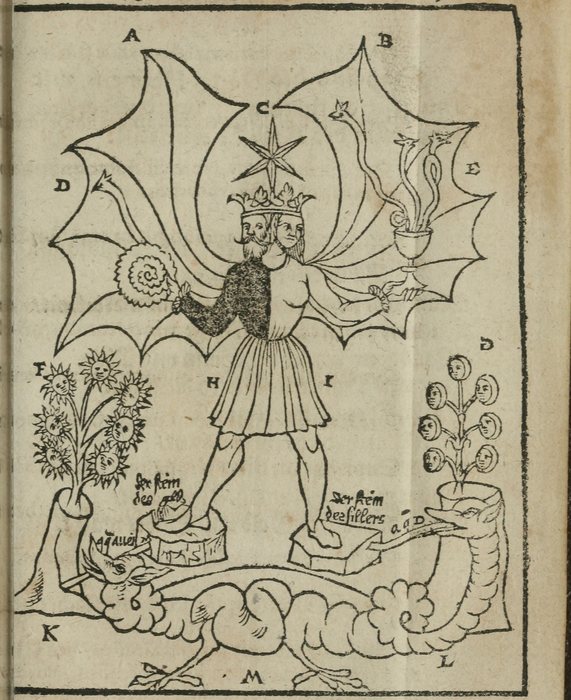
One crown covers both heads and does the work the text will not do. A cutter who wanted two crowned people had a second crown to hand; two pages on he draws three of them in a single picture. Here he gave the pair one band, five points, sitting level.
Michael Maier printed the two-headed body twice in the Atalanta fugiens of 1618, and the archive has carried both since it opened with nobody but Maier to gloss them. This block runs thirty-six years earlier out of another press in another country, and brings its own printed gloss with it. Two witnesses now, and they disagree about what to call the thing: Maier draws a Rebis, Basel prints a married couple.
Decoded: every motif is marked, and each mark carries the reading its author gave it, quoted from the text, or says that it is observed on the picture and not read. The reading above is the archive's own, made from those sources and no others.
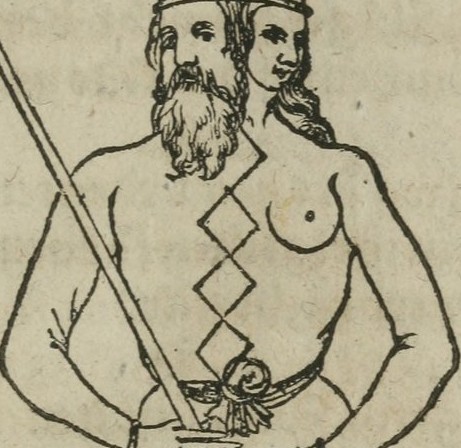
The conjunction completed. One body, two heads, and the end of the argument between sun and moon.
In plain words A bearded head and a long-haired head grow from one neck. The chest below carries a breast on the woman’s side and a flat plate on the man’s, with a chain of lozenges running down the join. The facing page never calls this one person.
The book, which names no author, 1582 “Die könig vnd die königin fröwen sich vnd gehnt inn ihren könig stül / dann sie sind von einer wurtzel”
Symbolica The book keeps the pair plural for three paragraphs and then gives the reason they can stand in one skin: they are of one root.
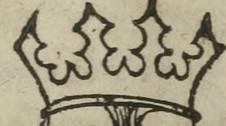
Completion, and in the Kabbalistic reading the first sephirah, the point at which the work is no longer yours.
In plain words One band with five points covers a man’s brow and a woman’s together. A cutter who wanted two people crowned had a second crown available and did not use it.
Symbolica The crown is on the block and the key does not mention it. Recorded as observed, and what it settles about the two heads left to the picture.
Also carrying the King and the Queen
35 works carry it. The 6 where it is the central motif are here. The symbol.
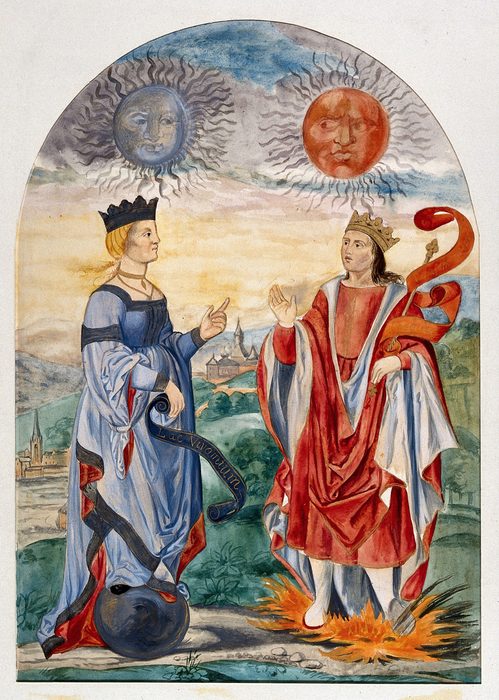
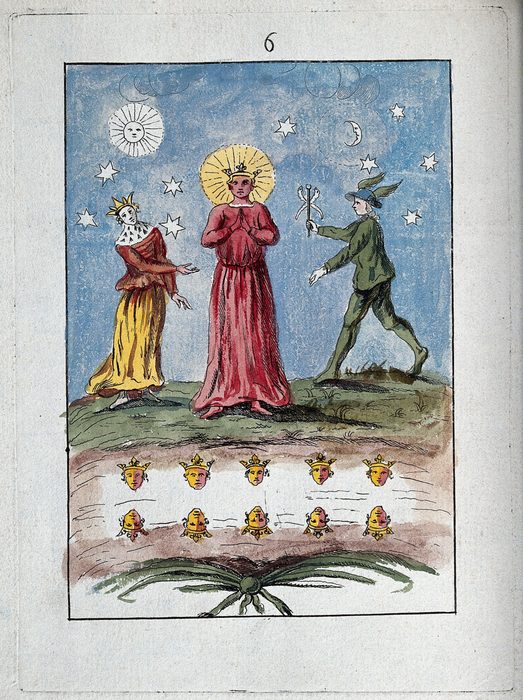
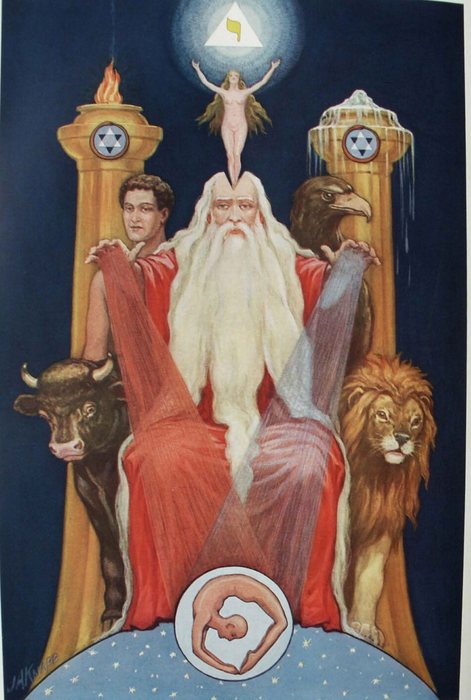
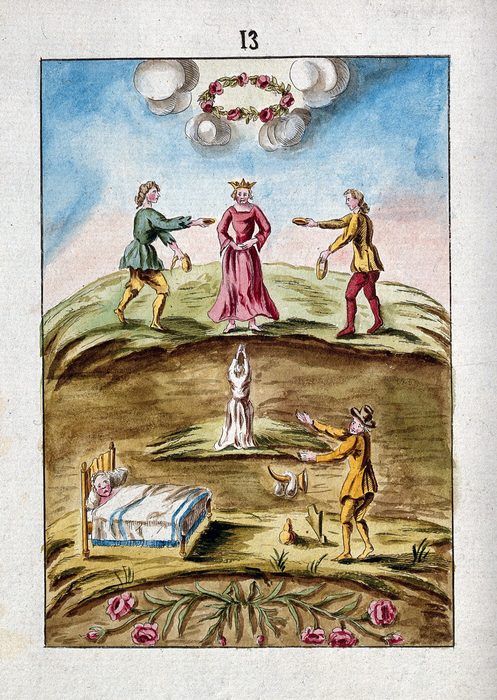
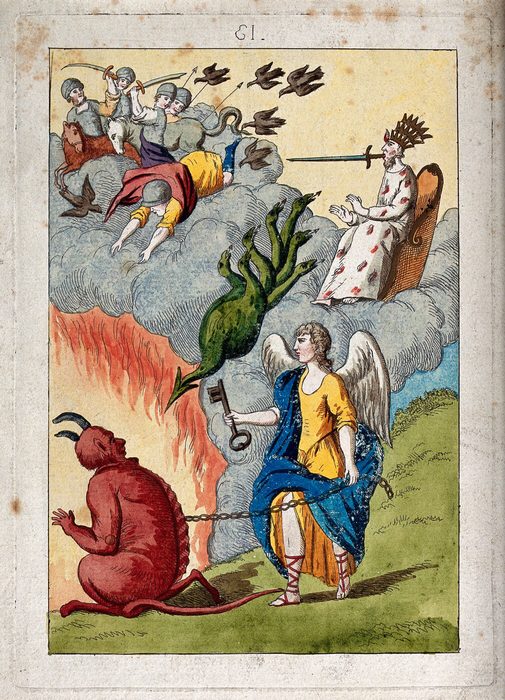
Where the detail is the subject
This is in the picture without being what it is about. Below, one work that is about it.
In the same series
Record
One symbol a week, decoded.
This picture is free at full size from its source, linked above. What an address gets is the Sunday letter: one picture, one symbol marked on it, what it meant and who said so, and the master files of the decoded plates as they are verified. Leave any time.
Free, one letter a week, unsubscribe in one click. How the address is used.
Scroll or pinch to zoom · drag to move · double-tap for 1:1 · 1072 by 1400 pixel web copy; the source file is linked under Record