Sophia
Jungfrau Sophia, the Virgin Wisdom, Theosophia, Wisdom
Wisdom drawn as a woman. In Proverbs she is with God before the world is made; in the German theosophists of the seventeenth century she becomes the bride the soul is trying to marry.
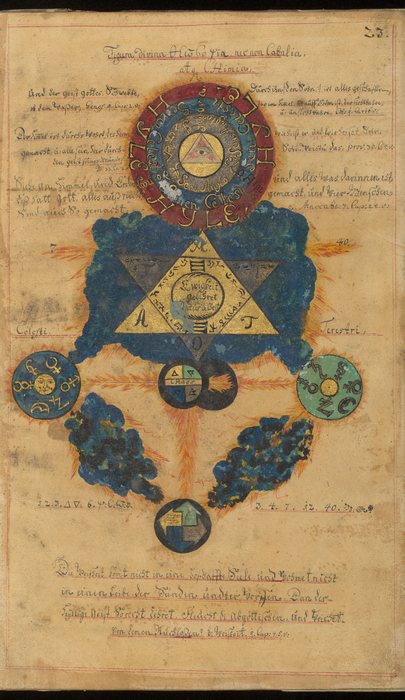
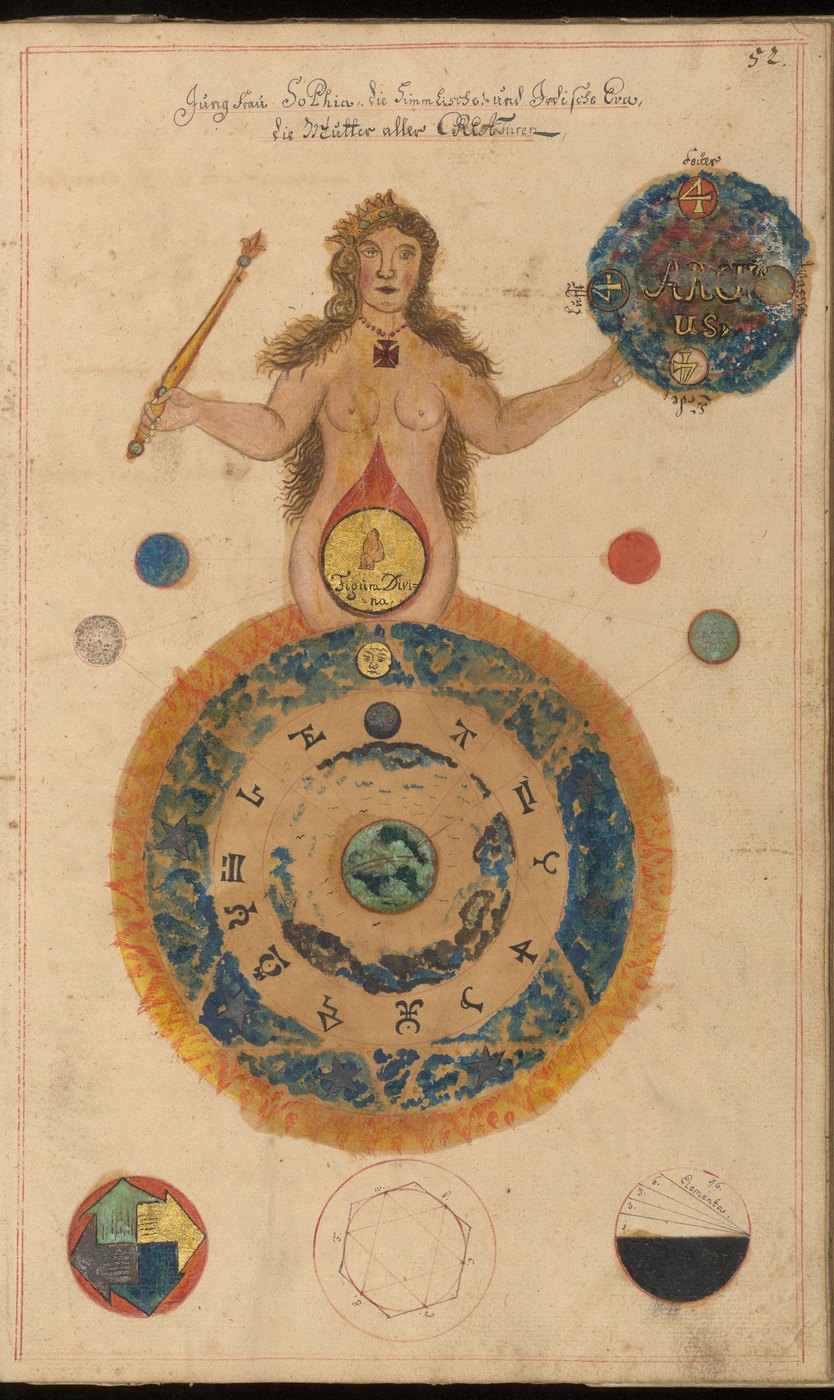
The German manuscript of about 1735 letters its whole doctrine across the top of its own page. Jungfrau Sophia, die Himmlische und Irdische Eva, die Mutter aller Creaturen. The Virgin Sophia, the heavenly and earthly Eve, the mother of all creatures. Three claims in one caption, and the writer plainly expects somebody to unpack them.
She is older than that page by a very long way. Proverbs has Wisdom standing beside God before the world was made, and the Book of Wisdom calls her the breath of the power of God. What the seventeenth century Germans did, Jacob Boehme before anyone, was to turn her into a person a soul could court, lose and marry: the bride Adam had before Eve, and the one a man spends the rest of his life trying to get back to.
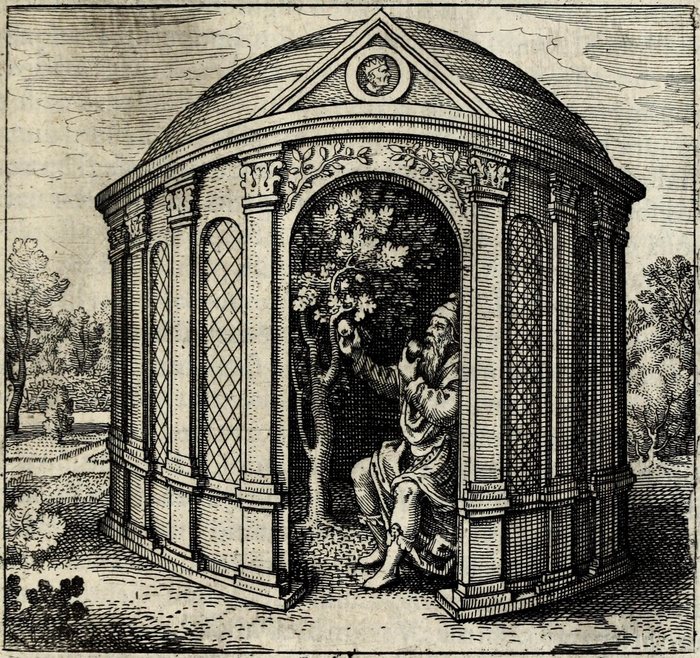
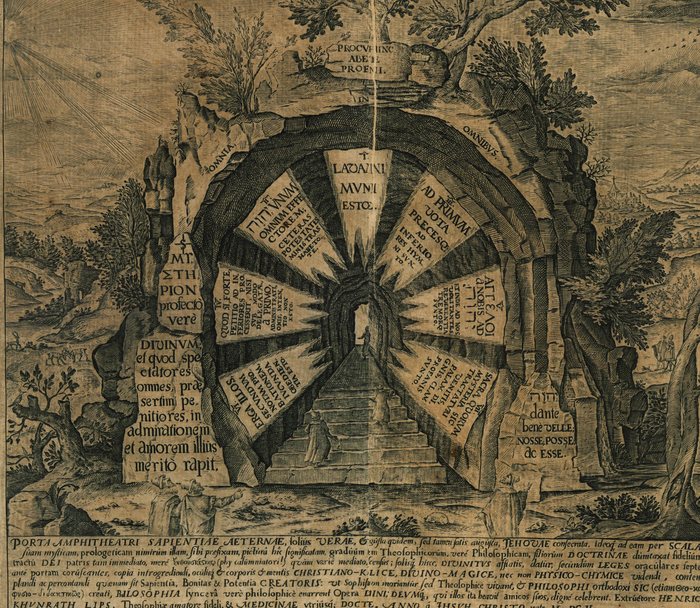
Michael Maier uses the name in a completely different register and it is worth seeing him do it. His ninth emblem sets a tree in the gardens of Sophia bearing golden apples, Arbor inest hortis Sophiae dans aurea mala, and here Sophia is simply Wisdom, the owner of the orchard, with no bride and no fall anywhere near her. Khunrath signs the gate of his amphitheatre as a faithful lover of Theosophia, meaning the study rather than the woman.
Between them the word covers a goddess, a bride, a garden and a discipline, and none of these writers apologises for the range.
Contested
Sources
- An unknown German hand, Gemma Sapientiae et Prudentiae, Wellcome MS.2492, 1735: The caption lettered over the figure, read from the page itself, and the naming of Sophia as the heavenly and earthly Eve.
- Michael Maier, Atalanta Fugiens, 1618: Emblem IX, the tree in the gardens of Sophia bearing golden apples, read against the page image.
- Heinrich Khunrath, Amphitheatrum Sapientiae Aeternae, the Porta plate, 1602: His own signature on the gate, as a faithful lover of Theosophia and doctor of both medicines.
On the same plate
Where it appears · 4
4 works in the archive carry Sophia. First the 4 where it has been read, with Sophia itself picked out.