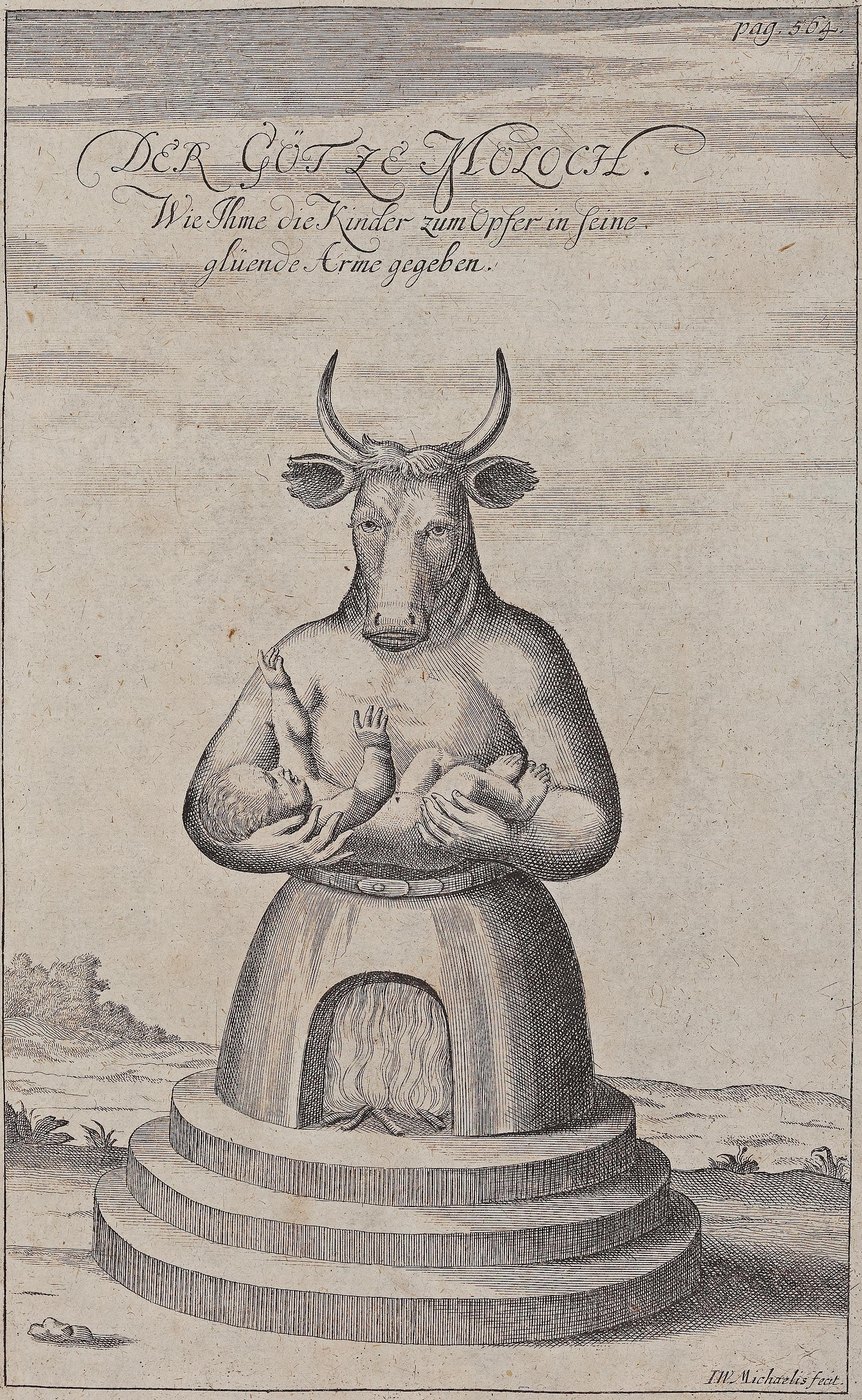
The idol Moloch with the children in his arms
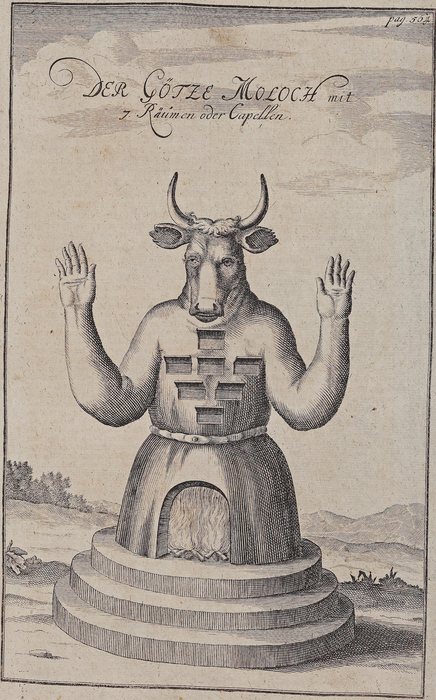
The idol Moloch as the central motif, filed under the Demon and the Monster, with the King and the Queen, the Hand, and Fire in a secondary part. From Lund's Jewish Antiquities.
What is happening
The plate itself, 1738 “DER GÖTZE MOLOCH. Wie Ihme die Kinder zum Opfer in seine glüende Arme gegeben.”
Johann Lund, 1738 “Andere aber zweifeln an diesen sieben Räumen oder Capellen”
Symbolica Lund prints this figure because he does not believe the other one. The seven-chambered Moloch comes first, credited to Gregorius Michaelis and Hofmann taking it out of Kircher; this sheet follows on the next leaf as what the doubters would draw instead. Two reconstructions, one opening of one book, and the reader is expected to choose.
Key · 4 motifs
Tap a motif on the picture, or a line below. Its note opens under the line, with the reading its author gave it.
- Primary motif
- Secondary motifs · 3
The picture
A bull-headed figure on a human body, its forearms folded across the waist with the hands cupped upward, two living infants laid along them, a belt at the waist, the body below it a domed furnace with fire standing in its arched mouth, three circular steps beneath and open country behind. By eye
The reading
The picture read whole, in the archive's words, from the sources quoted on the marks. Read on, and the picture follows: the motif under discussion keeps its colour.
Two infants lie along the folded arms, and both are alive. The one on the left has thrown its head back and lifted a hand with the fingers spread; the one on the right is kicking. Under them, in the base of the body, an arched mouth stands open with the fire in it. The engraver has drawn the moment before, and lettered what it is across the sky: “Wie Ihme die Kinder zum Opfer in seine glüende Arme gegeben.” How the children were given to him in sacrifice, into his glowing arms.
Johann Lund printed this plate because he did not believe the other one. Turn back a single leaf and Moloch stands there with seven chambers in his chest and both hands empty, and Lund, having set that drawing down and said whose it is, turns on it in the next sentence: “Andere aber zweifeln an diesen sieben Räumen oder Capellen.” Others doubt these seven chambers or chapels. Their account is plainer and worse. Light the fire under the image first; when it is thoroughly fiery and glowing, lay the children into its glowing arms and burn them in his honour. Then Lund points at the sheet: “Auf diese Weise würde es gewesen seyn, wie es beystehende Figur ausweiset.”
So the hands settle the argument between the two plates. On the seven-chambered sheet they are up at shoulder height, open and empty, waiting to be handed something. Here they have come down and turned over, the forearms crossing the waist to make a shelf, the fingers curled up under the children's backs. Nothing else about the figure has changed. The engraver moved two arms and the whole theory moved with them.
Athanasius Kircher, whose name the other sheet carries, describes this one. His chapter on Moloch has no picture in it, but at page 330 his margin says Statua Moloch and his sentence puts a hollow statue in the valley of Tophet, “in cuius manus & sinum”, into whose hands and lap, already full of fire and glowing hot, they laid the boys to be burned. Hands and lap, not chambers. The unsigned sheet took his name and this one took his description.
Both writers then stop to record a sound. Kircher has the priests making a din with drums and other instruments while it happens. Lund is more specific about why: as soon as the children were handed over, he writes, they beat briskly and merrily on drums and kettledrums and danced, so that the crying would not be heard and the parents would not be moved to pity. That detail is not in the picture, and it could not be. It explains the picture anyway.
Scripture, which is where most readers arrive from, never gets near any of this. Moloch is named in Leviticus, in the Third and Fourth Books of Kings and in Jeremias, and the passages command, forbid and condemn without describing him once. Jeremias goes furthest and stops short: the high places in the valley of the son of Ennom, sons and daughters consecrated to Moloch, and then a clause that closes the subject: “which I commanded them not, neither entered it into my heart”. The furnace, the ox's head, the seven graded chambers and the two children are all commentary, and this pair of leaves is what commentary looks like once somebody sits down and draws it.
Look again at the child on the left. Michaelis gave it a raised arm and open fingers, the gesture an infant makes reaching for whoever is holding it, and then signed the sheet under the bottom step: I. W. Michaelis fecit.
Decoded: every motif is marked, and each mark carries the reading its author gave it, quoted from the text, or says that it is observed on the picture and not read. The reading above is the archive's own, made from those sources and no others.
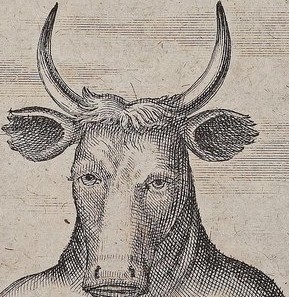
Almost always a composite and almost always subordinate. Note what it is made of and whether it is bound.
In plain words One head serves both reconstructions, because the head is the only part Lund's sources agree about. Brass or copper, an ox's or a calf's.
Johann Lund, 1738 “Sie geben vor, es sey ein eherner oder kupfferner Götze gewesen, mit einem Ochsen- oder Kalbes-Kopffe und ausgestreckten Händen, wie man die Hände ausstrecket, wenn man etwas empfangen wil.”
Leviticus 18:21 “Thou shalt not give any of thy seed to be consecrated to the idol Moloch, nor defile the name of thy God. I am the Lord.”
Symbolica Leviticus 18:21 and 20:2 to 5, 3 Kings 11:7, 4 Kings 23:10 and Jeremias 32:35 are the passages that name him. Every one of them commands, forbids or condemns, and not one describes him. The head, the hands and the chambers all come from somewhere else.
In the alchemical pictures a child is the thing being made. In the Apocalypse it is the thing under attack.
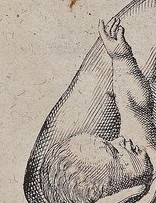
In plain words Both children are drawn alive. The engraver has caught the moment before, not the moment after, which is exactly the moment Lund's sentence and the plate's own caption describe.
The plate itself, 1738 “Wie Ihme die Kinder zum Opfer in seine glüende Arme gegeben.”
Johann Lund, 1738 “alsdenn hätten sie die Kinder diesem Götzen Moloch in seine glüende feurige Arme oder Hände eingelegt, und ihm zu Ehren verbrannt”
Jeremias 32:35 “to consecrate their sons and their daughters to Moloch: which I commanded them not, neither entered it into my heart, that they should do this abomination”
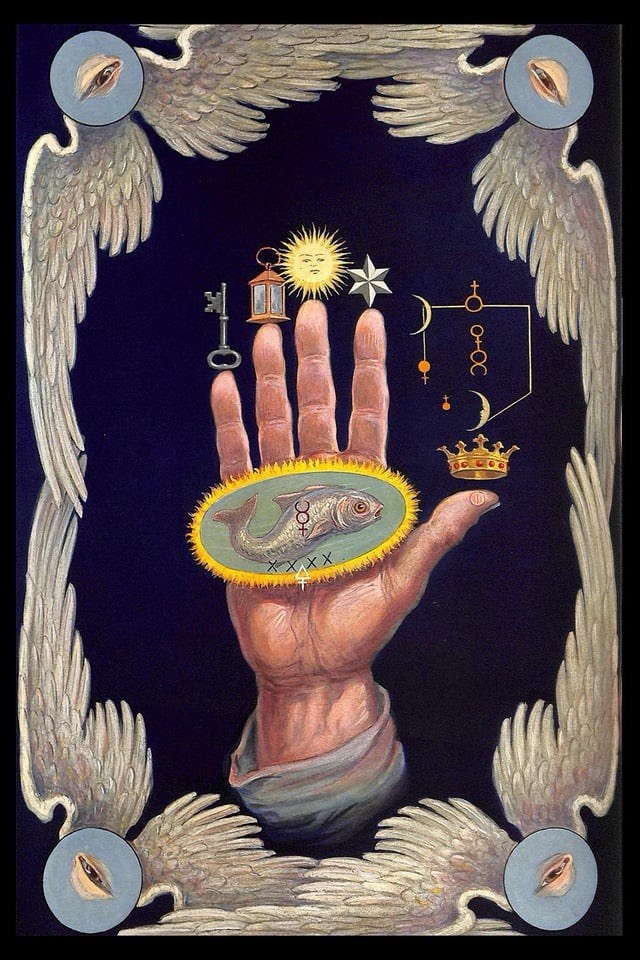
The hand as a sign in itself: what it holds, where it points, which fingers are raised. On the Hand of the Mysteries every finger carries a sign of its own.
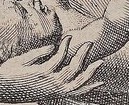
In plain words Turn back one leaf and these same hands are raised and empty. Here they are folded into a cradle over the furnace mouth, which is the whole difference between the two sheets, and it is the arrangement Kircher's own sentence describes.
Athanasius Kircher, 1652 “in qua concaua statua fuisse memoratur, in cuius manus & sinum iam igne plenum & incandescentem pueros concremandos imponebant”
Johann Lund, 1738 “und ausgestreckten Händen, wie man die Hände ausstrecket, wenn man etwas empfangen wil”
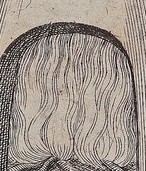
A count, a catastrophe, or the visible part of something that has no body. Note whether the flames are arranged in a number, breaking something, or standing where a figure would be.
In plain words The engraver has put the fire where the sentence puts it, under the arms and inside the image, and left out the one thing both sources insist on, which is the noise. Lund and Kircher each stop to record the drums.
Johann Lund, 1738 “wäre erst unter dem Bilde Feuer angemacht, und wenn es gantz feurig und glüend gewesen”
Johann Lund, 1738 “So bald die arme Kinder dem glüenden Moloch übergeben wurden, ward alsofort frisch und lustig auf Trummeln und Paucken geschlagen, und getantzet, damit der armen Kinder kläglich Geschrey nicht gehöret, und die Eltern zum Mitleiden beweget würden.”
Athanasius Kircher, 1652 “interim Sacerdotibus tympanis, & alijs Musicis instrumentis perstrepentibus”
Also carrying the Demon and the Monster
23 works carry it. The 6 where it is the central motif are here. The symbol.
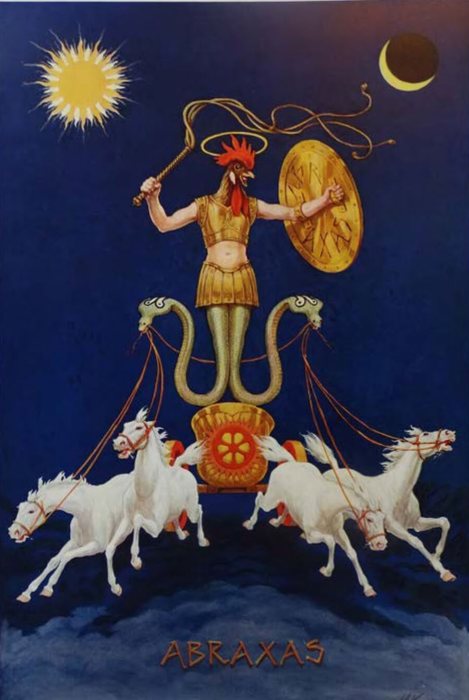 Abraxas, a Gnostic Pantheos
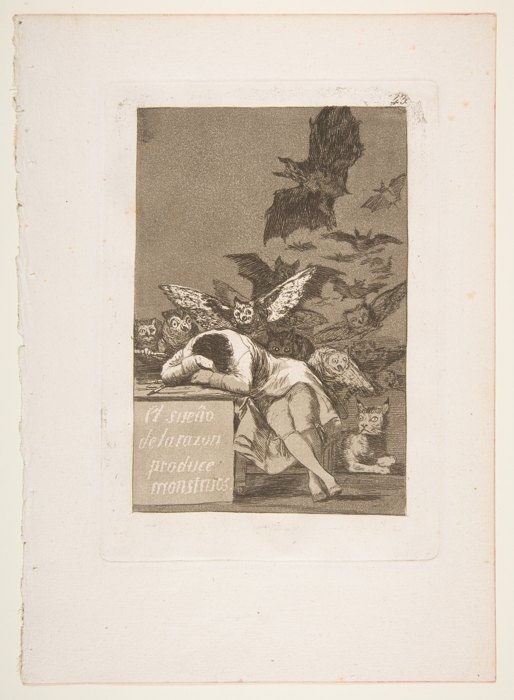 The Sleep of Reason Produces Monsters
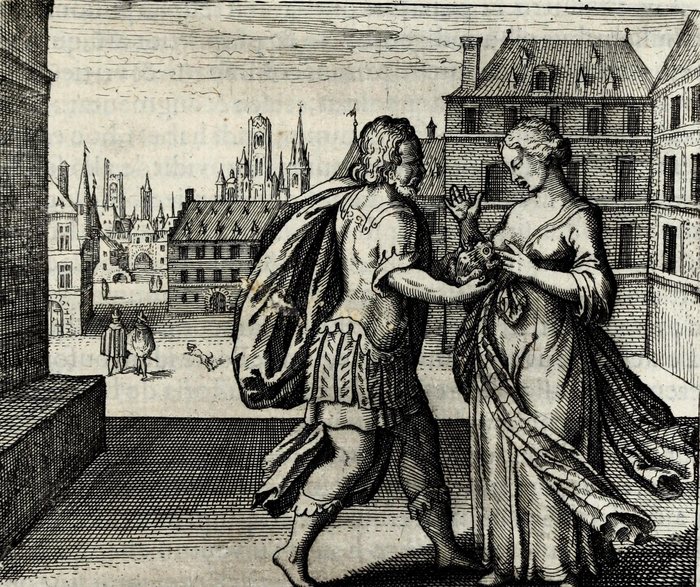 Appone mulieri super mammas bufonem, ut ablactet eum, & moriatur mulier, sitque bufo grossus de lacte
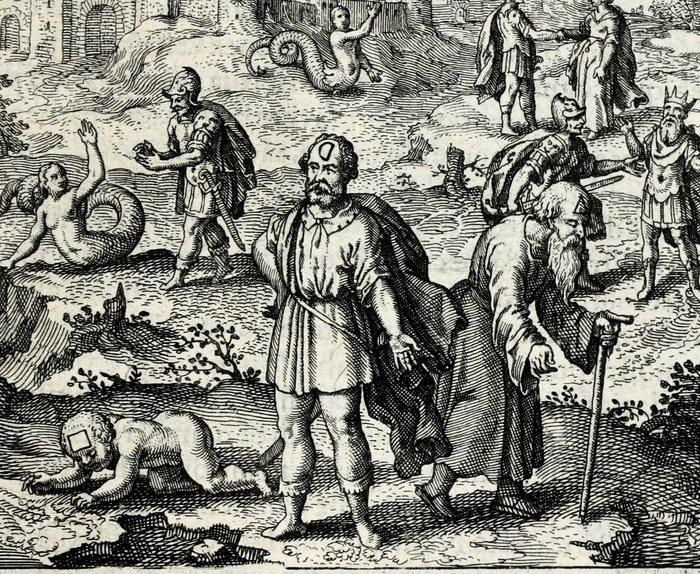 Oedypus Sphynge superata & trucidato Lajo patre matrem ducit in uxorem
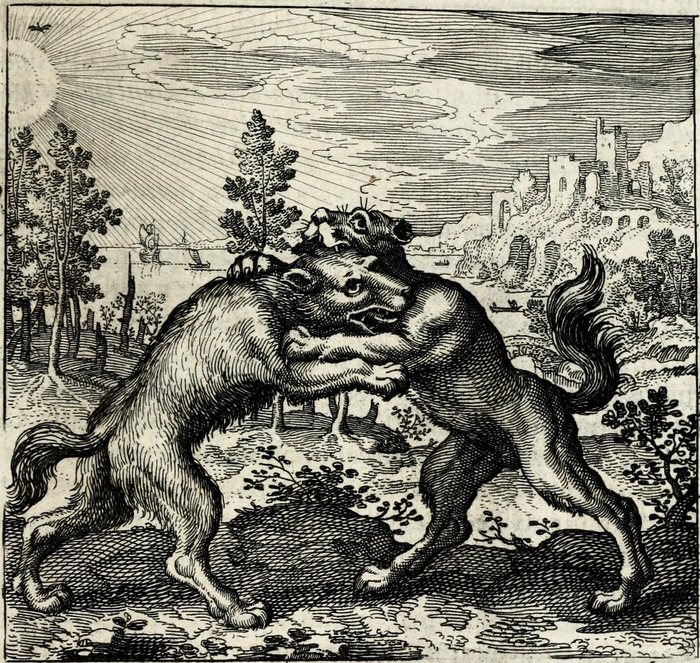 Lupus ab Oriente & Canis ab Occidente venientes se invicem momorderunt
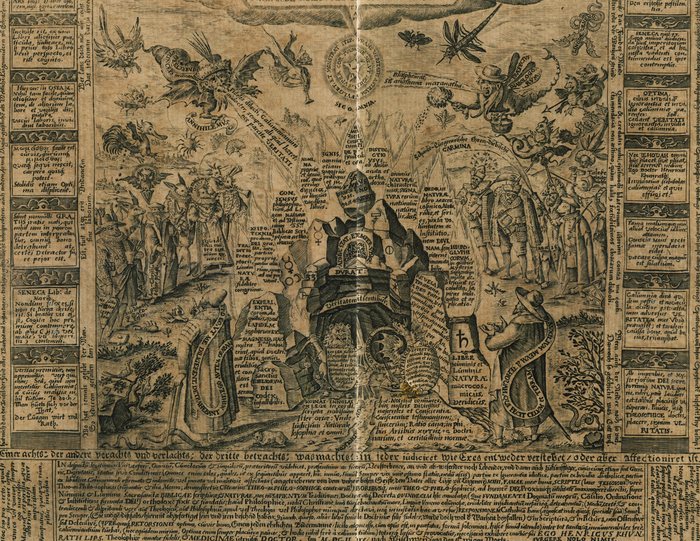 Against the slanderers, by right of retort
Where the detail is the subject
the King and the Queen · the Hand · Fire
Each of these is in the picture without being what it is about. Below, one work that is about each.
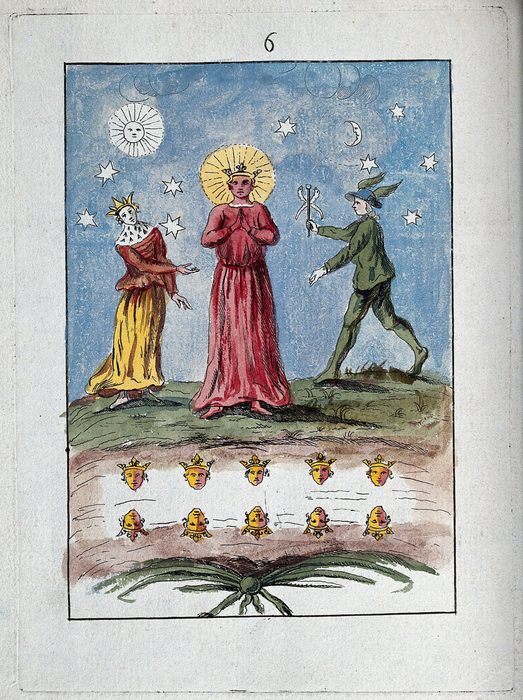
Record
One symbol a week, decoded.
This picture is free at full size from its source, linked above. What an address gets is the Sunday letter: one picture, one symbol marked on it, what it meant and who said so, and the master files of the decoded plates as they are verified. Leave any time.
Free, one letter a week, unsubscribe in one click. How the address is used.
Scroll or pinch to zoom · drag to move · double-tap for 1:1 · 862 by 1400 pixel web copy; the source file is linked under Record