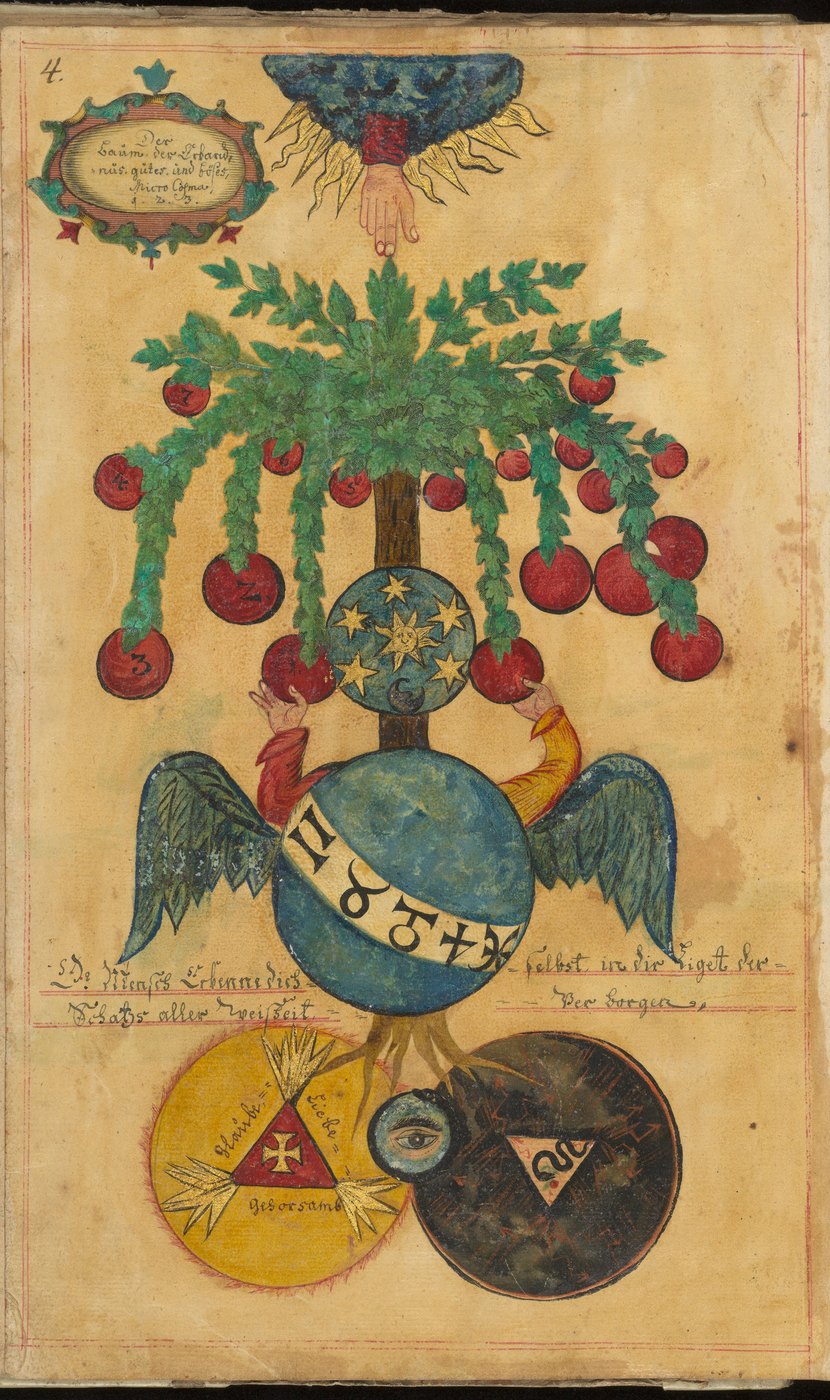
The Tree of the Knowledge of Good and Evil, Microcosma
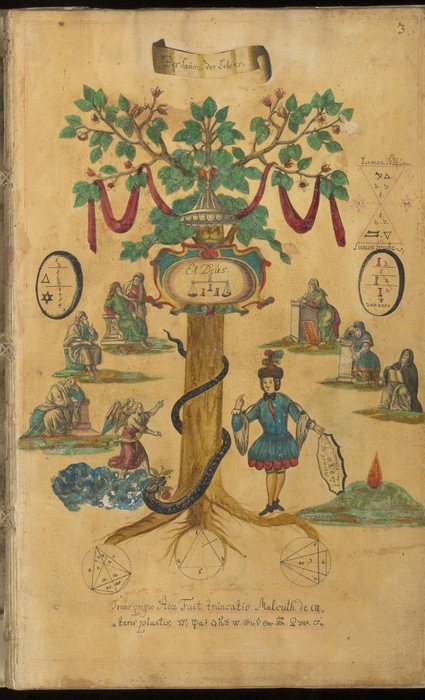
The tree of knowledge as the central motif, filed under the Tree, with the Hand, the Angel and the Wing, the Eye, the Triangle and the Pyramid, and the Serpent and the Dragon in a secondary part. From Gemma Sapientiae et Prudentiae, c. 1735.
What is happening
Symbolica, 2026 The manuscript's German, put into English here: The tree of the knowledge of good and evil, the microcosm. 1. 2. 3.
Symbolica, 2026 The manuscript's German, put into English here: O man, know thyself: in thee lies hidden the treasure of all wisdom.
Wellcome Collection, 2026 “MS., p. 4. Baum der Erkandtnus gutes und böses = Geh. Fig., fol. 9.”
Wellcome Collection, 2026 “Four of the illustrations have considerable likenesses to those in the 'Geheime Figuren der Rosenkreuzer', originally published at Altona in 1785-1788.”
Key · 6 motifs
Tap a motif on the picture, or a line below. Its note opens under the line, with the reading its author gave it.
- Primary motif
- Secondary motifs · 5
The picture
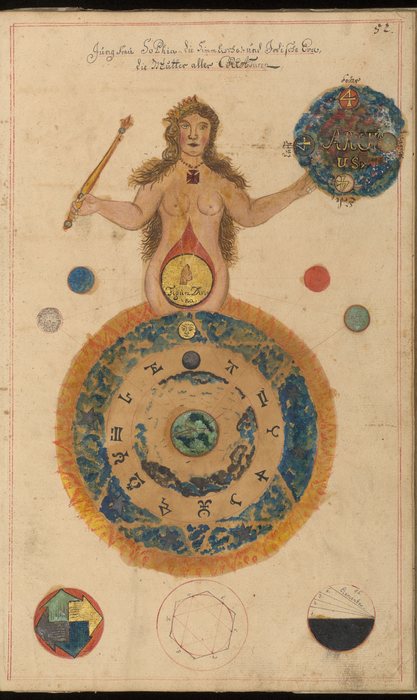
A hand-coloured page: a hand reaching down from a cloud over a green tree hung with numbered red fruits, a blue globe of sun, moon and stars in its trunk, the tree rising from a winged blue globe with a band of signs from which two arms reach up to pick; the motto O Mensch erkenne dich selbst either side; below the roots an eye between a golden circle with a red triangle and cross lettered Glaube, Liebe, Gehorsamb and a dark circle with a downturned triangle and a serpent; the tree of knowledge as the central motif. By eye
The reading
The picture read whole, in the archive's words, from the sources quoted on the marks. Read on, and the picture follows: the motif under discussion keeps its colour.
This page and the one before it are a pair: the tree of life on page 3, the tree of knowledge on page 4, the two trees of Eden drawn by one hand in the 1730s. The cartouche names this one and adds a word Genesis does not: Microcosma. The tree of the knowledge of good and evil is the little world, which is to say a human being. The Wellcome's catalogue matches the page to folio 9 of the Geheime Figuren der Rosenkreuzer, where the same design was printed in 1785.
A hand comes down out of a cloud at the top, over the tree. It is God's, the same hand that reaches out of the cloud in Fludd's mirror of nature and holds Nature's chain, and here it has planted a tree and left it. Two more arms, one sleeved in red and one in gold, reach up from below to take the fruit. The page is built on that contrast: the hand that gives from above, the hands that grasp from below.
The fruits are red and numbered, and in the trunk sits a blue globe with the sun and the stars painted in it: the heavens inside the tree, or the head inside the body, since the tree is a man. Read as a microcosm the picture is an anatomy. The crown of leaves is the mind, the fruits are what it can know, the heavens are in the middle where the heart would be, and the roots go down into the two circles at the foot.
The tree grows out of a winged globe, blue and banded with signs, and the picking arms belong to it. Either side the writer set the sentence the whole page turns on: O Mensch, erkenne dich selbst, in dir liget der Schatz aller Weisheit verborgen. O man, know thyself, in thee lies hidden the treasure of all wisdom. The Delphic command in a Lutheran hand. The winged globe is the self that is told to look; the tree is what it finds when it does.
Under the roots an eye looks out from a small blue disc, set exactly between two circles. It is the eye of the page's conscience, and it is placed at the fork.
The two circles are the two knowledges the tree gives. On the left, gold, with rays breaking from its corners, a red triangle pointing up with a cross in it, and round it Glaube, Liebe, Gehorsamb, faith, love, obedience. On the right, black, a pale triangle turned point down with a serpent inside. One shape, turned over, and everything changes.
The serpent of Genesis is here after all, small and at the bottom, inside the dark triangle. The writer did not wind it round the trunk as the Bible would suggest and as the tree of life on the facing page does. He filed it where he thought it belonged, in the knowledge of evil, as the opposite of the cross. That is a reading of Eden, not an illustration of it, and the page was made so that a reader would follow it.
Decoded: every motif is marked, and each mark carries the reading its author gave it, quoted from the text, or says that it is observed on the picture and not read. The reading above is the archive's own, made from those sources and no others.
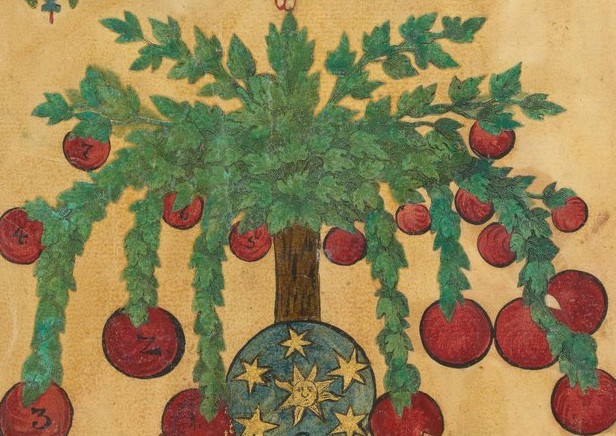
A body drawn as growth. Note which way it grows and what is at the root rather than at the top.
In plain words The cartouche names the tree: the tree of the knowledge of good and evil, and under it the word Microcosma, the little world, which is man. The fruits are numbered. In the trunk is a blue globe with the sun and the stars in it, and two arms reach up from below to pick.
The manuscript, c. 1735 “Der Baum der Erkandtnüs gutes und böses, Micro Cosma. 1. 2. 3.”
Symbolica, 2026 The manuscript's German, put into English here: The tree of the knowledge of good and evil, the microcosm. 1. 2. 3.
The manuscript, c. 1735 “O Mensch, erkenne dich selbst, in dir liget der Schatz aller Weisheit verborgen.”
Symbolica, 2026 The manuscript's German, put into English here: O man, know thyself: in thee lies hidden the treasure of all wisdom.
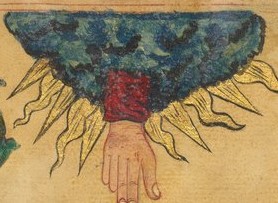
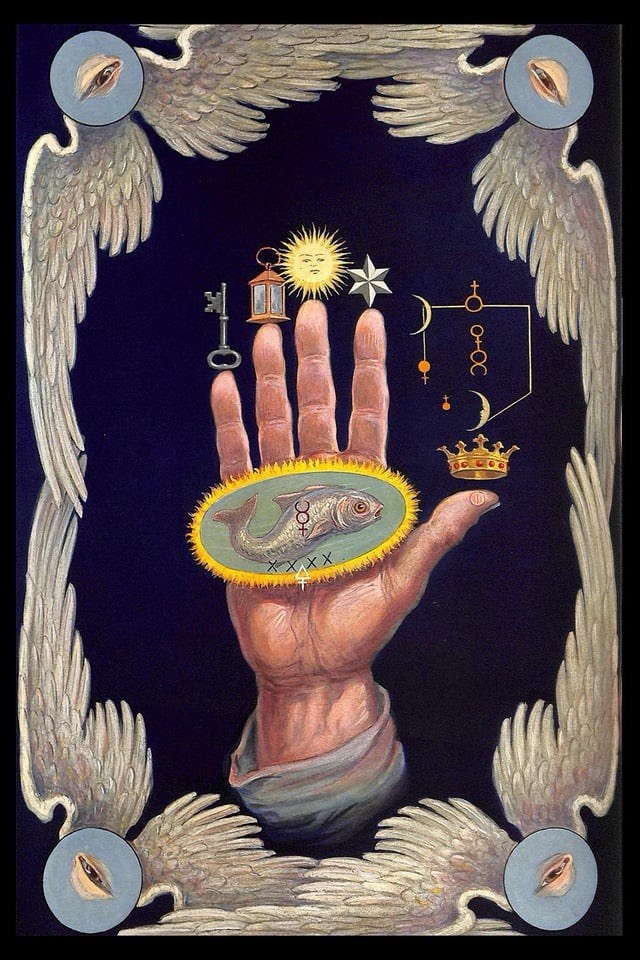
The hand as a sign in itself: what it holds, where it points, which fingers are raised. On the Hand of the Mysteries every finger carries a sign of its own.
In plain words A hand comes down out of a cloud over the tree, the way God's hand comes out of the cloud in Fludd's mirror of nature. Two more arms, one in a red sleeve and one in gold, reach up from the winged globe below to pick the fruit. Above, the hand that planted; below, the hands that take.
The manuscript, c. 1735 “Der Baum der Erkandtnüs gutes und böses, Micro Cosma. 1. 2. 3.”
Symbolica, 2026 The manuscript's German, put into English here: The tree of the knowledge of good and evil, the microcosm. 1. 2. 3.
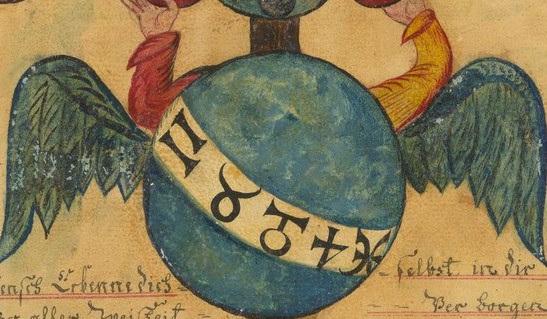
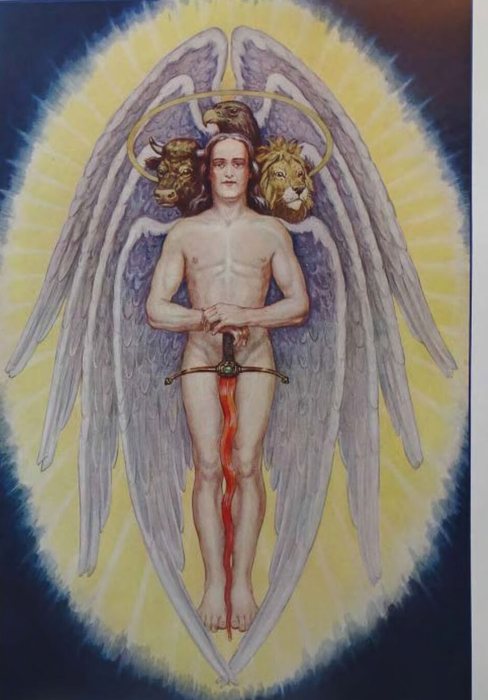
The mark of an errand rather than a nature. Note whether the wings are open, folded, or given to the figure by someone else.
In plain words The tree grows out of a winged globe, blue like the earth seen as a planet, with a band of signs across it. The arms that pick the fruit belong to it. The writer's motto is written either side: know yourself, the treasure of all wisdom lies hidden in you. The globe is the human being, and the tree of knowledge grows out of it.
The manuscript, c. 1735 “O Mensch, erkenne dich selbst, in dir liget der Schatz aller Weisheit verborgen.”
Symbolica, 2026 The manuscript's German, put into English here: O man, know thyself: in thee lies hidden the treasure of all wisdom.
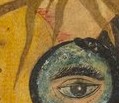
Attention from outside the frame. Note it is almost always placed at a boundary rather than at the centre.
In plain words An eye watches from between the two circles under the roots. On the gold side a triangle with a cross, lettered faith, love, obedience; on the dark side a triangle turned over with a serpent in it. Know yourself, the page says, and here are the two ways the knowledge can go.
The manuscript, c. 1735 “Glaube. Liebe. Gehorsamb.”
Symbolica, 2026 The manuscript's German, put into English here: Faith. Love. Obedience.
The manuscript, c. 1735 “O Mensch, erkenne dich selbst, in dir liget der Schatz aller Weisheit verborgen.”
Symbolica, 2026 The manuscript's German, put into English here: O man, know thyself: in thee lies hidden the treasure of all wisdom.
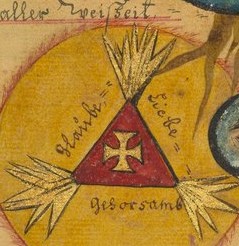
A number made visible. Count the points and then find what else in the picture comes in threes.
In plain words Two circles, two triangles. The golden circle holds a red triangle pointing up, a cross in it and rays at its corners, and round it the words faith, love, obedience. The dark circle holds a triangle turned point down with a serpent coiled inside. The same shape, the tree's two harvests.
The manuscript, c. 1735 “Glaube. Liebe. Gehorsamb.”
Symbolica, 2026 The manuscript's German, put into English here: Faith. Love. Obedience.
The manuscript, c. 1735 “Der Baum der Erkandtnüs gutes und böses, Micro Cosma. 1. 2. 3.”
Symbolica, 2026 The manuscript's German, put into English here: The tree of the knowledge of good and evil, the microcosm. 1. 2. 3.
A single creature doing two opposite jobs. Note whether it is bound, killed, or eating itself.
In plain words The serpent of Eden is here, but small, and put where the writer wanted it: inside the inverted triangle in the dark circle, the knowledge of evil, opposite the cross in the triangle of faith. The tree above bears both.
The manuscript, c. 1735 “Der Baum der Erkandtnüs gutes und böses, Micro Cosma. 1. 2. 3.”
Symbolica, 2026 The manuscript's German, put into English here: The tree of the knowledge of good and evil, the microcosm. 1. 2. 3.
The manuscript, c. 1735 “Glaube. Liebe. Gehorsamb.”
Symbolica, 2026 The manuscript's German, put into English here: Faith. Love. Obedience.
Also carrying the Tree
23 works carry it. The 6 where it is the central motif are here. The symbol.
Where the detail is the subject
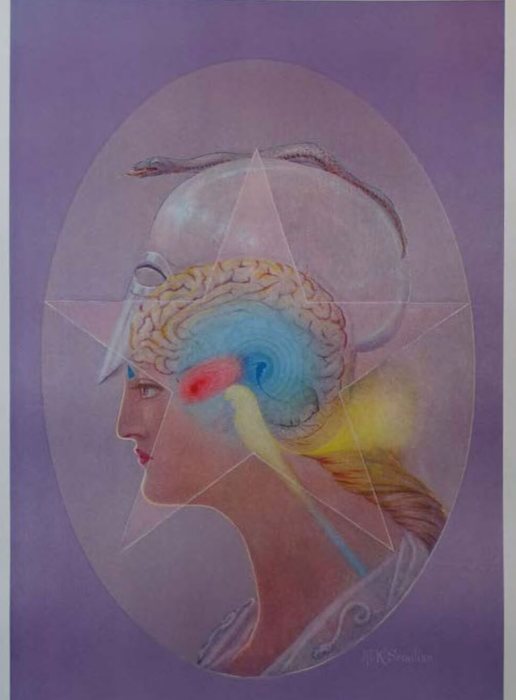
the Hand · the Angel and the Wing · the Eye · the Triangle and the Pyramid · the Serpent and the Dragon
Each of these is in the picture without being what it is about. Below, one work that is about each.
In the same series
Record
One symbol a week, decoded.
This picture is free at full size from its source, linked above. What an address gets is the Sunday letter: one picture, one symbol marked on it, what it meant and who said so, and the master files of the decoded plates as they are verified. Leave any time.
Free, one letter a week, unsubscribe in one click. How the address is used.
Scroll or pinch to zoom · drag to move · double-tap for 1:1 · 830 by 1400 pixel web copy; the source file is linked under Record