The Hanged Man (XII)
The Hanged Man as the central motif, filed under the Tree, with the Divine in a secondary part. From The 1909 tarot.
What is happening
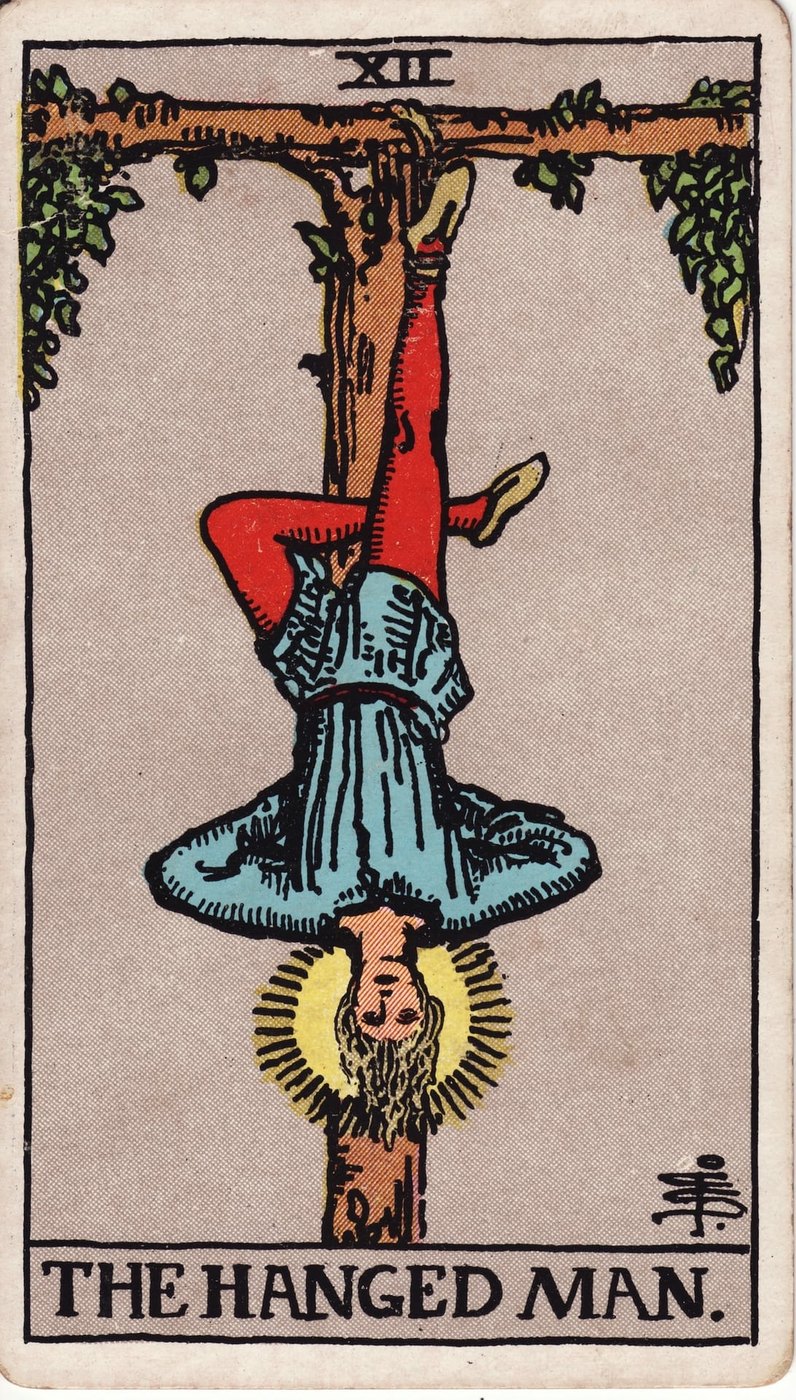
Waite, 1911 “The figure of a man is suspended head-downwards from a gibbet, to which he is attached by a rope about one of his ankles. The arms are bound behind him, and one leg is crossed over the other. According to another, and indeed the prevailing interpretation, he signifies sacrifice, but all current meanings attributed to this card are cartomancists' intuitions, apart from any real value on the symbolical side.”
Key · 2 motifs
Tap a motif on the picture, or a line below. Its note opens under the line, with the reading its author gave it.
- Primary motif
- Secondary motifs · 1
The picture
A young man in a blue tunic and red hose hanging by one foot from a living Tau cross of wood, his legs crossed, his arms behind his back and a halo of light about his head; the Hanged Man as the central motif. By eye
The reading
The picture read whole, in the archive's words, from the sources quoted on the marks. Read on, and the picture follows: the motif under discussion keeps its colour.
Waite spends his whole account of this card telling the reader what it does not mean. ‘It has been called falsely a card of martyrdom, a card of prudence, a card of the Great Work, a card of duty; but we may exhaust all published interpretations and find only vanity.’ Lévi did not know what it meant either, he adds, and neither did the editor of Lévi who said as much in print.
Look at the gallows before the man. It is made of living wood with leaves still on it, which is the first of three things Waite says should be noticed, and it settles what kind of scene this is. Nobody is executed on a tree that is still growing. The second is that ‘the face expresses deep entrancement, not suffering’. The third is that ‘the figure, as a whole, suggests life in suspension, but life and not death’. Waite also reads the arrangement as two crosses at once: the gallows makes a Tau, and the crossed legs make a fylfot, the old English name for the hooked four armed cross.
What he puts in place of everything he has cleared away is small and very firm. ‘I will say very simply on my own part that it expresses the relation, in one of its aspects, between the Divine and the Universe.’ The halo round the upside down head is the only mark of that relation in the picture. Then a promise for whoever can take it: ‘after the sacred Mystery of Death there is a glorious Mystery of Resurrection’.
This is the card he guards most carefully. It is of profound significance, he says, ‘but all the significance is veiled’, and he leaves the veil exactly where he found it. A man hangs head down from a living tree, calm, lit and tied, and the man who commissioned the picture will say only that this is how God and the world stand to one another, in one of their aspects. The reader is expected to hang there a while as well.
Readings quoted
Waite, 1911 “It is a card of profound significance, but all the significance is veiled. One of his editors suggests that Eliphas Lévi did not know the meaning, which is unquestionable nor did the editor himself.”
Waite, 1911 “It has been called falsely a card of martyrdom, a card of prudence, a card of the Great Work, a card of duty; but we may exhaust all published interpretations and find only vanity.”
Waite, 1911 “He who can understand that the story of his higher nature is imbedded in this symbolism will receive intimations concerning a great awakening that is possible, and will know that after the sacred Mystery of Death there is a glorious Mystery of Resurrection.”
Decoded: every motif is marked, and each mark carries the reading its author gave it, quoted from the text, or says that it is observed on the picture and not read. The reading above is the archive's own, made from those sources and no others.

A body drawn as growth. Note which way it grows and what is at the root rather than at the top.
In plain words The gallows is a T of rough timber, and it is alive: leaves are sprouting from both arms. Waite makes three points of the picture and this is the first. A dead man would hang from dead wood; this is ‘life in suspension, but life and not death’.
Waite, 1911 “The gallows from which he is suspended forms a Tau cross, while the figure--from the position of the legs--forms a fylfot cross. There is a nimbus about the head of the seeming martyr.”
Waite, 1911 “It should be noted (1) that the tree of sacrifice is living wood, with leaves thereon; (2) that the face expresses deep entrancement, not suffering; (3) that the figure, as a whole, suggests life in suspension, but life and not death.”
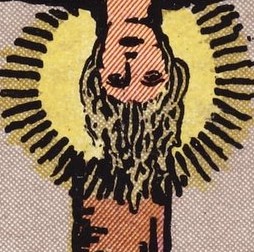
God shown, or pointed at. Look for what stands where a face would be: a name in a cloud, a circle above the top of a diagram, a ring of verses, a sign over a head.
In plain words Rays of light round the upside-down head, the halo painters give to saints. Waite calls him ‘the seeming martyr’ and says the face shows ‘deep entrancement, not suffering’. The halo is why the mark is filed under the Divine: it is the picture’s one sign of what the hanging is about, and Waite’s own summary is that the card ‘expresses the relation, in one of its aspects, between the Divine and the Universe’.
Waite, 1911 “The gallows from which he is suspended forms a Tau cross, while the figure--from the position of the legs--forms a fylfot cross. There is a nimbus about the head of the seeming martyr.”
Waite, 1911 “I will say very simply on my own part that it expresses the relation, in one of its aspects, between the Divine and the Universe.”
Also carrying the Tree
23 works carry it. The 6 where it is the central motif are here. The symbol.
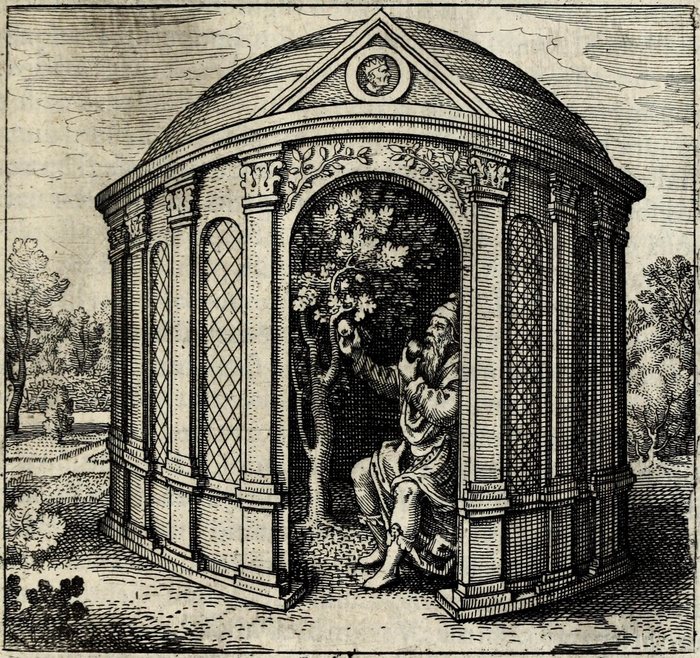
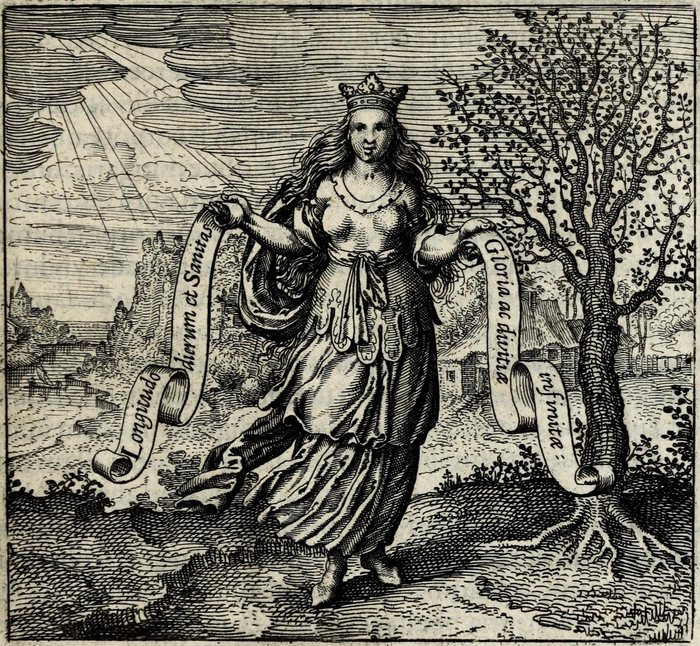
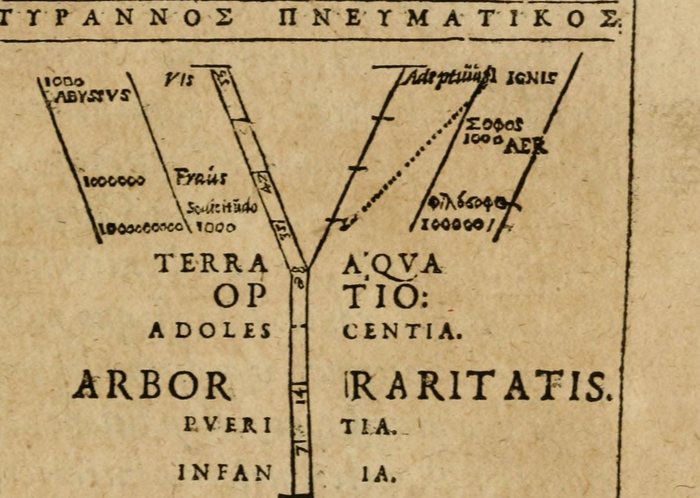
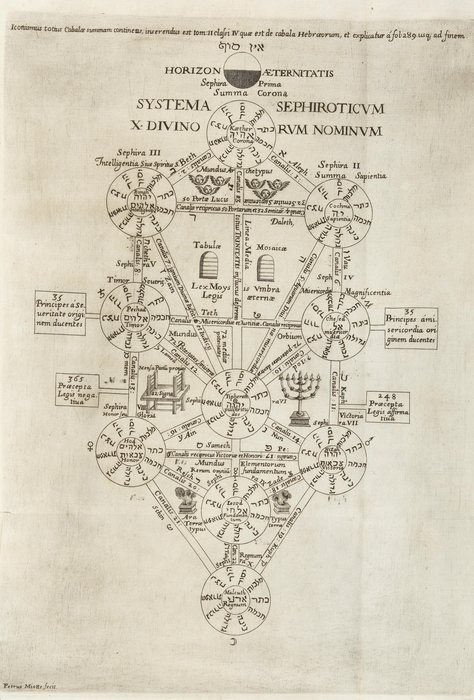
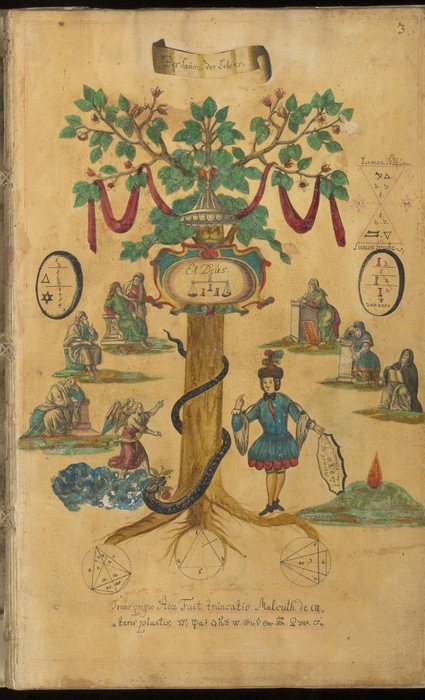
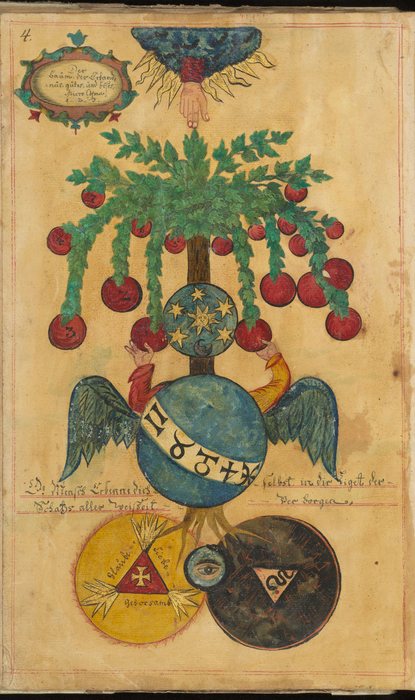
Where the detail is the subject
This is in the picture without being what it is about. Below, one work that is about it.
In the same series
Record
One symbol a week, decoded.
This picture is free at full size from its source, linked above. What an address gets is the Sunday letter: one picture, one symbol marked on it, what it meant and who said so, and the master files of the decoded plates as they are verified. Leave any time.
Free, one letter a week, unsubscribe in one click. How the address is used.
Scroll or pinch to zoom · drag to move · double-tap for 1:1 · 796 by 1400 pixel web copy; the source file is linked under Record