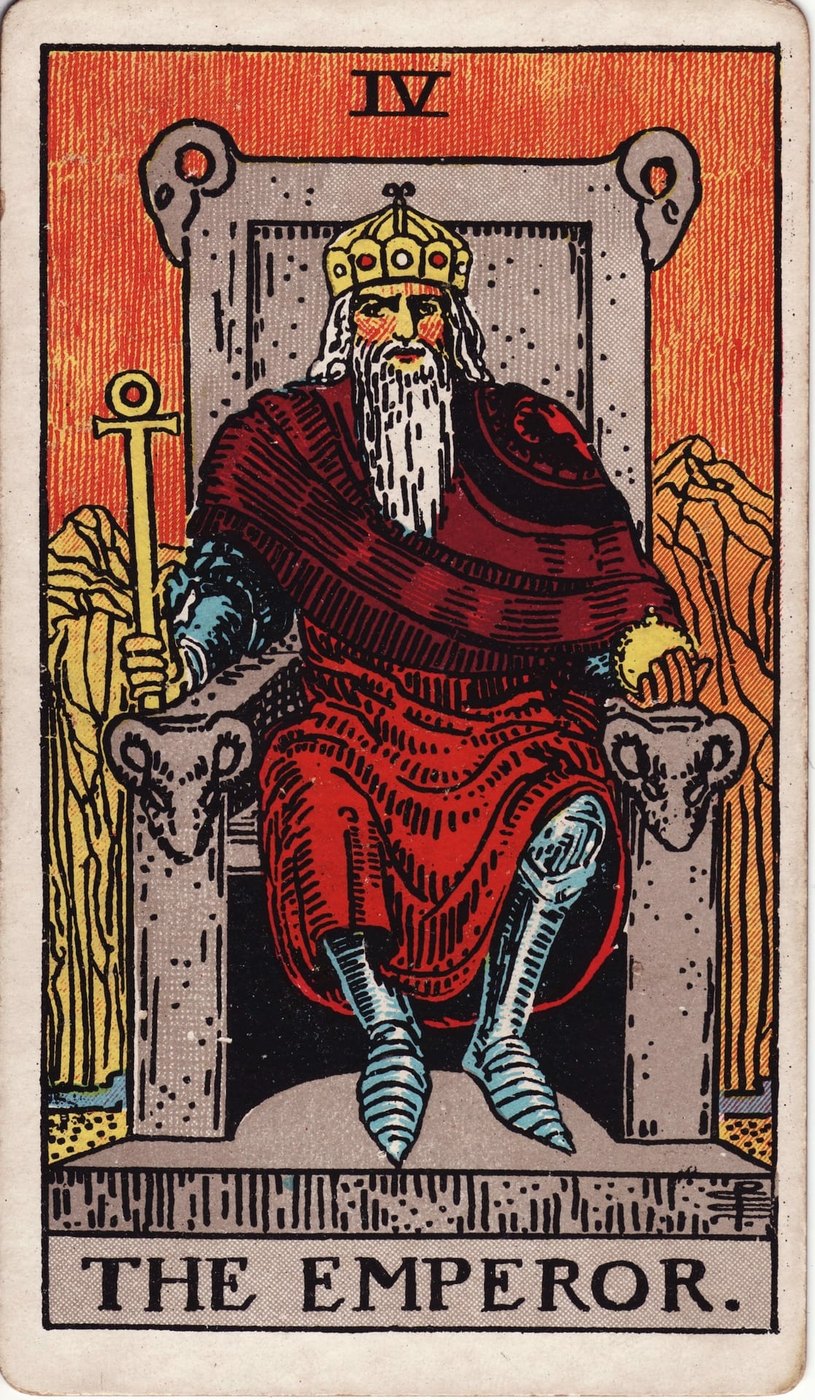
The Emperor (IV)
The Emperor as the central motif, filed under the King and the Queen, with the Crown and the Hand in a secondary part. From The 1909 tarot.
What is happening
Waite, 1911 “He is occasionally represented as seated on a cubic stone, which, however, confuses some of the issues.”
Key · 3 motifs
Tap a motif on the picture, or a line below. Its note opens under the line, with the reading its author gave it.
- Primary motif
- Secondary motifs · 2
The picture
A bearded emperor crowned, on a stone throne fronted by four rams' heads, a sceptre shaped as the crux ansata in his right hand and a globe in his left, in armour under a red robe, bare mountains behind; the Emperor as the central motif. By eye
The reading
The picture read whole, in the archive's words, from the sources quoted on the marks. Read on, and the picture follows: the motif under discussion keeps its colour.
The most interesting thing on this card is the one Waite names and then refuses to explain. The sceptre in the Emperor's right hand is not a sceptre. It is ‘a form of the Crux ansata’, the looped cross Egypt called the ankh, and Waite identifies it in four words and moves on.
He does the same with the throne. Four rams' heads front the arms of it; he counts them and leaves them. The blessing hand on the card after this one he glosses in detail. This hand he does not touch. A picture may carry more than its author explains, and the marks here stop where he stopped.
What he does explain is the pairing. This is ‘the virile power, to which the Empress responds’, and the two of them, he is careful to say, ‘do not precisely represent the condition of married life, though this state is implied’. On the surface they stand for ‘mundane royalty, uplifted on the seats of the mighty’. Above that comes the higher kingship on the intellectual throne, which he assigns to the male figure especially: ‘the lordship of thought rather than of the animal world’. Where the Empress is the fruitful ground, he is what acts on it.
Then he cuts two readings down. The Emperor as will in its embodied form he allows, but only as one application among several. The Emperor as ‘an expression of virtualities contained in the Absolute Being’ he calls fantasy. What is left under the crown is a plain man who is good at ruling, with a hint above him of what ruling is for. Both he and the Empress are full of strange experience, Waite says, and then withholds the one thing that would settle it: ‘theirs is not consciously the wisdom which draws from a higher world’. For that the deck has the woman between the pillars, and she is sitting two cards back.
Readings quoted
Waite, 1911 “It should be understood that this card and that of the Empress do not precisely represent the condition of married life, though this state is implied.”
Waite, 1911 “Hereof is the lordship of thought rather than of the animal world. Both personalities, after their own manner, are "full of strange experience," but theirs is not consciously the wisdom which draws from a higher world.”
Waite, 1911 “The Emperor has been described as (a) will in its embodied form, but this is only one of its applications, and (b) as an expression of virtualities contained in the Absolute Being--but this is fantasy.”
Decoded: every motif is marked, and each mark carries the reading its author gave it, quoted from the text, or says that it is observed on the picture and not read. The reading above is the archive's own, made from those sources and no others.
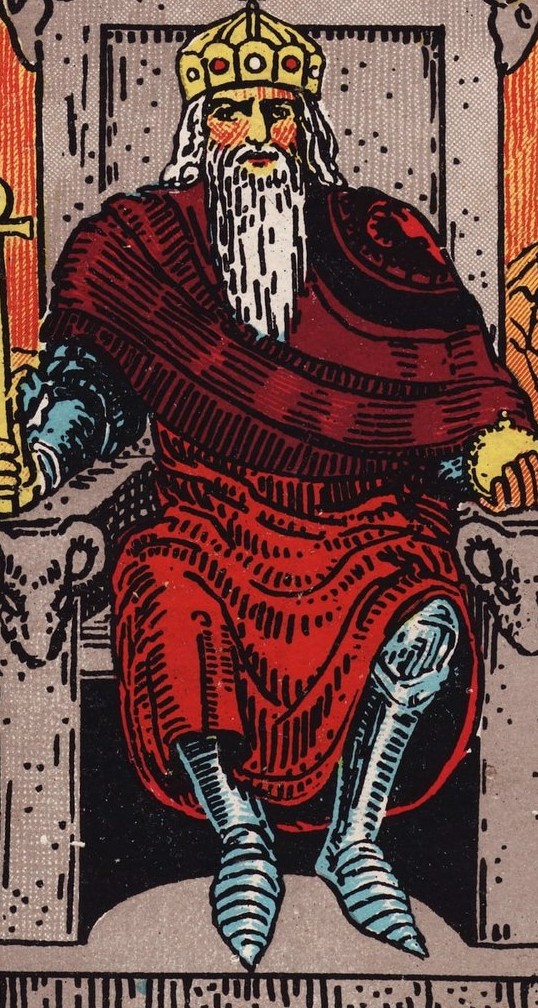
A rank rather than a person. Read the robe, the throne and what comes out of the mouth before you read the face.
In plain words A king on a stone throne, crowned and armoured, with rams’ heads carved on the throne’s arms. Waite reads him as worldly power at its highest, the Empress’s partner and opposite: she is the earth’s fruitfulness, he is the will that acts on it. He is filed with the King and the Queen because that is the picture; the card calls him the Emperor.
Waite, 1911 “He is a crowned monarch--commanding, stately, seated on a throne, the arms of which are fronted by rams' heads.”
Waite, 1911 “He is executive and realization, the power of this world, here clothed with the highest of its natural attributes.”
Waite, 1911 “He is the virile power, to which the Empress responds, and in this sense is he who seeks to remove the Veil of Isis; yet she remains virgo intacta.”
Completion, and in the Kabbalistic reading the first sephirah, the point at which the work is no longer yours.
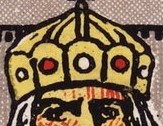
In plain words A heavy gold crown, the kind a king wears in a picture book. Waite says the Emperor and Empress stand on the surface for ordinary royalty, and above that for what he calls the higher kingship, ‘the intellectual throne’: the rule of thought rather than of the body.
Waite, 1911 “He is a crowned monarch--commanding, stately, seated on a throne, the arms of which are fronted by rams' heads.”
Waite, 1911 “On the surface, as I have indicated, they stand for mundane royalty, uplifted on the seats of the mighty; but above this there is the suggestion of another presence. They signify also--and the male figure especially--the higher kingship, occupying the intellectual throne.”
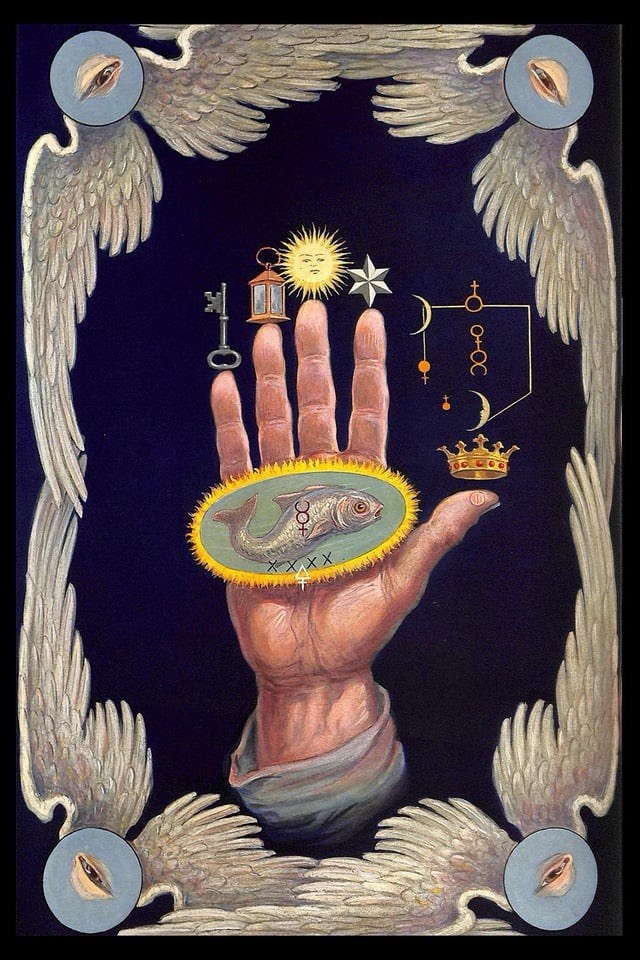
The hand as a sign in itself: what it holds, where it points, which fingers are raised. On the Hand of the Mysteries every finger carries a sign of its own.
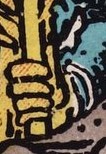
In plain words The sceptre is a cross with a loop for its head, the shape the Egyptians called the ankh and Waite calls the crux ansata, the handled cross. The globe in the other hand is the world he rules. Waite names both and reads neither.
Waite, 1911 “He has a form of the Crux ansata for his sceptre and a globe in his left hand.”
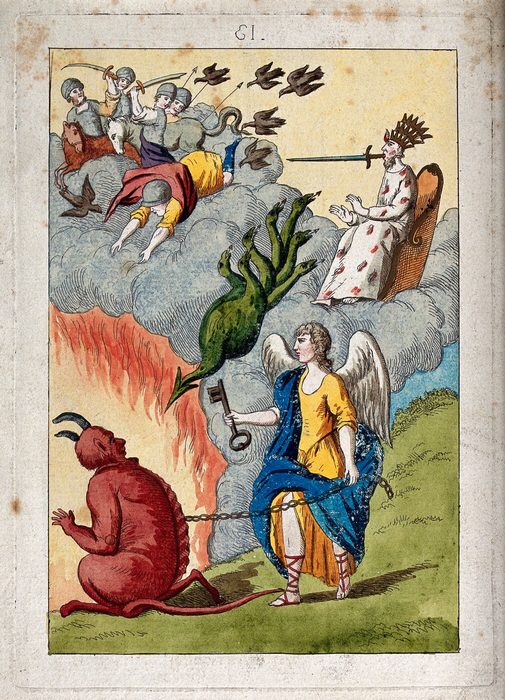
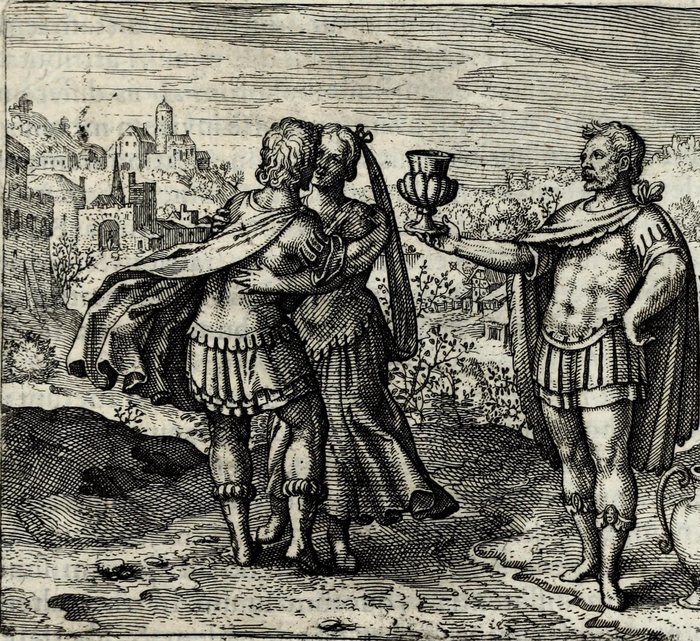
Also carrying the King and the Queen
35 works carry it. The 6 where it is the central motif are here. The symbol.
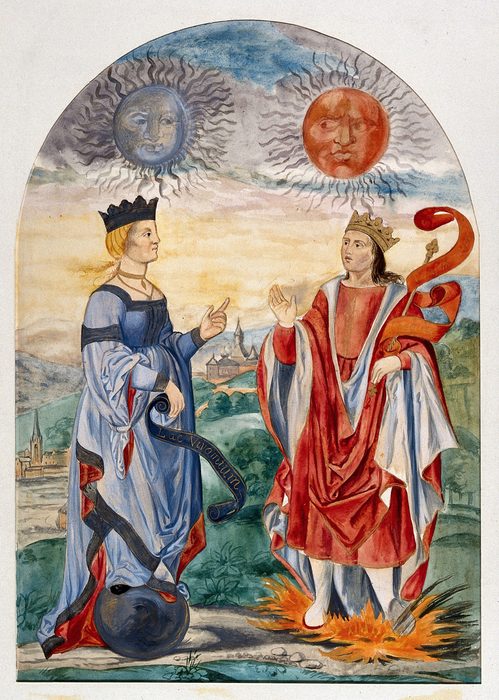
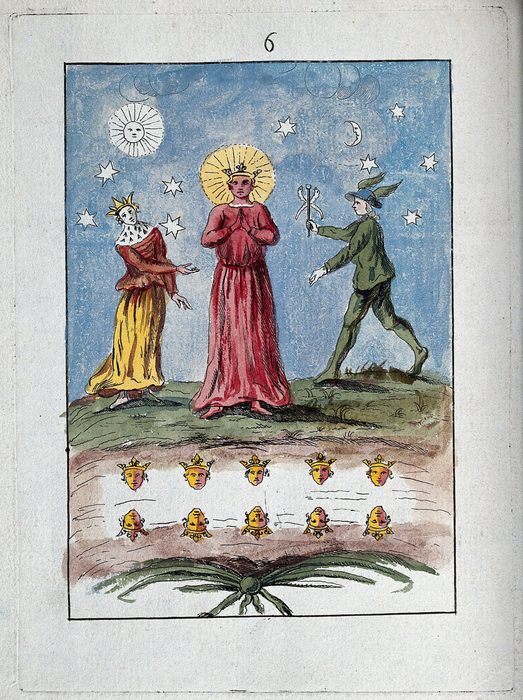
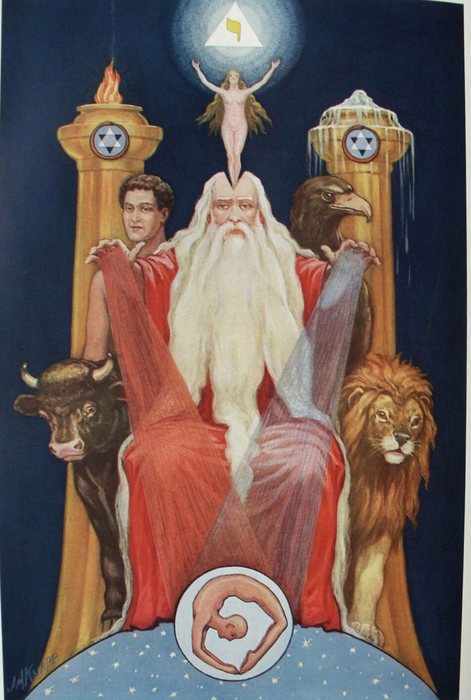
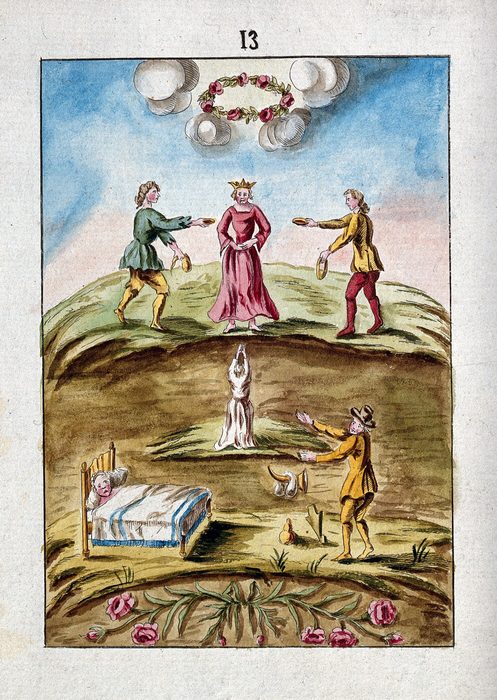
Where the detail is the subject
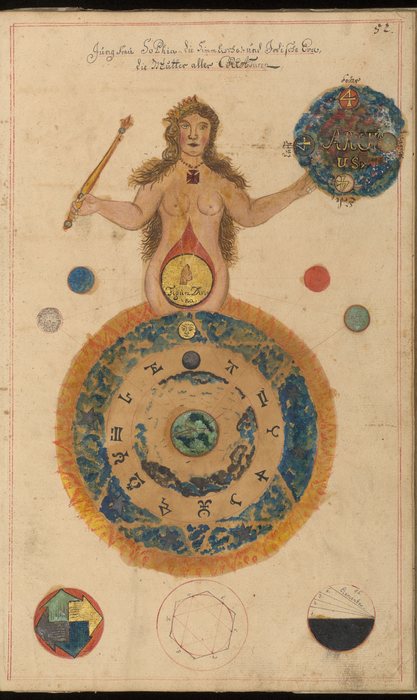
Each of these is in the picture without being what it is about. Below, one work that is about each.
In the same series
Record
One symbol a week, decoded.
This picture is free at full size from its source, linked above. What an address gets is the Sunday letter: one picture, one symbol marked on it, what it meant and who said so, and the master files of the decoded plates as they are verified. Leave any time.
Free, one letter a week, unsubscribe in one click. How the address is used.
Scroll or pinch to zoom · drag to move · double-tap for 1:1 · 815 by 1400 pixel web copy; the source file is linked under Record