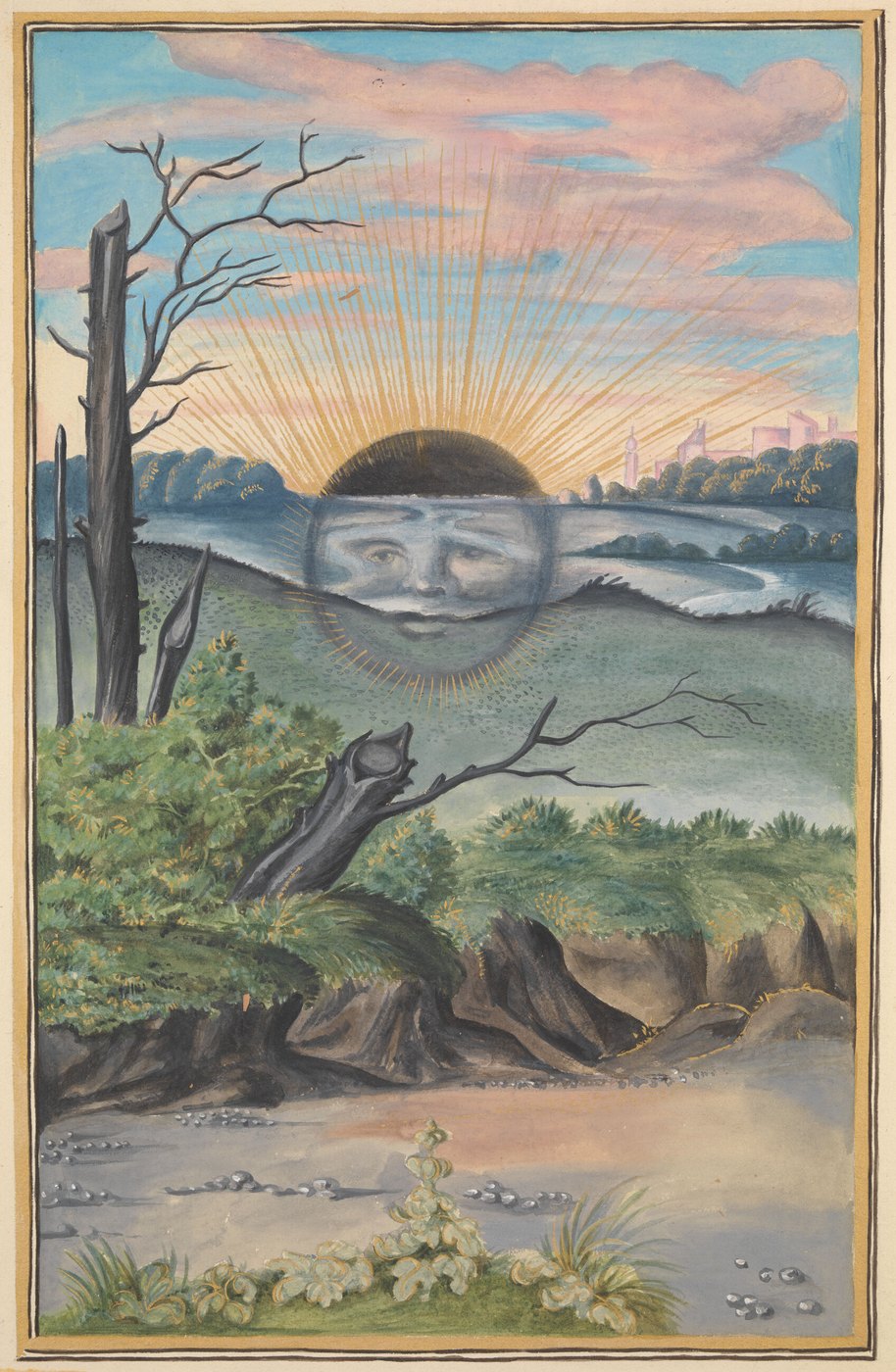
The black sun over the blighted country
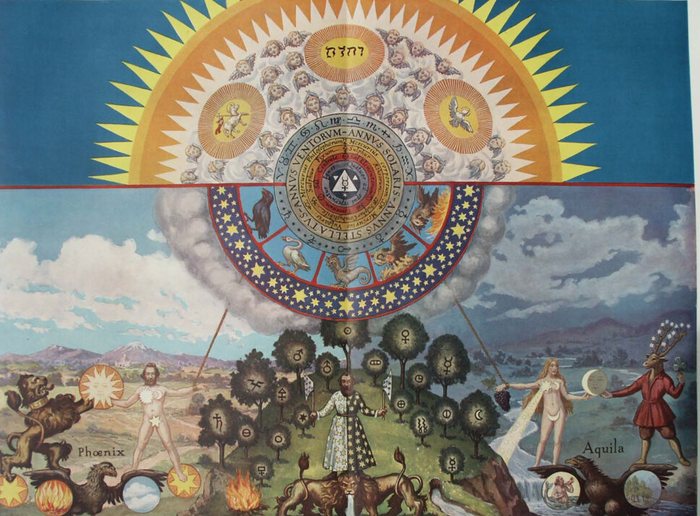
The Sun and the Moon as the central motif, with the Tree and the Water in a secondary part. From Splendor Solis.
What is happening
J. K., who wrote the 1920 elucidation, 1920 “It is a most dismal and curiously dark weird-like subject. A bleakish stunted landscape, with black blighted withered trees in foreground. A MONSTER BLACK SUN is in great part sunk below the ground, yet visible and partly rising above the ground at the centre of the landscape, or middle distance.”
Symbolica J. K. sets MONSTER BLACK SUN in small capitals, the only words he shouts in twenty-two descriptions. The treatise supplies what he will not: this darkness is a wetting of what has dried out, so that it can green and grow again.
Key · 3 motifs
Tap a motif on the picture, or a line below. Its note opens under the line, with the reading its author gave it.
- Primary motif
- Secondary motifs · 2
The picture
A black disc with a human face and long dark rays, half sunk at the horizon of a marshy country with burnt and broken trees in the foreground, gold light escaping from behind it into a pink sky. By eye
The reading
The picture read whole, in the archive's words, from the sources quoted on the marks. Read on, and the picture follows: the motif under discussion keeps its colour.
The dark plate of the book, and J. K. loses his composure over it. Every other description in the twenty-two is an inventory. This one opens with a judgement.
“It is a most dismal and curiously dark weird-like subject”, he begins, and then he shouts, in small capitals: “A MONSTER BLACK SUN is in great part sunk below the ground, yet visible and partly rising above the ground at the centre of the landscape, or middle distance”. Nothing else in his elucidation gets capitals.
Read the next sentence carefully, because it contains two suns. “The rising of this pall-like bristly black sun, overspreads and hides totally the body of the true sun, which lies beyond”. The black one has not taken the place of the true one. It stands in front of it, and the gold breaking round its rim is the one behind, still there, still burning.
“A bleakish stunted landscape, with black blighted withered trees in foreground”. Dead wood, and the treatise fifty pages back has already said what dead wood is for. “The Philosophers do not mean this kind of Putrefaction. Their Putrefaction is a moistening of dry bodies, that they may be restored to their former state of Greening and Growing.” Blackness in this book is the wet ground stage, not the end of anything.
The plate earns its place by refusing consolation and then quietly withholding despair. Nothing in it has been destroyed. Something has been covered up, and the cover is the part the painter drew a face on.
Decoded: every motif is marked, and each mark carries the reading its author gave it, quoted from the text, or says that it is observed on the picture and not read. The reading above is the archive's own, made from those sources and no others.
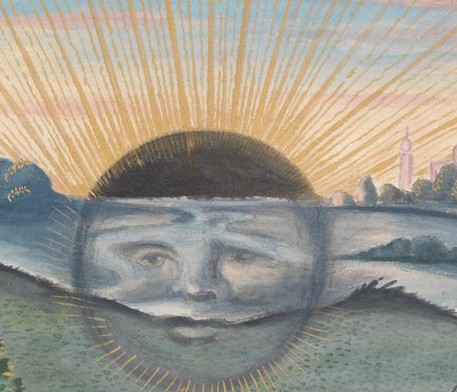
Gold, the perfected metal, and the illuminated intellect. The most overloaded symbol in the tradition.
In plain words A dark disc with a human face carrying long bristling rays, cut in half by the line of the land, with gold light breaking round its edge from something behind it.
J. K., who wrote the 1920 elucidation, 1920 “A MONSTER BLACK SUN is in great part sunk below the ground, yet visible and partly rising above the ground at the centre of the landscape, or middle distance.”
J. K., who wrote the 1920 elucidation, 1920 “The rising of this pall-like bristly black sun, overspreads and hides totally the body of the true sun, which lies beyond”
Symbolica Two suns, one in front of the other. The black one has not replaced the true one; it stands in front of it, and the gold at its rim is the one behind still burning.
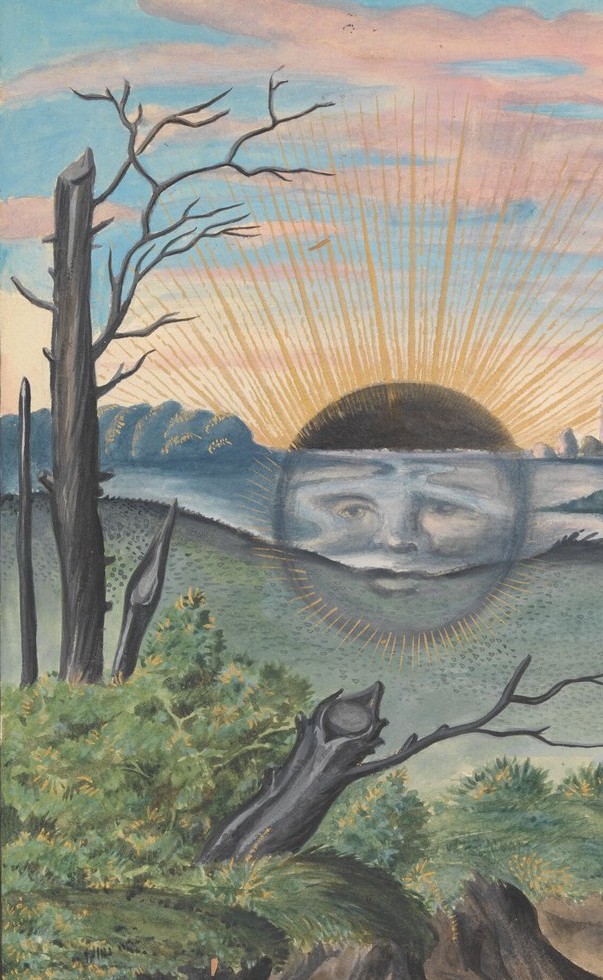
A body drawn as growth. Note which way it grows and what is at the root rather than at the top.
In plain words A tall dead trunk at the left with its bark gone and its branches snapped, and a second broken stump lower down in the middle of the field.
J. K., who wrote the 1920 elucidation, 1920 “A bleakish stunted landscape, with black blighted withered trees in foreground.”
Salomon Trismosin, attributed, 1920 “The Philosophers do not mean this kind of Putrefaction. Their Putrefaction is a moistening of dry bodies, that they may be restored to their former state of Greening and Growing.”
Symbolica Blighted and withered, which is the state the treatise wants undone. Dry bodies restored to their former state of Greening and Growing is the sentence this whole dead field waits on.
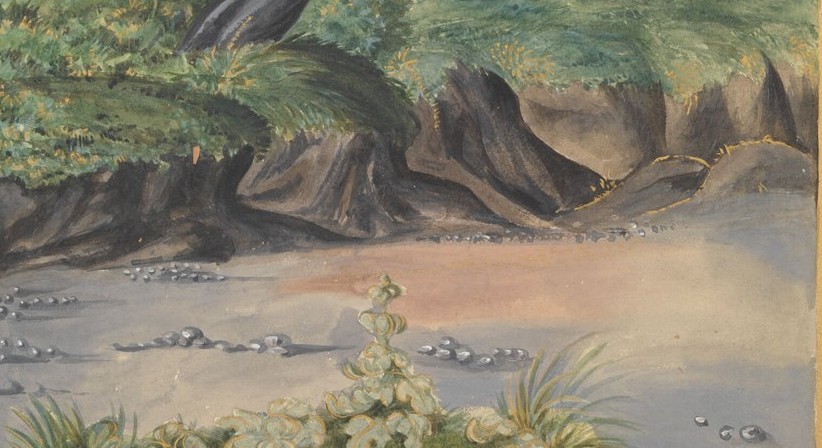
Where a thing is taken apart rather than destroyed. Note whether the figure is in the water, on it, or pouring it.
In plain words Pale wet ground with stones in it, stretching the width of the sheet under the trees.
Symbolica The wet is on the plate and neither J. K. nor the treatise attaches it to this picture. Recorded as observed, and its bearing on putrefaction left unclaimed.
Also carrying the Sun and the Moon
59 works carry it. The 6 where it is the central motif are here. The symbol.
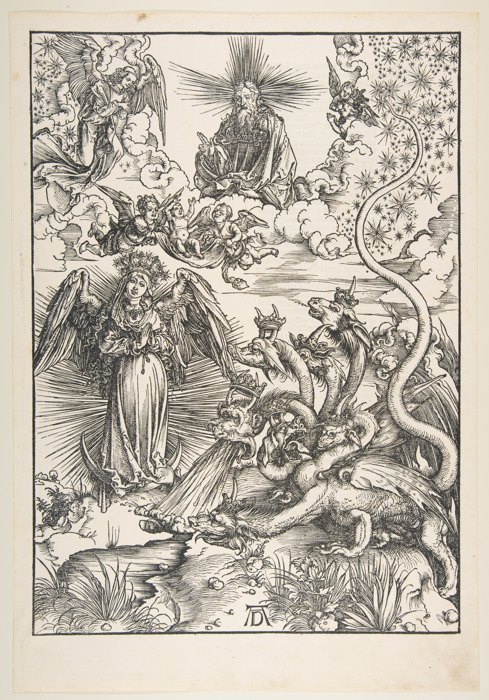
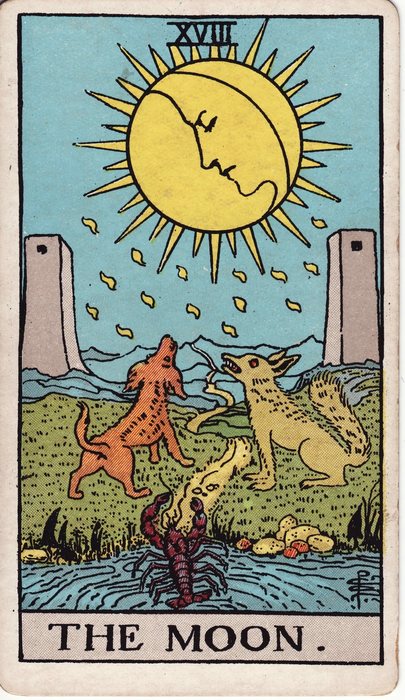
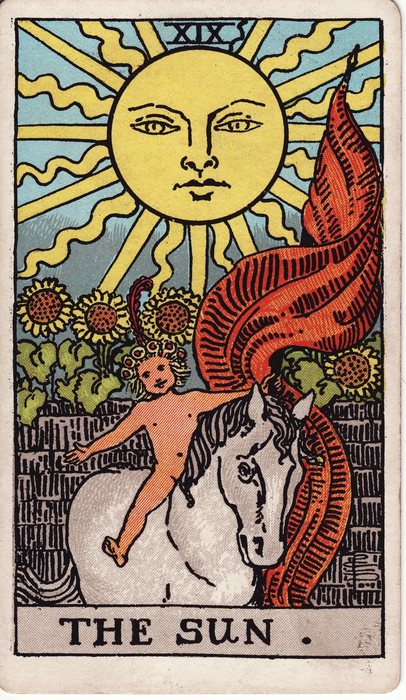
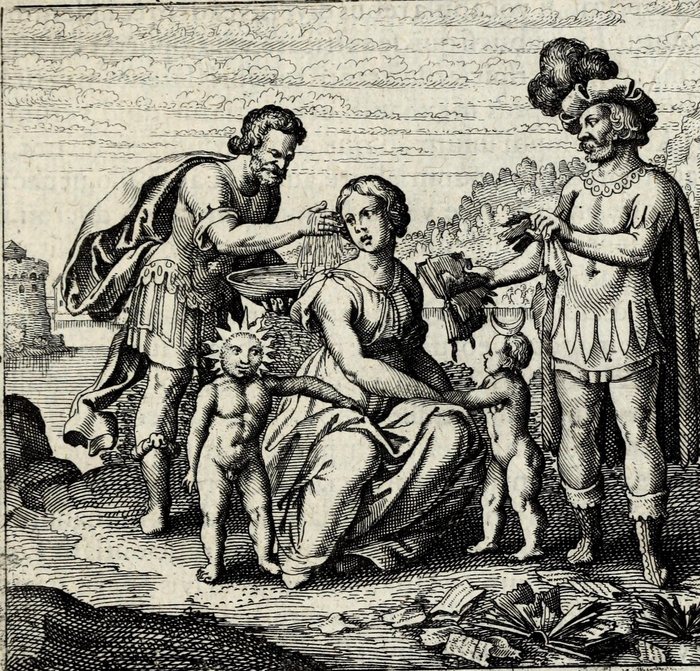
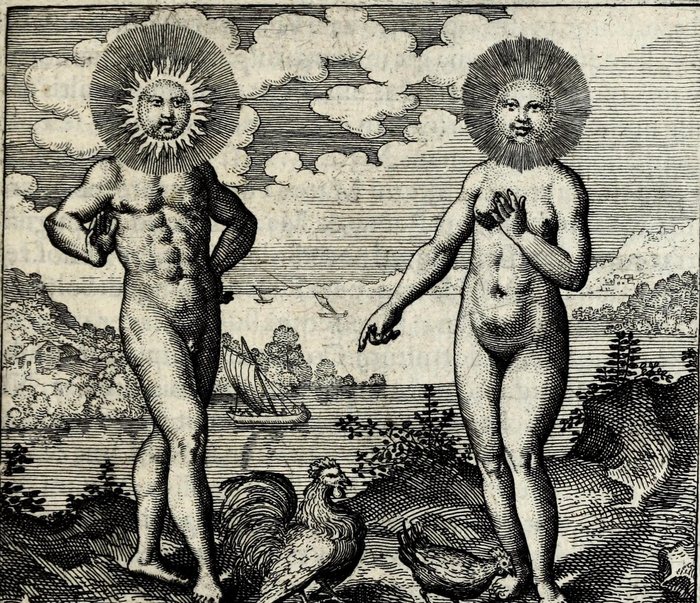
Where the detail is the subject
Each of these is in the picture without being what it is about. Below, one work that is about each.
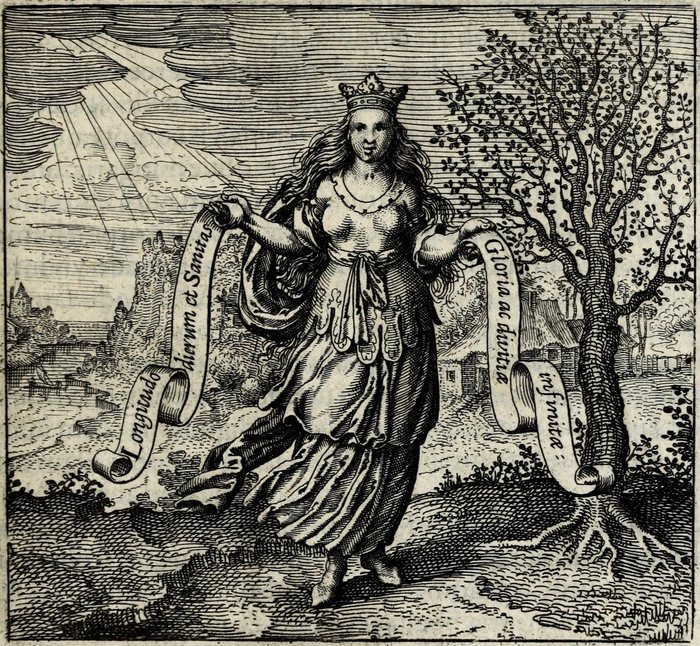
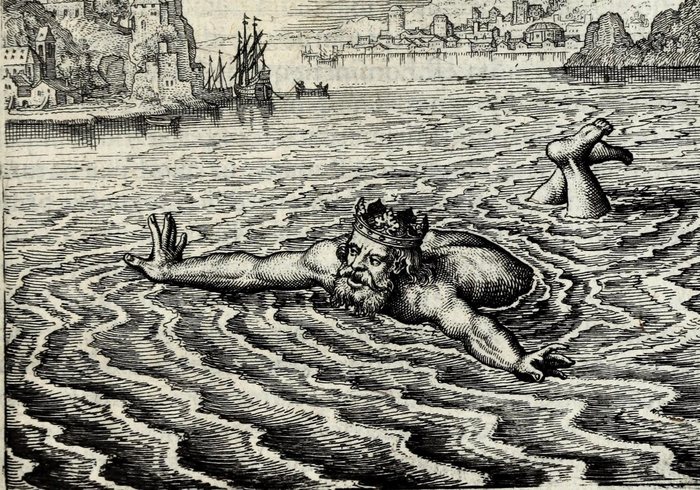
In the same series
After Splendor Solis, watercolours by Edith A. Ibbs, 1900 to 1909
Record
One symbol a week, decoded.
This picture is free at full size from its source, linked above. What an address gets is the Sunday letter: one picture, one symbol marked on it, what it meant and who said so, and the master files of the decoded plates as they are verified. Leave any time.
Free, one letter a week, unsubscribe in one click. How the address is used.
Scroll or pinch to zoom · drag to move · double-tap for 1:1 · 914 by 1400 pixel web copy; the source file is linked under Record