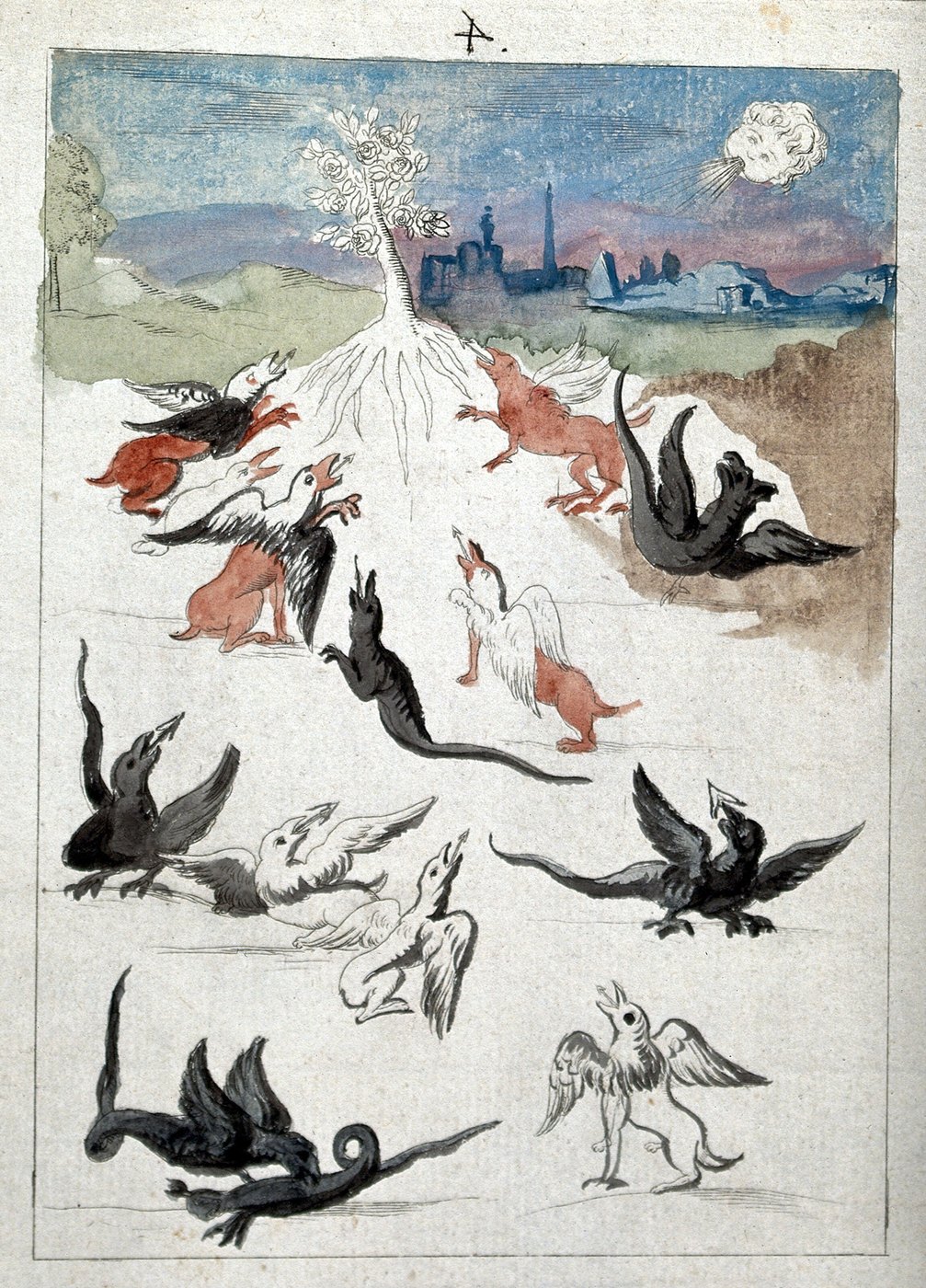
The Flowering Tree on the Mountain, with the Dragons and Griffons
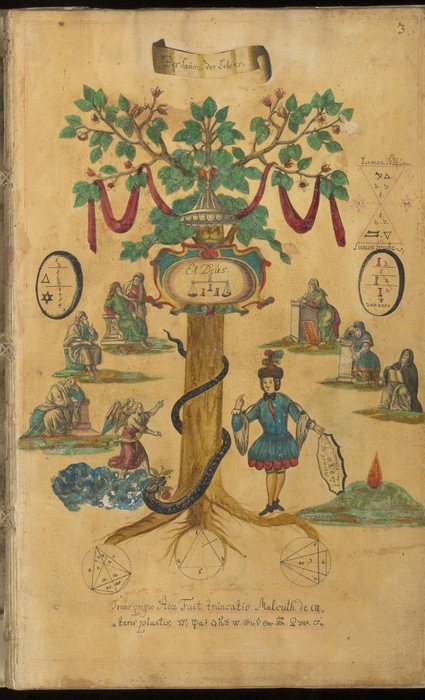
The Tree as the central motif, with the Serpent and the Dragon, and the Demon and the Monster in a secondary part. From The Flamel figures.
What is happening
Wellcome Collection, 2026 “The Livre takes its inspiration from a text by Nicolas Flamel (ca. 1330-1417) first published in France in 1612, then in England in 1624. Flamel tells of how a book written by one Abraham the Jew fell into his hands and goes on to describe its illustrations, which he does not attempt to reproduce. Only in 1672, in W. Salmon's edition of the book, did the images come to be actualised.”
Symbolica So the picture came after the words, by some sixty years at least, and everything on it can be checked against them.
Key · 3 motifs
Tap a motif on the picture, or a line below. Its note opens under the line, with the reading its author gave it.
- Primary motif
- Secondary motifs · 2
The picture
A slender tree in white flower stands on a bare white mound with its roots showing; a face in a cloud blows at it from the right; eleven beasts are ranged below, some winged serpents with long curled tails, some eagle-headed with wings on four-footed bodies; a walled town on the skyline. By eye
The reading
The picture read whole, in the archive's words, from the sources quoted on the marks. Read on, and the picture follows: the motif under discussion keeps its colour.
Nicolas Flamel says he bought a gilded book for two florins from a man who did not know what he had, and that its fourth and fifth leaves carried no writing at all, only paintings. He then describes the paintings, in the first person, in detail, and pointedly does not draw them. This sheet is somebody drawing them anyway.
Take his sentence about the fourth leaf a clause at a time. “a faire flowre on the top of a very high mountaine”: here it is, a slender thing in white bloom standing on a bare mound with its roots out in the air. “sore shaken with the North wind”: the engraver cut a face into the cloud at the upper right and drew the breath coming out of it in lines. The flowers were to be white and red; they are white here, and the red went onto the beasts instead. The foot was to be blue, and the mound is white. That one he let go.
Then the last clause, and it is the reason the sheet is so crowded: “round about it the Dragons and Griffons of the North made their nests and abode.” He names two kinds and no others, and the engraver keeps them apart, which is a good sign he was reading rather than inventing. Dragons here are black, winged, long-tailed, with no forelegs.
The griffons have the head and the beak of an eagle set on a four-footed body with the wings up, and they come in red, white and grey. Eleven beasts in all, and every one of them faces the tree with its jaws open. Flamel does not say they want it. He says they nest there.
What the picture cannot do is the thing Flamel does next. Having described the fourth and fifth leaves he stops, and says he will not represent what was written on the others, because God would punish him for it. The engraver had the paintings to go on and nothing else, and this sheet is the whole of what a reader could recover: a flowering tree, a wind, and eleven animals waiting.
Decoded: every motif is marked, and each mark carries the reading its author gave it, quoted from the text, or says that it is observed on the picture and not read. The reading above is the archive's own, made from those sources and no others.
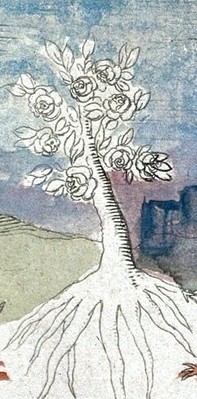
A body drawn as growth. Note which way it grows and what is at the root rather than at the top.
In plain words Flamel puts four things in one sentence and the engraver drew all four: the flower on the high mountain, the north wind shaking it, the white and red of the flowers, the gold of the leaves. He drew the wind as a face, which is his own addition, and he drew the mound white where Flamel says the foot was blue.
Nicolas Flamel, 1624 “On the other side of the fourth leafe, hee painted a faire flowre on the top of a very high mountaine, which was sore shaken with the North wind; it had the foot blew, the flowres white and red, the leaues shining like fine gold:”
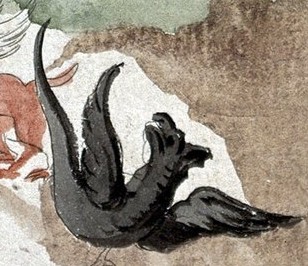
A single creature doing two opposite jobs. Note whether it is bound, killed, or eating itself.
In plain words Flamel names two kinds of beast and no others, and the sheet keeps them apart: these are the dragons, black, winged, with the long tail and no forelegs.
Nicolas Flamel, 1624 “And round about it the Dragons and Griffons of the North made their nests and abode.”
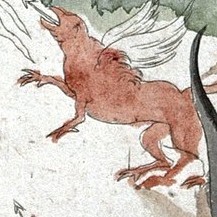
Almost always a composite and almost always subordinate. Note what it is made of and whether it is bound.
In plain words And these are the griffons: the head and beak of an eagle on a four-footed body, wings up. Flamel gives them nests round the tree and no work to do. On the sheet they are all facing it, jaws open, and none of them has reached it.
Nicolas Flamel, 1624 “And round about it the Dragons and Griffons of the North made their nests and abode.”
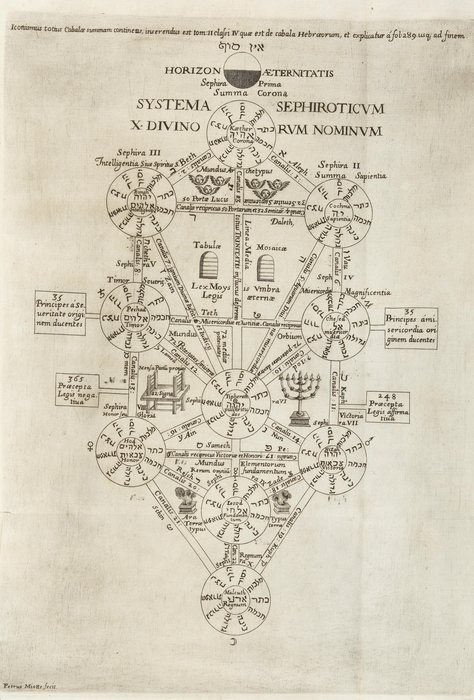
Also carrying the Tree
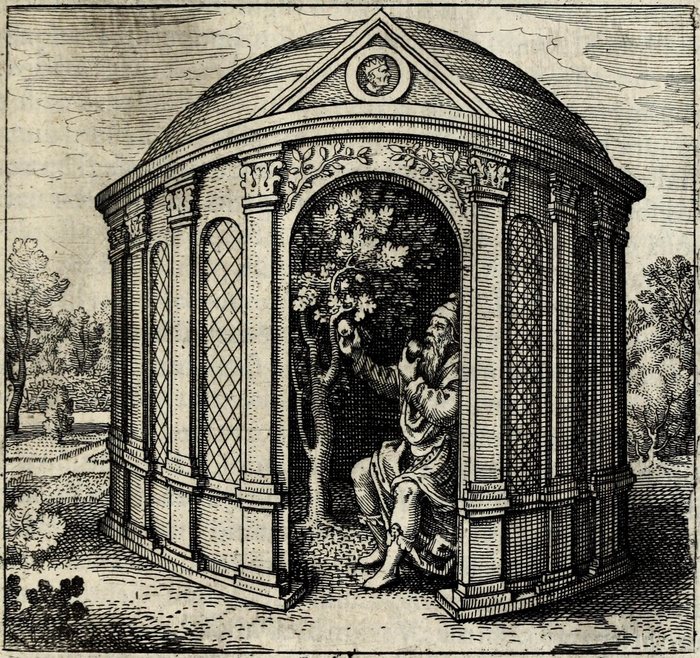
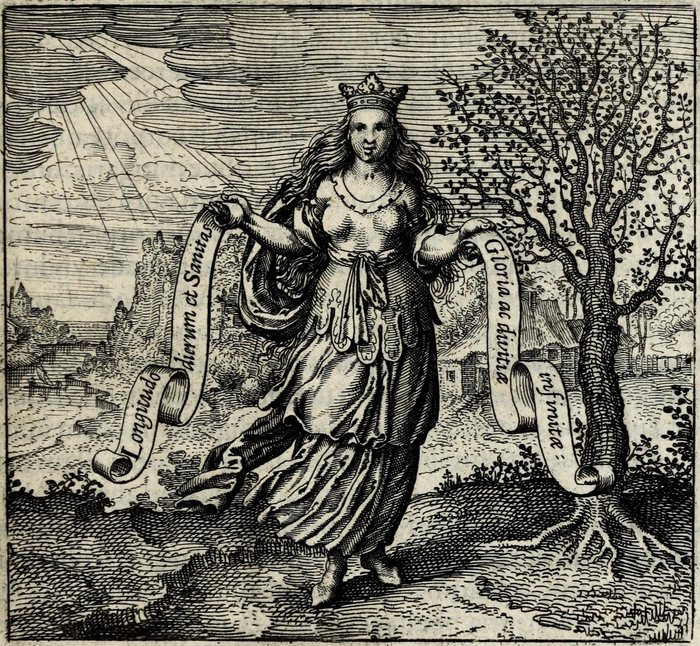
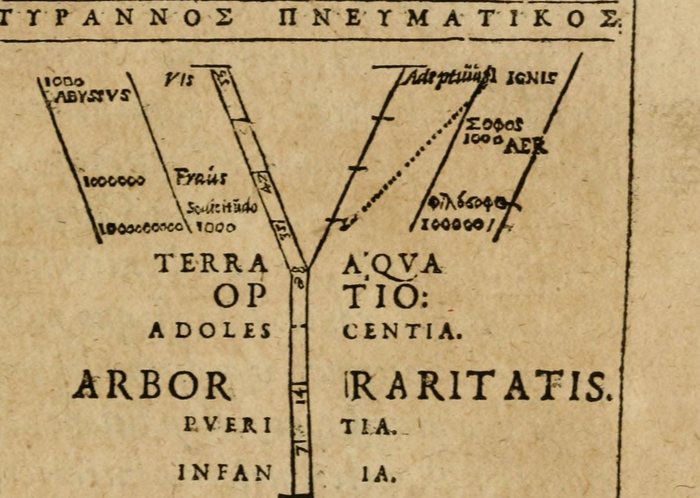
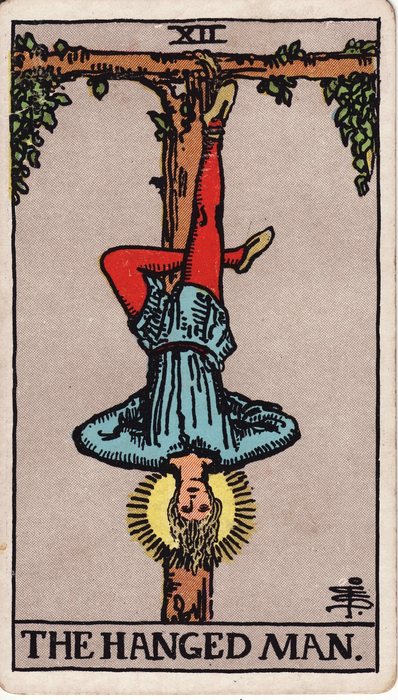
20 works carry it. The 6 where it is the central motif are here. The symbol.
Where the detail is the subject
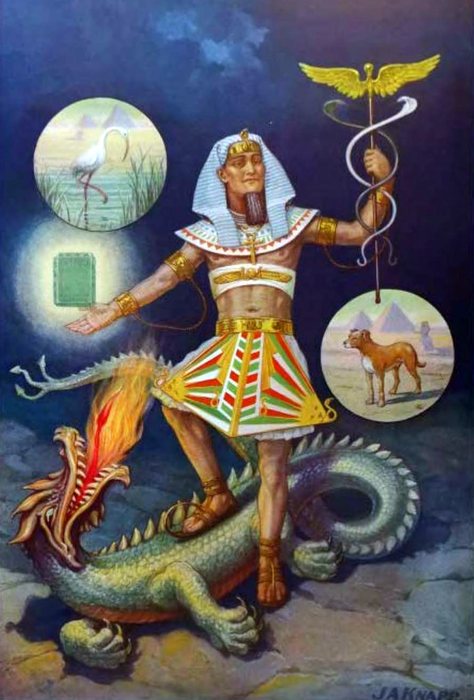
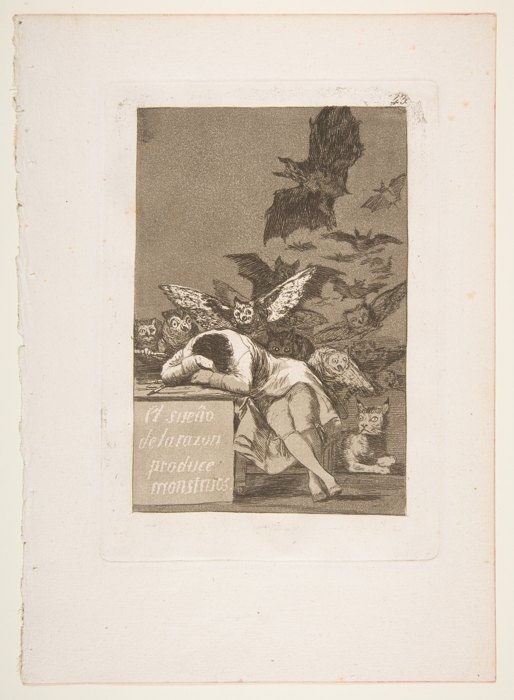
the Serpent and the Dragon · the Demon and the Monster
Each of these is in the picture without being what it is about. Below, one work that is about each.
In the same series
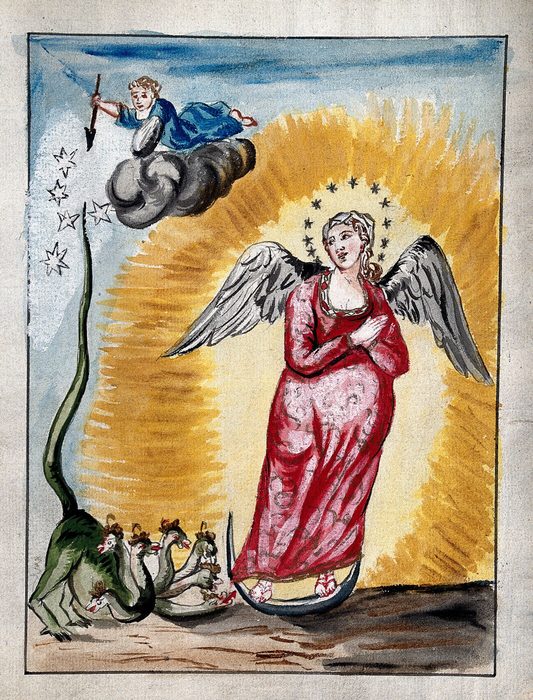
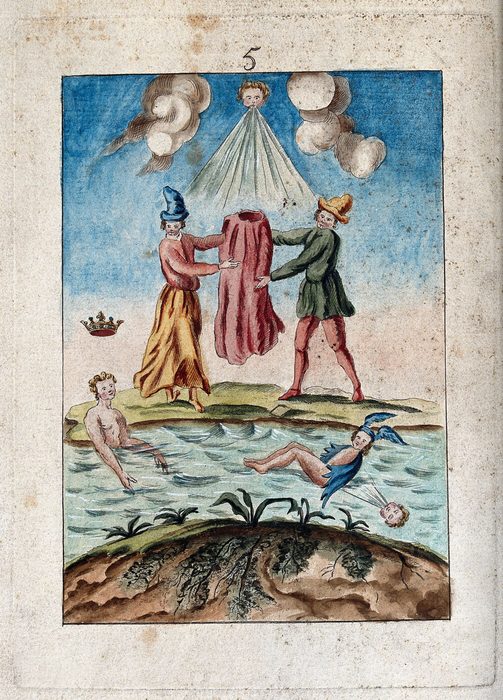
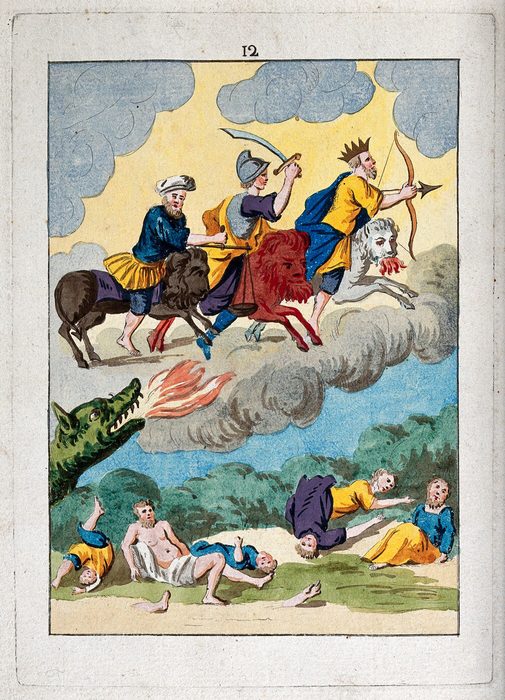
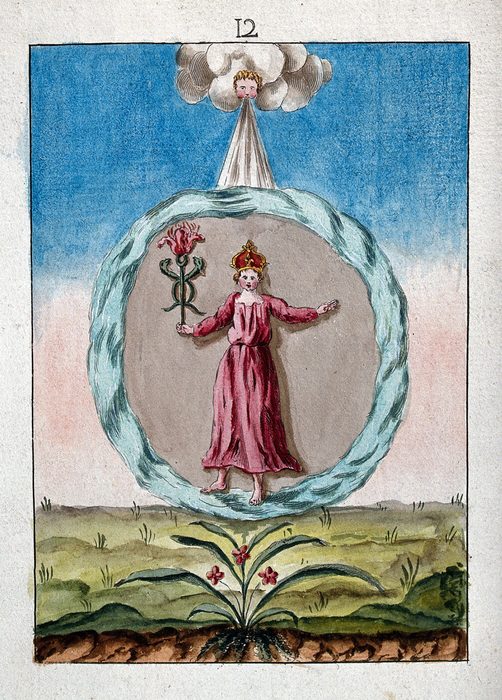
Record
One symbol a week, decoded.
This picture is free at full size from its source, linked above. What an address gets is the Sunday letter: one picture, one symbol marked on it, what it meant and who said so, and the master files of the decoded plates as they are verified. Leave any time.
Free, one letter a week, unsubscribe in one click. How the address is used.
Scroll or pinch to zoom · drag to move · double-tap for 1:1 · 1007 by 1400 pixel web copy; the source file is linked under Record