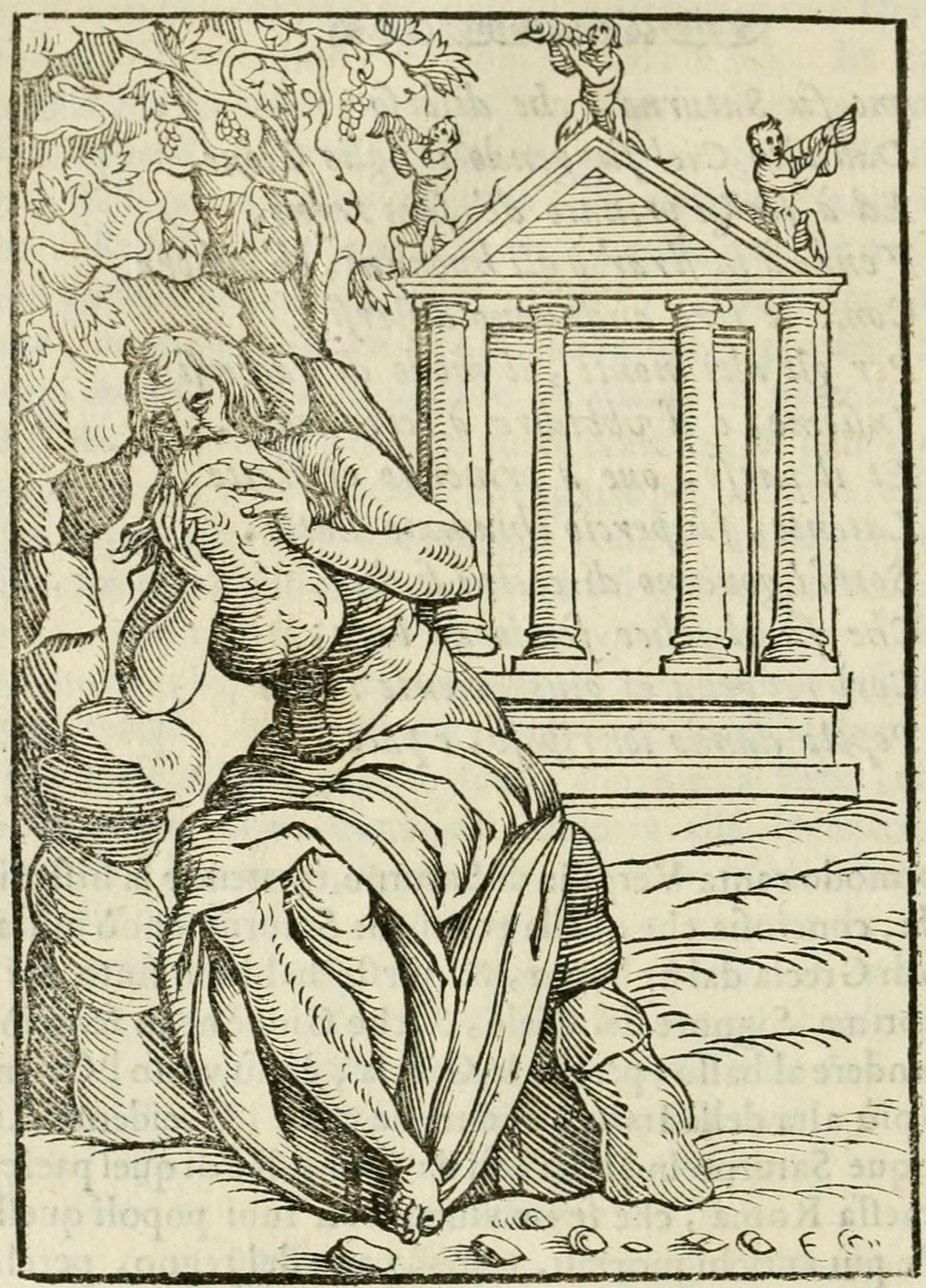
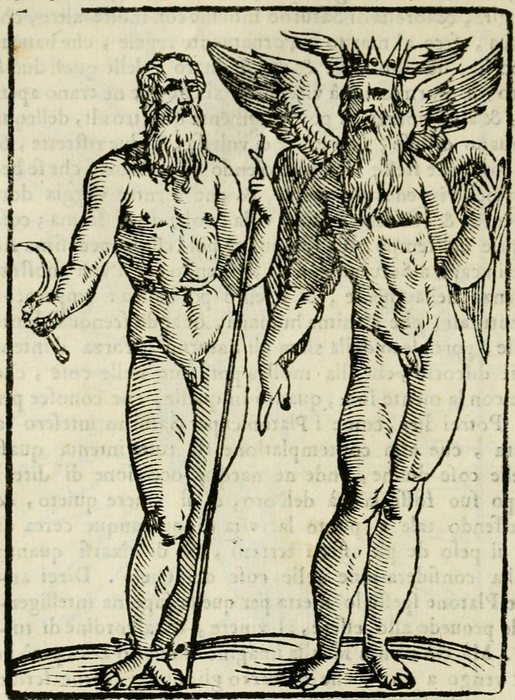
Imagine di Saturno, ò del Tempo divoratore de suoi figliuoli
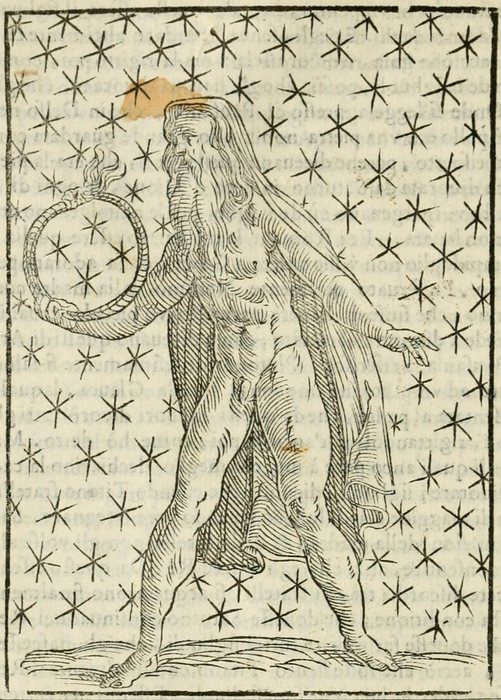
The Heavens as the central motif, with the King and the Queen, the Tree, and the Demon and the Monster in a secondary part. From Le vere e nove imagini de gli dei delli antichi, 1615.
What is happening
Vincenzo Cartari, 1615 “Imagine di Saturno, ò del Tempo divoratore de suoi figliuoli, cioè del tutto consumatore, eccettuati Gioue, Giunone, Nettuno, & Plutone, intesi per li quattro elementi Fuoco, Aria, Aqua, & Terra, che non si distruggono.”
Symbolica Cartari's caption, put into English here: Image of Saturn, or of Time the devourer of his own children, that is the consumer of everything, except Jupiter, Juno, Neptune and Pluto, understood as the four elements Fire, Air, Water and Earth, which are not destroyed.
Key · 4 motifs
Tap a motif on the picture, or a line below. Its note opens under the line, with the reading its author gave it.
- Primary motif
- Secondary motifs · 3
The picture
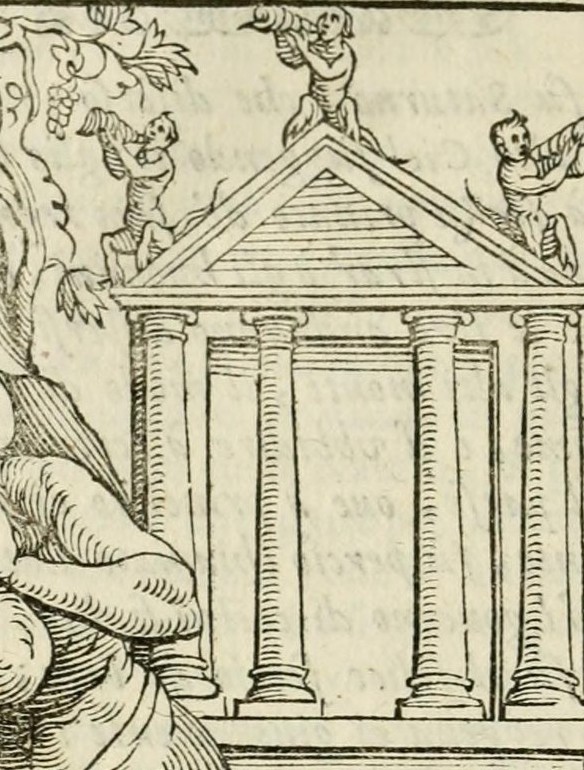
An old man bends his head into a child he holds head downward; a vine loaded with grapes hangs over him, a temple of six columns stands behind, three half figures blow conch shells from its roof, and loose stones lie on the ground at his feet. By eye
The reading
The picture read whole, in the archive's words, from the sources quoted on the marks. Read on, and the picture follows: the motif under discussion keeps its colour.
Cartari wrote a handbook for painters. Every god gets a picture, and then a page saying what each part of the picture does. Saturn gets four blocks in a row, and this is the first.
The caption names him twice, Saturn and Time, and then explains the appetite: he consumes everything. Four children get away, and page 29 says which four and what they stand for. Jupiter, Juno, Pluto and Neptune are fire, air, earth and water. Time devours what time made, and it cannot make a meal of the elements.
On page 25 Cartari describes the antique statue he is working from, and it holds no child. It holds a certain thing wrapped in a cloth, which the god seems to be pushing into his throat. Two pages later he opens the cloth: the stone Ops gave her husband in place of Jupiter, swallowed without a second look. The block cutter unwrapped it and drew the child.
The vine over his shoulder earns its place the same way. Cartari calls Saturn Vitisatore a few lines earlier, the planter of vines, because he came into Italy and taught the country to plant, tend and press them.
Which leaves the temple, and the three figures on its roof. Each holds a spiral shell to his mouth, and each stops at the tiles with nothing underneath. Cartari's page hands them their lower halves. The ancients put a Triton with the trumpet at its mouth on top of Saturn's temple and buried the tail, because history begins to be told at Saturn, and before the times were separated it could only be mute.
Decoded: every motif is marked, and each mark carries the reading its author gave it, quoted from the text, or says that it is observed on the picture and not read. The reading above is the archive's own, made from those sources and no others.
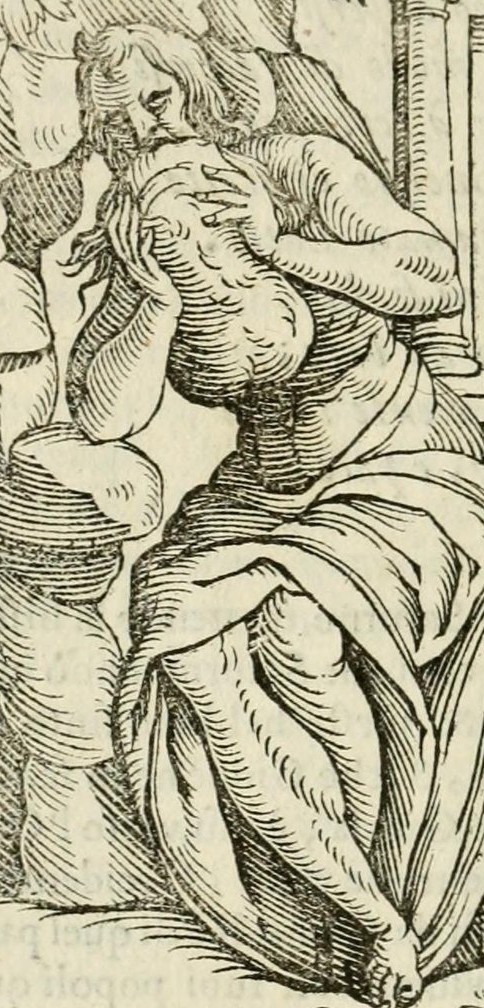
The outermost planet of the old order, the metal lead, the black first stage of the work, and an old man with a sickle. One sign does all four jobs, and the books move between them without explaining themselves.
In plain words Cartari's caption names him twice over, Saturn and Time, and gives the appetite its reason: he consumes everything. Four children get away from him, and the exposition names them on page 29 as the four elements. Time devours what time made, and the elements were not made in time.
Vincenzo Cartari, 1615 “da gli elementi in fuori, che sono i quattro figliuoli, Gioue, Giunone, Plutone, e Nettuno, cioè fuoco, aria, terra, & acqua, li quali non passarono per la vorace gola, perche questi durano sempre.”
Symbolica Cartari's Italian, put into English here: apart from the elements, which are the four children, Jupiter, Juno, Pluto and Neptune, that is fire, air, earth and water, which did not pass down the greedy throat, because these last for ever.
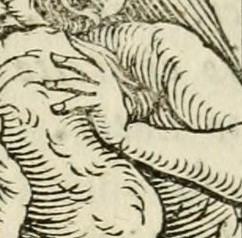
In the alchemical pictures a child is the thing being made. In the Apocalypse it is the thing under attack.
In plain words The statue Cartari is working from held no child. It held a certain thing wrapped in a cloth, and two pages later he says what was inside the cloth: the stone Ops handed her husband in place of Jupiter, which he swallowed without looking and brought up again. The block cutter unwrapped it and drew the child instead.
Vincenzo Cartari, 1615 “perche le fecero quasi sempre di huomo vecchio, mal vestito, senza nulla in capo, con vna falce nell'vna mano, & nell'altra haueua certa cosa auiluppata in vn panno, quale pareua cacciarsi in gola, come che la volesse diuorare, e quattro piccoli fanciullini gli erano quiui appresso.”
Symbolica Cartari's Italian, put into English here: because they made him nearly always as an old man, badly clothed, with nothing on his head, a sickle in one hand, and in the other a certain thing wrapped in a cloth which he seemed to be pushing into his throat as though he wanted to devour it, and four little children stood there beside him.
Vincenzo Cartari, 1615 “Ope gli presentò certa pietra auuolta in vn panno, dicendo quello essere il figliuolo, che egli domandaua. Et egli, senza guardare altrimente che fosse, se la cacció in gola, e diuorossela”
Symbolica Cartari's Italian, put into English here: Ops presented him with a certain stone wrapped in a cloth, saying that this was the son he was asking for. And he, without looking to see what it was, thrust it down his throat and devoured it.
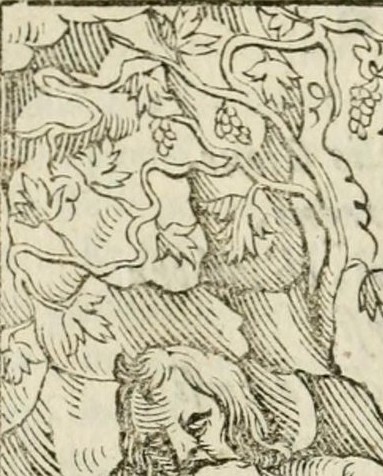
A body drawn as growth. Note which way it grows and what is at the root rather than at the top.
In plain words Not scenery. Cartari gives Saturn a second name a few lines above the description of the statue, and the vine is that name drawn: the god who came into Italy and taught the country how to plant a vine, keep it and make wine out of it.
Vincenzo Cartari, 1615 “Fu detto anco Saturno, Vitisatore, quasi cultor delle viti, perche dicono, che essendo passato nell'Italia, come s'è detto, & accettato da' Latini, ne hebbe della figlia di vno d'essi Enotria nominata, alcuni figliuoli, trà quali vien connumerato Giano; a chi egli insegnò il modo di piantare, & coltiuar la vite, & di fare il vino”
Symbolica Cartari's Italian, put into English here: Saturn was also called Vitisatore, as one might say the cultivator of vines, because they say that having passed into Italy, as has been said, and been received by the Latins, he had by the daughter of one of them, named Enotria, some children, among whom Janus is counted; and it was Janus he taught how to plant and tend the vine, and how to make wine.
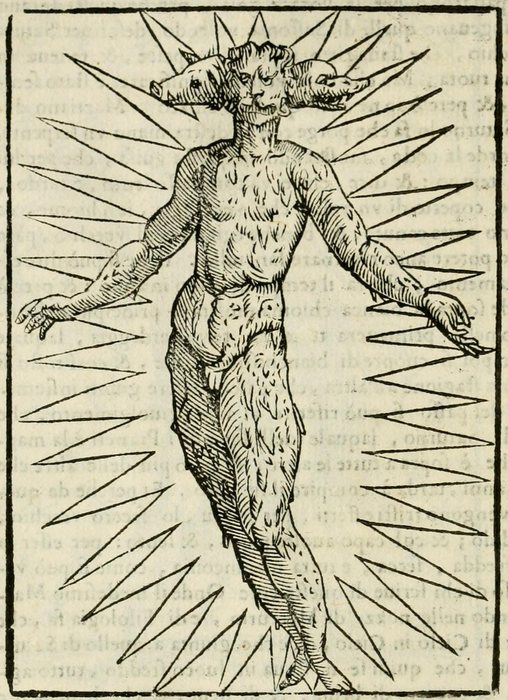
Almost always a composite and almost always subordinate. Note what it is made of and whether it is bound.
In plain words Sea monsters, and their missing halves have a job. Cartari's page says the ancients set a Triton with the trumpet at its mouth on the top of Saturn's temple and buried its tail out of sight, because history begins to be told at Saturn, and before the times were separated it could only be mute. The block cutter gave him three and let the roof do the burying.
Vincenzo Cartari, 1615 “Soleuano gli antichi porre sù la cima del tempio di Saturno vn Tritone con la buccina alla bocca, & sepelir iui sotterra la coda di quello, volendo con ciò mostrare, come dice Macrobio, che da Saturno cominciò la historia a farsi palese, & ad esser conosciuta, perche senza dubio, innanzi che fossero distinti i tempi, ella non poteua essere se non muta, & incognita; il che significaua il nascondere la coda.”
Symbolica Cartari's Italian, put into English here: The ancients used to set on the top of Saturn's temple a Triton with the trumpet at its mouth, and to bury its tail underground there, wishing to show by this, as Macrobius says, that history began at Saturn to become plain and to be known, because without doubt, before the times were distinguished, it could only be mute and unknown; which was what the hiding of the tail signified.
Also carrying the Heavens
53 works carry it. The 6 where it is the central motif are here. The symbol.
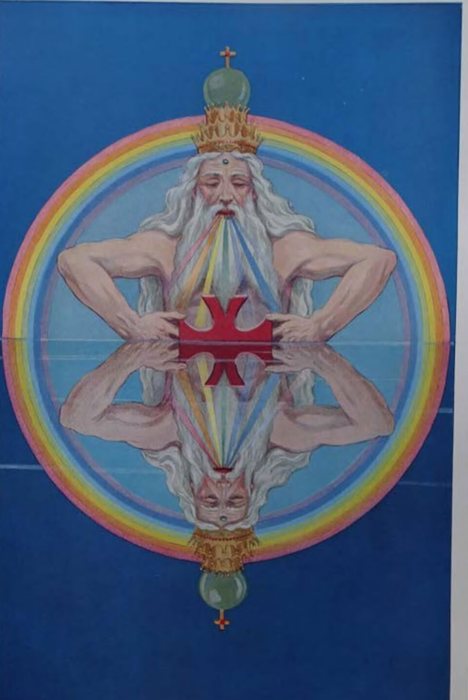
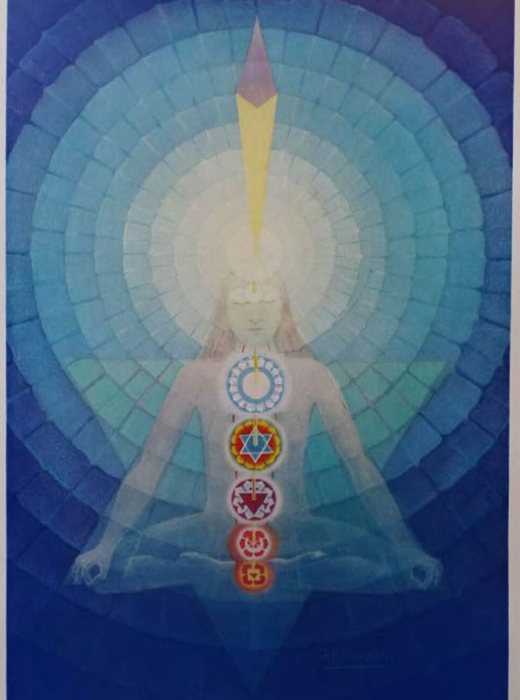
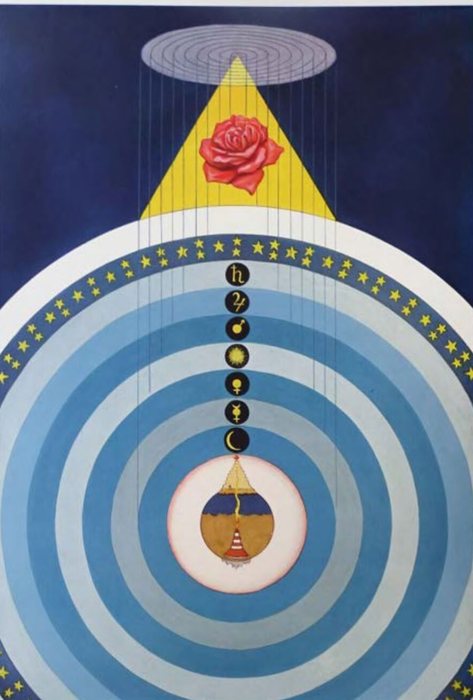
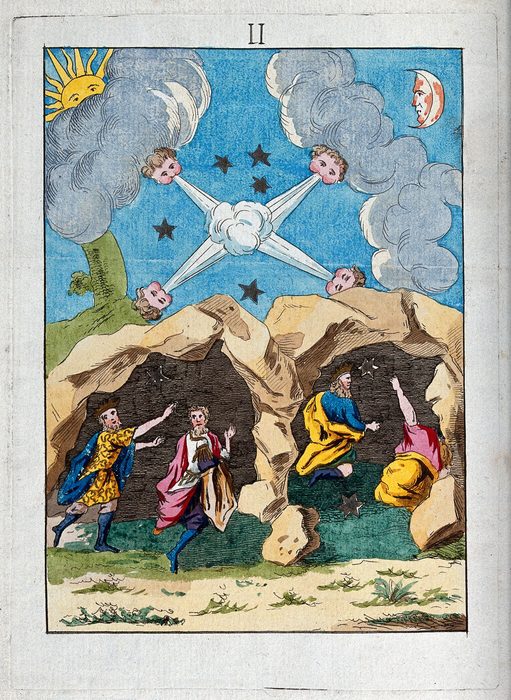
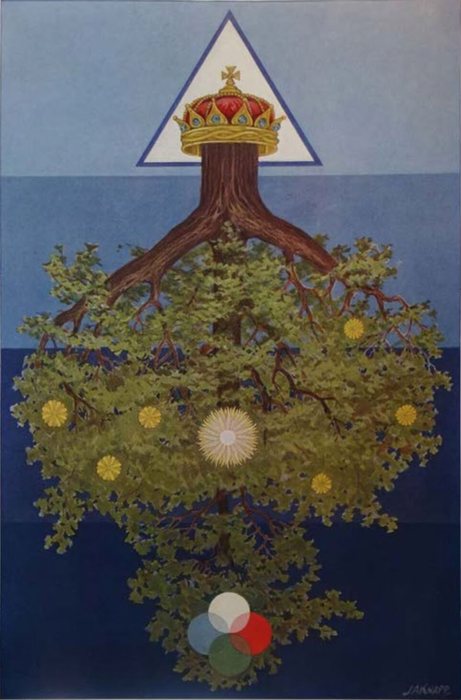
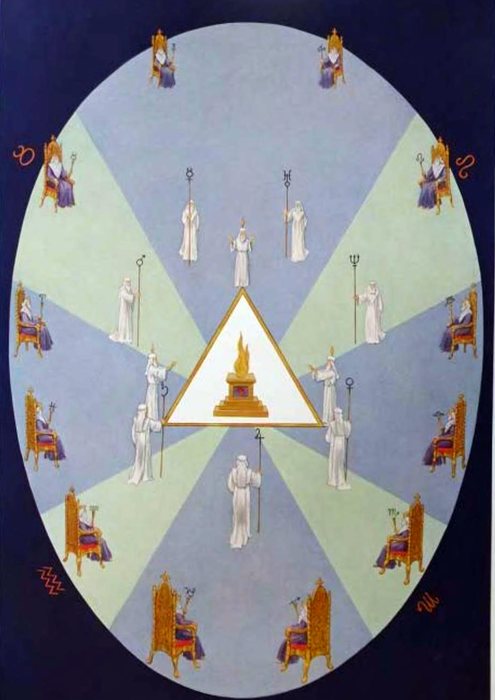
Where the detail is the subject
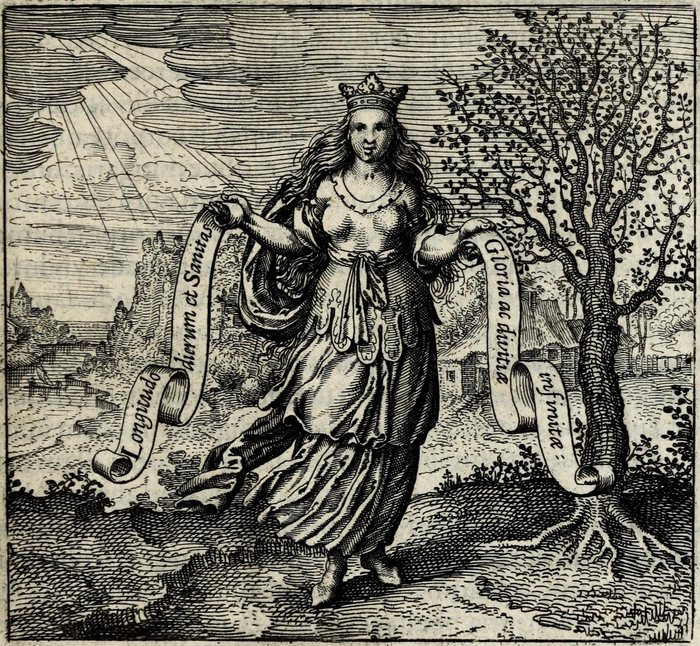
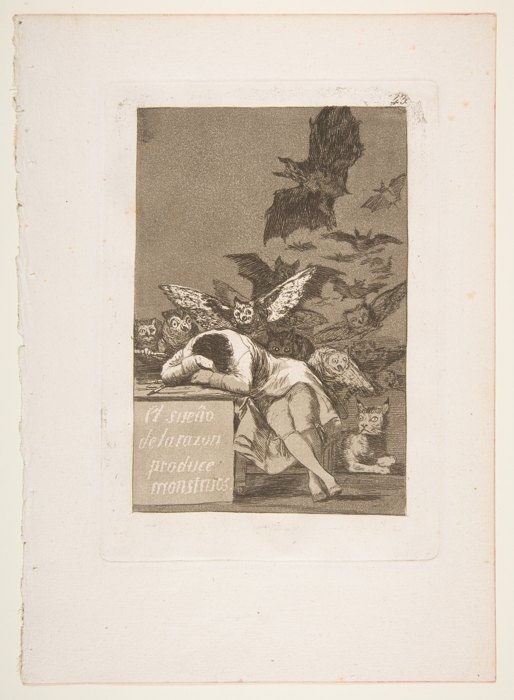
the King and the Queen · the Tree · the Demon and the Monster
Each of these is in the picture without being what it is about. Below, one work that is about each.
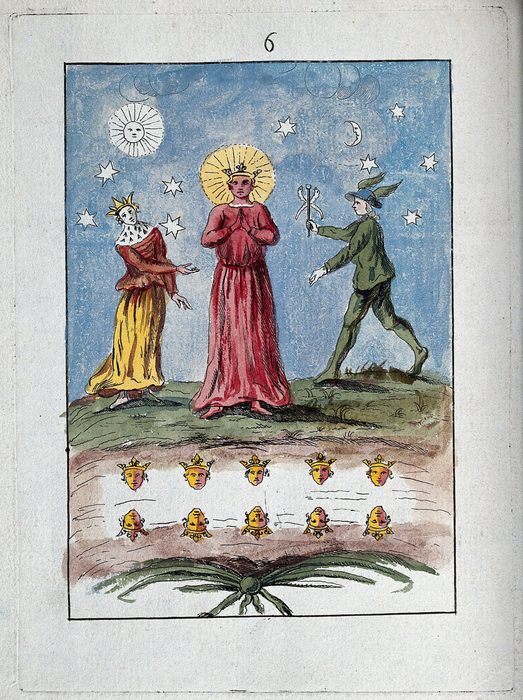
In the same series
Record
One symbol a week, decoded.
This picture is free at full size from its source, linked above. What an address gets is the Sunday letter: one picture, one symbol marked on it, what it meant and who said so, and the master files of the decoded plates as they are verified. Leave any time.
Free, one letter a week, unsubscribe in one click. How the address is used.
Scroll or pinch to zoom · drag to move · double-tap for 1:1 · 1007 by 1400 pixel web copy; the source file is linked under Record