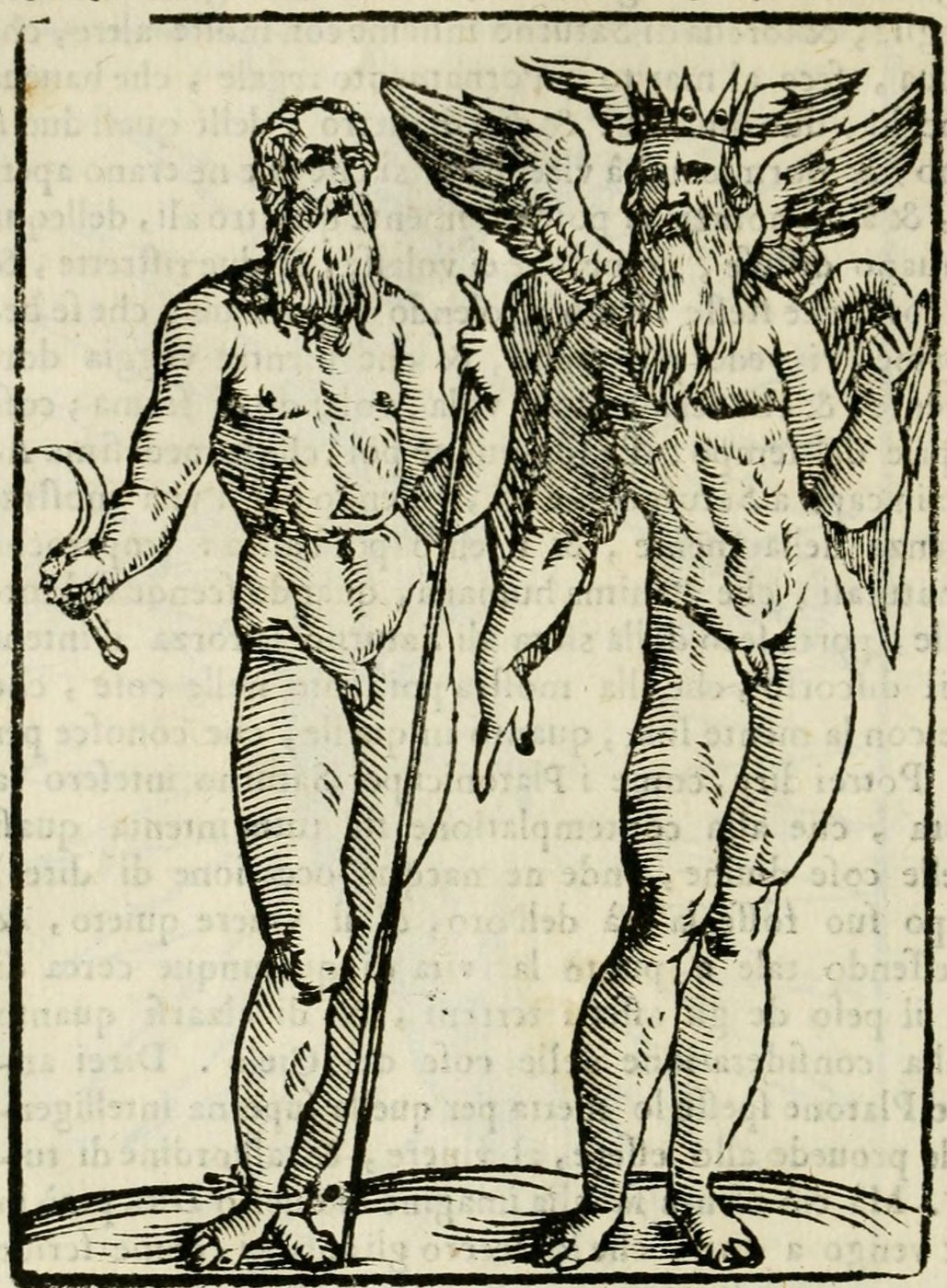
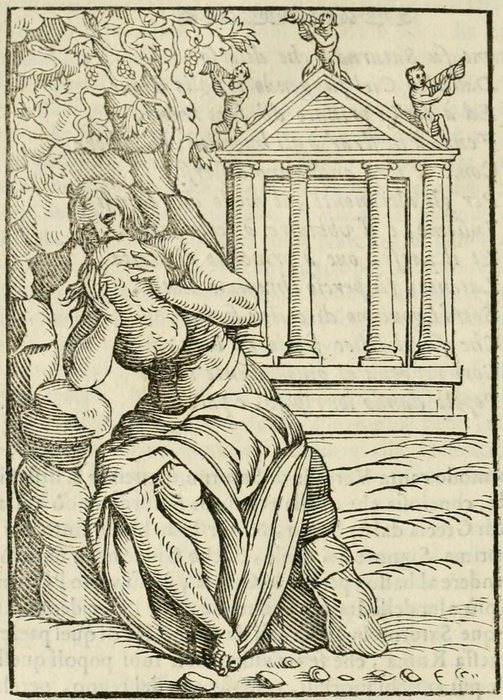
Imagine di Saturno, & del Tempo, che co' piedi legati di fil di lana
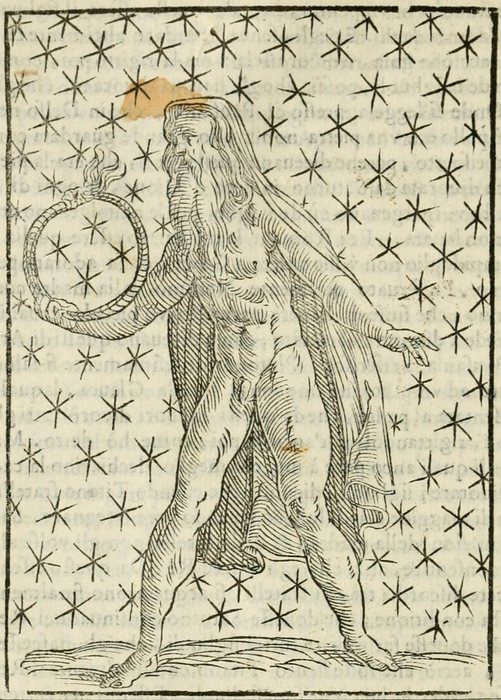
The Heavens as the central motif, with the Angel and the Wing in a secondary part. From Le vere e nove imagini de gli dei delli antichi, 1615.
What is happening
Vincenzo Cartari, 1615 “Imagine di Saturno, & del Tempo, che co' piedi legati di fil di lana, significa la vendetta, & castigo di Dio esser tardo aspettando l'emenda. dinota ancora la ragione del parto con la produttione delle cose insieme andar congionte.”
Symbolica Cartari's caption, put into English here: Image of Saturn and of Time, who with feet bound with woollen thread signifies that the vengeance and punishment of God is slow, waiting for amendment. It denotes also that the reason of birth and the production of things go joined together.
Key · 2 motifs
Tap a motif on the picture, or a line below. Its note opens under the line, with the reading its author gave it.
- Primary motif
- Secondary motifs · 1
The picture
Two old men stand side by side on a strip of ground; the one on the left holds a hooked blade and a long staff and has a thread running ankle to ankle, the one on the right wears a crown, has wings at his head and wings at his shoulders, and raises an open hand. By eye
The reading
The picture read whole, in the archive's words, from the sources quoted on the marks. Read on, and the picture follows: the motif under discussion keeps its colour.
For eleven months of the year the Romans kept Saturn's statue tied at the ankles, and in December they cut it loose. Cartari reports the custom from Macrobius on page 31, and his cutter puts the cord on the block.
It runs ankle to ankle in one thin line, and the thread is wool. The reason arrives with the custom: a child in its mother's belly lies bound with tender, soft knots, and the knots come undone in the tenth month, when the birth is ready. Out of that, Cartari says, the Latins got their proverb that the gods have feet of wool. The caption takes the other meaning, which is what a proverb about quiet feet is for. Bound feet stand for the vengeance and punishment of God, slow, and waiting for amendment. Page 33 says how slow: divine goodness does not run, and makes no noise, and moves so quietly that the sinner feels the penalty before he hears it coming.
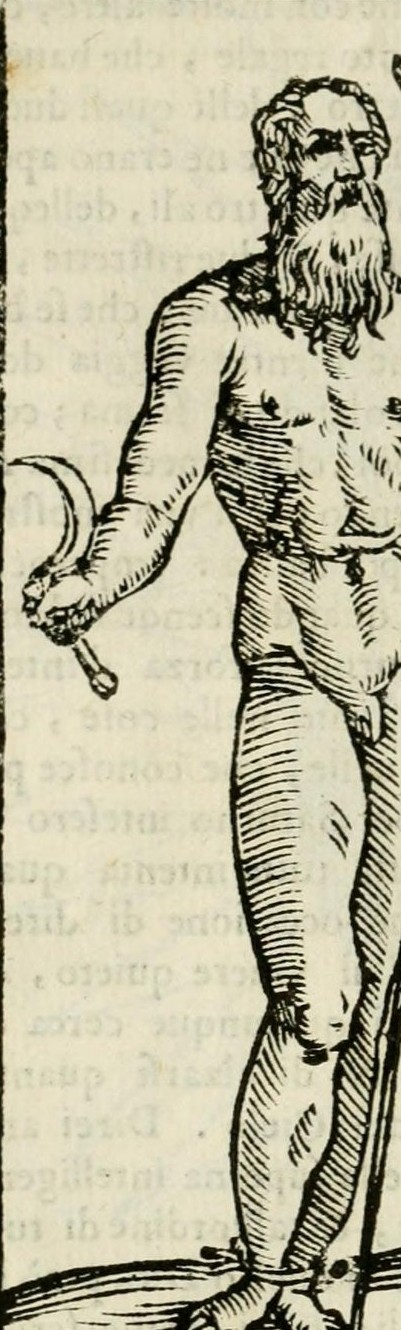
The hooked blade in his hand belongs to the other half of the god, the half the first block in this run left out. Cartari settles it in one line on page 26. The sickle in Saturn's hand shows that time reaps, and cuts down everything.
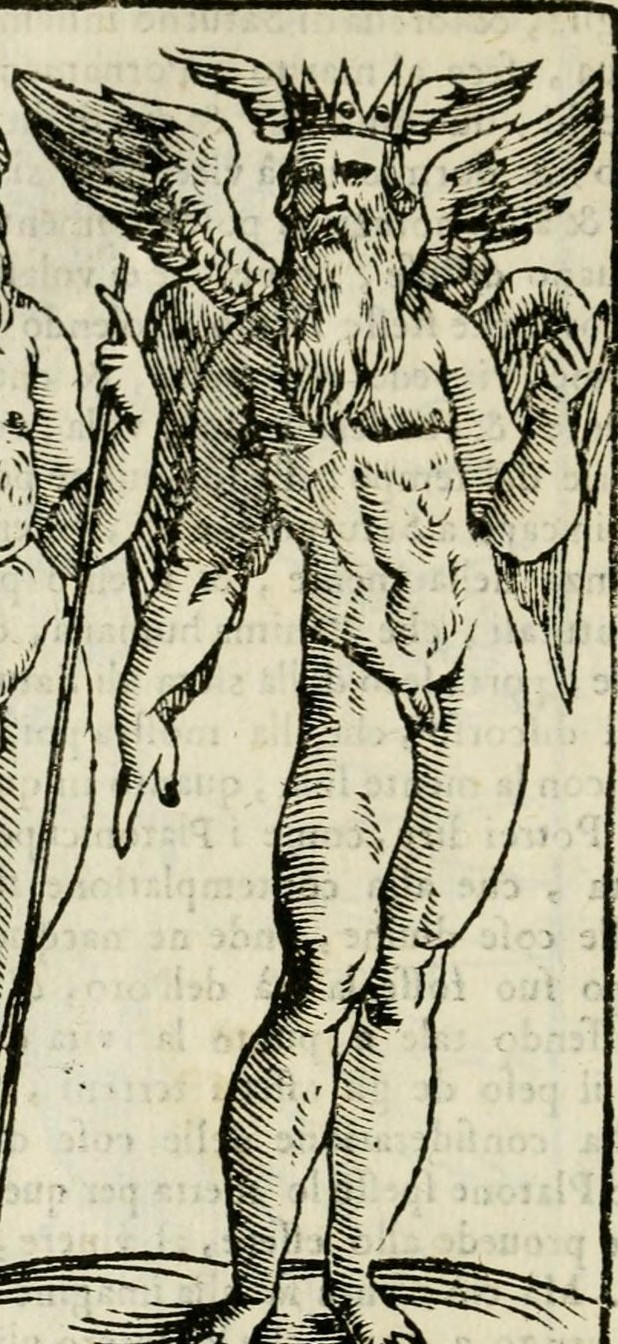
His companion carries the wings, and Cartari takes him from Eusebius. Astarte made her husband a royal ornament with four eyes, two in front and two behind, of which two closed and slept by turns so that two stayed open; four wings at the shoulders, two spread as though he flew and two folded as though he stood still; and two more wings on his head, one for the excellence of the mind and one for the senses. Cartari's own summary of the assembly: he sees while he sleeps and sleeps while he sees, and standing still he flies, and flying he stands still, all of it proper to time.
Decoded: every motif is marked, and each mark carries the reading its author gave it, quoted from the text, or says that it is observed on the picture and not read. The reading above is the archive's own, made from those sources and no others.
The outermost planet of the old order, the metal lead, the black first stage of the work, and an old man with a sickle. One sign does all four jobs, and the books move between them without explaining themselves.
In plain words Two attributes, and Cartari sources both. The hooked blade belongs to the half of Saturn the first block in this run left out: the sickle in his hand shows that time reaps and cuts down everything. The thread is wool. The Romans kept the statue tied that way all year and cut it loose in December, on the days consecrated to him, and Macrobius, through Cartari, gives the reason: a child in its mother's belly lies bound with tender knots which come undone in the tenth month, when the birth is ready. Out of that, Cartari says, came the Latin proverb that the gods have feet of wool.
Vincenzo Cartari, 1615 “Mostra la falce in mano di Saturno, che'l tempo miete, e taglia tutte le cose.”
Symbolica Cartari's Italian, put into English here: The sickle in Saturn's hand shows that time reaps, and cuts all things.
Vincenzo Cartari, 1615 “lo fecero gli antichi, come scriue Macrobio, con i piedi legati con filo di lana, & lo teneuano così tutto l'anno, se non che lo scioglieuano poi di Dicembre in certi dì, che erano consecrati a lui, volendo in questo modo mostrare, che la creatura nel ventre della madre stà legata con nodi teneri, & molli, li quali si sciolgono quando al decimo mese è giunto già il tempo del maturo parto. Et quindi dice Macrobio essere nato quel prouerbio appresso de i Latini, che i Dei hanno li piedi di lana.”
Symbolica Cartari's Italian, put into English here: the ancients made him, as Macrobius writes, with his feet bound with woollen thread, and kept him so all the year, except that they loosed him in December on certain days that were consecrated to him, wishing in this way to show that the creature in its mother's belly lies bound with tender and soft knots, which are loosed when at the tenth month the time of the ripe birth has come. And from this, Macrobius says, was born that proverb among the Latins, that the Gods have feet of wool.
Vincenzo Cartari, 1615 “Dicesi anchora, che staua Saturno con i piedi legati, ò perche tutte le cose prodotte in questo mondo paiono essere insieme annodate ( così vengono l'vna dietro l'altra ) ouero perche la natura con certa, & ordinata legge così tiene i tempi legati insieme, che non cessano mai di andare succedendo l'vno all'altro.”
Symbolica Cartari's Italian, put into English here: It is said also that Saturn stood with his feet bound, either because all the things produced in this world seem to be knotted together, so they come one behind the other, or because nature by a fixed and ordered law holds the ages tied together in such a way that they never stop following one after another.
The mark of an errand rather than a nature. Note whether the wings are open, folded, or given to the figure by someone else.
In plain words Two sets of wings, and Cartari accounts for both. Astarte, Saturn's wife and sister, made her husband a royal ornament: four eyes, two in front and two behind, of which two shut and slept by turns so that two stayed open; and four wings at the shoulders, two spread as though he flew, two folded as though he stood still. She set two more on his head, one for the excellence of the mind and one for the senses.
Vincenzo Cartari, 1615 “fece al marito vn'ornamento regale, che haueua quattro occhi, due dinanti: & due di dietro, delli quali due si chiudeuano, & dormiuano à vicenda, sì che due ne erano aperti sempre, & à gli homeri vi pose parimente quattro ali, dellequali due stauano distese, come che ei volasse, & due ristrette, & raccolte, come che stesse fermo”
Symbolica Cartari's Italian, put into English here: she made her husband a royal ornament, which had four eyes, two in front and two behind, of which two would close and sleep by turns, so that two of them were always open; and at the shoulders she likewise set four wings, of which two stood spread as though he were flying, and two drawn in and folded as though he were standing still.
Vincenzo Cartari, 1615 “la medesima Astarte pose in capo a Saturno due ali, volendo per l'vna mostrare l'eccellenza della mente, & il senso per l'altra.”
Symbolica Cartari's Italian, put into English here: the same Astarte set two wings on Saturn's head, wishing to show by the one the excellence of the mind, and by the other the senses.
Also carrying the Heavens
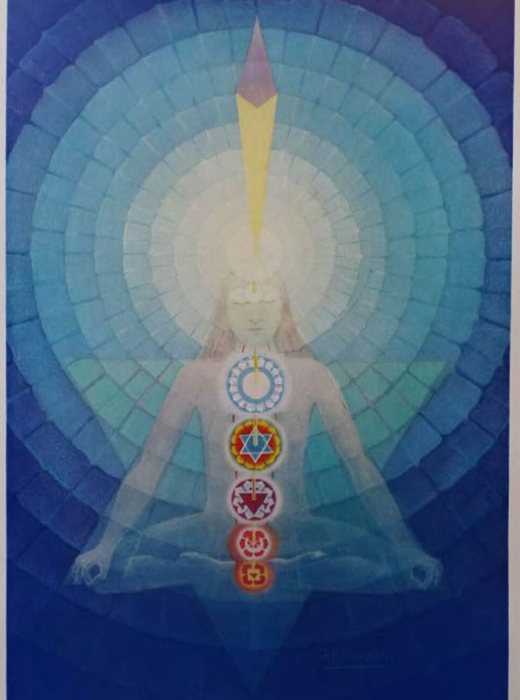
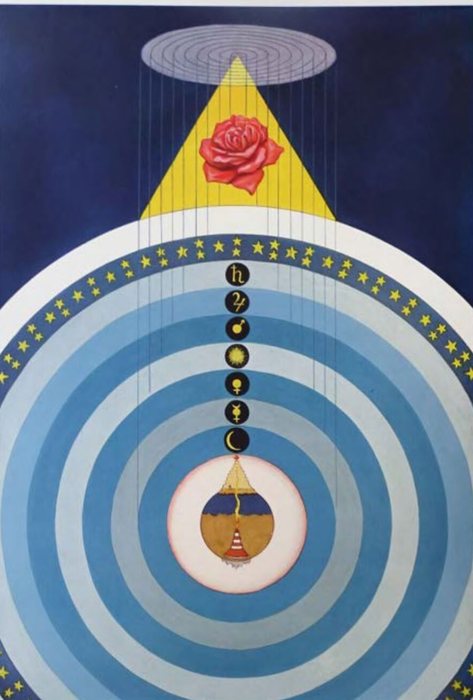
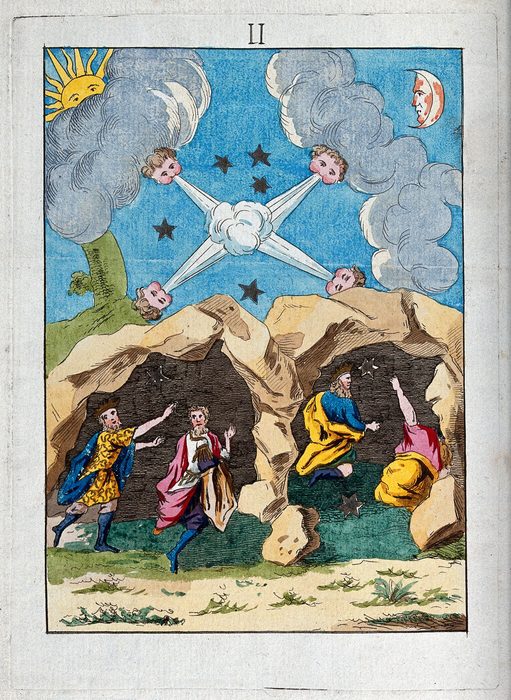
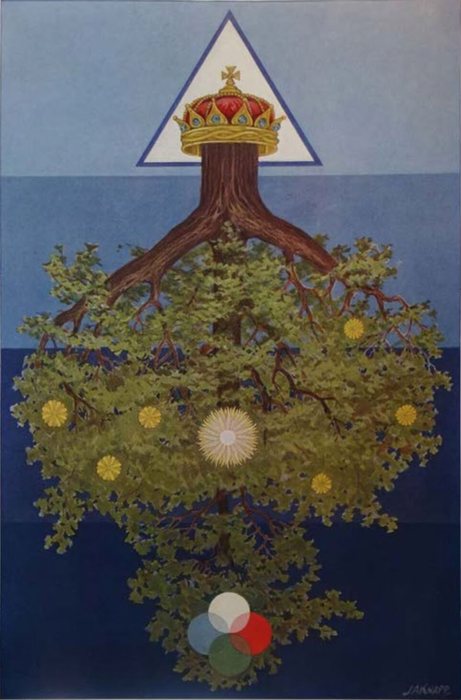
53 works carry it. The 6 where it is the central motif are here. The symbol.
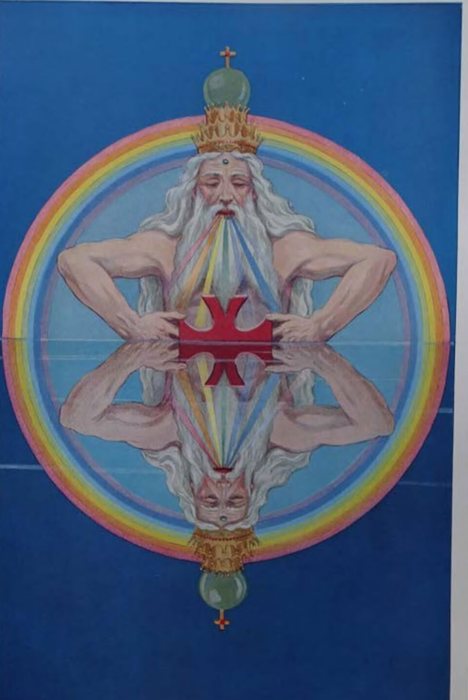
Where the detail is the subject
This is in the picture without being what it is about. Below, one work that is about it.
In the same series
Record
One symbol a week, decoded.
This picture is free at full size from its source, linked above. What an address gets is the Sunday letter: one picture, one symbol marked on it, what it meant and who said so, and the master files of the decoded plates as they are verified. Leave any time.
Free, one letter a week, unsubscribe in one click. How the address is used.
Scroll or pinch to zoom · drag to move · double-tap for 1:1 · 1029 by 1400 pixel web copy; the source file is linked under Record