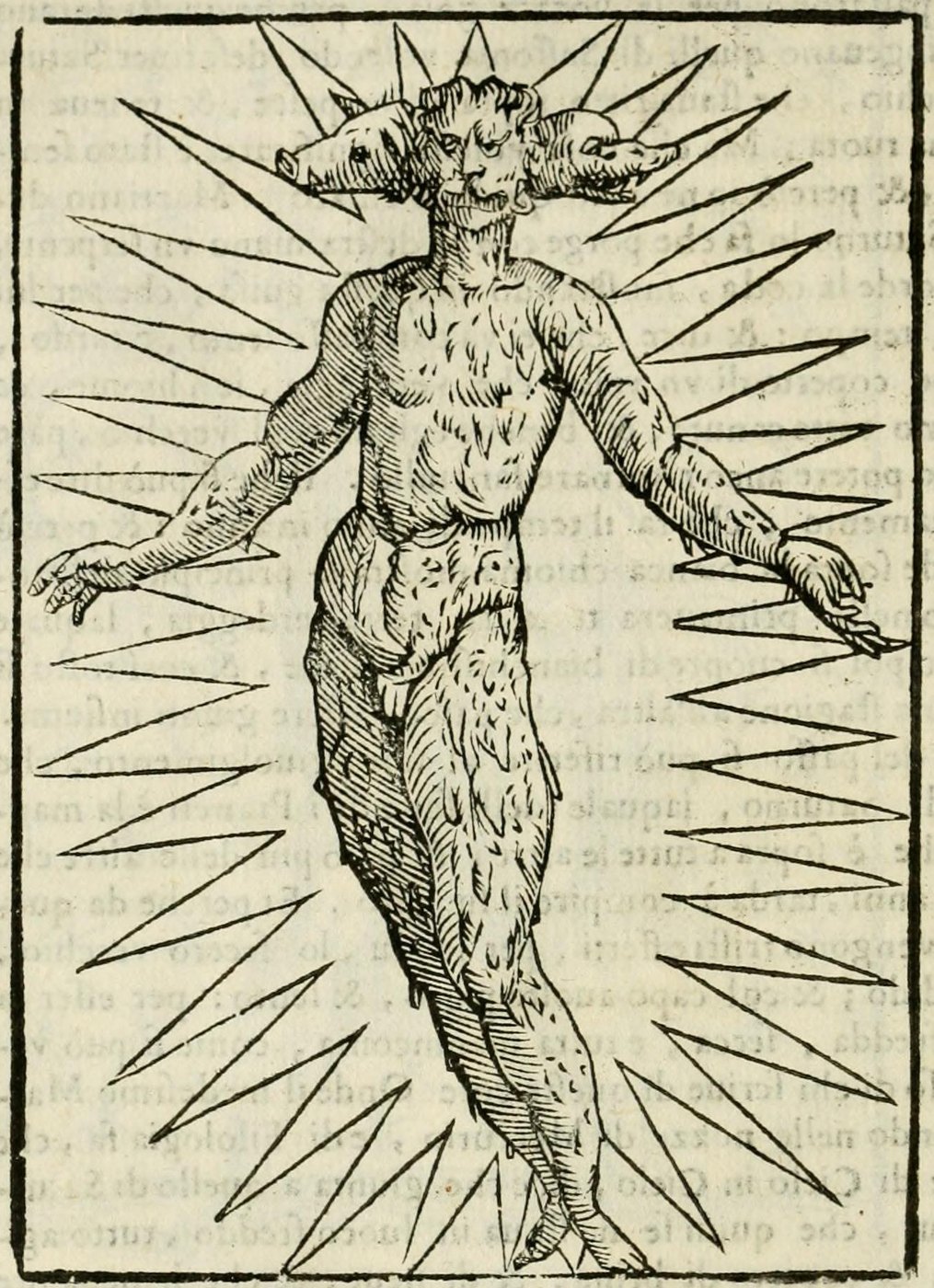
Imagine di Saturno, che significa il tempo presente, passato, & avenire
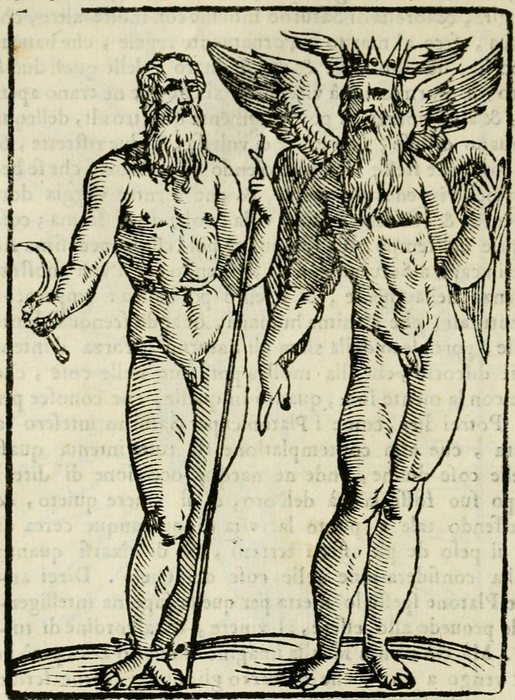
The Demon and the Monster as the central motif, with the Heavens in a secondary part. From Le vere e nove imagini de gli dei delli antichi, 1615.
What is happening
Vincenzo Cartari, 1615 “Imagine di Saturno, che significa il tempo presente, passato, & auenire, & la mala natura di tal pianeta, & sua freddezza, & il tempo tutto consumare, & distruggere.”
Symbolica Cartari's caption, put into English here: Image of Saturn, which signifies present, past and future time, and the bad nature of that planet, and its coldness, and that time consumes and destroys everything.
Key · 2 motifs
Tap a motif on the picture, or a line below. Its note opens under the line, with the reading its author gave it.
- Primary motif
- Secondary motifs · 1
The picture
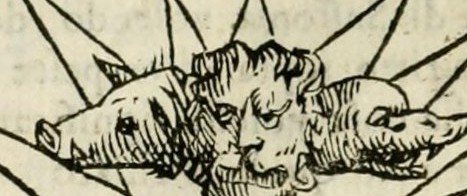
A shaggy standing figure with three heads on one neck, a maned face in the middle and a long snouted head to each side, ringed all round by long straight rays. By eye
The reading
The picture read whole, in the archive's words, from the sources quoted on the marks. Read on, and the picture follows: the motif under discussion keeps its colour.
Watch what Cartari does after he prints this block. He offers a reading, and then he takes it back.
The picture reaches him through Martianus Capella, who found Saturn in a frozen heaven wearing sometimes a serpent on his head, sometimes a lion's head, sometimes a boar's with terrible teeth. [sym:demon] Those three heads might perhaps show the effects of time, Cartari writes, and then, in the same sentence, that he does not affirm it, because he does not find it written by an author worthy of trust. A book whose whole business is telling a painter what to paint stops to say that it does not know.
Then he gives the version he will stand behind. The three times, past, present and to come, were shown by an image with three heads, of a Lion, of a Dog and of a Wolf, which the Egyptians set beside the statue of Serapis. The block obliges: a maned face in the middle with its mouth open, a long snouted head on either side, one shut, one baring its teeth. Which animal stands where, Cartari never says.
The caption underneath hands the picture back to its owner. It calls him Saturn, and it lists his charges: the three times, the bad nature of the planet, its coldness, and time consuming and destroying everything. Four charges that the other three blocks in this run share out between them, loaded here onto one body.
Everything on the block has a source except the light. Pages twenty nine and thirty one work through the heads and the animals and the Egyptians, then move on. Nobody explains why a god described on the same page as cold and slow goes out to the frame in rays.
Decoded: every motif is marked, and each mark carries the reading its author gave it, quoted from the text, or says that it is observed on the picture and not read. The reading above is the archive's own, made from those sources and no others.
Almost always a composite and almost always subordinate. Note what it is made of and whether it is bound.
In plain words Cartari names the three animals and does not say which stands where. He is careful about this picture in a way a handbook rarely is. He offers the reading, then withdraws it in the same breath, and only afterwards gives the version he will stand behind.
Vincenzo Cartari, 1615 “Le quali tre teste potrebbono forse mostrare gli effetti del tempo, ilche non affermo, perche non lo trouo scritto da Autore degno di fede. Ma dirò bene; che à ciò si confa assai quella imagine significatrice de i tre tempi, passato, presente, & auenire, che haueua parimente tre capi di Leone di Cane, & di Lupo, posta da quelli di Egitto con il simulacro di Sarapide loro Dio principale”
Symbolica Cartari's Italian, put into English here: Which three heads might perhaps show the effects of time, which I do not affirm, because I do not find it written by an Author worthy of trust. But I will say this much, that it agrees well enough with that image signifying the three times, past, present and to come, which likewise had three heads, of a Lion, of a Dog and of a Wolf, set by the Egyptians beside the statue of Serapis, their principal God.
The outermost planet of the old order, the metal lead, the black first stage of the work, and an old man with a sickle. One sign does all four jobs, and the books move between them without explaining themselves.
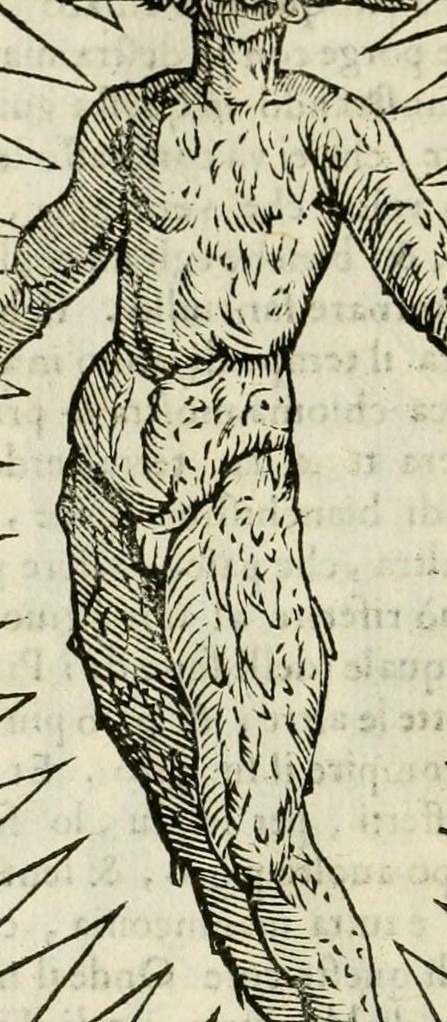
In plain words The caption gives the picture its owner back. Whatever the heads are borrowed from, the figure is filed as Saturn, and the caption lists what he carries: the three times, the bad nature of the planet, its coldness, and time consuming and destroying everything. The rays are the one thing on the block nobody accounts for. Pages 29 and 31 work through the heads, the animals, the Egyptians and Serapis, then move to the next image, and a burst of light around a god the same page calls cold and slow gets no line.
Vincenzo Cartari, 1615 “& la mala natura di tal pianeta, & sua freddezza, & il tempo tutto consumare, & distruggere.”
Symbolica Cartari's Italian, put into English here: and the bad nature of that planet, and its coldness, and that time consumes and destroys everything.
Symbolica The rays are observed on the block. Pages 29 and 31 explain the three heads and pass to the next image without mentioning them.
Also carrying the Demon and the Monster
21 works carry it. The 6 where it is the central motif are here. The symbol.
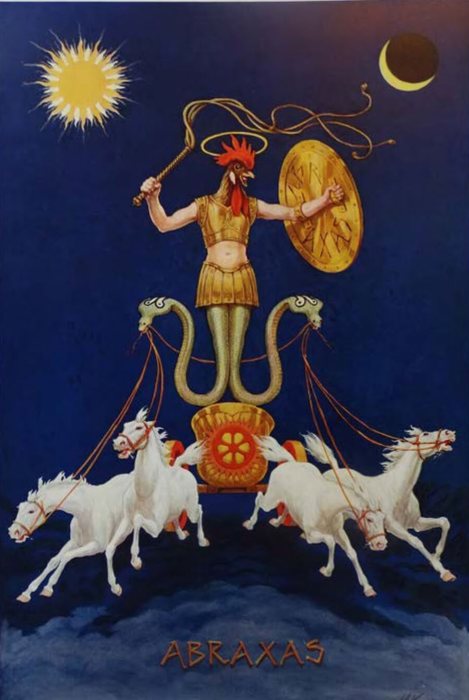 Abraxas, a Gnostic Pantheos
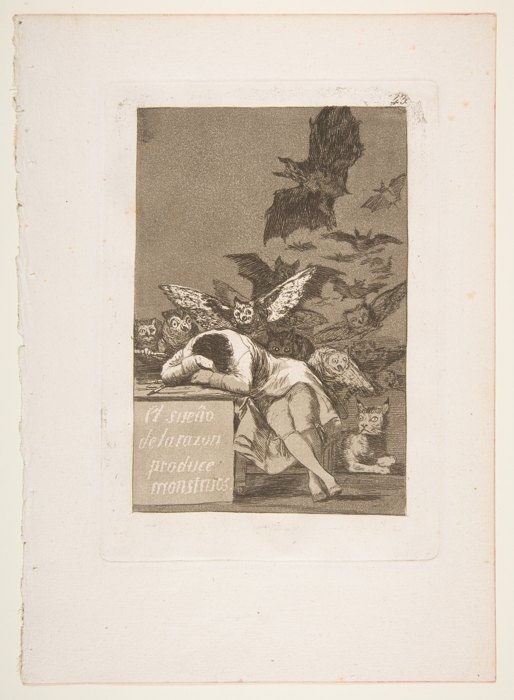 The Sleep of Reason Produces Monsters
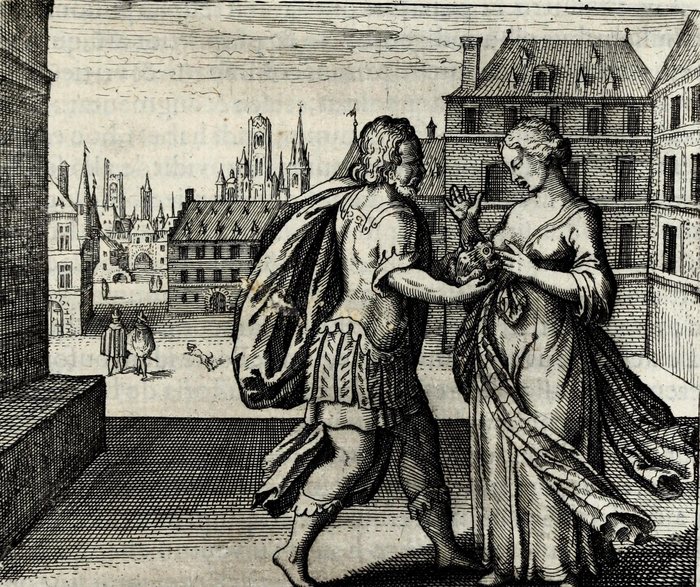 Appone mulieri super mammas bufonem, ut ablactet eum, & moriatur mulier, sitque bufo grossus de lacte
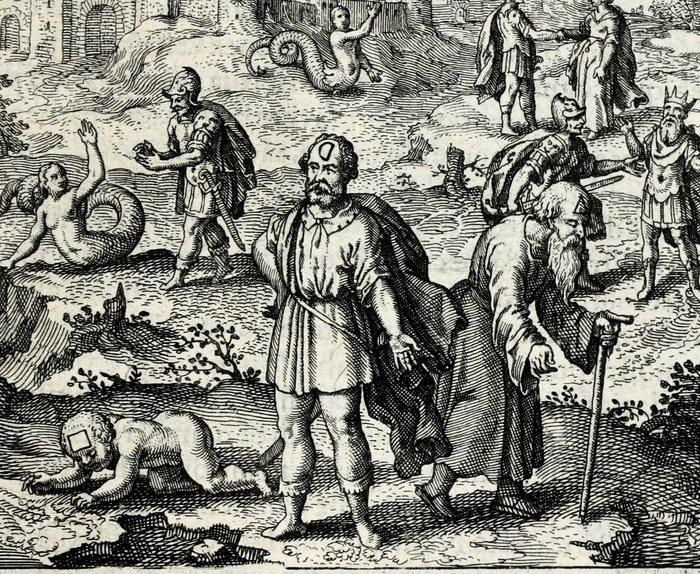 Oedypus Sphynge superata & trucidato Lajo patre matrem ducit in uxorem
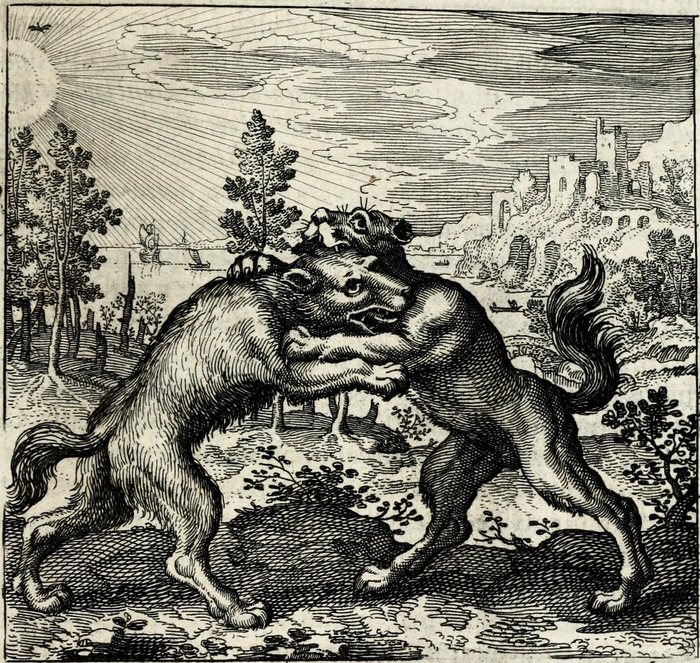 Lupus ab Oriente & Canis ab Occidente venientes se invicem momorderunt
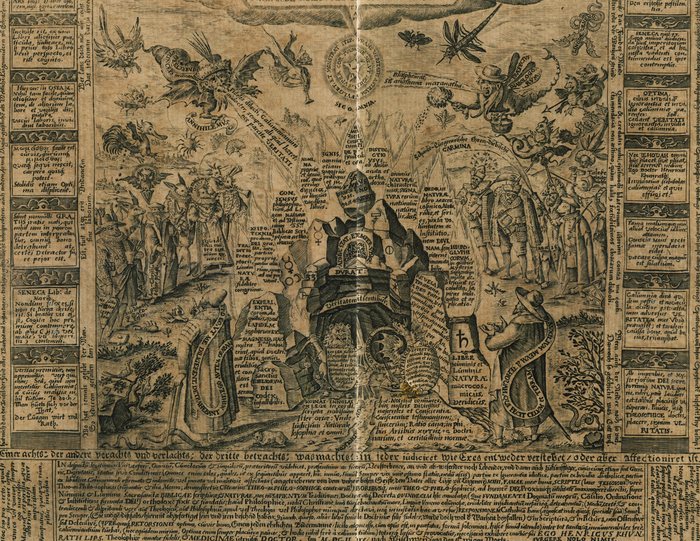 Against the slanderers, by right of retort
Where the detail is the subject
This is in the picture without being what it is about. Below, one work that is about it.
In the same series
Record
One symbol a week, decoded.
This picture is free at full size from its source, linked above. What an address gets is the Sunday letter: one picture, one symbol marked on it, what it meant and who said so, and the master files of the decoded plates as they are verified. Leave any time.
Free, one letter a week, unsubscribe in one click. How the address is used.
Scroll or pinch to zoom · drag to move · double-tap for 1:1 · 1015 by 1400 pixel web copy; the source file is linked under Record