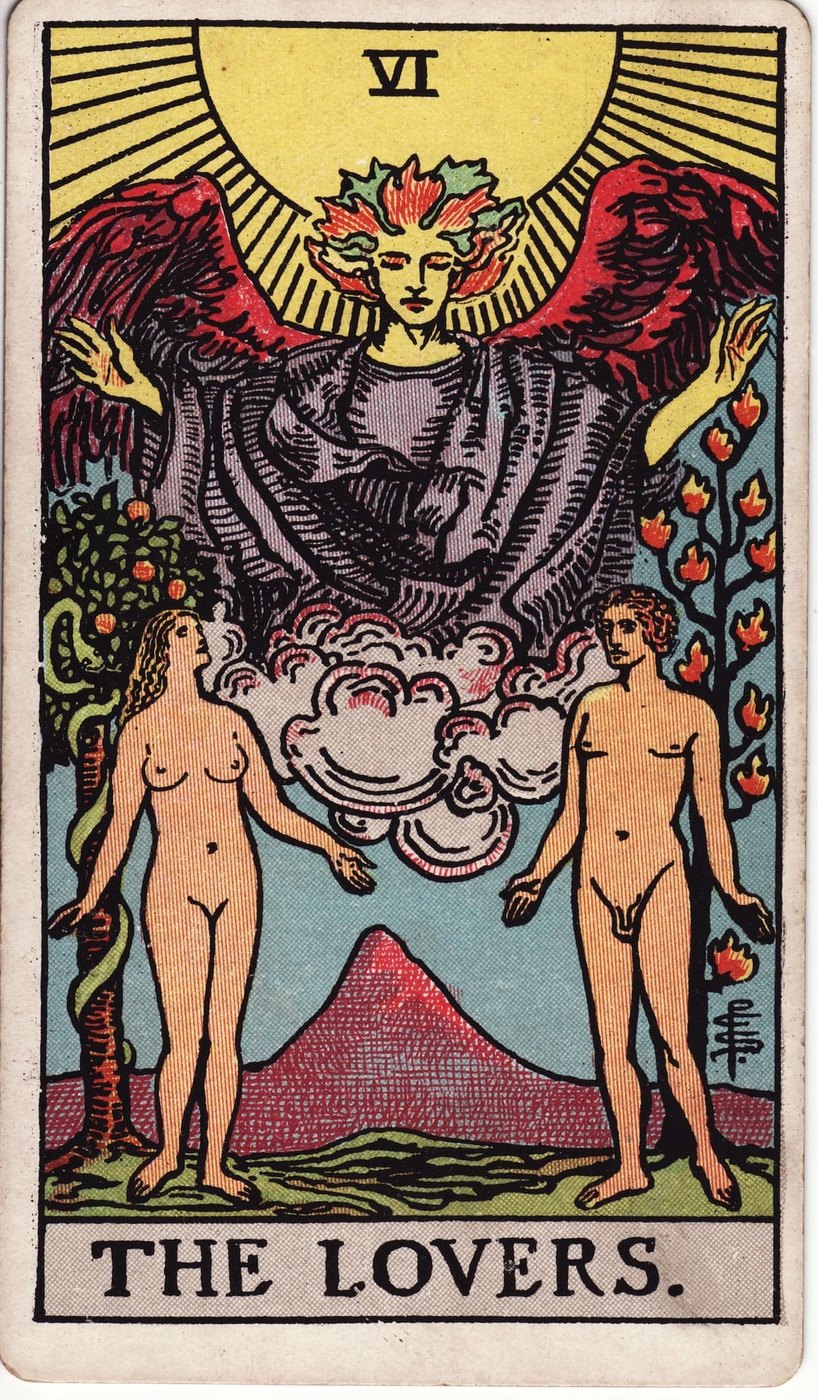
The Lovers (VI)
The Lovers as the central motif, filed under the King and the Queen, with the Angel and the Wing, the Sun and the Moon, the Tree, and the Serpent and the Dragon in a secondary part. From The 1909 tarot.
Key · 5 motifs
Tap a motif on the picture, or a line below. Its note opens under the line, with the reading its author gave it.
- Primary motif
- Secondary motifs · 4
The picture
A naked man and woman on green ground, a great winged angel with red wings and arms extended above them under the sun, a tree of flames behind the man and an apple tree with a serpent behind the woman, a mountain between them; the Lovers as the central motif. By eye
The reading
The picture read whole, in the archive's words, from the sources quoted on the marks. Read on, and the picture follows: the motif under discussion keeps its colour.
Nothing has happened yet. That is the card, and Waite assembles it piece by piece: the sun at the zenith, ‘a great winged figure with arms extended, pouring down influences’, and below two human figures ‘unveiled before each other, as if Adam and Eve when they first occupied the paradise of the earthly body’. Behind the man, the Tree of Life with twelve fruits. Behind the woman, the Tree of Knowledge, with the serpent already up it.
Waite insists on the plainness of the scene. The pair ‘suggest youth, virginity, innocence and love before it is contaminated by gross material desire’; ‘this is in all simplicity the card of human love’. He is saying that against two versions he threw out. The eighteenth century card showed a marriage with a cupid overhead. A later one showed a young man choosing between vice and virtue. Two people here, not three, and no choice being made.
Then the serpent, and the turn he gives it. The woman signifies the attraction towards the sensitive life that carries the idea of the Fall in it, and Waite immediately refuses to make her a villain: she is ‘rather the working of a Secret Law of Providence than a willing and conscious temptress’. Then he goes further, in the sentence readers remember. ‘It is through her imputed lapse that man shall arise ultimately, and only by her can he complete himself.’
The two trees carry the argument without a word between them. He stands in front of life, she stands in front of knowledge, and the width of the picture is the distance between the two. Waite closes by calling the card, in a very high sense, ‘a mystery of the Covenant and Sabbath’, and then walks away from the sentence without explaining a syllable of it.
Readings quoted
Waite, 1911 “It replaces, by recourse to first principles, the old card of marriage, which I have described previously, and the later follies which depicted man between vice and virtue. In a very high sense, the card is a mystery of the Covenant and Sabbath.”
Waite, 1911 “It is through her imputed lapse that man shall arise ultimately, and only by her can he complete himself. The card is therefore in its way another intimation concerning the great mystery of womanhood.”
Decoded: every motif is marked, and each mark carries the reading its author gave it, quoted from the text, or says that it is observed on the picture and not read. The reading above is the archive's own, made from those sources and no others.
A rank rather than a person. Read the robe, the throne and what comes out of the mouth before you read the face.
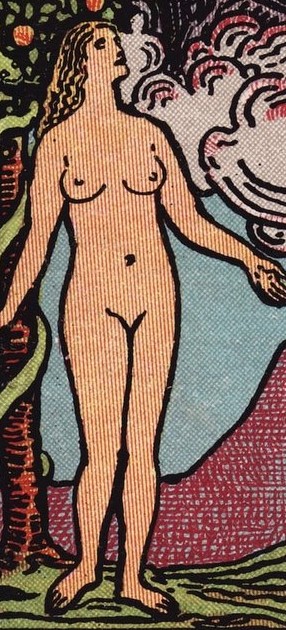
In plain words A man and a woman, naked, facing each other with nothing between them. Waite says Adam and Eve, before anything went wrong, and calls this simply the card of human love. They are filed with the King and the Queen because that is the archive’s heading for the pair, the two who belong together; the card’s own name is the Lovers.
Waite, 1911 “In the foreground are two human figures, male and female, unveiled before each other, as if Adam and Eve when they first occupied the paradise of the earthly body.”
Waite, 1911 “The figures suggest youth, virginity, innocence and love before it is contaminated by gross material desire. This is in all simplicity the card of human love, here exhibited as part of the way, the truth and the life.”
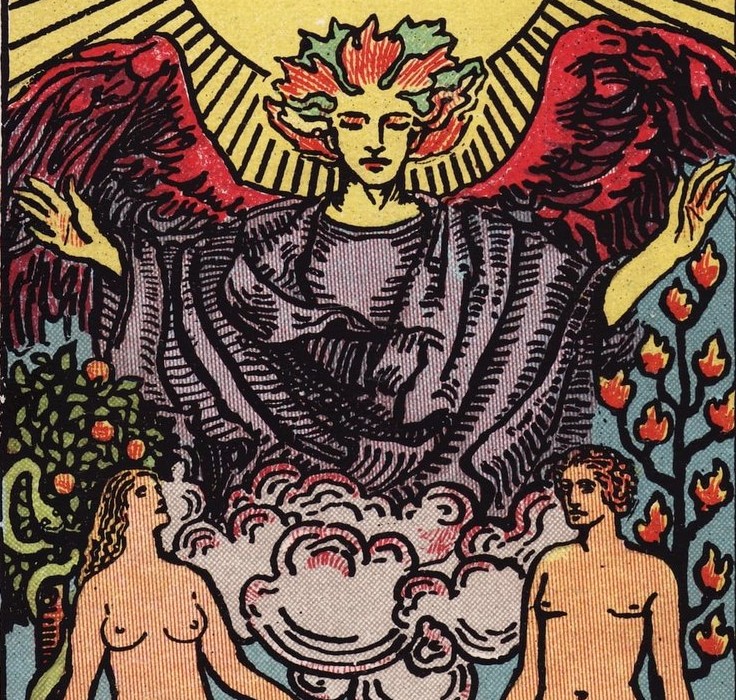
The mark of an errand rather than a nature. Note whether the wings are open, folded, or given to the figure by someone else.
In plain words The angel fills the top half of the card, wings spread, hands open over the two heads. Waite says only that it is ‘pouring down influences’, a blessing coming from above. Its hair is flames and its robe is violet; he names neither.
Waite, 1911 “The sun shines in the zenith, and beneath is a great winged figure with arms extended, pouring down influences.”
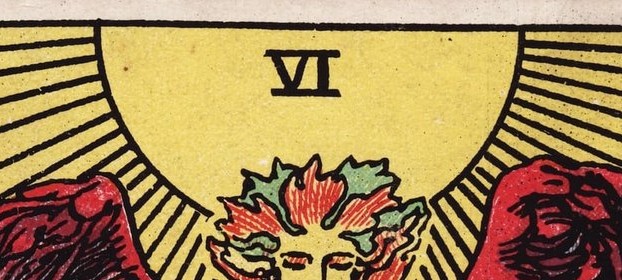
Gold, the perfected metal, and the illuminated intellect. The most overloaded symbol in the tradition.
In plain words The sun is directly overhead, the angel in front of it. Noon, in other words, and the light comes straight down through the angel onto the pair.
Waite, 1911 “The sun shines in the zenith, and beneath is a great winged figure with arms extended, pouring down influences.”
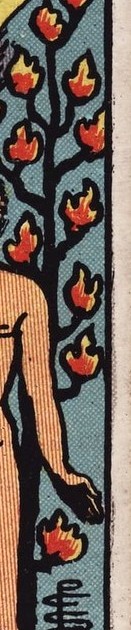
A body drawn as growth. Note which way it grows and what is at the root rather than at the top.
In plain words Two trees from the garden of Eden. Behind the man the Tree of Life, its twelve fruits drawn as flames; behind the woman the Tree of Knowledge with its apples and its serpent. Each figure stands in front of a different tree, which is the whole of the story in one arrangement.
Waite, 1911 “Behind the man is the Tree of Life, bearing twelve fruits, and the Tree of the Knowledge of Good and Evil is behind the woman; the serpent is twining round it.”

A single creature doing two opposite jobs. Note whether it is bound, killed, or eating itself.
In plain words The serpent of Genesis, coiled up the trunk beside the woman. Waite takes the old reading, that the woman is the way to the Fall, and turns it: she is not a temptress but the working of a law of providence, and it is through her, he says, that man will complete himself.
Waite, 1911 “Behind the man is the Tree of Life, bearing twelve fruits, and the Tree of the Knowledge of Good and Evil is behind the woman; the serpent is twining round it.”
Waite, 1911 “The suggestion in respect of the woman is that she signifies that attraction towards the sensitive life which carries within it the idea of the Fall of Man, but she is rather the working of a Secret Law of Providence than a willing and conscious temptress.”
Also carrying the King and the Queen
35 works carry it. The 6 where it is the central motif are here. The symbol.
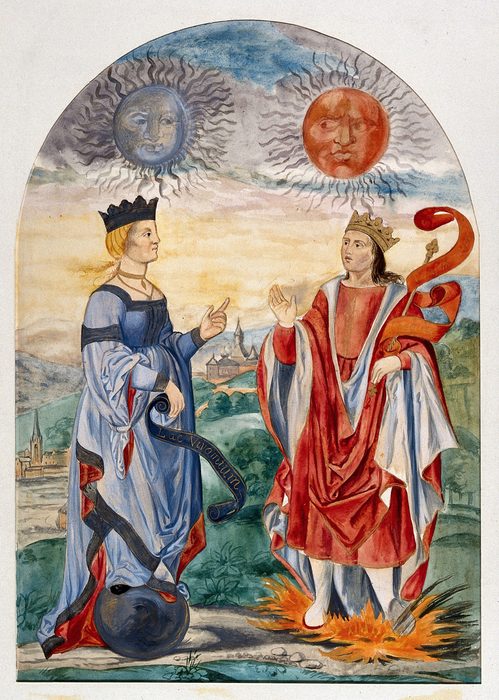
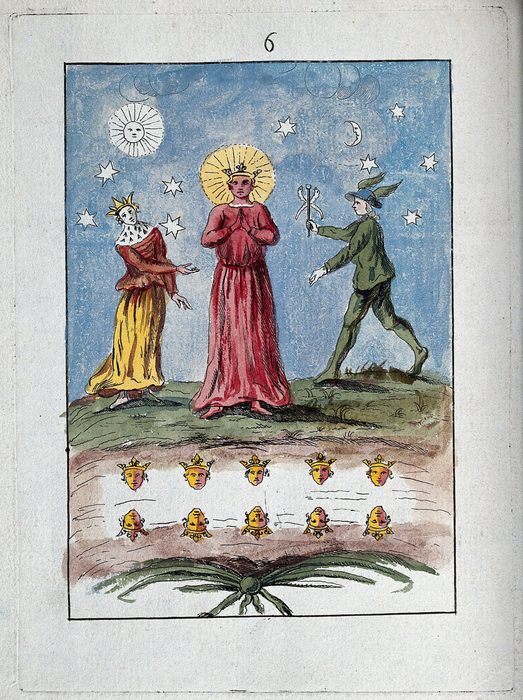
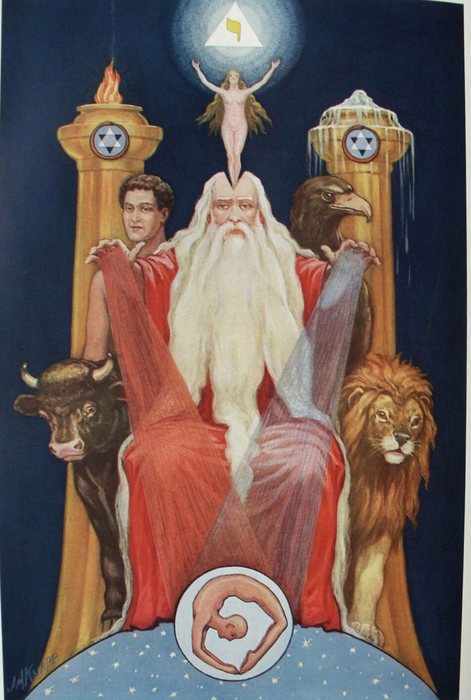
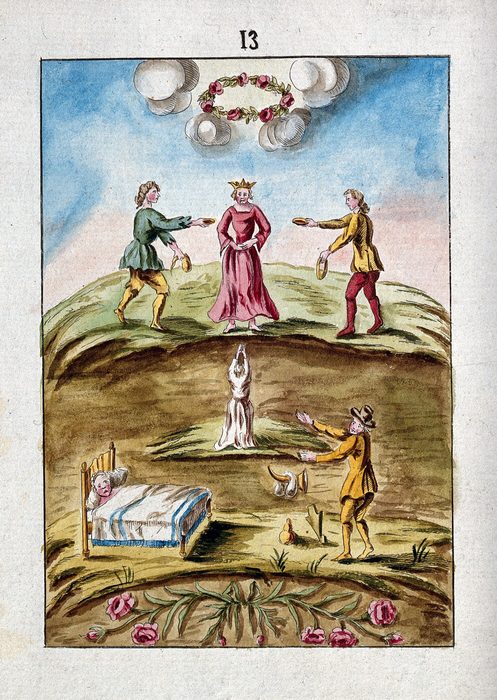
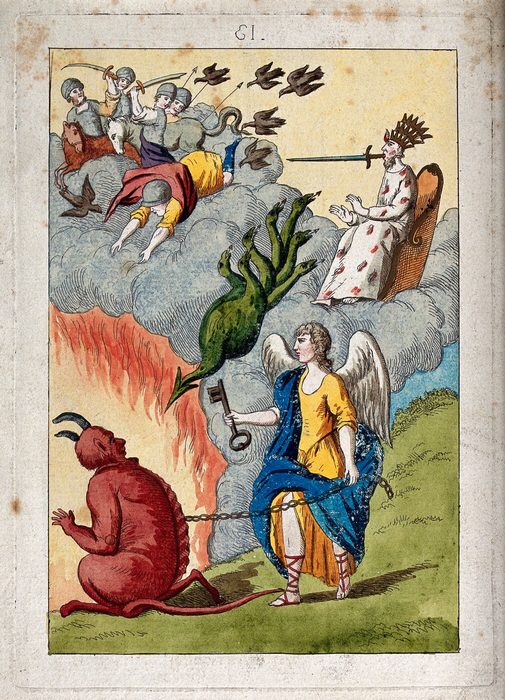
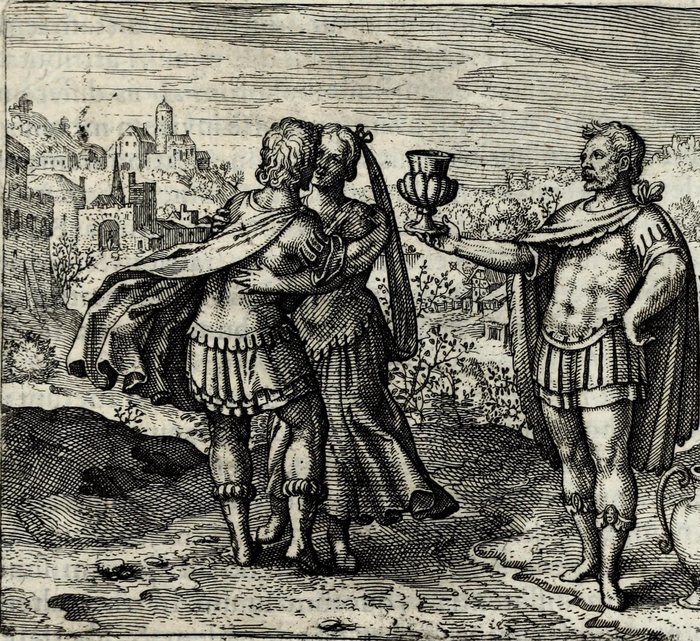
Where the detail is the subject
the Angel and the Wing · the Sun and the Moon · the Tree · the Serpent and the Dragon
Each of these is in the picture without being what it is about. Below, one work that is about each.
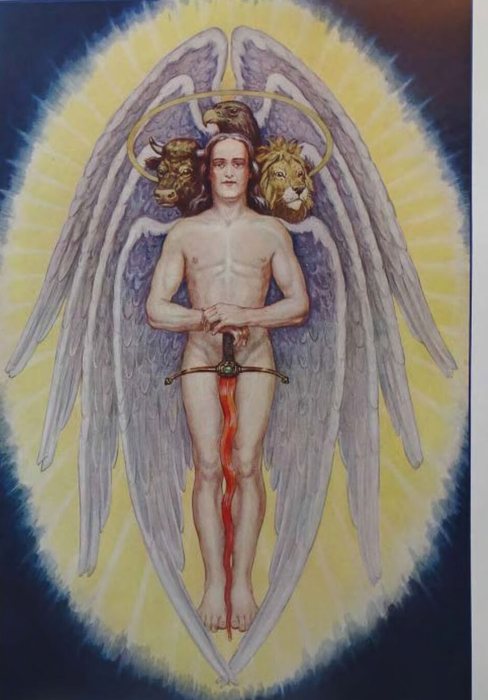
In the same series
Record
One symbol a week, decoded.
This picture is free at full size from its source, linked above. What an address gets is the Sunday letter: one picture, one symbol marked on it, what it meant and who said so, and the master files of the decoded plates as they are verified. Leave any time.
Free, one letter a week, unsubscribe in one click. How the address is used.
Scroll or pinch to zoom · drag to move · double-tap for 1:1 · 818 by 1400 pixel web copy; the source file is linked under Record