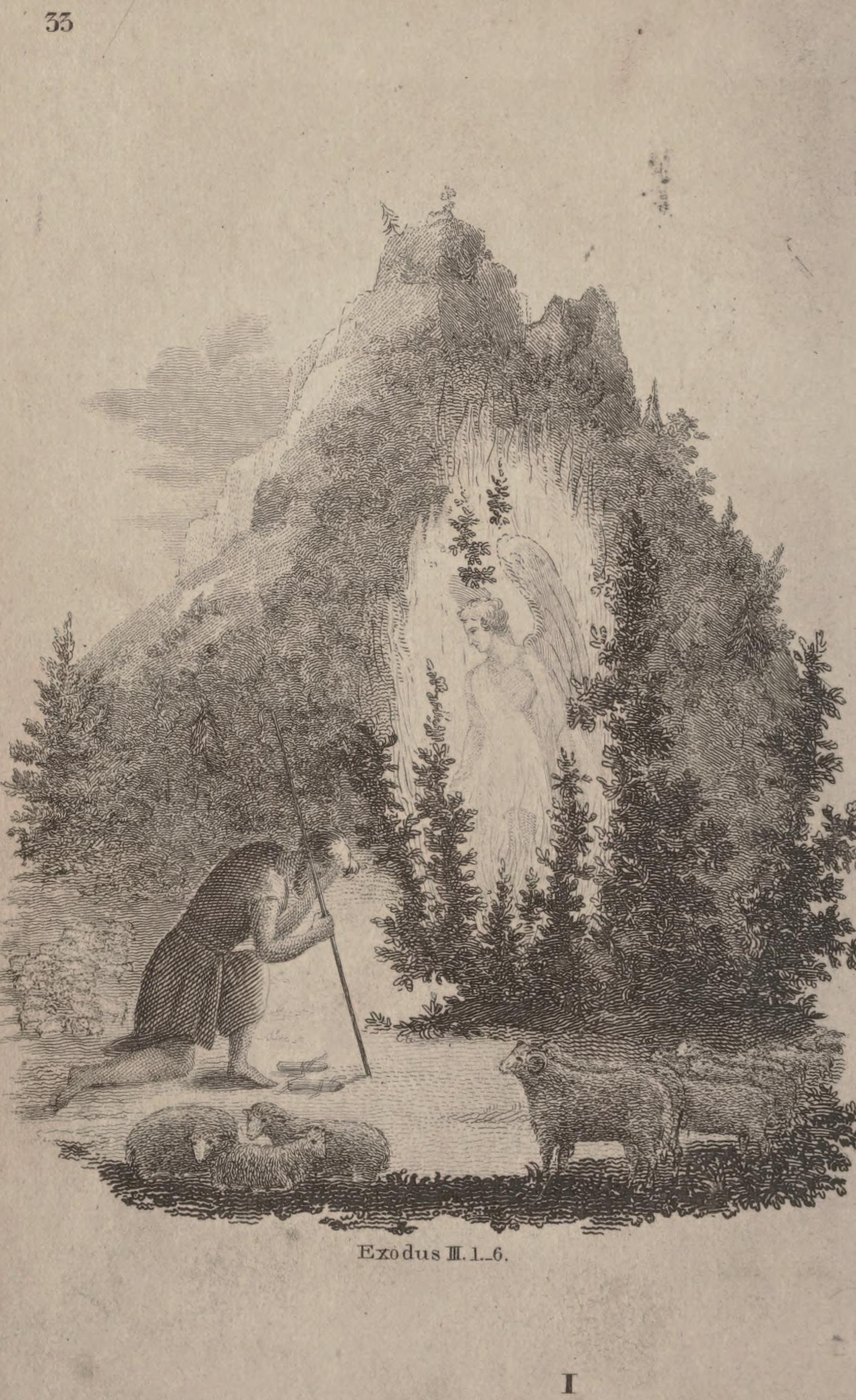
The Burning Bush
Fire as the central motif, with the Divine and the Tree in a secondary part. From Masonic Chart.
What is happening
Jeremy L. Cross, 1826 “Exodus III. 1-6.”
Amos Doolittle, 1826 “Doolittle Sc.”
Symbolica Plate 33 of the chart, in the Royal Arch degree. The monitor prints the six verses the plate cites in that degree, on pages 103 and 104, under the heading Exodus iii, 1 to 6. The archive quotes them from the Douay-Rheims, Challoner revision, the English text it uses for scripture throughout.
Key · 3 motifs
Tap a motif on the picture, or a line below. Its note opens under the line, with the reading its author gave it.
- Primary motif
- Secondary motifs · 2
The picture
Moses kneeling with his staff before a bush that burns on a mountainside, his face hidden in his arm, his shoes beside him and his flock below, and a winged figure standing in the flame. By eye
The reading
The picture read whole, in the archive's words, from the sources quoted on the marks. Read on, and the picture follows: the motif under discussion keeps its colour.
Plate 33 illustrates a passage of scripture, and the plate says which: Exodus III. 1-6 is engraved beneath it, and the monitor prints the six verses in the Royal Arch degree, on pages 103 and 104. Moses kneels at the left with his staff, his face hidden in his arm, his shoes beside him and his flock below; the bush burns on the mountainside; a winged figure stands in the flame.
‘And the Lord appeared to him in a flame of fire out of the midst of a bush: and he saw that the bush was on fire, and was not burnt.’ Moses' answer is the picture's subject: ‘I will go, and see this great sight, why the bush is not burnt.’ The engraver has kept the bush whole under the flame, leaves and all.
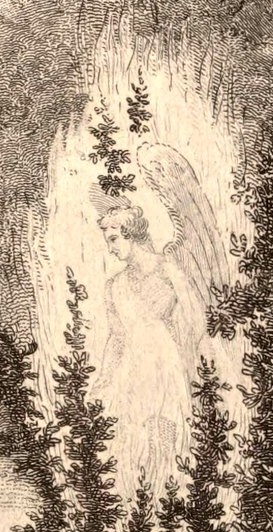
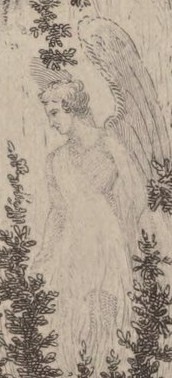
The figure in the fire is the appearance itself. The Challoner note on the verse says how to take it: ‘The Lord appeared.... That is, an angel representing God, and speaking in his name.’ Doolittle drew the angel with wings, standing calm in the flame, and what the figure says is the last verse of the plate's reference: ‘I am the God of thy father, the God of Abraham, the God of Isaac, and the God of Jacob. Moses hid his face: for he durst not look at God.’
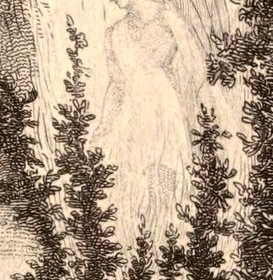
The bush is filed with the trees because it is the plant that does not burn. The fifth verse gives the ground its name, ‘the place, whereon thou standest, is holy ground’, and Moses has his shoes off beside him, as the verse orders.
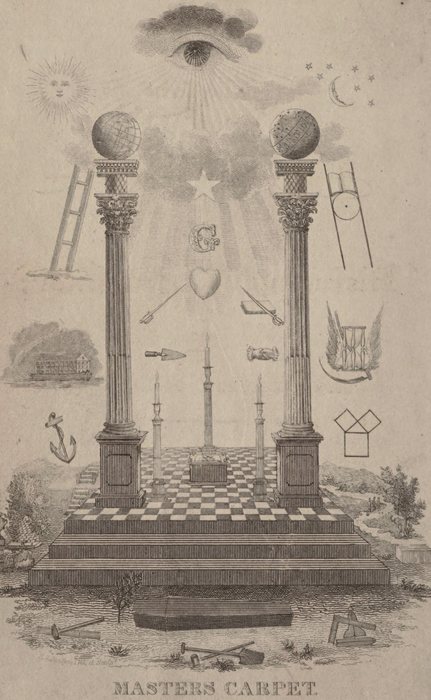
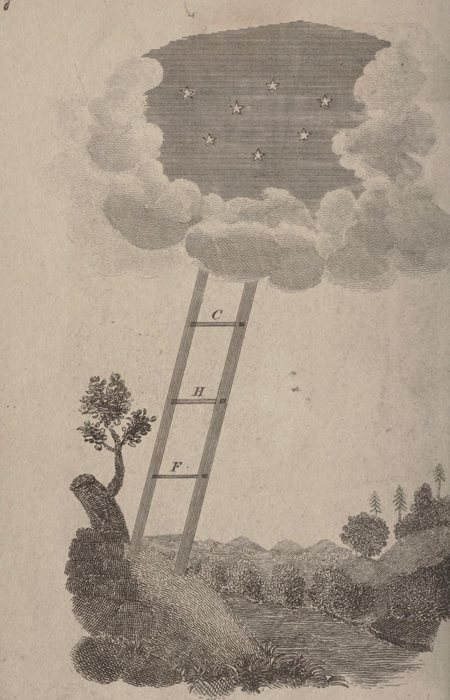
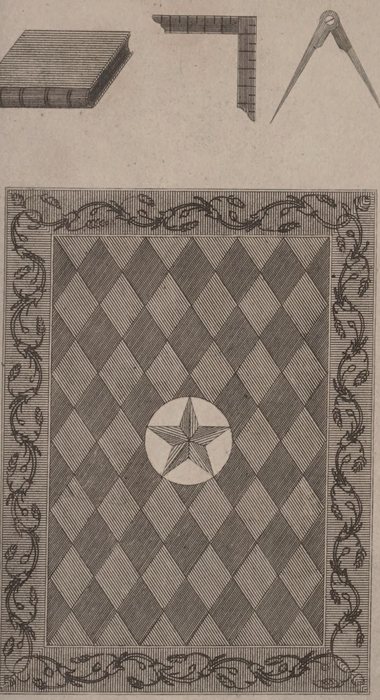
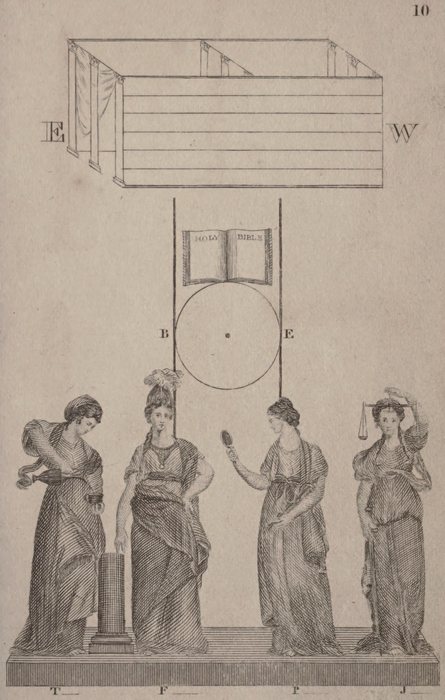
The plate is the one place in Cross's chart where the emblem is a scene: not a tool or a floor standing for a lesson, but six verses drawn as they read.
Decoded: every motif is marked, and each mark carries the reading its author gave it, quoted from the text, or says that it is observed on the picture and not read. The reading above is the archive's own, made from those sources and no others.
A count, a catastrophe, or the visible part of something that has no body. Note whether the flames are arranged in a number, breaking something, or standing where a figure would be.
In plain words A bush on the hillside with a column of fire standing in it. The verse the plate cites says what is strange about it: the bush was on fire and was not burnt, and Moses turned aside to see why. The engraver has kept every leaf whole inside the flame.
Exodus 3:2 “And the Lord appeared to him in a flame of fire out of the midst of a bush: and he saw that the bush was on fire, and was not burnt.”
Exodus 3:3 “And Moses said: I will go, and see this great sight, why the bush is not burnt.”
God shown, or pointed at. Look for what stands where a face would be: a name in a cloud, a circle above the top of a diagram, a ring of verses, a sign over a head.
In plain words A winged figure stands calm in the middle of the fire, looking down at Moses. The verse says the Lord appeared to him in the flame, and the Challoner note explains the figure: an angel representing God and speaking in his name. What it says is the sixth verse, I am the God of thy father, and Moses hides his face.
Exodus 3:2 “And the Lord appeared to him in a flame of fire out of the midst of a bush: and he saw that the bush was on fire, and was not burnt.”
Exodus 3:2, the note to the verse “The Lord appeared.... That is, an angel representing God, and speaking in his name.”
Exodus 3:6 “And he said: I am the God of thy father, the God of Abraham, the God of Isaac, and the God of Jacob. Moses hid his face: for he durst not look at God.”
A body drawn as growth. Note which way it grows and what is at the root rather than at the top.
In plain words The bush is the plant that burns and is not consumed. It is filed with the trees for that: a living thing drawn to carry a meaning, not scenery. The ground it grows on is holy, the fifth verse says, and Moses has taken his shoes off beside him as the verse orders.
Exodus 3:2 “And the Lord appeared to him in a flame of fire out of the midst of a bush: and he saw that the bush was on fire, and was not burnt.”
Exodus 3:5 “And he said: Come not nigh hither, put off the shoes from thy feet; for the place, whereon thou standest, is holy ground.”
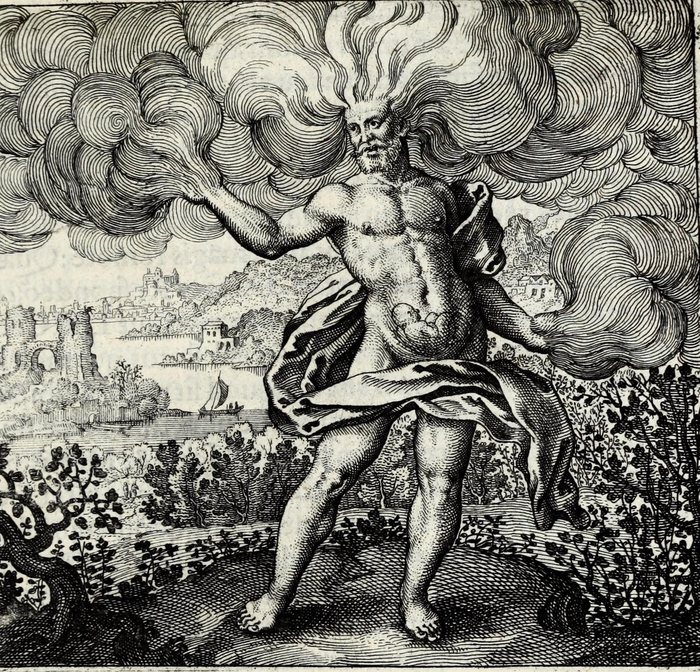
Also carrying Fire
44 works carry it. The 6 where it is the central motif are here. The symbol.
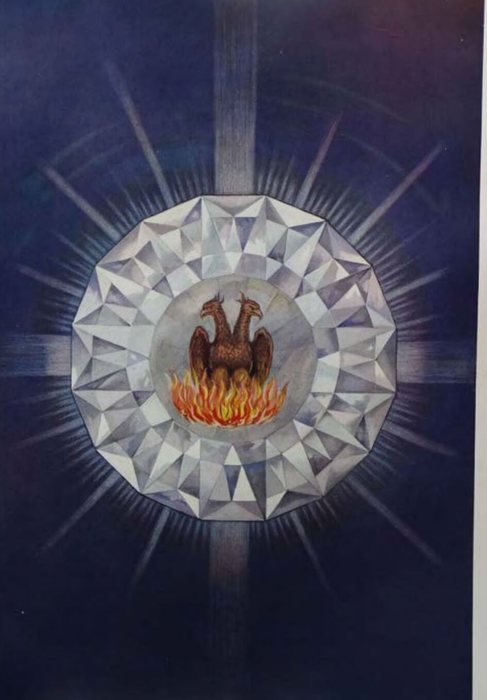
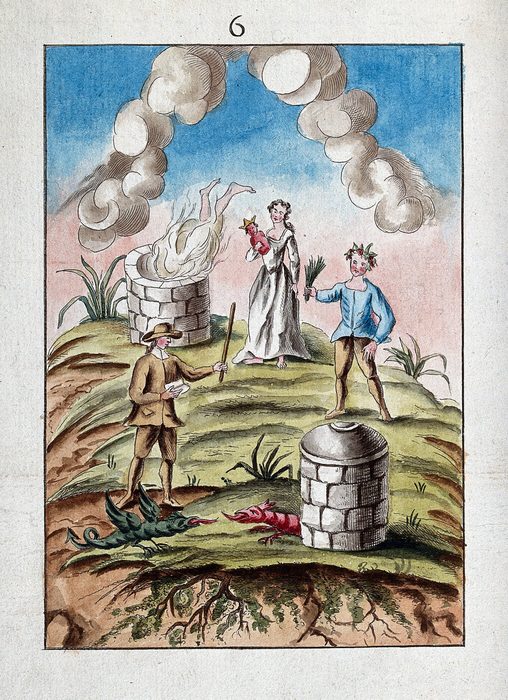
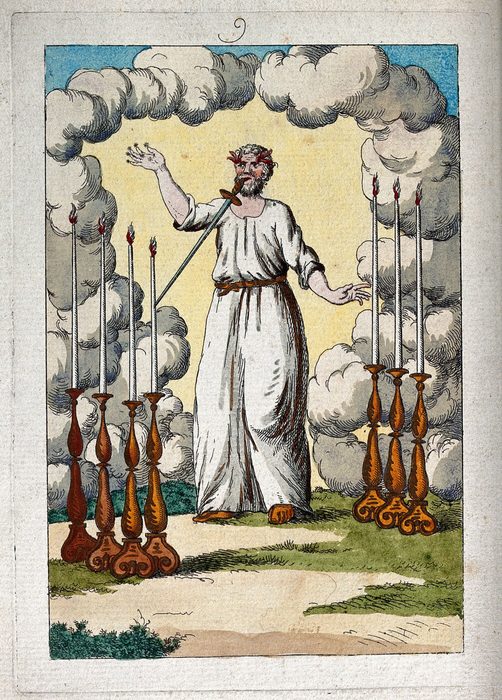
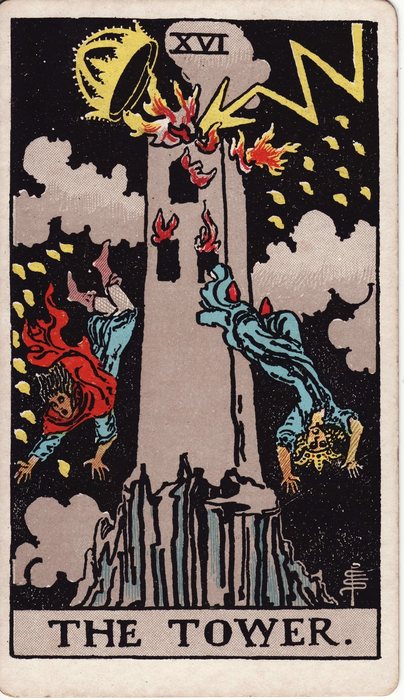
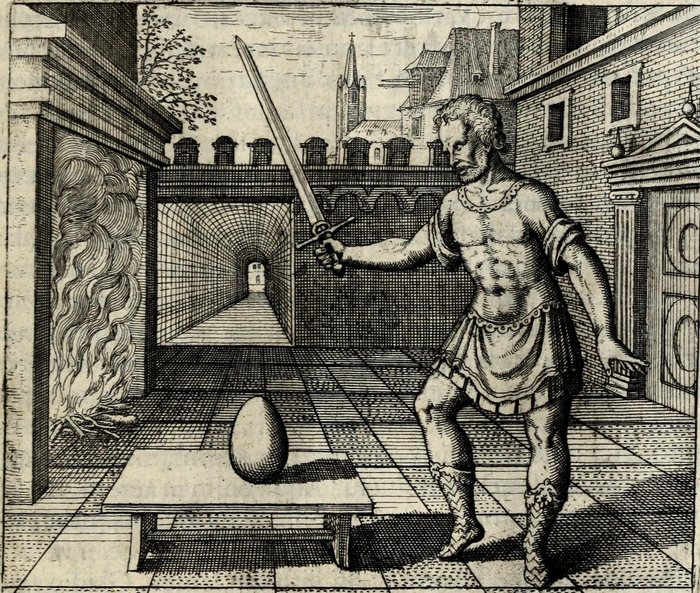
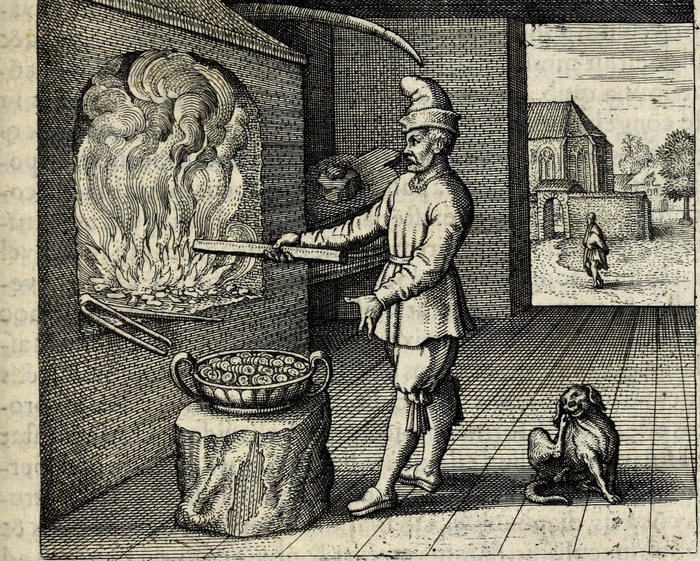
Where the detail is the subject
Each of these is in the picture without being what it is about. Below, one work that is about each.
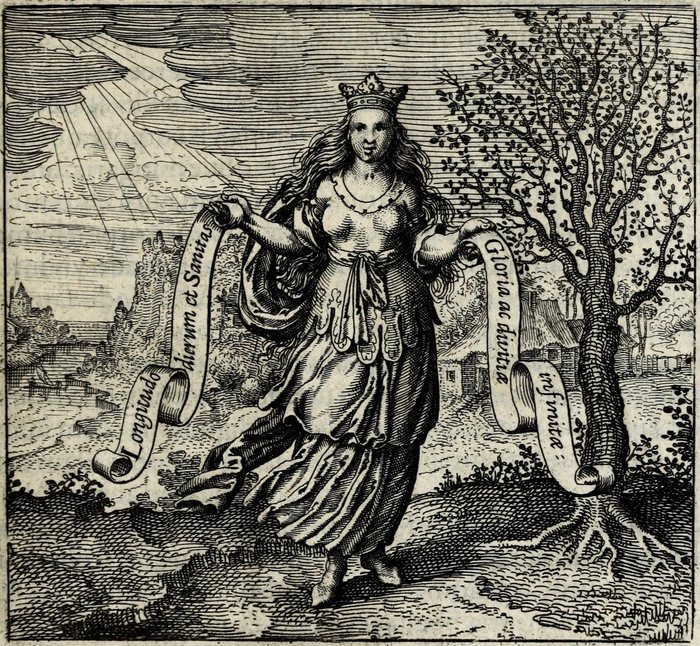
In the same series
Record
One symbol a week, decoded.
This picture is free at full size from its source, linked above. What an address gets is the Sunday letter: one picture, one symbol marked on it, what it meant and who said so, and the master files of the decoded plates as they are verified. Leave any time.
Free, one letter a week, unsubscribe in one click. How the address is used.
Scroll or pinch to zoom · drag to move · double-tap for 1:1 · 856 by 1400 pixel web copy; the source file is linked under Record