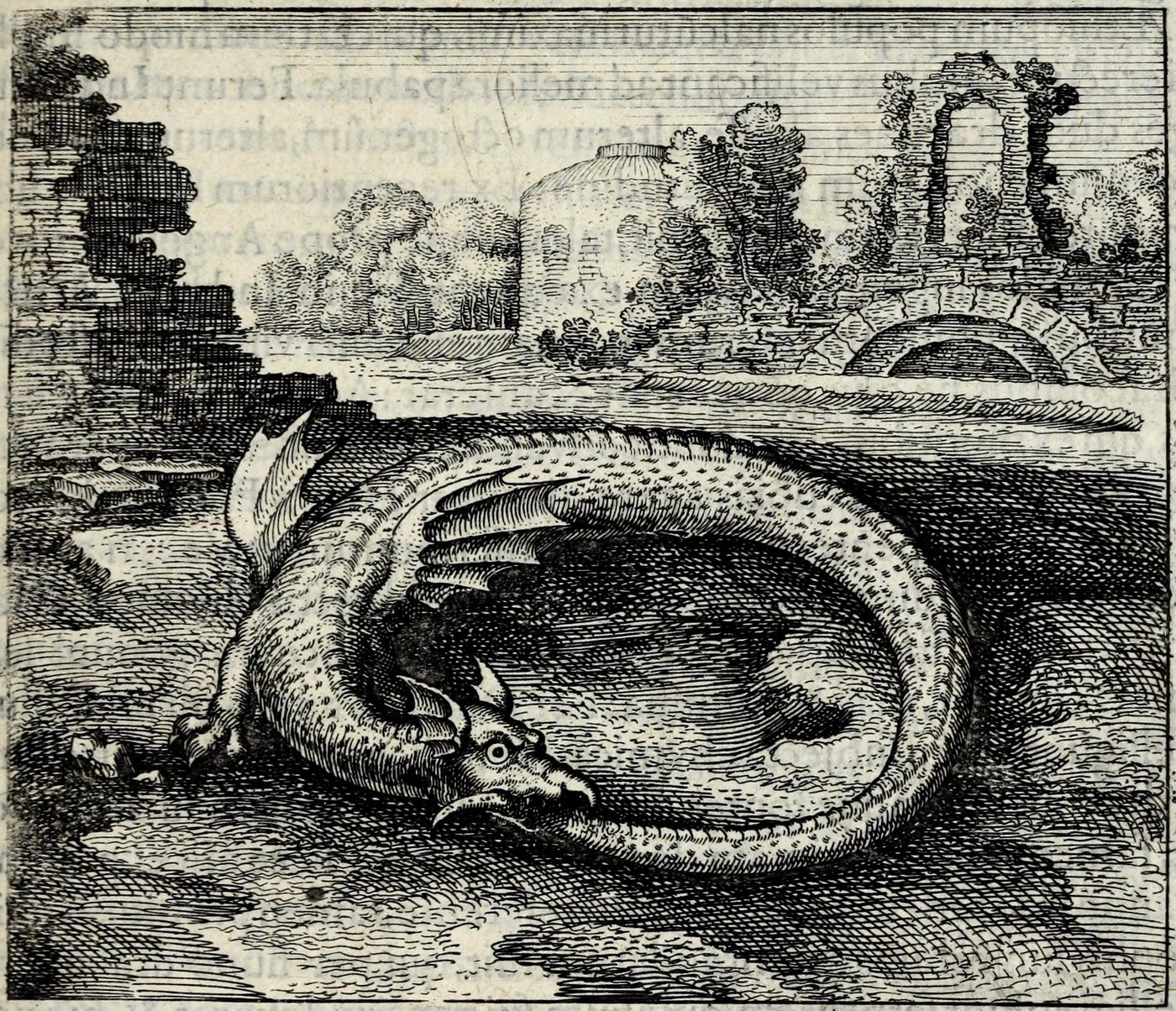
The Dragon
draco, the winged serpent
The alchemists' dragon is not an enemy. It is the matter, and it has to die three ways.
Eight works carry a dragon, and the serpent entry has already said what the Apocalypse does with it: “that old serpent, who is called the devil and Satan”. This entry is for the other dragon, the alchemists', which is not an enemy to be cast out but a substance to be worked on.
Maier's fourteenth emblem is the dragon eating its tail, and the epigram under it is not an emblem but an instruction: “That one must be tamed with iron, with hunger, with prison, until it devours and vomits itself up, kills itself and gives birth to itself.” Iron is the fire, hunger the withholding of food, prison the sealed glass. The twenty-fifth kills the dragon by other hands: “Brother and sister together press down his jaws with a club, and no foreign thing brings about his death.” The sun and the moon do the killing, and the weight of the line is on “no foreign thing”: what dissolves the matter comes from inside the work. The fiftieth and last emblem buries the dragon with a woman: “she dies, and the Dragon is covered with earth along with her. From this his body is given over to death, and is stained with her blood. This is the true path of your work.”
Three deaths, none of them a defeat. The dragon in Maier eats itself, is clubbed by its own brother and sister, and is buried with its bride, and each is a stage the matter passes through on the way to the stone.
In the Splendor Solis flask copied by Ibbs the same creature has three heads and sits inside the glass, which is where Maier's prison puts it. Nothing in the archive explains that sheet in words, so it is recorded as observed.
Contested
The line drawn here between the Apocalypse's dragon and the alchemists' is the archive's, made because the two bodies of text use the one word for opposite purposes; no source in the archive draws it. Maier's Latin is quoted from the records and the English is the archive's translation, marked as such. The Ripley Scroll devices and the Splendor Solis flask carry dragons that no text here reads.
Sources
- Michael Maier, Atalanta Fugiens: The mottoes and the six-line epigrams, read off the 1618 page on each record. The Latin is Maier's; the English quoted here is the archive's own translation and is marked as such on the records.
- The Apocalypse of Saint John, Douay Rheims, Challoner revision: Quoted from the Challoner revision, the English text the archive uses for the Apocalypse throughout.
On the same plate
Where it appears · 8
8 works in the archive carry the Dragon. First the 8 where it has been read, with the Dragon itself picked out.
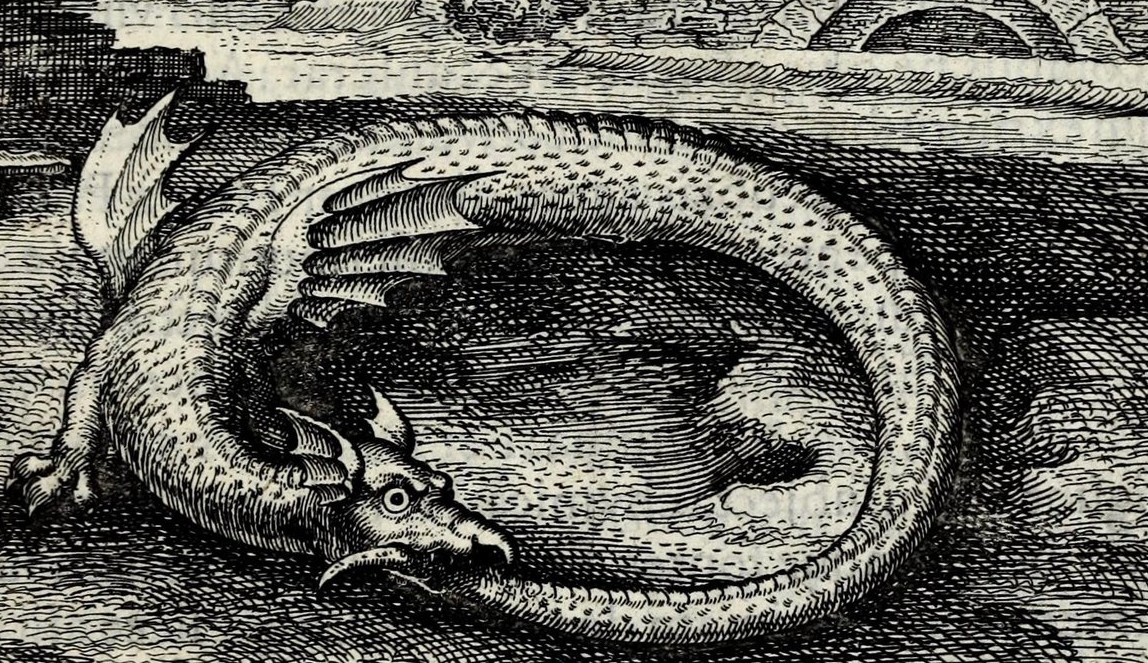
Hic est Draco caudam suam devorans
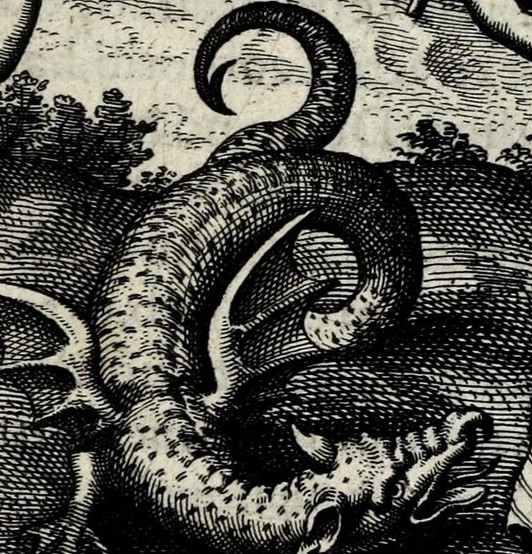
DRACO non moritur, nisi cum fratre & sorore sua interficiatur, qui sunt Sol & Luna
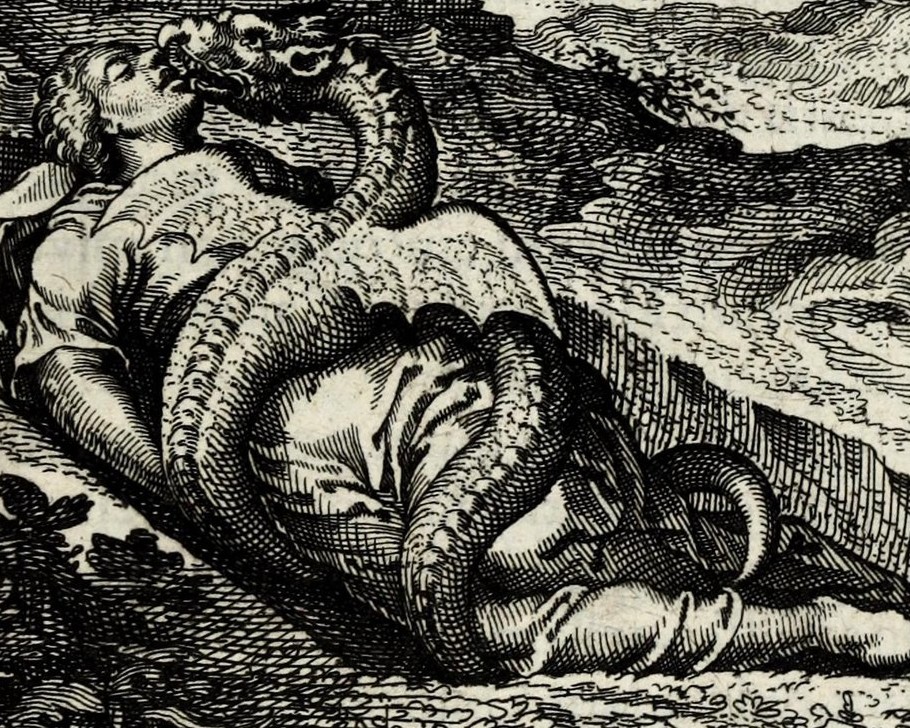
Draco mulierem, & hæc illum interimit, simulque sanguine perfunduntur
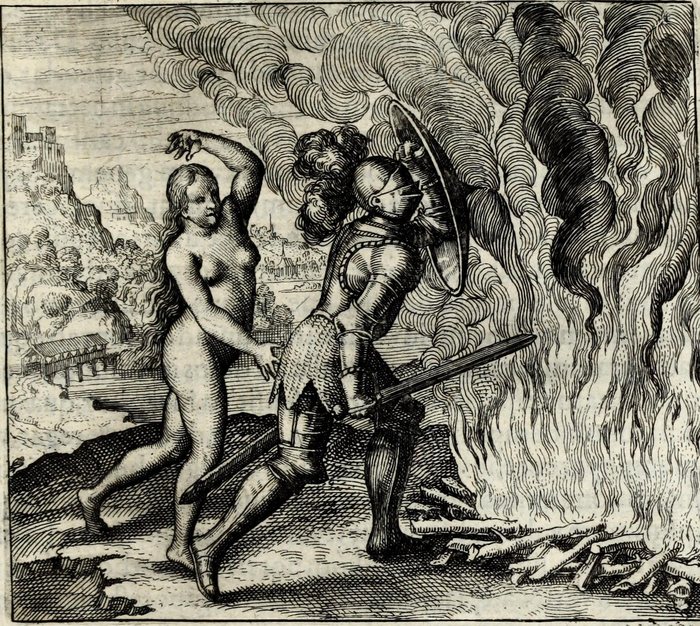
Naturam natura docet, debellet ut ignem
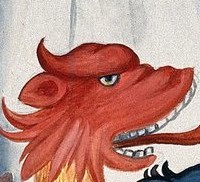
The Three-Headed Monster in the Flask
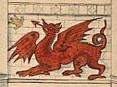
The Buried Stone, the Castle and the Beasts
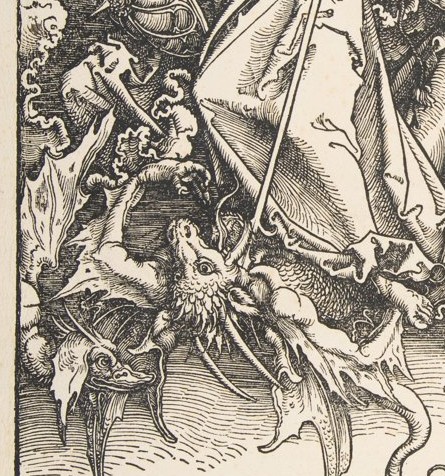
Saint Michael Fighting the Dragon
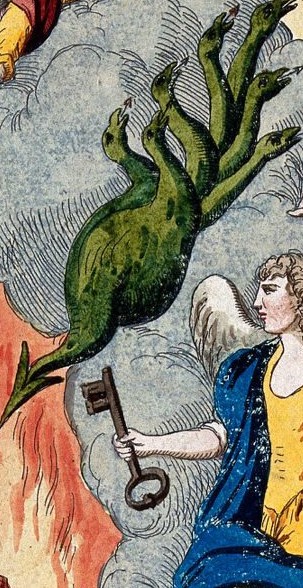
The King with Three Crowns and the Seven-Headed Hydra