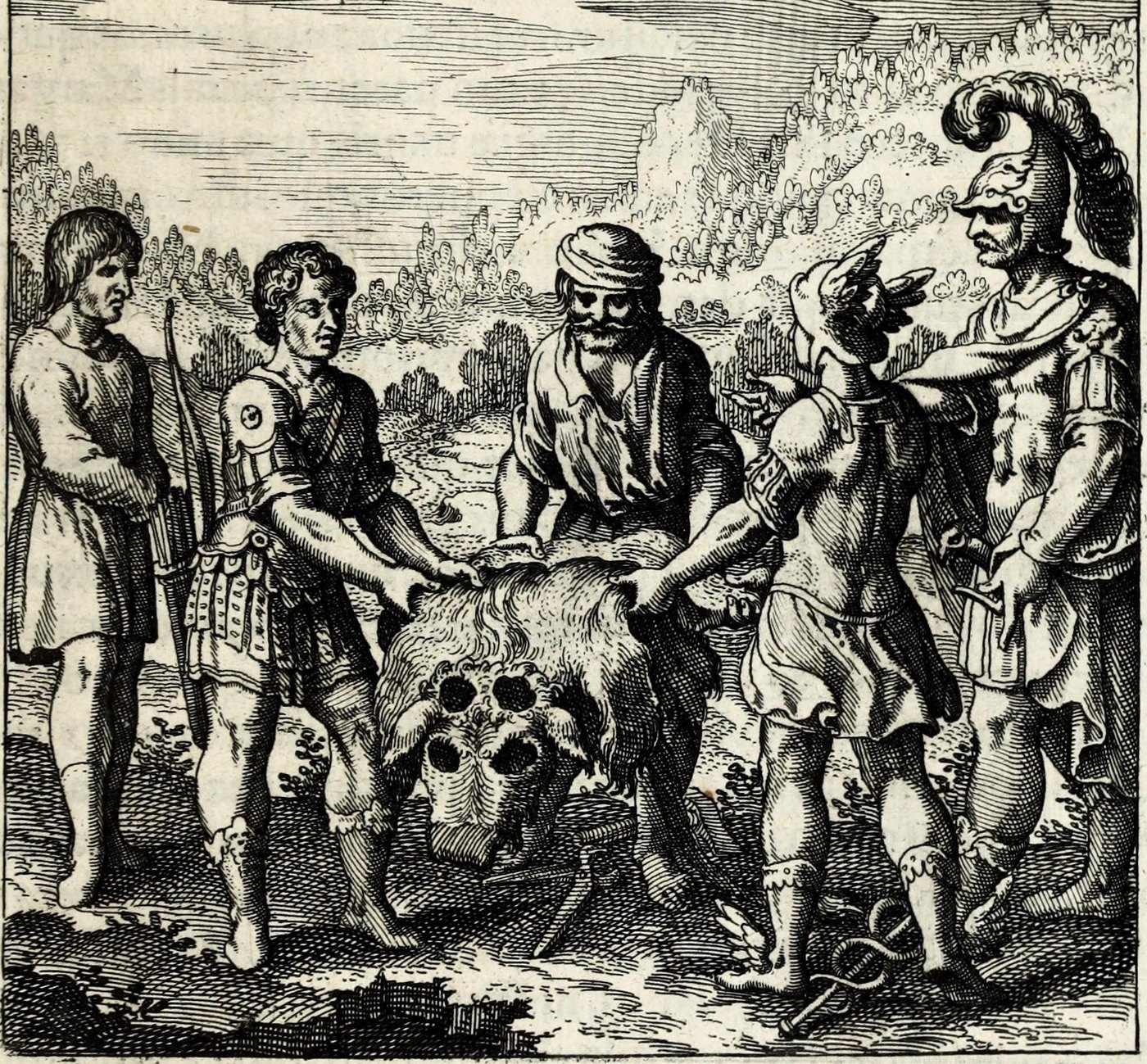
Infans Philosophicus tres agnoscit patres, ut Orion
The Divine as the central motif. From Atalanta Fugiens.
What is happening
Michael Maier, 1618 “Infans Philosophicus tres agnoscit patres, ut Orion.”
Symbolica, 2026 Maier’s Latin, put into English here: The philosophic infant knows three fathers, as Orion did.
Michael Maier, 1618 “Fabula narratur, Phoebus, Vulcanus & Hermes
In pellem bubulam semina quod suerint;
Tresque Patres fuerint magni simul ORIONIS:
Quin Sobolem Sophiae sic tripatrem esse ferunt:
SOL etenim primus, Vulcanus at esse secundus
Dicitur, huic praestans tertius arte pater.”
Symbolica, 2026 Maier’s epigram, put into English here: The story is told that Phoebus, Vulcan and Hermes sewed their seed into an ox hide, and that the three together were the fathers of great ORION. In just this way they say the Child of the Sages has three fathers. The SUN is the first, Vulcan is said to be the second, and the third, outstanding in art, is his father too.
Key · 1 motif
Tap a motif on the picture, or a line below. Its note opens under the line, with the reading its author gave it.
- Primary motif
The picture
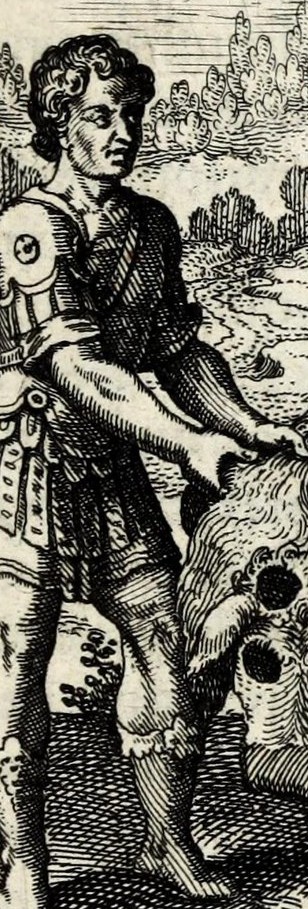
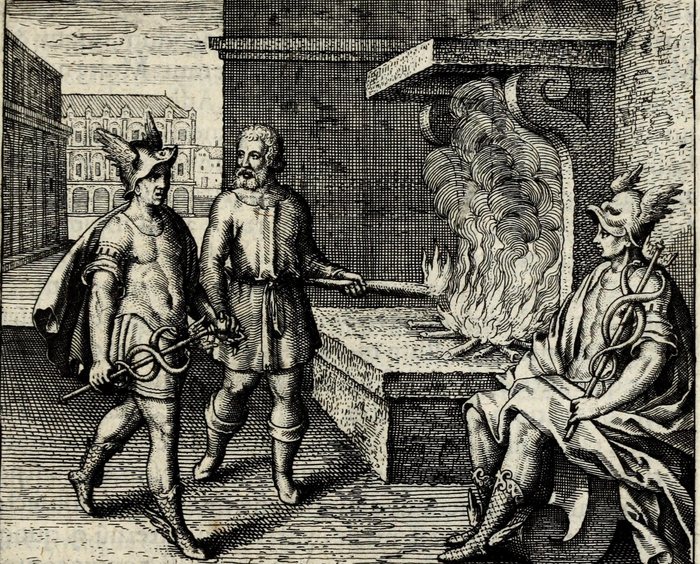
Phoebus with his bow, Hermes in his winged cap and a third father in armour, gathered with two others over the ox hide on the ground, the caduceus lying at their feet. By eye
The reading
The picture read whole, in the archive's words, from the sources quoted on the marks. Read on, and the picture follows: the motif under discussion keeps its colour.
‘Infans Philosophicus tres agnoscit patres, ut Orion’: the philosophic infant knows three fathers, as Orion did. Five men stand round an ox hide spread on the ground, and three of them wear the marks of gods.
‘Fabula narratur, Phoebus, Vulcanus & Hermes / In pellem bubulam semina quod suerint’, the story runs that Phoebus, Vulcan and Hermes sewed their seed into an ox hide, ‘Tresque Patres fuerint magni simul ORIONIS’, and that the three together fathered great Orion. Then Maier applies it: ‘Quin Sobolem Sophiae sic tripatrem esse ferunt’, in just this way they say the child of the sages has three fathers. ‘SOL etenim primus, Vulcanus at esse secundus / Dicitur’, the sun comes first, Vulcan second, ‘huic praestans tertius arte pater’, and a third, outstanding in art, fathers him too.
The sun supplies the metal and Vulcan the fire, and the third father works the bench: the one man on the plate who wears no attribute of a god. Maier names him by his skill alone, and in that line the book comes closest to saying outright that the work has a human parent.
Decoded: every motif is marked, and each mark carries the reading its author gave it, quoted from the text, or says that it is observed on the picture and not read. The reading above is the archive's own, made from those sources and no others.
God shown, or pointed at. Look for what stands where a face would be: a name in a cloud, a circle above the top of a diagram, a ring of verses, a sign over a head.
In plain words Three gods stand over an ox hide on the ground: Phoebus with his bow, Hermes with his winged cap and his caduceus at his feet, and Vulcan, the smith, with two men beside them. The story is that the three sewed their seed into the hide and Orion was born of it with three fathers, and Maier says the child of the sages is born the same way: of the sun, of fire, and of the art.
Michael Maier, 1618 “Fabula narratur, Phoebus, Vulcanus & Hermes / In pellem bubulam semina quod suerint;”
Symbolica Maier's Latin, put into English here: The story is told that Phoebus, Vulcan and Hermes sewed their seed into an ox hide, and that the three together were the fathers of great ORION.
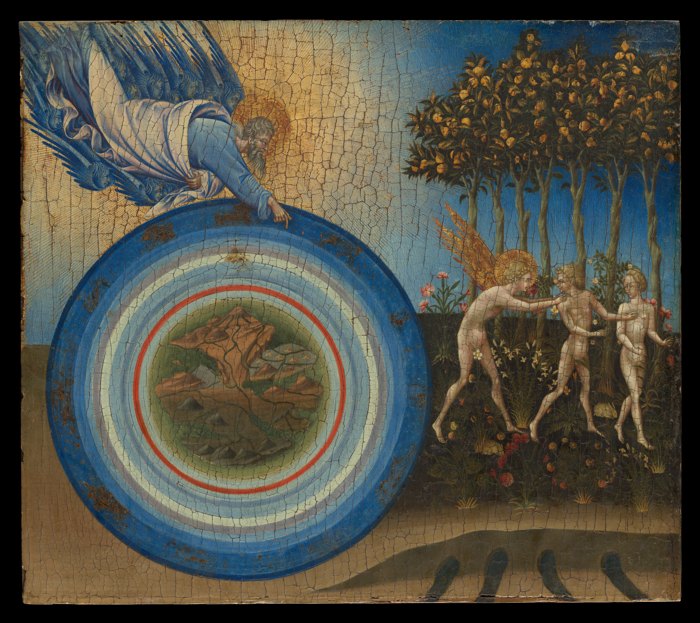
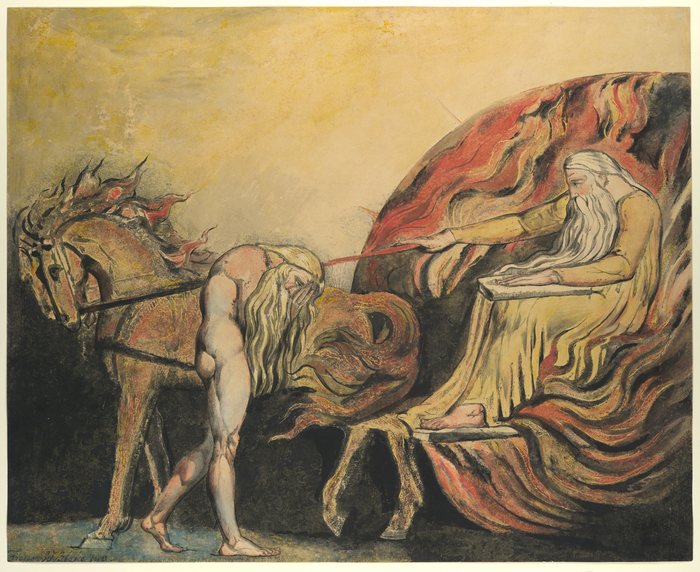
Also carrying the Divine
39 works carry it. The 6 where it is the central motif are here. The symbol.
In the same series
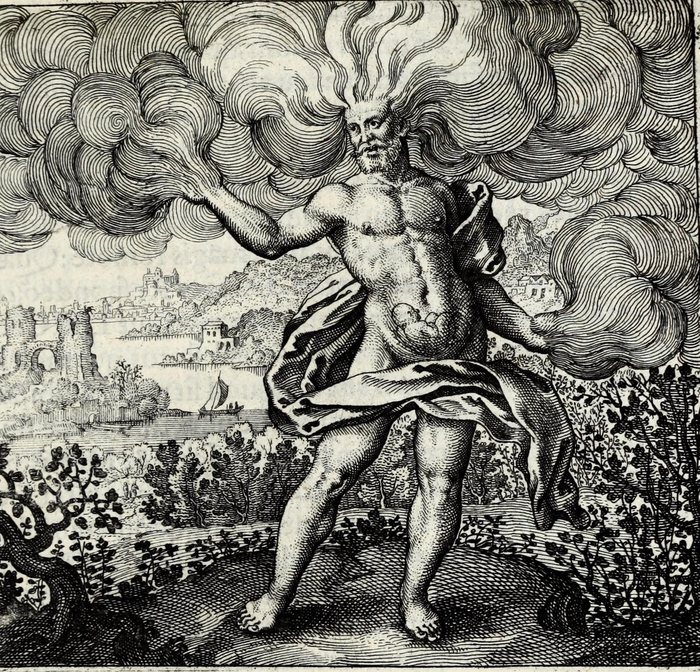 Portavit eum ventus in ventre suo
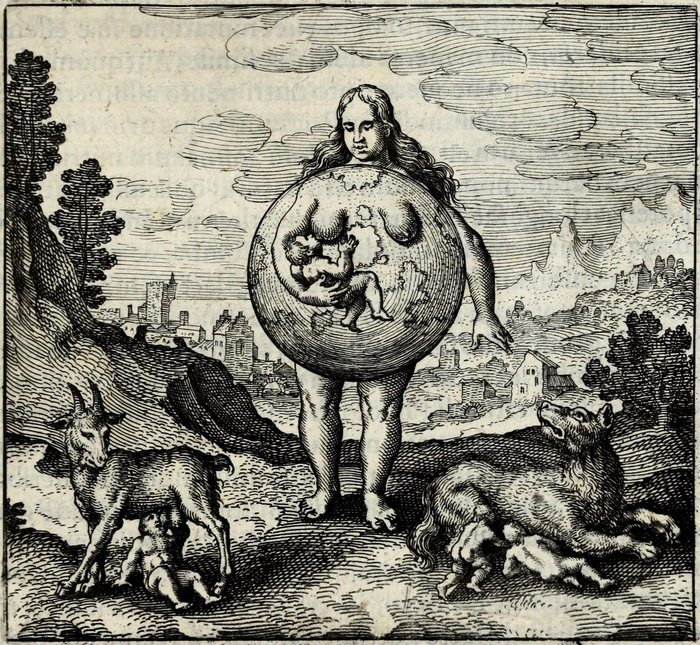 Nutrix ejus terra est
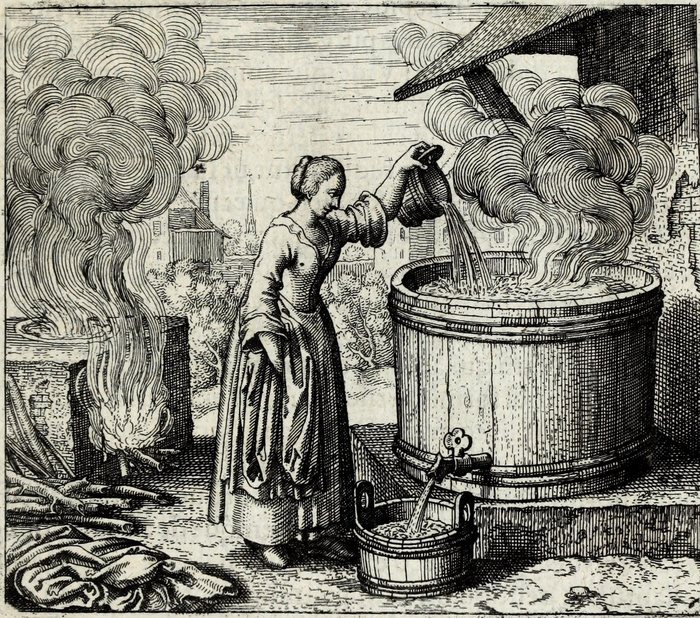 Vade ad mulierem lavantem pannos, tu fac similiter
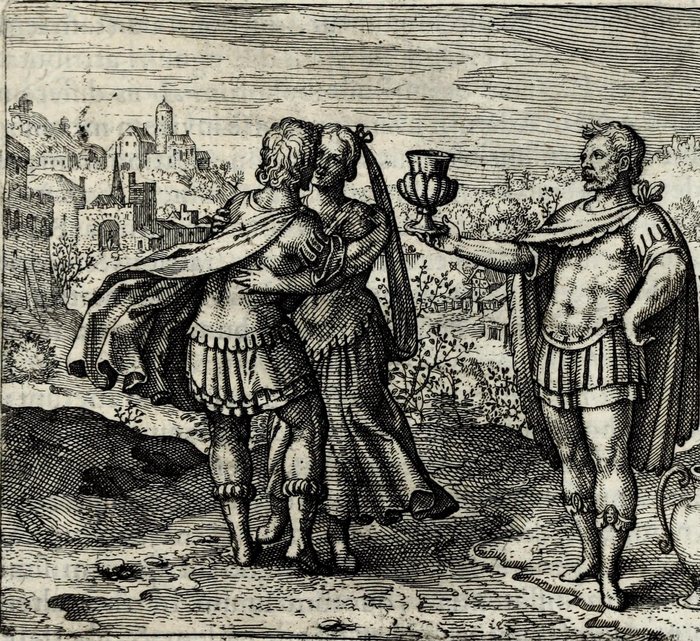 Conjunge fratrem cum sorore & propina illis poculum amoris
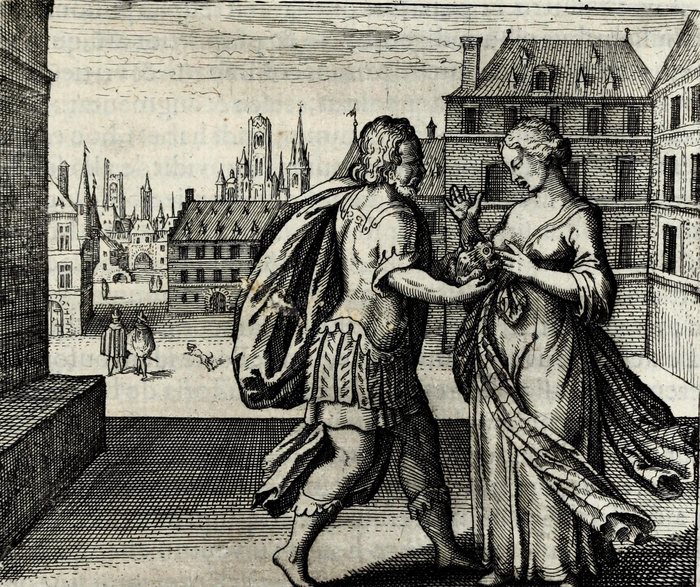 Appone mulieri super mammas bufonem, ut ablactet eum, & moriatur mulier, sitque bufo grossus de lacte
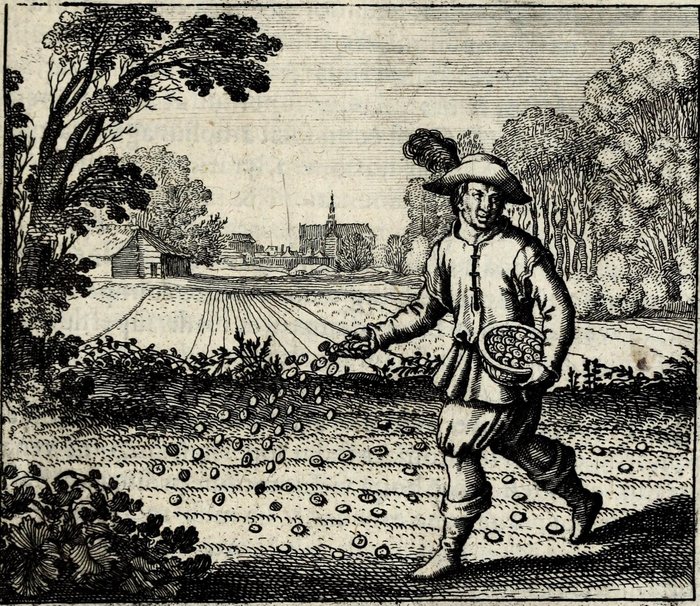 Seminate aurum vestrum in terram albam foliatam
Record
One symbol a week, decoded.
This picture is free at full size from its source, linked above. What an address gets is the Sunday letter: one picture, one symbol marked on it, what it meant and who said so, and the master files of the decoded plates as they are verified. Leave any time.
Free, one letter a week, unsubscribe in one click. How the address is used.
Scroll or pinch to zoom · drag to move · double-tap for 1:1 · 1400 by 1299 pixel web copy; the source file is linked under Record