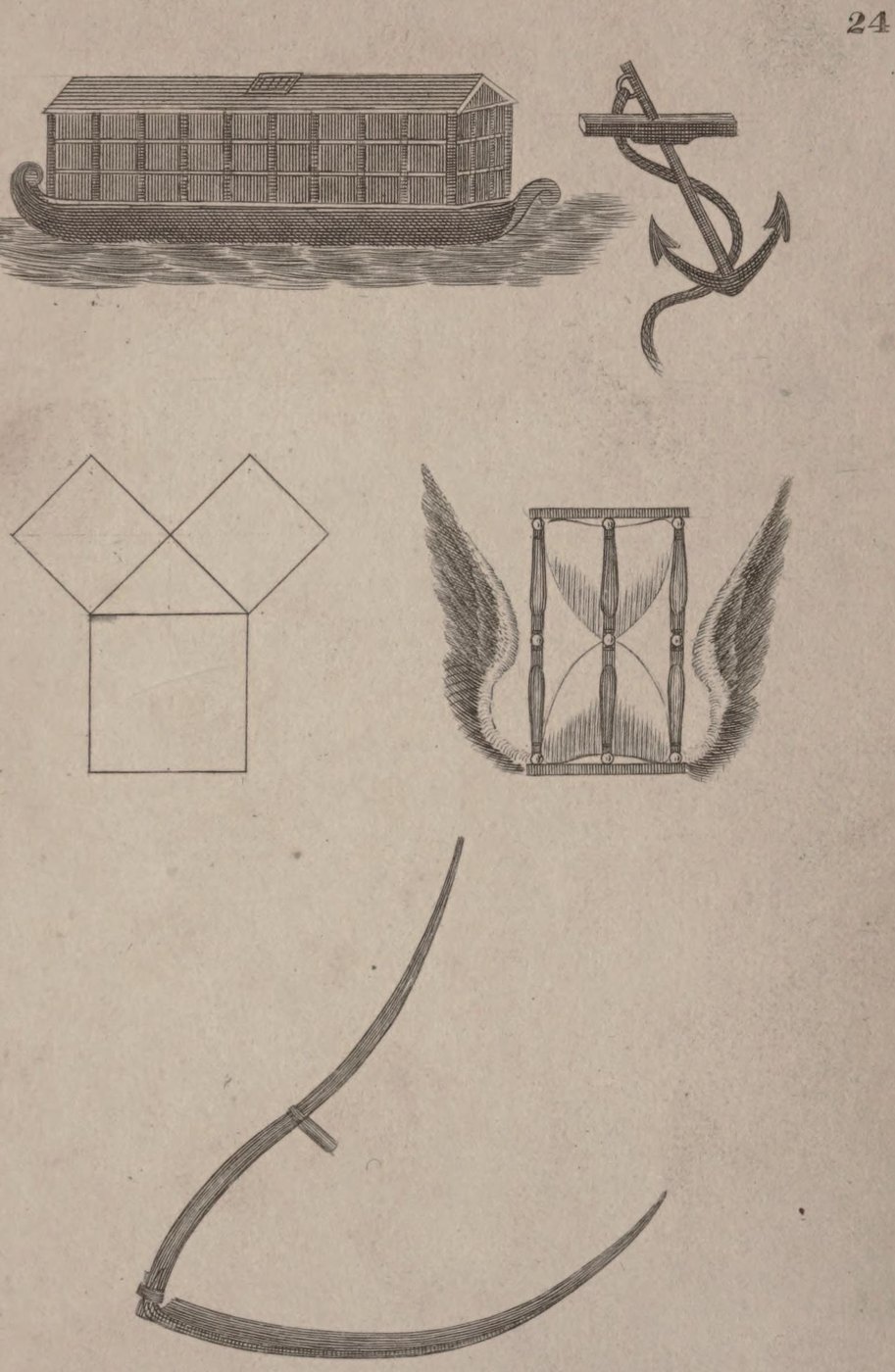
The Anchor and the Ark, the Forty-seventh Problem, the Hourglass and the Scythe
Death and the Skull as the central motif, with the Triangle and the Pyramid, the Angel and the Wing, and the Water in a secondary part. From Masonic Chart.
Key · 4 motifs
Tap a motif on the picture, or a line below. Its note opens under the line, with the reading its author gave it.
- Primary motif
- Secondary motifs · 3
The picture
An ark on the water with an anchor beside it, the figure of the forty-seventh problem of Euclid, a winged hourglass, and a scythe. By eye
The reading
The picture read whole, in the archive's words, from the sources quoted on the marks. Read on, and the picture follows: the motif under discussion keeps its colour.
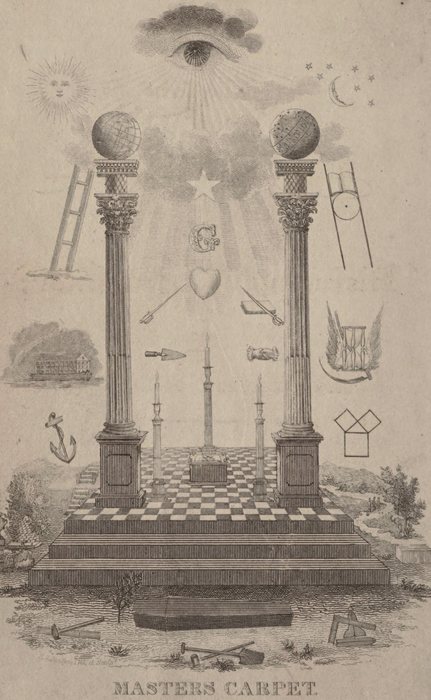
Plate 24 continues the emblems of the Master Mason's third section, five of them on one page, and the monitor gives each its line.
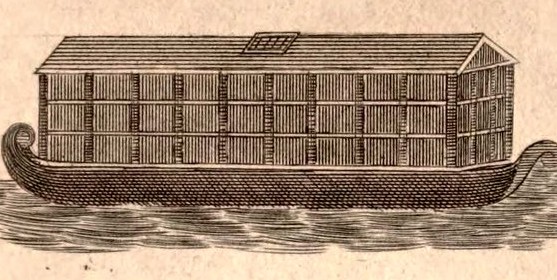
‘The Anchor and Ark are emblems of a well-grounded hope, and a well-spent life. They are emblematical of that divine Ark, which safely wafts us over this tempestuous sea of troubles, and that Anchor which shall safely moor us in a peaceful harbor, where the wicked cease from troubling, and the weary shall find rest.’ The ark is drawn as a long house afloat, the anchor beside it with its cable, and the water under the ark is the sea of troubles.
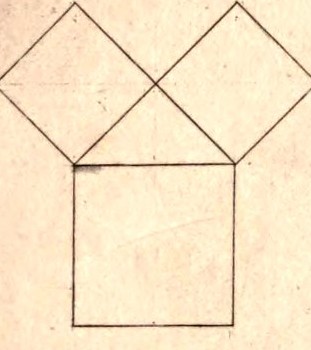
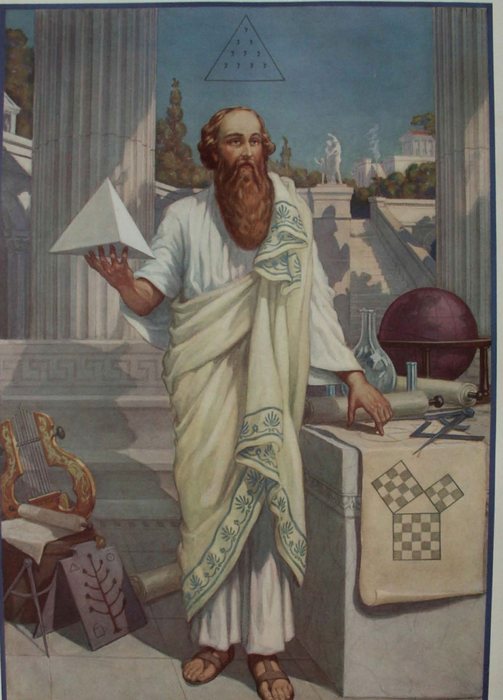
The figure of three squares on a right-angled triangle is ‘The Forty-Seventh Problem of Euclid. This was an invention of our ancient friend and brother, the great Pythagoras. It teaches masons to be general lovers of the arts and sciences.’ Hall's plate of Pythagoras in this archive has the same theorem on a scroll; Cross draws it bare, and reads it as a lesson in curiosity rather than as geometry.
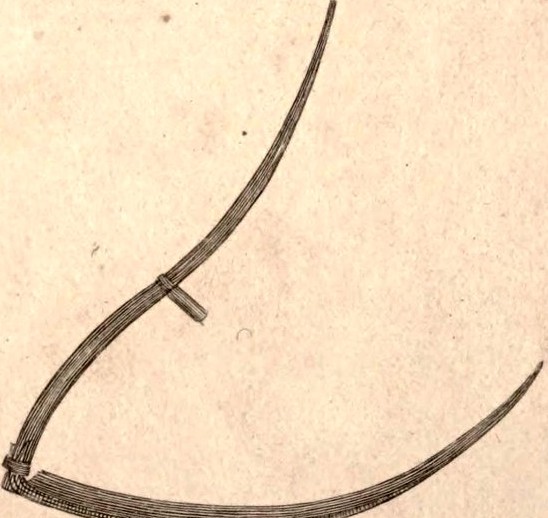
‘The Hour-Glass is an emblem of human life. Behold! how swiftly the sands run, and how rapidly our lives are drawing to a close!’ And: ‘The Scythe is an emblem of time, which cuts the brittle thread of life, and launches us into eternity.’ Time is drawn twice, as the glass that measures it and the blade that ends it.
The hour-glass has wings, and the lecture does not mention them. They are recorded as seen.
Hope, learning, and time running out: the plate is the middle of a lecture that ends, on the next plate, at a coffin.
Decoded: every motif is marked, and each mark carries the reading its author gave it, quoted from the text, or says that it is observed on the picture and not read. The reading above is the archive's own, made from those sources and no others.
An office, not an ending. Note what Death is holding and who is being made to look at it.
In plain words Time twice: the glass that measures a life and the blade that ends it. Cross's two sentences are the plainest in the lecture. The sands run fast and our lives are drawing to a close; the scythe cuts the thread of life and launches us into eternity.
Jeremy L. Cross, 1826 “The Hour-Glass is an emblem of human life. Behold! how swiftly the sands run, and how rapidly our lives are drawing to a close!”
Jeremy L. Cross, 1826 “The Scythe is an emblem of time, which cuts the brittle thread of life, and launches us into eternity.”
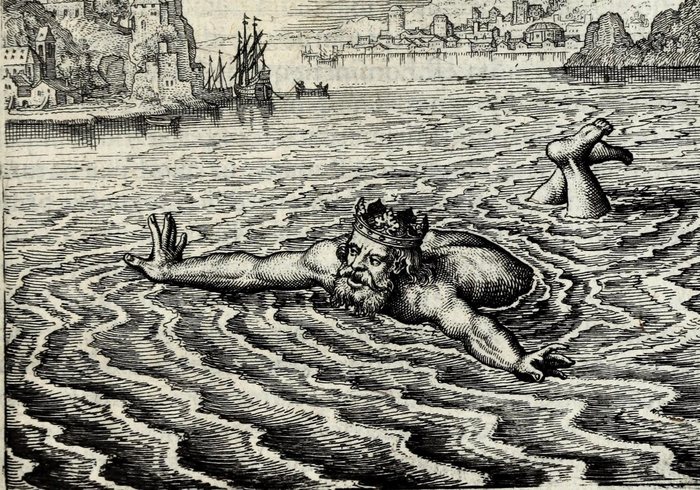
Where a thing is taken apart rather than destroyed. Note whether the figure is in the water, on it, or pouring it.
In plain words A long house of a boat rides on the water, and an anchor hangs beside it. Cross takes the two together: the ark is the hope that carries us over a rough sea of troubles, the anchor is the hope that holds us in a quiet harbour at the end. The water is the trouble.
Jeremy L. Cross, 1826 “The Anchor and Ark are emblems of a well-grounded hope, and a well-spent life. They are emblematical of that divine Ark, which safely wafts us over this tempestuous sea of troubles, and that Anchor which shall safely moor us in a peaceful harbor, where the wicked cease from troubling, and the weary shall find rest.”
A number made visible. Count the points and then find what else in the picture comes in threes.
In plain words A right-angled triangle with a square built on each side: the theorem every schoolchild meets, drawn without a letter on it. Cross calls it the forty-seventh problem of Euclid, credits Pythagoras with it, and reads it as a lesson in curiosity: masons should be lovers of the arts and sciences.
Jeremy L. Cross, 1826 “The Forty-Seventh Problem of Euclid. This was an invention of our ancient friend and brother, the great Pythagoras. It teaches masons to be general lovers of the arts and sciences.”
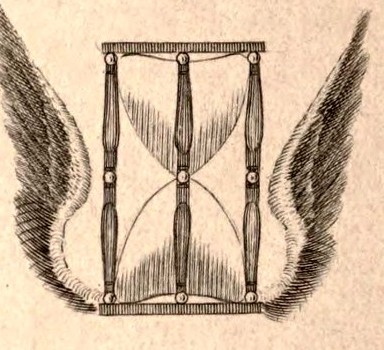
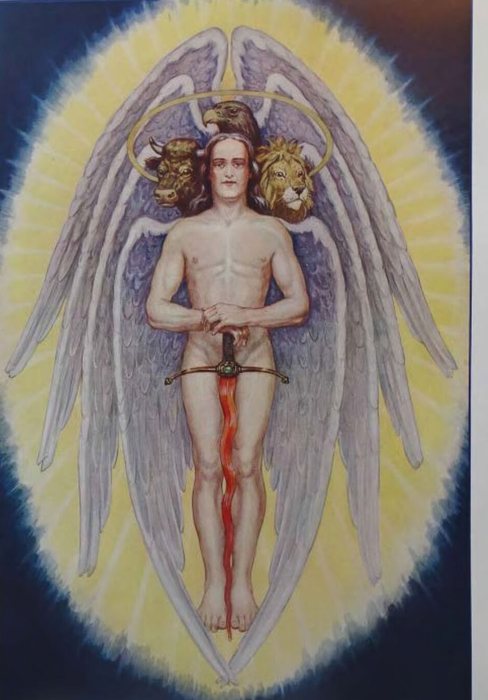
The mark of an errand rather than a nature. Note whether the wings are open, folded, or given to the figure by someone else.
In plain words The hour-glass has a pair of wings, spread. The lecture calls it an hour-glass and says nothing about wings. Observed on the plate, and left unread rather than guessed.
Symbolica The lecture reads the hour-glass and does not say why it is winged. Observed on the plate, and left unread rather than guessed.
Also carrying Death and the Skull
13 works carry it. The 6 where it is the central motif are here. The symbol.
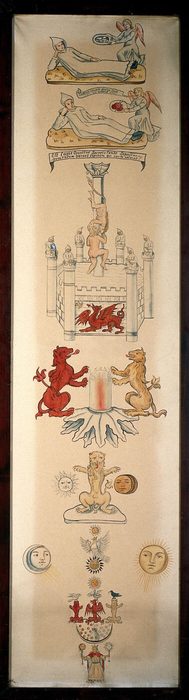 The Buried Stone, the Castle and the Beasts
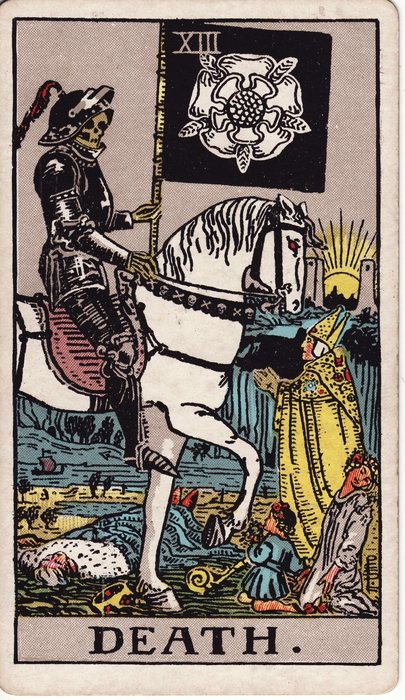 Death (XIII)
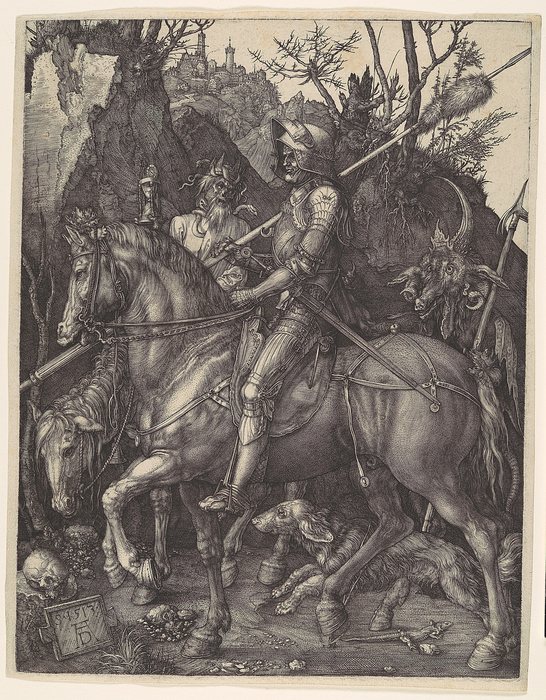 Knight, Death, and the Devil
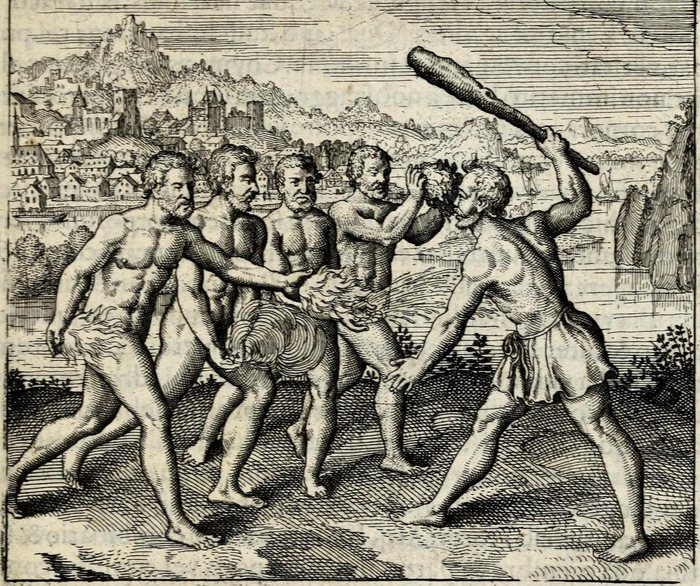 Si de quattuor unum Occidas, subitò mortuus omnis erit
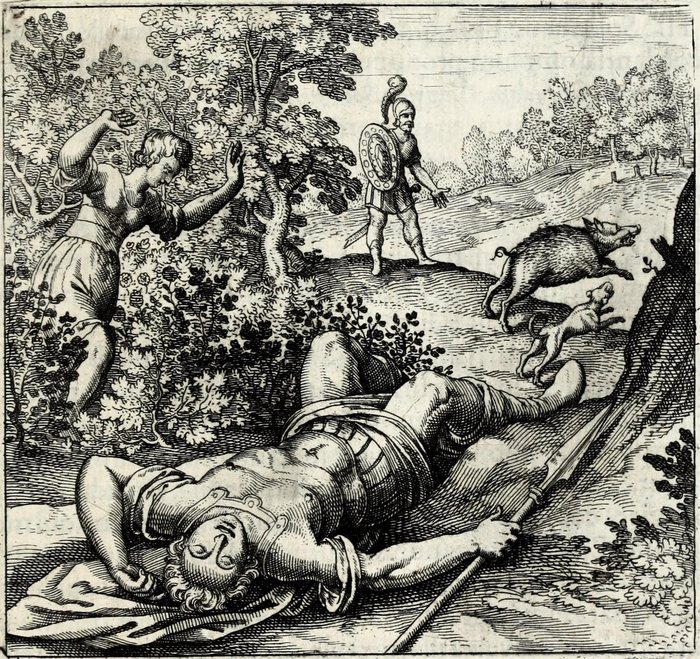 Adonis ab apro occiditur, cui Venus accurrens tinxit Rosas sanguine
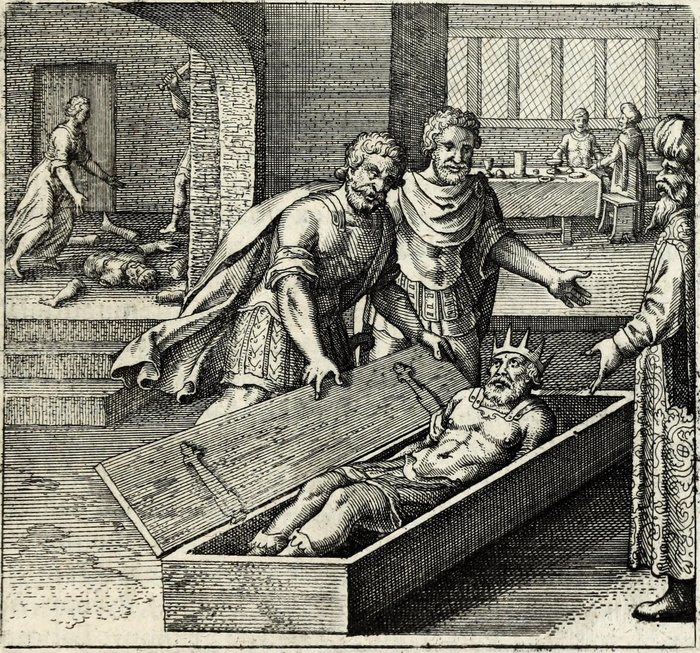 Dolo Typhon Osyridem trucidat, artúsque illius Hinc inde dissipat, sed hos collegit Isis inclyta
Where the detail is the subject
the Triangle and the Pyramid · the Angel and the Wing · the Water
Each of these is in the picture without being what it is about. Below, one work that is about each.
In the same series
Record
One symbol a week, decoded.
This picture is free at full size from its source, linked above. What an address gets is the Sunday letter: one picture, one symbol marked on it, what it meant and who said so, and the master files of the decoded plates as they are verified. Leave any time.
Free, one letter a week, unsubscribe in one click. How the address is used.
Scroll or pinch to zoom · drag to move · double-tap for 1:1 · 913 by 1400 pixel web copy; the source file is linked under Record